
Projects that are good for beginner quilters include simple quilt blocks, basic patchwork designs, and small, manageable items like placemats or mug rugs. We found that these projects help you learn essential skills without feeling overwhelmed.
Starting with smaller quilting projects allows you to practice fundamental techniques such as accurate cutting, precise piecing, and consistent seam allowances. This builds your confidence and helps you master the basics before tackling more complex designs. You want to make sure your first quilting experiences are fun, right?
- Choose projects with straight lines and simple shapes.
- Look for patterns that use pre-cut fabric (like charm packs).
- Start with small, functional items you can finish quickly.
- Focus on learning one new technique at a time.
- Don’t be afraid to make mistakes; they’re part of learning!
Ready to discover some fantastic first projects? Let’s explore the best options to get you started on your quilting journey.
Ideal Quilting Ventures for Newbies
Beginning your quilting journey is exciting! The best projects for new quilters focus on building fundamental skills without overwhelming you with too many steps or complicated techniques.
We found that starting simple helps you gain confidence quickly.
Why Small Projects Make a Big Difference
When you’re just starting, bigger isn’t always better. Small projects offer unique advantages that can boost your learning and enjoyment.
They provide quick wins, which keeps your motivation high.
Quick Sense of Accomplishment
Finishing something quickly gives you a fantastic feeling. You see tangible results of your efforts sooner.
This sense of accomplishment is really important for new quilters, as we found in our research.
- You practice a skill, then see it come to life.
- Less time invested means less frustration if a mistake happens.
- You can display your finished piece right away!
Mastering Core Techniques
Small projects let you zero in on a few key skills. You’re not juggling too many new ideas at once.
This focused practice helps you really master things like accurate cutting and piecing.
It’s like learning to walk before you run, right?
Perfecting Your Seam Allowance
A consistent seam allowance is super important in quilting. Small projects provide lots of chances to practice this.
Aim for a perfect quarter-inch seam every time. Your accuracy will improve with each stitch.
Learning to Cut Accurately
Precision starts with your cutting. Even slightly off cuts can throw off your whole project.
Small projects allow you to focus on using your rotary cutter and ruler with care. We found this skill to be fundamental for success (National Quilters Circle).
Go-To Projects for Your First Quilt
What should your very first quilting project be? You have several excellent choices that teach essential skills.
These options are beginner-friendly and produce useful, charming items.
Mug Rugs and Coasters
These tiny quilts are perfect for a first attempt. They’re small, quick, and use minimal fabric.
Mug rugs are like mini placemats for your drink and a snack. Coasters are even smaller.
Skills You’ll Learn
Making mug rugs or coasters teaches you several core quilting techniques:
- Fabric selection and pressing.
- Cutting small pieces precisely.
- Sewing straight seams.
- Adding batting and backing.
- Basic quilting stitches (often straight lines).
- Binding a small edge.
These projects are like a mini-course in quilting!
Simple Placemats
Placemats are just a step up from mug rugs in size. They offer a bit more space to practice.
You can make a set for your table or give them as gifts.
Expanding Your Comfort Zone
With placemats, you’ll still focus on straight lines but with slightly larger pieces. This helps build your confidence.
You might experiment with a simple block repeat, too.
Pillow Covers
A pillow cover is a great way to showcase a few quilt blocks. They are functional and decorative.
You can make one for your couch or bedroom.
Introducing Quilt Blocks
This is where you start to really play with quilt blocks. Choose a simple block design, like a Four Patch or Nine Patch.
We found that repetitive blocks are fantastic for building muscle memory (Quilt Alliance).
Basic Quilt Block Designs to Try
Many classic quilt blocks are surprisingly simple to make. They rely on straight cuts and seams.
Choosing these blocks for your first projects sets you up for success.
The Four Patch Block
This block is exactly what it sounds like: four squares sewn together to make one larger square.
It’s one of the easiest and most common blocks for beginners.
How it Helps You
The Four Patch teaches you:
- Sewing two strips together.
- Cutting those strips into pairs.
- Joining two pairs to form a block.
- Pressing seams correctly.
It’s a fantastic way to practice consistency.
The Nine Patch Block
Similar to the Four Patch, the Nine Patch uses nine squares in a 3×3 grid.
This block introduces you to sewing three rows and then joining those rows.
Building on Skills
You’ll refine your strip piecing and learn how to align seams when joining rows.
The Nine Patch is slightly more complex than the Four Patch but still very manageable.
The Half-Square Triangle (HST)
HSTs open up a world of design possibilities! They are made by sewing two triangles together to form a square.
Many traditional quilt patterns use this versatile block.
Adding Angles (Gently!)
While it involves triangles, the process for HSTs is often taught with squares. You draw a diagonal line, sew on either side, then cut.
This method helps you achieve accurate triangles without cutting them on the bias, which can be tricky for new quilters.
Choosing Your Fabric Wisely
The fabric you pick can really influence your experience. Some fabrics are easier to work with than others.
Make sure your fabric choices don’t add unnecessary difficulty.
Stick to 100% Cotton
Quilting cotton is the gold standard for a reason. It’s stable, easy to cut, and doesn’t stretch much.
Avoid slippery silks or stretchy knits for your first projects. Those can be very frustrating!
Consider Pre-Cuts
Pre-cut fabrics are a beginner’s best friend. They save you a ton of cutting time and ensure consistent sizes.
Common pre-cuts include:
- Charm Packs: 5-inch squares.
- Layer Cakes: 10-inch squares.
- Jelly Rolls: 2.5-inch strips.
These are often coordinated, so your project will look cohesive without much effort on your part.
Essential Tools for Beginners
You don’t need every tool in the quilting store to get started. A few key items will suffice.
Investing in good quality basic tools will make your experience much smoother.
| Tool | Why You Need It | Beginner Tip |
|---|---|---|
| Rotary Cutter | For precise, fast fabric cutting. | Start with a 45mm size. Always use a mat! |
| Self-Healing Mat | Protects your work surface and cutter blade. | Get the biggest one you can afford and store. |
| Acrylic Ruler | Essential for accurate measuring and cutting. | An 6×24 inch or 8×24 inch is very versatile. |
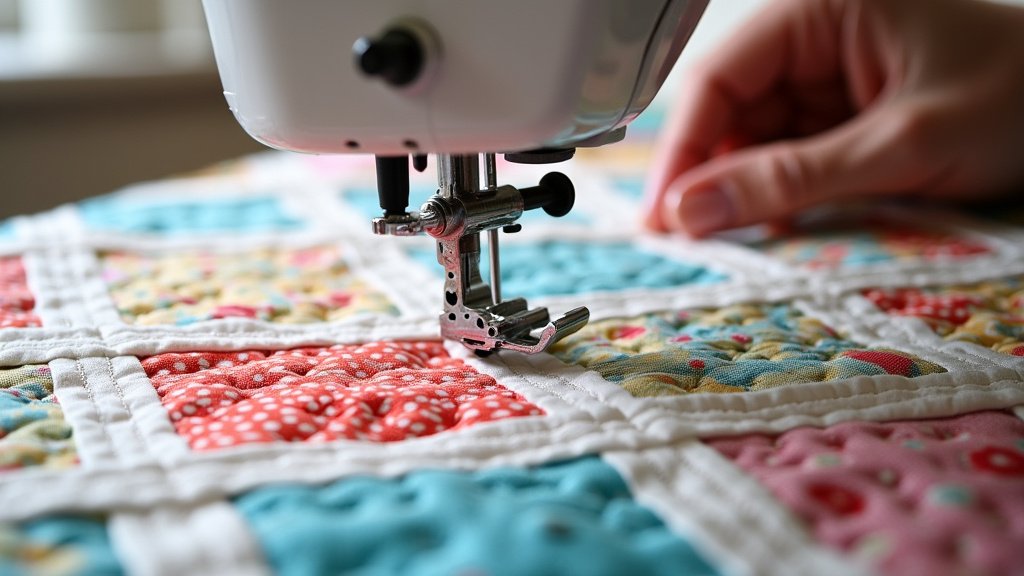
| Sewing Machine | Your primary tool for stitching. | Any basic model with a straight stitch works. |
| Iron & Ironing Board | For pressing seams, not ironing. | Pressing is key for flat, accurate blocks. |
| Good Fabric Scissors | For snipping threads and fabric details. | Keep them sharp and use only for fabric. |
Quick Checklist for Your First Quilt Project
Before you dive in, run through this quick checklist. It helps ensure you’re ready and set for success.
This prevents common beginner frustrations, we found.
- Do I have all the necessary tools?
- Is my fabric pre-washed and pressed (if desired)?
- Have I read through the entire pattern before starting?
- Are my cutting measurements double-checked?
- Do I understand how to maintain a consistent seam allowance?
Conclusion
You’ve seen how simple projects like mug rugs, placemats, and basic quilt blocks are perfect starting points. They help you build foundational skills like accurate cutting and a consistent seam allowance without feeling overwhelmed. Remember, each small finished project boosts your confidence and makes you a better quilter. We found that choosing the right first project and tools sets you up for lasting enjoyment in this rewarding craft. So, pick a pattern, gather your supplies, and start stitching today!
Frequently Asked Questions
What’s the absolute easiest quilt block for a beginner?
The Four Patch block is generally considered the easiest. It involves sewing just four squares together. This simple design is great for practicing straight seams and pressing techniques.
Should I pre-wash my fabric before quilting my first project?
For your very first project, pre-washing is optional. Many quilters skip it for small items to save time. However, for larger quilts that will be washed frequently, pre-washing can prevent shrinkage and color bleeding later on.
How long does it typically take to finish a beginner quilting project?
Small projects like mug rugs or coasters can often be completed in a single afternoon or over a weekend. Placemats or a simple throw pillow might take a few days, depending on how much time you dedicate to sewing. The goal is quick satisfaction!
Do I need a fancy sewing machine to start quilting?
Absolutely not! Any basic sewing machine that can produce a straight stitch will work. You just need a machine that is reliable and easy for you to operate. Fancy features can come later if you decide to upgrade. Our guide to the best quilting machine for beginners can help you choose a model that is user-friendly and reliable.
Is it okay to use fabric scraps for my first quilting project?
Using fabric scraps is a fantastic idea for beginner projects! It’s a great way to use up leftover fabric and experiment without investing in new material. Just ensure your scraps are all 100% quilting cotton for consistent results.
