How to Choose a Quilting Method for Small Spaces
The best quilting method for a small space is one that keeps the active fabric area manageable: try small projects, quilt-as-you-go, or quilting a large quilt in sections. Match the method to your table, machine clearance, and storage.
On this page (7 sections)
- Which types of quilting for small spaces are easiest to manage?
- Is quilt-as-you-go a good choice for a small room?
- Can you quilt a large quilt in a small space?
- Should you use straight-line or free-motion quilting?
- What workspace setup helps in a small sewing area?
- What finished quilts suit a small-space project?
- How do you choose the right method?
The best quilting method for a small space is one that keeps the fabric you handle at one time within reach. Start with small projects or quilt-as-you-go, and use a section-by-section approach when the finished quilt is large.
Your work area needs room for the machine, fabric, tools, and your hands. You can make the setup easier to manage by choosing a method that limits how much fabric must sit on the table or move through the machine at once.
Which types of quilting for small spaces are easiest to manage?
Quilt-as-you-go and small projects are often the easiest methods to fit into a compact sewing area. Both reduce how much fabric you need to support and move at one time.
Quilt-as-you-go breaks a project into smaller sections that you quilt individually, then join. If you want to piece organic motifs into a section, see how to inset organic shapes in quilts.
Small projects, such as table runners or placemats, also use less working surface than a full-size quilt.
| Method | Why it can fit a small space | Consider before choosing |
|---|---|---|
| Small projects | Less fabric needs to rest on the work surface | You may need to make several pieces to practice a technique |
| Quilt-as-you-go | You work with smaller quilted sections | Joining the sections takes planning |
| Large quilt in sections | The bulk is handled in stages | The finished quilt still needs room for assembly and storage |
| Free-motion quilting | Stitching can cover areas without a fixed straight-line pattern | You need control over fabric movement and a stable machine setup |
| Straight-line quilting | Simple lines can create a clear design | The quilt's weight still needs support as it moves |
The smallest method is not automatically the best fit. Think about whether you have room to lay out pieces, keep a finished section safe, and put the quilt away between sessions.
What is quilting for small spaces?
Quilting for small spaces means planning the work so the active fabric, tools, and machine have enough support in the area you have. It can mean making smaller projects, quilting sections separately, or rearranging the workspace between steps.
It does not require a dedicated sewing room. A dining table or other cleared surface can work if you can set up safely, keep tools organized, and move the project without dragging it across the floor.
Is quilt-as-you-go a good choice for a small room?
Quilt-as-you-go can make a large project easier to handle in a small room because you quilt smaller sections before joining them. You still need a place to assemble and store the sections, but the full quilt does not have to cover your work surface during every quilting step.
A table runner is one way to try a smaller project. The June Tailor pattern has its design printed on cotton-poly batting and uses piece-by-number construction; the finished project measures 48 x 15 in, and fabric is not included.
Before choosing quilt-as-you-go for a larger quilt, consider how the sections will fit together and where you will keep them. Check the pattern's construction steps so you know what space you'll need during joining and finishing.
For a large project on a compact machine, see our guide to quilt a large quilt on a small machine. It covers ways to manage the bulk as you work.
Can you quilt a large quilt in a small space?
Yes, you can quilt a large quilt in a small space by dividing the work into manageable sections and supporting the fabric near the machine. The finished quilt still needs room for assembly, so plan where it will rest when you are not sewing.
A sewing machine's throat space affects how much fabric can fit between the needle and the machine body. A smaller throat may make bulky fabric harder to maneuver, even when you quilt only one part at a time.
For a bed-size project, consider quilting sections separately or using a simpler design that avoids repeated repositioning. A clear path around your table can also help you turn and guide the fabric without catching it on nearby objects.
If you are choosing a machine for a compact room, compare sewing and quilting machines for small spaces and review what size quilting machine fits a small space. Look at the machine dimensions, workspace, and how much room you'll have around it.
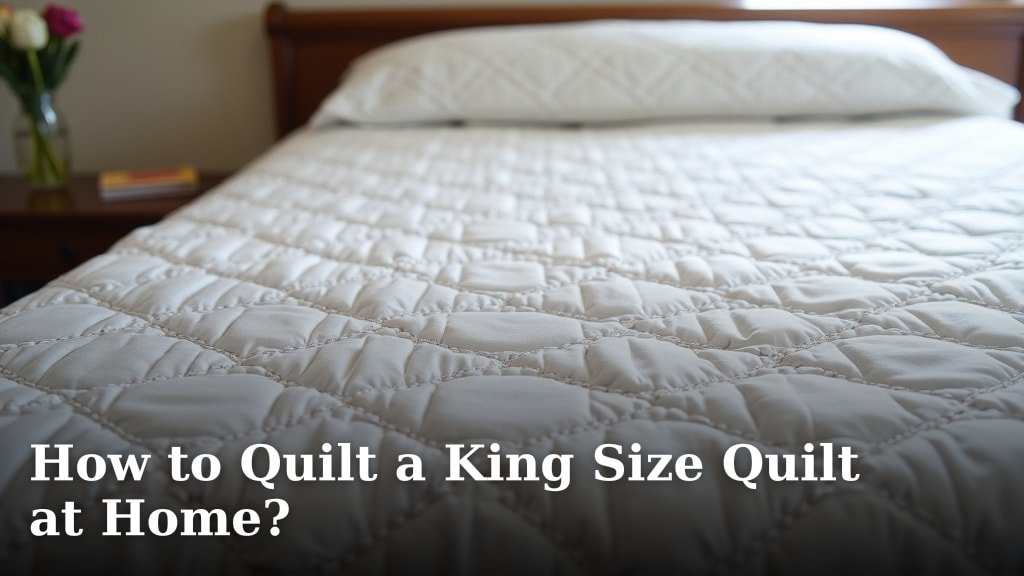
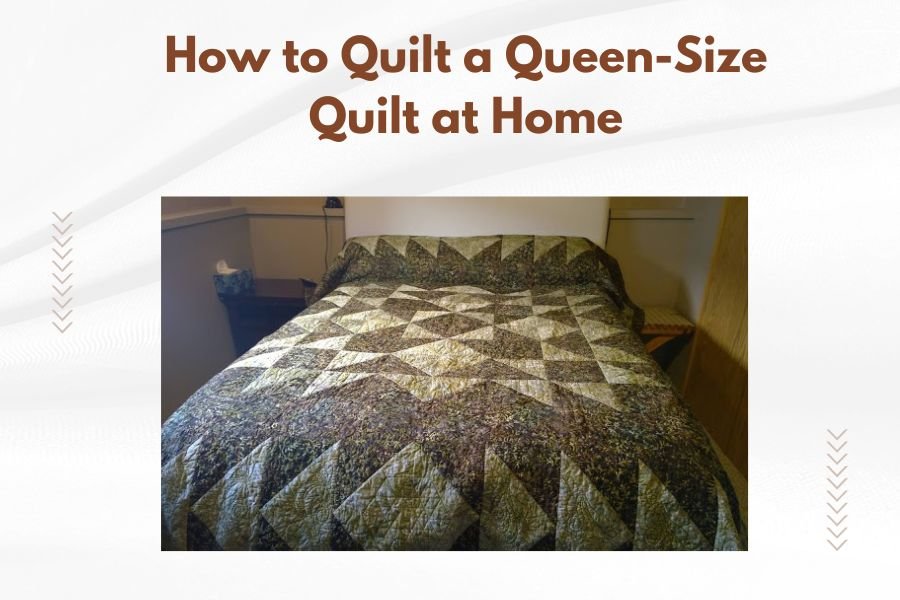
For bed-size planning, read our guides to quilting a king-size quilt at home and quilting a queen-size quilt at home. Those projects need more room for the finished quilt than a table runner does.
Should you use straight-line or free-motion quilting?
Choose the quilting style you can guide steadily with the space and setup you have. Straight-line quilting follows a planned path, while free-motion quilting gives you more freedom to move the fabric in different directions.
For hand quilting, see hand quilting stitch length guidance.
Straight lines may be easier to plan on a small table because you can work across the quilt in rows. For a walking-foot design, see Baptist fan quilting.
Free-motion work can suit designs with curves or patterns, but it asks you to move the fabric smoothly and keep it supported.
Whichever method you use, avoid letting a heavy section hang far off the table. Fabric pulling downward can make it harder to guide the quilt and keep your stitching consistent.
What workspace setup helps in a small sewing area?
A clear, stable work surface with tools close at hand makes quilting in a small area easier to manage. Keep only the tools for your current step on the table, and store the rest nearby.
Before sewing, clear the area around the machine and test how the fabric moves. Check that cords, scissors, pins, and other tools stay out of the path of the needle and your hands.
Use a temporary setup only if the table is stable and gives you comfortable access to the machine. When the work is done, fold or store the project in a way that protects it from spills, pets, and household traffic.
What finished quilts suit a small-space project?
A small finished quilt, such as a table runner, is a practical starting point when you have limited work and storage space. You can build skills without needing a large layout area for the whole project.
Bed quilts need more planning because the top, batting, and backing take up more room during assembly and quilting. You might use a quilt-as-you-go plan or ask a quilting service to handle the quilting stage if the fabric bulk is difficult to manage at home.
The RECYCO sets are finished bedding with channel box stitching, rather than quilting project supplies. Each set includes a 108 x 96 in velvet quilt and 2 pillow shams, so they may help if your goal is a quilted look for the bed without making a bed quilt yourself.
How do you choose the right method?
Choose the method that keeps your active project supported and gives you enough space to finish each step. For a dense stitched finish, see how to bury threads in matchstick quilting.
Try a small project if you are new to quilting, use quilt-as-you-go to divide a larger quilt, or quilt in sections when the full piece is difficult to handle.
If you have a stable table and room to maneuver, straight-line or free-motion quilting may suit your project. If space is very tight, keep the design and project size simple, and plan where the finished quilt will go before you begin.
For a first small-space project, a table runner can keep the fabric manageable. For a larger bed quilt, choose a section-based plan and check the machine's throat and table setup before cutting fabric.