How to Sew Stretchy Fabric
Use a stretch needle, a flexible stitch, and gentle fabric handling to sew stretchy fabric without wavy seams. Test the stitch on scraps, support the fabric, and avoid pulling it through the machine.
On this page (11 sections)
- What needle and thread should you use for stretchy fabric?
- Which stitch is best for stretchy fabric?
- How should you cut stretchy fabric?
- How do you keep stretchy fabric from feeding unevenly?
- How do you sew stretchy fabric without wavy seams?
- Which products can help with stretch-fabric projects?
- How do you press stretchy fabric?
- How do you sew curves in stretchy fabric?
- Can you use a pintuck foot on stretchy fabric?
- What should you check before sewing the final seam?
- How do you sew stretchy fabric successfully?
Here's how to sew stretchy fabric: choose a stretch or ballpoint needle, use a stitch that can flex, and keep the fabric supported without pulling it. For a fitted upholstery project, see sewing chair covers.
Test on a scrap before sewing the project, because knits and other stretch materials can react differently to the same stitch.
Stretch fabric may curl, shift, or develop a wavy seam when it is pushed or pulled during sewing. A steady setup matters as much as the stitch choice.
What needle and thread should you use for stretchy fabric?
Start with a stretch or ballpoint needle and thread that suits the fabric. The needle should pass through the material cleanly without creating runs, skipped stitches, or holes.
Check the needle after threading and before sewing. Replace it if it is bent, damaged, or no longer forming even stitches.
Choose thread that matches the project and fabric weight. Keep the color close to the fabric when the seam may show, and test the thread tension on a scrap.
If you are also learning how to sew sheer fabric, use the same test-first approach. Sheer fabric needs different handling, but a small sample still helps you spot puckering before it reaches the finished piece.
Which stitch is best for stretchy fabric?
A narrow zigzag is a practical starting stitch because it lets the seam stretch without snapping. Set a small width and moderate length, then test how the seam behaves when gently stretched.
Some machines offer a stretch stitch or lightning stitch. Use that option if it creates an even seam on your fabric, but don't assume the setting will suit every knit.
A straight stitch is less forgiving on areas that need to stretch. It may suit stable fabric or seams with little movement, but pull the sample gently to check for broken stitches before continuing.
How do you test the stitch?
Cut a scrap from the same fabric and sew along the grain and across it. Stretch the seam lightly in the direction the finished garment or project will move.
Look for skipped stitches, loops, tunneling, or a wavy edge. Change one setting at a time so you know which adjustment helped.
How should you cut stretchy fabric?
Lay the fabric flat without stretching it before cutting. Smooth wrinkles with your hands, align the grain, and use weights or a few suitable pins to keep the layers still.
Avoid lifting the fabric while marking or cutting. The edge can change shape while it is in the air, which may create pieces that no longer match.
Use sharp fabric scissors or a rotary cutter with a safe cutting surface. Check each piece against the pattern before moving it to the machine.
If the fabric has shine or a raised surface, mark the direction before cutting. For more control with a slippery material, compare these sewing velvet tips before you begin.
How do you keep stretchy fabric from feeding unevenly?
Let the machine feed the fabric while you guide it with light hands. Pulling the front or back of the fabric can create a stretched, rippled seam.
Support bulky fabric on the table so its weight does not drag against the needle. Keep the seam allowance aligned with a guide and slow down near curves, corners, and crossings.
A walking foot may help some machines feed layers more evenly. Test it on scraps first, because foot pressure and fabric thickness affect the result.
For a project that includes elastic, read how to sew elastic before attaching it. Elastic needs controlled tension, while ordinary stretch seams should usually be sewn without pulling the fabric.
How do you sew stretchy fabric without wavy seams?
Use a flexible stitch, stable support, and gentle handling to reduce wavy seams. Pressing can improve the finished edge, but it won't fully correct a seam that stretched during sewing.
Sew a short section, then check the seam before continuing. If the edge waves, reduce handling, review the stitch, and test a lighter presser-foot pressure if your machine has that control.
Don't stretch the fabric to make it fit another layer. Match the edges with clips or pins and ease only as much as the pattern requires.
For a textured stretch material, sewing with stretch velvet can help you plan the nap, direction, and handling before you stitch.
Which products can help with stretch-fabric projects?
A stable work surface and a clear construction plan can make stretchy fabric easier to control. These products suit different project needs, so choose based on whether you need a pattern, a finished quilted textile, or a color and texture reference.
The June Tailor option is a physical table runner pattern printed on cotton/poly batting. It uses piece-by-number construction and calls for 30 seams, with a final project size of 48 x 15 in.
Fabric is not included.
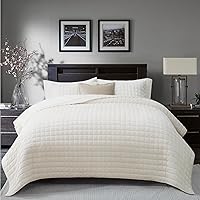
The RECYCO cream white set is a king or California king quilt set with a 108 x 96 in velvet quilt and 2 pillow shams measuring 20 x 36 in. Its geometric channel stitching and polyester material make it useful as a finished textile reference when comparing surface texture and seam direction.
The RECYCO mocha brown set has the same 108 x 96 in king or California king quilt size and includes 2 pillow shams. Its geometric pattern and mocha brown color give you another finished example for considering texture, color, and stitched lines.
How do you press stretchy fabric?
Press stretchy fabric with light pressure and avoid dragging the iron across the surface. Lift and place the iron instead of pushing the fabric out of shape.
Use the heat and steam settings that suit the fiber, and test on a hidden scrap first. Some fabrics can flatten, shine, or change shape when exposed to too much heat.
Press seams in the direction required by the pattern. A pressing cloth can add a layer between the iron and the fabric when the surface is delicate or prone to shine.
When a project includes quilt binding, follow How to Sew Binding on a Quilt? for the finishing sequence. If the project uses a nylon layer, compare sewing ripstop nylon and how to quilt nylon fabric before pressing or stitching.
How do you sew curves in stretchy fabric?
Sew curves slowly and keep the seam allowance flat as you turn the fabric. Shorter stitches can give you more control, but test the curve on a scrap first.
Clip or notch the seam allowance only when the pattern and fabric allow it. Avoid cutting into the stitching line, and use enough clips to prevent the edge from spreading.
Turn the handwheel near tight curves if the fabric starts to bunch. For a curved quilting project, see How to Sew Curves When Quilting? before starting the final seam.
Can you use a pintuck foot on stretchy fabric?
Use a pintuck foot only after testing it on a scrap and confirming that the fabric feeds evenly. Pintucks add shape, so the fabric may need extra support to avoid ripples.
Compare the foot instructions with your machine and needle setup. The correct approach depends on the foot, stitch, fabric thickness, and spacing you want.
For more detail, read how to use a pintuck foot on a sewing machine. Keep the test piece because it shows the actual spacing and tension before you sew the project.
What should you check before sewing the final seam?
Check the needle, stitch, tension, seam allowance, and fabric stretch on a test piece. This small sample can reveal problems before they affect the finished project.
Stretch the sample lightly, wash it only if the finished item will be washed, and inspect the seam afterward. Look for broken stitches, holes, ripples, or fabric distortion.
Choose your settings based on the fabric's behavior, not only its label. A stable knit may need less adjustment than a loose, slippery, or highly elastic material.
For the simplest workflow, cut without stretching, support the fabric, sew with a flexible stitch, and press with light pressure.
How do you sew stretchy fabric successfully?
Pick the needle and stitch that let the seam move, then keep your hands from stretching the fabric during sewing. Test every important setting on scraps and correct waviness before moving to the final piece.
Choose the June Tailor pattern when you want a 48 x 15 in table runner project with printed cotton/poly batting and piece-by-number construction. Choose either RECYCO set when you need a finished velvet quilt reference for geometric channel stitching, with cream white or mocha brown as the color choice.
Once your sample seam stays flat and flexible, continue in short sections and check the fabric often. That method is also useful when you need to sew stretch fabric alongside sheer, elastic, velvet, or nylon materials.
Frequently asked questions
What stitch should you use to sew stretchy fabric?
Use a narrow zigzag or another flexible stitch that can move with the fabric. Test stitch width and length on a scrap first, then adjust the tension and presser-foot pressure if your machine allows it.
A straight stitch can work on stable stretch fabric, but it may break when the seam is pulled.
How do you stop stretchy fabric from stretching while sewing?
Support the fabric on the table, guide it gently, and let the feed dogs move it instead of pulling from behind. Use clips or pins suited to the fabric, and sew slowly over seams.
A stabilizing layer can help on difficult areas, but test it first so the fabric still moves naturally.
Do you need a special needle for stretchy fabric?
A stretch or ballpoint needle is usually a useful starting point because its rounded tip is designed for knit fabrics. Choose the needle size for the fabric weight, replace a bent or dull needle, and sew a test seam before working on the final piece.