How to Sew Chair Covers
To sew chair covers, measure the seat, back, and legs, add seam and elastic allowances, and sew a fitted or loose cover to those exact numbers. You will get a cleaner fit if you test the pattern in cheap fabric first and adjust before you cut your good fabric.
On this page (11 sections)
- How do you measure a chair before you cut fabric?
- What fabric works best for sewing chair covers?
- How do you choose between fitted and loose chair covers?
- How do you make a pattern for a fitted chair cover?
- How do you sew a fitted chair cover step by step?
- How do you sew a loose chair cover so it hangs evenly?
- What quilting techniques help a chair cover look finished?
- How do you add ties, sashes, or elastic for a secure fit?
- How do you test the fit before you finish the cover?
- How do you care for finished chair covers?
- Which chair cover style should you sew first?
To sew chair covers, measure the seat, back, and legs, add seam and elastic allowances, and sew to those exact numbers. Test the pattern in cheap fabric first and adjust before you cut your good fabric.
The steps are the same for dining, folding, or office chairs. The main choice is style, since a fitted cover hugs the chair and a loose cover drapes over it.
How do you measure a chair before you cut fabric?
Measure every part the cover will touch, then write each number down before you buy fabric. Chairs that look alike often have different seat heights and back shapes.
Measure seat width side to side, seat depth from front edge to back rest, and back height from seat to top rail.
Measure front and back leg heights separately, since back legs may angle outward. Also measure cushion thickness, as padding can make a cover too tight.
Add seam allowance, usually 1/2 in on each side. Add length for a hem and extra width for elastic.
What fabric works best for sewing chair covers?
Choose a woven fabric with enough body to hold its shape on the chair. Medium to heavy cotton duck, canvas, linen blends, and upholstery fabric suit most home projects.
Cotton duck is easy to sew, wash, and press. Linen blends drape nicely but wrinkle more than canvas, so press before and after sewing.
Upholstery fabric is heavier and resists daily wear, though it can be harder to pin. Avoid slippery satin or light polyester for a first cover, as they slide.
How do you choose between fitted and loose chair covers?
Pick a fitted cover for a tailored look and a loose cover for a simpler make. Fitted suits dining chairs used daily and works better for folding chairs, as it stays on when folding.
A fitted cover follows seat and back closely and may use elastic, ties, or a shaped seat panel. A loose cover hangs like a slipcover, hides more of the chair, and forgives small measurement errors.
It needs enough length to hang past the seat and down the sides, but it can pool on the floor if too long. Measure the decorative back edge carefully for even drape.
How do you make a pattern for a fitted chair cover?
Draft the pattern from your measurements on muslin before you cut good fabric. This catches shape problems while mistakes are still cheap.
Draw the seat panel from seat width and depth plus allowances. Draw the back panel from back width and height plus allowances.
Trace a curved back onto muslin and pin it to the chair. Label pieces, sew the test, check the fit, and fix pulls or gaps before cutting final fabric.
How do you sew a fitted chair cover step by step?
Sew the seat, back, and side panels together, then add elastic or ties.
Cut final pieces from the corrected pattern, press them flat, and sew the back panel to the seat panel. Pin corners and attach side panels slowly.
Our guide on how to sew elastic shows how to feed elastic through a casing. Turn the cover out and check it on the chair before adding elastic, ties, or a sash.
How do you sew a loose chair cover so it hangs evenly?
Cut two large panels for the seat and back, then add length so fabric drapes past the seat on all sides. Loose covers rely on even length more than exact fit.
For the back panel, measure from the top of the back to the floor. Add hem allowance at the bottom and seam allowance at the top.
For the seat panel, measure the seat depth plus the front drop, reaching at least to the seat frame. Sew the seat to the back, press, and check the hang before finishing the sides.
Leave the sides open or add ties at the seat, then finish the bottom with a narrow folded hem.
What quilting techniques help a chair cover look finished?
Quilting adds texture and body, but it can change the fit, so test it on the muslin first. A light quilted layer suits the seat panel where wear is highest.
Layer seat fabric, batting, and lining, then stitch a simple grid or diagonal lines spaced wide enough to keep the seat flexible. Bind the seat panel edges if the back will show.
Our guide on how to sew binding on a quilt explains how to finish an edge with a neat fold. Our guide on how to sew curves when quilting shows how to ease curved seams without puckers.
Who should try a quilt-as-you-go pattern?
Choose a quilt-as-you-go pattern if you want piece-by-number construction that builds a quilted surface as you sew. The June Tailor Morning Blend pattern prints the design on batting, so each seam adds structure as you go.
The finished project measures 48 in by 15 in, which suits a table runner rather than a full chair cover. You can still use the same quilt-as-you-go method on a seat panel if you scale the pieces to your chair measurements.
The printed batting includes instructions, and the fabric is not included. That means you can match the pattern to your chair cover fabric and lining.
How does velvet change the look of a chair cover?
Velvet gives a chair cover a soft sheen and a plush surface that reads as formal. It works best for dining chairs in a room where you want more texture and less visible weave.
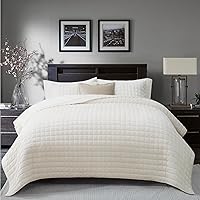
The RECYCO set in cream white includes one velvet quilt at 108 in by 96 in and two pillow shams at 20 in by 36 in. The channel box stitching creates a raised geometric pattern that holds the fill in place.
Velvet can show marks from hands and seat pressure. A fitted velvet cover may need a lining to keep it from slipping on a smooth seat.
How do you pick a velvet tone for dining chairs?
Pick the tone based on the light in the room and the finish of the chair frame. A dark velvet can look rich, while a light velvet can brighten a dark wood frame.
The RECYCO set in mocha brown also includes one velvet quilt at 108 in by 96 in and two pillow shams at 20 in by 36 in. The warm brown tone pairs well with wood frames and brass or dark metal accents.
For a chair cover, cut a small swatch and place it on the chair in daylight and at night. Velvet changes shade with light and angle, so the swatch test shows the real color better than a screen image.
How do you add ties, sashes, or elastic for a secure fit?
Add ties or elastic where the cover meets the seat frame, because that is where it moves most. A sash adds decoration, but ties do more holding work.
Cut ties from matching fabric and sew them to the underside of the seat edge to tie below the frame. For a sash, cut a long strip to wrap the chair back and tie at the front or side.
Elastic suits a fitted cover with a straight seat edge, so sew a casing, run elastic through, and join the ends flat. If you use sewing curtains for beginners as practice, the same casing method applies.
How do you test the fit before you finish the cover?
Put the cover on the chair after each major seam and check the front, back, and sides. Small fixes then save you from redoing a finished cover.
Check the back panel sits at the top rail without pulling down. If it pulls, add length or ease the seam.
Check the seat lies flat without bubbles, which often mean the seat panel is too wide or side panels pull to one side.
Check the cover clears the legs when pushing the chair in and out. If it catches, shorten side panels or open a small corner vent.
Sit and stand again. A good fit stays in place without riding up or twisting.
How do you care for finished chair covers?
Wash the cover according to the fabric label, then check the fit after it dries. Some fabrics shrink or stretch, which can affect the seat edge.
Press while slightly damp if it wrinkles. Store spare covers folded dry and label seasonal sets with the chair name.
Our guide on sewing patterns for storage bins shows how to make a labeled bin. How to sew a bag also gives a pattern you can size for folded covers.
Which chair cover style should you sew first?
Sew a loose cover first if you are new, and sew a fitted cover once your muslin test fits well. Loose teaches measuring, hemming, and drape without pressure of a tight fit.
Choose cotton duck or canvas for a first fitted cover, as it is stable and easy to press. Choose linen blend for a loose cover for a softer hang.
Add quilting only after the plain cover fits, as it adds body and can stiffen curves and corners.
Finish with ties or elastic, test on the chair, and wash once before deciding on adjustment.
Frequently asked questions
How much fabric do I need for a chair cover?
It depends on the chair size and style, so measure the seat width, seat depth, back height, and leg height, then add seam allowances and hem room. A fitted cover usually needs less fabric than a loose drop cover, and a muslin test will show if your estimate is short or too large.
What is the best fabric for sewing chair covers?
A sturdy woven fabric with some body works well, because it holds its shape and resists daily wear. Cotton duck, canvas, linen blends, and upholstery-weight fabric are common choices, while very slippery or very stretchy fabric can make fitting harder for beginners.
Should a chair cover be fitted or loose?
Choose a fitted cover if you want a neat, tailored look that stays in place, and choose a loose cover if you want a faster project with more drape. Fitted covers need more precise measuring, while loose covers need enough length to hang evenly on all sides.
How do I keep a chair cover from slipping?
A fitted shape, elastic at the seat edge, and ties or a sash can all help a cover stay in place. Add grip by choosing a fabric with some texture, and check the fit after washing, because some fabrics shrink or stretch after the first wash.