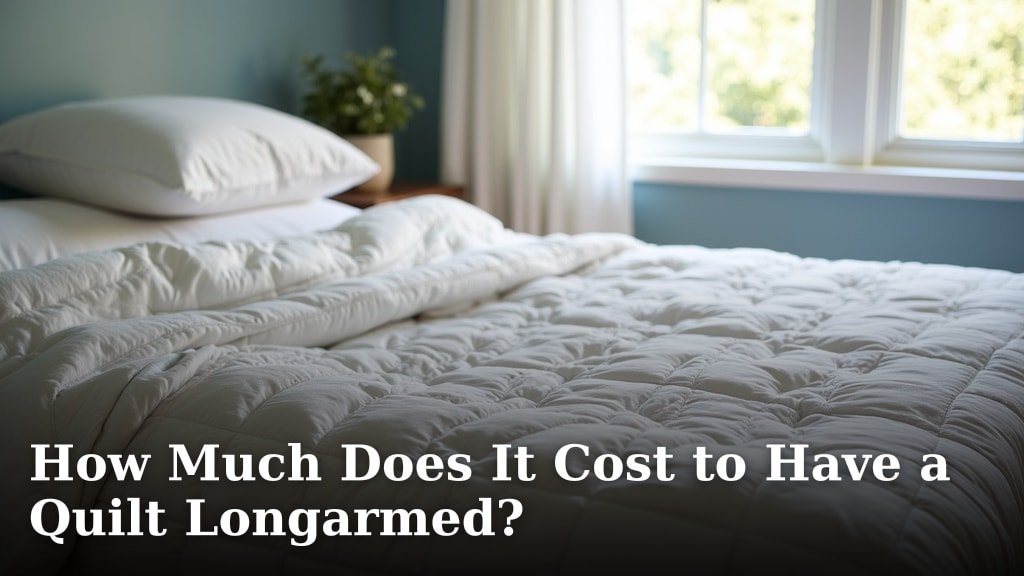
On average, the cost to have a quilt longarmed ranges from $0.02 to $0.05 per square inch. This usually covers the quilting itself, but not always thread or batting. Your final price depends on the quilt’s size and the design’s complexity.
You might be wondering if it’s worth the expense to hire someone for this specialized service. Professional longarming can give your quilt a beautiful, consistent finish that’s hard to achieve at home. It’s a great option for those who want a polished look without buying expensive equipment.
TL;DR:
- Quilting costs usually fall between $0.02 and $0.05 per square inch.
- The total price depends on your quilt’s dimensions.
- Intricate designs can increase the overall cost.
- Thread and batting are often extra charges.
- Professional longarming offers a high-quality finish.
Let’s break down all the factors that influence longarming prices, helping you understand where your money goes and what to expect.
Understanding Longarm Quilting Costs
The core price for longarm quilting usually depends on the size of your quilt and the design’s detail. Most longarmers charge by the square inch. This system makes pricing fair for everyone. A bigger quilt with a simple design might cost less than a smaller one with very complex patterns. We’ve found this pricing model to be quite standard across the industry.
Calculating Your Quilt’s Square Inches
First, you need to know your quilt’s dimensions. You’ll measure the length and width in inches. Then, you simply multiply these two numbers. For example, a quilt that is 60 inches wide and 80 inches long has 4,800 square inches (60 x 80 = 4,800).
Once you have this number, you can easily apply the longarmer’s per-square-inch rate. If they charge $0.03 per square inch, that 4,800-square-inch quilt would cost $144 for the quilting alone (4,800 x $0.03 = $144). It’s a straightforward way to get a baseline cost.
The Impact of Quilting Designs
The type of quilting design you choose plays a big role in the final price. Think of it like painting a house. A single color is quick, but adding murals takes more time and skill. This is very similar to how quilting patterns affect pricing.
Edge-to-Edge (E2E) Designs
Edge-to-edge designs are the most budget-friendly option. This is because the design repeats consistently across the entire quilt surface. The longarm machine does much of the work here. It’s like a continuous flow of quilting. This method is efficient and beautiful. It gives your quilt a unified look without breaking the bank.
- Designs are usually repeated from one edge to the other.
- Offers a consistent texture over the whole quilt.
- Generally the lowest cost per square inch.
- Perfect for showing off your piecing or fabric choices.
Custom Quilting
Custom quilting involves specific designs in specific areas of your quilt. It means outlining individual blocks, quilting unique motifs in borders, or even doing detailed background fills. This type of work is much more labor-intensive. It requires the longarmer to stop, start, and often manipulate the quilt by hand. Because of this, custom quilting comes with a higher price tag. Many quilters love the artistic touch custom quilting adds. It truly makes each quilt one-of-a-kind.
- Each section of the quilt receives a tailored design.
- Requires more time, skill, and attention from the longarmer.
- Higher cost per square inch due to increased complexity.
- Allows for unique artistry and highlights specific quilt elements.
Semi-Custom Quilting
Sometimes, you want a little more than edge-to-edge but don’t need full custom work. That’s where semi-custom comes in. This might involve an edge-to-edge design over most of the quilt but with custom work in a border or a special block. It’s a nice middle ground. It gives you some of the custom flair without the full custom price. We find this option to be very popular for those looking for a balanced approach.
Additional Costs to Consider
Beyond the basic quilting charge, several other items can add to your final bill. It’s smart to ask about these upfront. That way, you won’t have any surprises when you pick up your beautiful finished quilt. Many longarmers provide a detailed breakdown of costs, which is very helpful.
Thread Charges
Most longarmers charge extra for thread. The amount of thread needed depends on the quilt’s size and the density of the quilting design. Some longarmers charge a flat fee, while others charge by the bobbin or even by the cone. The type of thread also matters. Special threads, like variegated or metallic, might cost more. Always discuss thread choices and their impact on price with your longarmer.
Here’s what we found about common thread pricing:
- Flat fee: A set price, often around $10-$25, for any quilt size.
- Per bobbin: You pay for each bobbin of thread used, usually $3-$5 each.
- Per cone: If a large amount is needed, you might pay for the cost of the entire cone.
Batting Costs
Batting is the fluffy layer in the middle of your quilt. It adds warmth and dimension. You can supply your own batting, or your longarmer can provide it. If they provide it, you’ll pay for it by the yard. The cost varies based on the type of batting (cotton, poly, wool, blend) and its size. Providing your own can sometimes save you money, but make sure it’s good quality. Many longarmers prefer you use specific types of batting to ensure the best results.
When selecting batting, consider:
- Fiber content: Cotton is popular, wool is very warm, poly is lightweight.
- Loft: How thick or thin it is. This impacts the quilt’s feel.
- Shrinkage: Some battings shrink more than others when washed.
Preparation Fees
Longarmers often charge for extra preparation if your quilt top isn’t ready to go. This can include pressing, trimming stray threads, or repairing wavy borders. These fees are usually hourly. For example, if your quilt top is severely wrinkled, the longarmer might spend an hour pressing it, and you’d pay their hourly rate for that time. To avoid these fees, make sure your quilt top is Learning how to piece a quilt top correctly can help you avoid these extra preparation fees.pressed flat, square, and thread-free before dropping it off.
Here’s a quick checklist to help avoid prep fees:
- Press your quilt top smoothly.
- Trim all loose threads, especially dark ones on light fabric.
- Make sure your quilt top lies flat and isn’t wavy.
- Square up your backing fabric so it’s larger than your top.
- Ensure all seams are securely stitched.
Backing Fabric and Wide Backs
Just like batting, you can buy backing fabric from your longarmer or bring your own. Many longarmers sell “wide backs.” These are fabrics that are 108 inches wide or more. Using a wide back means you don’t have to piece your backing fabric, which saves you time and often results in a smoother finish. If you do piece your backing, ensure your seams are strong and pressed open. The backing needs to be at least 4-6 inches larger than your quilt top on all sides (total of 8-12 inches larger in width and length).
Understanding the Value of Professional Longarming
You might be asking, “Is it really worth the cost?” We believe it is. Professional longarming transforms your quilt from a collection of fabric pieces into a cohesive, finished work of art. The quality of stitching, the even tension, and the beautiful designs are hard to replicate at home unless you have a dedicated machine and years of practice. Many quilters find that the time saved and the professional finish are well worth the investment.
It’s like getting your car detailed. You could wash it yourself, but a professional detailer gives it a showroom shine. Longarmers have invested in expensive equipment and have honed their skills. They can create designs that would be very difficult or impossible on a domestic machine. This expertise saves you hours, sometimes even days, of work. It also ensures your quilt will last for generations (National Quilting Association).
Estimating Your Longarming Budget
Let’s put it all together. Here’s a hypothetical example to help you budget. Imagine you have a queen-size quilt, which is often around 90 inches by 100 inches.
| Item | Calculation Example | Estimated Cost |
|---|---|---|
| Quilting (E2E) | 90″ x 100″ = 9,000 sq in @ $0.025/sq in | $225.00 |
| Thread Fee | Flat rate for average quilt | $15.00 |
| Batting | 3 yards of 96″ wide cotton @ $12/yard | $36.00 |
| Backing Fabric | (If purchased from longarmer) 3 yards of wide back @ $18/yard | $54.00 |
| Preparation Fees | (If needed) 30 minutes of pressing @ $30/hour | $15.00 |
| Total Estimate | Sum of all items | $345.00 – $375.00 (if backing is purchased) |
This table gives you a general idea. Your actual costs will vary. Always get a specific quote from your chosen longarmer. Don’t be afraid to ask questions. A good longarmer will be happy to explain their pricing and help you understand your options.
Conclusion
You now have a clearer picture of longarm quilting costs. Remember, the price depends mainly on your quilt’s size and design complexity. Don’t forget to factor in extras like thread and batting. While it’s an investment, professional longarming gives your quilt a beautiful, lasting finish. It saves you time and ensures a quality outcome that will be cherished for years.
We recommend always getting a detailed quote. Chat with your longarmer about your specific needs. This helps avoid surprises and ensures you get the perfect finish for your cherished quilt.
Frequently Asked Questions
Is it cheaper to longarm myself or send it out?
Sending your quilt out is almost always cheaper than buying your own longarm machine. These machines are a significant investment, often costing thousands of dollars. You also need space and time to learn how to use it.
How do I prepare my quilt for a longarmer?
Ensure your quilt top is clean, pressed flat, and free of loose threads. Square up your backing fabric, and make sure it’s at least 4-6 inches larger than your quilt top on all sides. This careful preparation helps avoid extra fees.
Can I choose my own thread color?
Absolutely! Most longarmers encourage you to choose your thread color. They can also offer suggestions if you’re unsure. Discuss your vision with them to ensure the thread complements your quilt perfectly.
How long does longarming usually take?
The turnaround time varies greatly by longarmer and their current workload. It can range from a few weeks to several months. Always ask for an estimated completion date when you drop off your quilt.
What if my quilt top isn’t perfectly square?
Don’t worry too much! Many quilt tops aren’t perfectly square. A skilled longarmer can often work with minor imperfections. However, severely wavy borders or out-of-square tops might incur preparation fees.
