
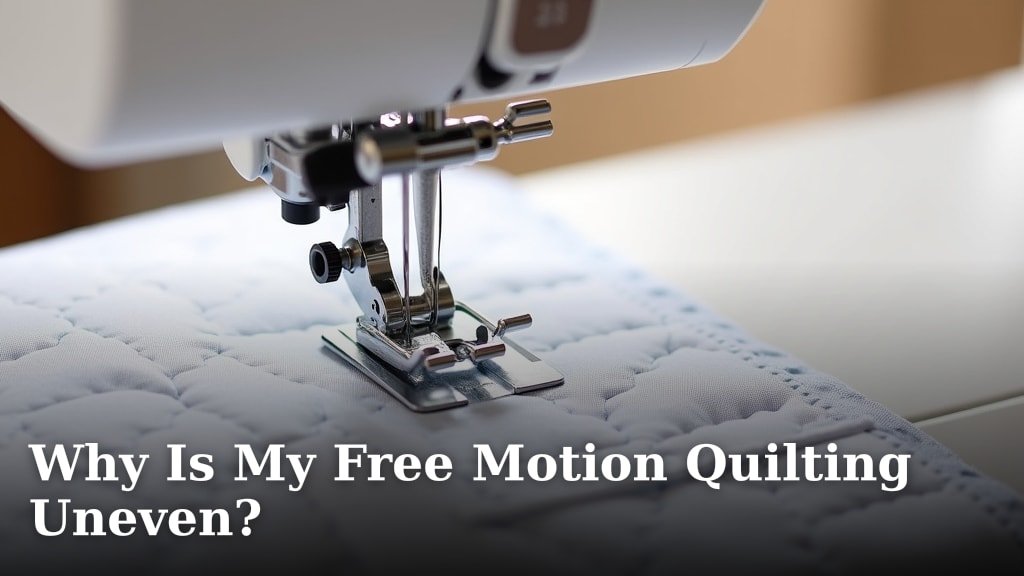
Your free motion quilting is uneven primarily because of a mismatch in speed between your hands and your sewing machine. This often leads to inconsistent stitch length and wobbly lines. You are not alone in facing this common quilting challenge.
Many quilters experience uneven stitches when starting out. It’s a sign you are still learning to coordinate your movements. Factors like thread tension, needle choice, and even your posture also play a big role in stitch quality.
- Uneven quilting often comes from mismatched hand and machine speed.
- Inconsistent stitch length is a key indicator.
- Several factors beyond speed, like tension and posture, also affect your stitches.
- It’s a common issue for beginners, and it gets better with practice.
Let’s dive into the common reasons why your free motion quilting might be uneven. We’ll show you how to get those stitches looking much smoother.
Unraveling Uneven Stitches in Free Motion Quilting
You’re ready to create beautiful quilts. But sometimes, those stitches just don’t cooperate. Let’s look at the common culprits behind your uneven free motion quilting stitches. We’ll help you get to the bottom of it.
Speed Control: Your Hands Versus Your Machine
One of the biggest reasons for uneven stitches is a mismatch in speed. Think of it like dancing. If your partner moves too fast or too slow, you’ll be out of sync. It’s the same with your hands and your sewing machine.
Machine Speed Considerations
Your sewing machine’s speed impacts stitch length. If the machine goes too fast while your hands move slowly, stitches become tiny and bunched up. Move your hands too fast and the machine is slow, and you’ll get long, loose stitches. Many experts recommend a medium, consistent speed for your machine (Quilting Daily). This gives you the best chance to match it with your hand movements.
Hand Speed Coordination
Your hands are guiding the fabric. They need to move at a steady, fluid pace. Jerky or inconsistent hand movements lead directly to uneven stitches. Practice moving your hands smoothly without thread in the machine first. This helps build muscle memory.
Tension Troubles: Finding the Sweet Spot
Thread tension is a delicate balance. It’s like tuning a guitar string – too tight or too loose, and it won’t sound right. The same is true for your stitches. Proper tension is key for balanced stitches.
Your sewing machine has both top tension and bobbin tension. Both need to be set correctly for free motion quilting. Often, a slightly looser top tension is needed compared to regular sewing. You want the top thread and bobbin thread to meet perfectly in the middle of your fabric layers.
| Tension Issue | Appearance on Fabric | Possible Fix |
|---|---|---|
| Top tension too tight | Bobbin thread shows on top | Loosen top tension dial slightly |
| Top tension too loose | Top thread shows on bottom | Tighten top tension dial slightly |
| Bobbin tension too loose | Loopy stitches on top | Tighten bobbin screw a tiny bit |
| Bobbin tension too tight | Loopy stitches on bottom | Loosen bobbin screw a tiny bit |
Remember, make very small adjustments. Change one thing at a time and test it on a scrap sandwich. This lets you see the impact of each change.
Needle and Thread: The Right Tools for the Job
Believe it or not, your needle and thread choices make a big difference. Using the wrong type can lead to frustrating uneven stitches. It’s like trying to cut steak with a butter knife – not ideal.
- Needle Type: A sharp needle (like a quilting needle or microtex) pierces fabric cleanly. A dull or bent needle can skip stitches or pull threads, creating an uneven look.
- Needle Size: Match your needle size to your thread weight. A larger needle is needed for thicker thread. A smaller needle works well with finer threads. Using a too-small needle with thick thread can cause shredding or skipped stitches.
- Thread Quality: High-quality thread has consistent thickness and strength. Cheap, uneven thread can cause tension problems and break easily. We found that polyester or cotton threads designed for quilting perform best.
Posture and Ergonomics: Your Body’s Role
You might not think your body position affects your stitches, but it does. Poor posture can cause fatigue and strain. This makes it harder to maintain those smooth, consistent movements. Think of an athlete – good form is everything.
Sit comfortably at your machine. Your feet should be flat on the floor. Your arms and shoulders should be relaxed. Try not to hunch over. A good chair and a well-lit work area are also helpful. When you are comfortable, you can focus better on your quilting.
Fabric Preparation: A Smooth Canvas
A well-prepared quilt sandwich is essential for even stitches. It’s like painting on a smooth canvas versus a lumpy one. Any lumps or wrinkles will show up in your quilting.
Make sure your batting is smooth and centered. Pin or baste your layers well. Use plenty of pins or basting spray. You want the fabric to glide smoothly under the needle. Any shifting layers can cause puckering and uneven stitch length.
Practice Makes Progress: The Quilter’s Journey
No one starts as an expert. Free motion quilting is a skill that takes time to develop. Think of it like learning to ride a bike. You fall a few times, but you get better with practice. Don’t be too hard on yourself!
Spend time doodling with your machine. Use scrap fabric sandwiches. Draw designs on paper first, then try to replicate them with your needle. Focus on consistency over perfection. Over time, your hands and your machine will learn to work together better.
A Quick Checklist for Better Stitches
- Is your machine speed set to a comfortable medium?
- Are your hands guiding the fabric smoothly and consistently?
- Have you tested your top and bobbin tension on a scrap?
- Is your needle sharp and the correct size for your thread?
- Are you sitting comfortably with good posture?
- Is your quilt sandwich basted securely and wrinkle-free?
By checking these points, you can systematically troubleshoot why your free motion quilting might be uneven. Every small adjustment brings you closer to those beautiful, consistent stitches you envision.
Conclusion
Achieving even free motion quilting boils down to coordination and attention to detail. Remember, those uneven stitches are usually a sign that your hands and machine aren’t quite in sync yet. By focusing on consistent speed, perfecting your tension, choosing the right tools, and maintaining good posture, you’ll see a big difference.
Every quilter faces this challenge, and it’s completely solvable with patience. Don’t be afraid to experiment with your settings and practice regularly. Your journey to smooth, beautiful stitches is a process, and with these tips, you’re well on your way to mastering it.
Frequently Asked Questions
How do I stop my free motion quilting from looking wobbly?
Wobbly lines often come from jerky hand movements or an inconsistent machine speed. Focus on keeping your hands relaxed and moving them in smooth, continuous motions. Try practicing simple shapes without thread first to build muscle memory for smoother lines.
Should my feed dogs be up or down for free motion quilting?
For free motion quilting, your feed dogs should always be in the “down” position. This allows you to move the fabric freely in any direction without the machine trying to pull it forward. Lowering them gives you full control over your stitch direction and length.
Why are my free motion stitches sometimes long and sometimes short?
This inconsistency usually points back to a speed mismatch. If your hands move too fast relative to the machine, stitches get long. If your hands move too slowly, stitches become short and crowded. Aim for a steady, medium machine speed and match your hand movement to it.
Can a dirty sewing machine cause uneven free motion quilting?
Yes, a dirty machine can definitely contribute to uneven stitches. Lint and thread buildup around the bobbin case or under the needle plate can interfere with thread flow and tension. Regularly cleaning your machine, especially the bobbin area, can prevent these issues.
What is the best type of batting to prevent uneven stitches?
While batting doesn’t directly cause uneven stitches, a good quality, stable batting can make quilting easier. We found that cotton or cotton-blend battings tend to hold their shape well and are less likely to shift or stretch unevenly as you quilt. This provides a more stable surface for consistent stitching.
