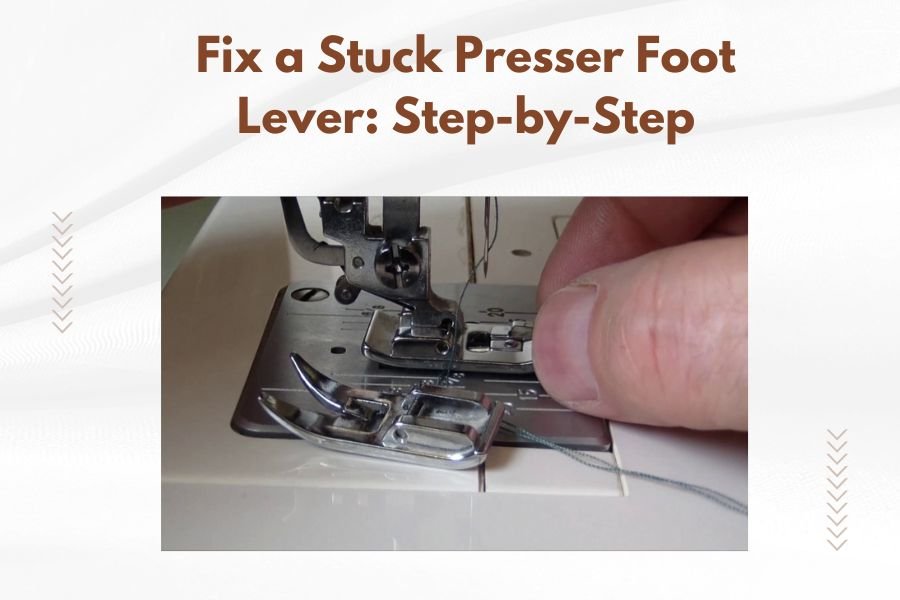
Why Will Your Presser Foot Lever Not Stay Up?
A presser foot lever that won't stay up may be loose, obstructed, or worn. Turn the machine off, check for thread or lint around the presser bar, and consult the manual before adjusting parts.
On this page (6 sections)
A presser foot lever that won't stay up may be loose, obstructed, or worn. Turn the machine off, check for thread or lint around the presser bar, and use your manual to decide whether the lever needs an adjustment or service.
The lever raises and lowers the presser foot, which holds fabric against the feed dogs while you sew. If fabric still will not move, see New Home fabric feeding troubleshooting.
If it drops after you lift it, troubleshoot gently and avoid forcing it.
For other common sewing machine presser foot problems, start with the machine manual and the part's movement.
Why won't the presser foot lever stay up?
A lever that drops may not be engaging its hold position, or something may be keeping the presser bar from moving freely. The cause varies by machine, so check for simple obstructions before assuming a spring or internal part has failed.
With the machine switched off, raise the lever and watch whether the presser foot rises fully. Look for thread, lint, or fabric caught near the foot and presser bar.
Don't put fingers near the needle or move internal parts while the machine is powered.
Some machines use a lever position that holds the foot up, while others may have a separate knee lifter or another mechanism. Check your manual for the correct position and whether your model is designed to latch.
What can you check safely before repair?
Start with power off, the needle area clear, and the manual open. Remove visible lint or loose thread only from areas the manual identifies as user-cleanable.
- Switch off and unplug the machine if the manual directs.
- Remove fabric and raise the needle using the handwheel if instructed.
- Check around the presser foot and bar for loose thread or lint.
- Confirm the lever is in the position shown in the manual.
- Lift and lower it gently once to see whether the foot moves freely.
Don't oil the lever or remove covers unless the manual tells you to. Oil can reach areas where it doesn't belong, and opening a machine may expose parts that need trained service.
If the lever is stuck in place instead of dropping, follow our step-by-step guide to fix a stuck presser foot lever. A stuck lever and a lever that won't stay raised are different symptoms, so don't apply force based only on the similar names.
Could the presser foot be loose?
A loose foot can affect how it sits under the presser bar, but it doesn't necessarily explain why the lever drops. If thread shreds while using a ruler foot, see ruler foot thread shredding causes.
With the power off, check whether the foot is attached as your manual describes and whether its screw or holder looks obviously loose.
If the foot itself shifts, see how to tighten a loose presser foot for the right next steps. Don't tighten a screw that your manual doesn't identify as user-adjustable.
Alison Smith's The Sewing Book covers sewing machine tools and techniques, with illustrated step-by-step sequences. It can help you revisit machine basics, but it doesn't replace the instructions for your model.
When does a lever problem need service?
Arrange service if the lever remains loose after a basic check, the presser bar won't rise, or movement feels rough or catches. A bent part, failed spring, or internal linkage issue may need repair, but you can't confirm those causes from the symptom alone.
Stop using the machine if the foot won't hold fabric securely or the needle could strike the foot. Don't keep sewing while holding the lever by hand; the fabric may shift and the needle area may become unsafe.
For an embroidery machine with a foot that locks down, use the specific presser foot locking embroidery machine fix. If your machine model is still under warranty, check its service instructions before attempting a repair.
What should you tell a repair technician?
Describe what the lever does, when it drops, and whether the presser foot moves. Include the machine make and model, any error message, and the basic checks you've already made.
Note whether the issue began after changing a foot, cleaning the machine, or moving it. Don't guess at a failed part; a clear symptom description is more useful than a diagnosis you can't verify.
All-Star Quilts of Valor collects 25 patriotic quilt patterns from quilt designers. It offers project ideas for when your machine is ready to sew again, but it won't diagnose a lever problem.
Can you prevent the lever from dropping again?
Use the lever as your machine's manual describes, and keep the presser bar area free of lint and loose thread during routine cleaning. Don't pull the lever sideways or use extra force if it resists.
Attach presser feet and accessories with the power off. If the lever starts dropping again after a repair or adjustment, stop and contact the service provider rather than repeating the adjustment.
Encyclopedia of Classic Quilt Patterns includes more than 101 projects and covers topics such as quick piecing and rotary cutting. It's a project reference for quilters, not a repair manual for a presser foot lever.
What should you do if your presser foot lever won't stay up?
If your presser foot lever won't stay up, check for visible thread or lint and confirm the lever position in your manual. If it still drops, the foot won't rise, or the movement feels rough, stop sewing and arrange service.
Choose a troubleshooting guide when the lever is stuck, and check a foot-tightening guide when the foot itself shifts. For an unresolved lever issue, give a technician the machine model and a clear description of what happens.