What Stitch Should You Use for a T-Shirt Quilt?
Use a walking-foot straight stitch for most T-shirt quilts, quilting in gentle lines through the stabilized panels, batting and backing. Keep stitching sparse enough to avoid crowding shirt graphics, and follow the batting’s spacing guidance.
On this page (9 sections)
- What quilt stitch works best for a T-shirt quilt?
- How do knit panels affect your stitch choice?
- Should you quilt in straight lines or curves?
- How do you keep quilting away from shirt graphics?
- What machine setup helps prevent puckers?
- How should you quilt a large T-shirt quilt on a home machine?
- How does batting affect quilting distance?
- Can a finished quilt’s stitch pattern inspire your design?
- How do you choose the stitch for your project?
The best stitch for a T-shirt quilt is usually a straight stitch made with a walking foot. Stabilized T-shirt panels are knit fabric, and evenly feeding the top, batting and backing helps limit shifting as you sew.
Plan quilting lines that hold the layers together without crowding the shirt graphics. Use the batting maker’s spacing guidance, and test your stitch on a layered scrap before starting the quilt.
What quilt stitch works best for a T-shirt quilt?
A straight stitch in gentle, spaced lines is the easiest choice for most T-shirt quilts. It works with simple grid layouts, avoids complicated curves, and can be placed around printed designs.
A walking foot helps feed the quilt layers at a more even rate. If you don't have one, sew slowly, support the quilt’s weight on the table, and avoid pulling from behind the presser foot.
| Stitching approach | Useful when | Watch for |
|---|---|---|
| Straight lines | You want a clear grid or simple rows | Lines can cross graphics if you don't plan them |
| Gentle curves | Your blocks have open space for flowing lines | Curves take practice to keep smooth |
| Stitch in the ditch | You want quilting along existing seams | It may leave large areas without quilting |
| Ties | Your batting permits ties and you want minimal visible stitching | Tie spacing and secure knots matter |
The batting’s instructions should set the maximum distance between quilting lines or ties. If you want a pattern that leaves large open areas, check that it still meets those requirements.
How do knit panels affect your stitch choice?
T-shirt fabric stretches more readily than woven quilting cotton, so stabilize each shirt panel before piecing. Interfacing helps the knit hold its shape while you assemble and quilt the top.
If the panels are already pieced, handle the quilt gently and avoid stretching it to fit under the machine arm. Supporting the weight reduces drag that can distort blocks or create puckers.
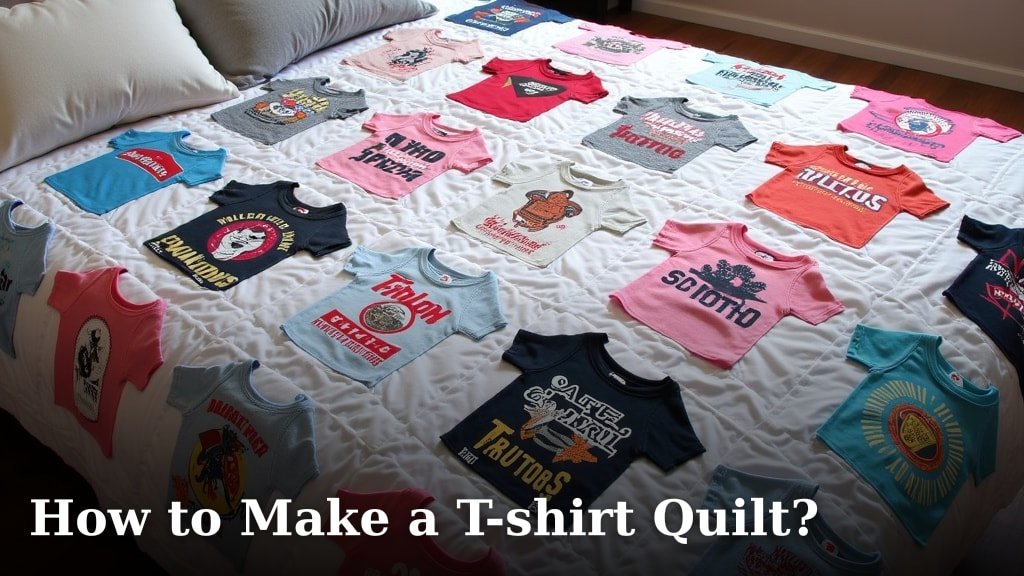
For the full preparation and assembly process, see How to Make a T-shirt Quilt?. If you're planning a keepsake project with shirts from different people or events, How to Quilt a Memory Quilt: Step-by-Step covers another type of memory quilt.
Should you quilt in straight lines or curves?
Choose straight lines for predictable spacing and curves when the quilt layout has enough open room for a flowing pattern. Both can work if the quilting keeps the layers secure and follows the batting guidance.
A simple grid can run parallel to panel seams, or across the quilt in rows. Mark a few guide lines first, then check how they fall against logos, lettering and faces.
Curves can soften a blocky layout, but they are harder to keep even across a bulky quilt. Practice the curve on a layered sample, then use it only where it won't pull attention away from a shirt design.
What quilt stitch pattern suits a T-shirt quilt?
A straight-line pattern is a reliable starting point for a T-shirt quilt. It is easier to map around different panel sizes and the graphics each shirt carries.
Try one of these layouts:
- Stitch in the ditch along some panel seams, then add lines through larger open blocks.
- Quilt a loose grid that crosses plain areas but avoids prominent designs.
- Add gentle diagonal lines if they fit the layout and stay within the batting’s spacing limit.
Stitching only in the ditch may leave broad areas without quilting. Measure the widest gaps between lines before you choose that approach.
How do you keep quilting away from shirt graphics?
Mark your quilting lines on the top before loading the quilt under the needle. Route lines through blank fabric or along panel seams when you can, especially around names, dates and large prints.
A removable fabric marker or painter’s tape can help you preview the layout. Check that your marking method is safe for the fabric, and test it on a scrap if you haven't used it before.
You don't have to avoid every graphic. A few lines across a less important area may be a reasonable trade-off if avoiding the design would leave an unsupported section.
What machine setup helps prevent puckers?
Use a fresh quilting or universal needle suited to the quilt’s layers, and thread that works with both the top and bobbin. Make a sample sandwich from similar shirt fabric, batting and backing, then adjust tension and stitch length until the stitches look balanced on both sides.
A walking foot can help manage the layers. Lower the presser foot evenly, sew at a steady pace, and pause with the needle down when you need to reposition a bulky area.
Baste the layers thoroughly before quilting. Smooth the quilt from the center outward, then pin or baste at intervals that keep the sandwich flat while you sew.
How should you quilt a large T-shirt quilt on a home machine?
Start near the center and work outward, rolling or folding the sections that aren't under the needle. This keeps much of the bulk supported and gives you space to steer the quilt.
Sew a manageable line, stop with the needle down, and rearrange the roll before continuing. Don't let a heavy section hang off the table, since its weight can tug the quilt and affect stitch quality.
For a different construction approach, How to Sew a T-Shirt Quilt Using Quilt as You Go explains how smaller quilted sections can be joined. For a strip-pieced project, see jelly roll race quilt instructions.
A [June Tailor Quilt As You Go Table] can help you practice a piece-by-number table runner with printed batting, though it is not a T-shirt quilt pattern.
How does batting affect quilting distance?
The batting determines how far apart your quilting lines can be. Check its package or maker instructions before marking the top, since the recommended distance varies by batting type and construction.
Closer lines can make the quilt feel firmer and more textured. Wider spacing can leave it softer, but only if it stays within the batting’s limits.
If you haven't chosen batting yet, read What Is the Best Batting for T-shirt Quilts? and compare its care and quilting requirements with your intended use.
Can a finished quilt’s stitch pattern inspire your design?
A finished quilt can show how channel stitching or a geometric grid looks across a surface, but bedding construction is not a direct pattern for a T-shirt quilt. Different fabrics, batting and construction methods change how a stitch behaves.
The RECYCO Channel Box Stitch Velvet Quilt Set uses a channel box pattern to secure its filling, according to the brand. Its cream white and mocha brown versions are examples of a finished geometric quilting look.
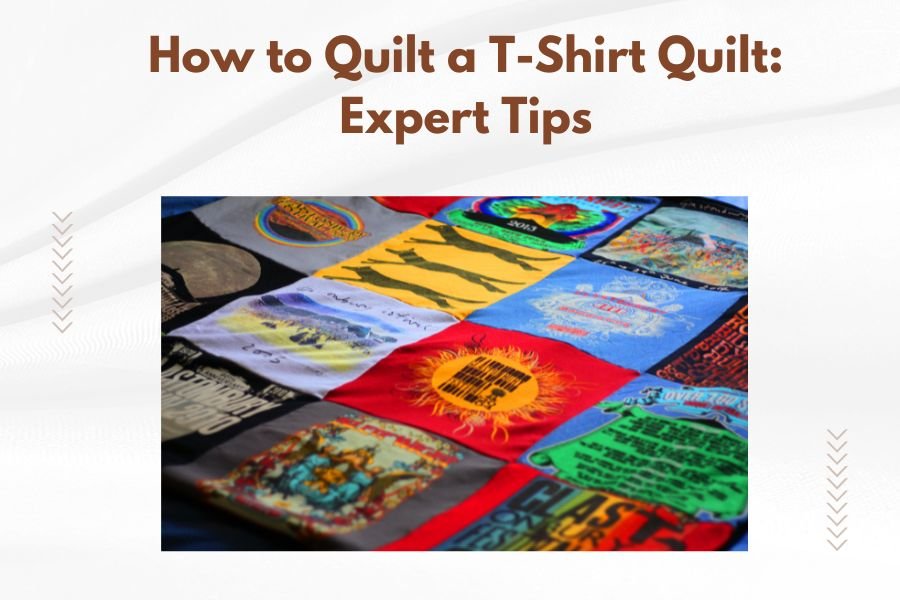
For machine options and setup considerations, see Top 7 Best Quilting Machine For T-Shirt Quilts. For a broader project walkthrough, use How to Quilt a T-Shirt Quilt: Expert Tips.
How do you choose the stitch for your project?
Choose a walking-foot straight stitch if you want an easy-to-plan pattern that works around shirt graphics. For finishing a dense straight-line design, see how to bury threads in matchstick quilting.
Choose gentle curves for open areas, and use ties only when your batting instructions allow them.
Before quilting the full top, test your layers, check the stitch on both sides, and confirm the planned spacing. If you need help with the machine choice, compare the best quilting machine for T-shirt quilts.
Frequently asked questions
What stitch is best for a T-shirt quilt?
A straight stitch with a walking foot is a practical choice for most T-shirt quilts. It helps feed the quilt layers evenly, while straight lines are easy to plan around graphics and seams.
Test on a layered scrap first, and keep the quilting within the batting maker’s spacing guidance.
Can you use a regular sewing machine to quilt a T-shirt quilt?
Yes, if the quilt fits under the machine’s arm and your machine can handle its thickness. Roll or fold the bulk so you can move the quilt without pulling it, use a walking foot if available, and begin quilting near the center to control shifting.
Should you quilt over T-shirt designs?
You can quilt over a design, but stitching may cross letters, faces or other printed details. Plan lines through open areas where possible, or use a sparse pattern that secures the layers while keeping the main graphics clear.
How far apart should quilting lines be on a T-shirt quilt?
Follow the maximum quilting distance printed on the batting package, since batting types differ. Draw a test layout over the quilt top and check that the planned lines stay within that limit, including across larger open blocks.
Can you tie a T-shirt quilt instead of quilting it?
Tying can secure layers at spaced points, but it may not suit every batting or finished quilt. Check the batting instructions for permitted methods and spacing, then choose ties that won't obscure important shirt graphics.