What Needle Should I Use for Silk?
On this page (7 sections)
When sewing silk, you should use a fine, sharp needle. A size 8 or 9 universal needle is usually best. This prevents snags and skipped stitches in the delicate fabric. Avoid dull or thick needles at all costs.
Choosing the right needle is key to a beautiful finish. Silk is a fine, slippery material. It requires a needle that glides through without causing damage. Using the correct needle will make your silk sewing project much easier and more enjoyable.
- Use fine, sharp needles for silk.
- Sizes 8 or 9 universal needles are good choices.
- This prevents snags and keeps stitches even.
- A sharp needle glides through fabric easily.
Let’s walk through exactly what kind of needle will make your silk projects shine!
“`htmlChoosing the Right Needle for Your Silk Projects
Sewing with silk can feel like a dream. The fabric drapes beautifully. It has a lovely sheen. But it can also be a bit tricky. The wrong needle can cause a lot of frustration. You might get snags, skipped stitches, or even tears. That’s why picking the perfect needle is so important.
You want a needle that is fine and sharp. This is the golden rule for silk. Think of it like using a sharp knife for delicate herbs. A dull knife will just mash them. A sharp knife slices cleanly. The same applies to silk fabric. A sharp needle pierces the fibers without damaging them.
So, what’s the magic size? Many sewers find that a size 8 or 9 universal needle works wonders. These needles are thin enough for silk. They’re also strong enough to handle most sewing machines. They offer a great balance for this delicate material. Using these can make your silk sewing projects much smoother. You’ll end up with a much more professional look.
Understanding Needle Types and Their Role
Needles might seem simple, but they come in many varieties. Each type is designed for a specific purpose. For silk, we need a needle that respects its fine nature. We’re not working with heavy denim here. We’re working with something much more refined.
Universal Needles: The All-Rounder
Universal needles are often the go-to for many fabrics. They have a slightly rounded point. This makes them versatile. They work well on both wovens and knits. For silk, a universal needle in the right size is a solid choice. It’s like having a reliable friend in your sewing box. They offer good performance without being too specialized.
We found that a size 8 universal needle is often ideal for lighter silks. Think charmeuse or chiffon. A size 9 universal needle can handle slightly heavier silks. This includes dupioni or some satins. Always test on a scrap piece of your silk first. This ensures you get the best stitch quality. You want a clean, even line of stitching.
Specialty Needles for Silk: When to Consider Them
While universal needles are great, sometimes a specialty needle can offer even better results. These needles are designed with silk’s specific needs in mind. They often have a sharper point or a special coating.
Microtex Needles: The Sharp Choice
Microtex needles are exceptionally sharp. They are also very fine. Their sharp point is designed to pierce tightly woven fabrics. This includes silk. They go through the fibers cleanly. This helps prevent runs or snags. Many sewers swear by microtex needles for silk. They create a very precise stitch. You might find these especially useful for very fine silks like georgette. They really deliver a polished finish.
When using microtex needles, you’ll want to stick to the smaller sizes. A size 60/8 or 70/10 is typically best. These are extremely fine. They are perfect for delicate fabrics. They minimize any potential damage to the silk threads. Research suggests these needles create a very neat stitch line. This is essential for beautiful garments.
Sharps Needles: Another Fine Option
Sharps needles are similar to microtex needles. They also boast a very fine point. They are designed for piecing and fine fabrics. Think of them as another excellent option for silk. They pierce the fabric smoothly. They reduce the risk of pulling threads. This is key when working with slippery silk. You want your seams to look as good as the outside of your garment.
Needles to AVOID for Silk
Just as important as knowing what to use is knowing what not to use. Certain needles can cause havoc with silk. They can ruin your project before you even finish. It’s worth being aware of these pitfalls.
Ballpoint or Jersey Needles: A No-Go
Ballpoint needles are designed to push fabric fibers apart. This is great for knits. It prevents snags in stretchy materials. However, for silk, this is the opposite of what you want. The rounded point can catch and pull the fine silk fibers. This leads to runs and visible damage. You will also likely get skipped stitches. These needles are just not made for the precise nature of silk. Save them for your t-shirts and leggings.
Heavy-Duty or Universal Needles in Large Sizes
Even universal needles can be problematic if they are too large. Needles size 14 (90/14) or higher are generally too thick for most silks. A thick needle creates a larger hole. This can weaken the silk fabric. It can also leave a visible mark. Always opt for the finer end of the needle spectrum when sewing silk. You’ll be much happier with the results. Think of it as choosing a delicate tool for a delicate job.
Matching Needles to Silk Types
Not all silks are created equal. Some are very fine and airy. Others have a bit more body. The type of silk you’re using can influence your needle choice. It’s all about finding the best match.
Here’s a little guide to help you:
| Type of Silk | Recommended Needle Size & Type | Why it Works |
|---|---|---|
| Chiffon, Georgette, Habotai (Very Lightweight) | 60/8 or 70/10 Microtex or Sharps | Extremely fine point to prevent snags and runs. |
| Charmeuse, Crepe de Chine, Silk Satin (Medium Weight) | 70/10 or 80/12 Universal or Microtex | Fine point handles slipperiness and prevents skipped stitches. |
| Silk Dupioni, Silk Noil (Slightly Heavier/Textured) | 80/12 Universal or Microtex | A bit more strength for textured weaves, still fine enough for clean stitches. |
Remember, this is a guideline. Your machine and your thread also play a role. Always perform a test stitch on a double layer of your fabric. This is the best way to be sure. You can adjust your stitch length or tension slightly if needed. But starting with the right needle is half the battle.
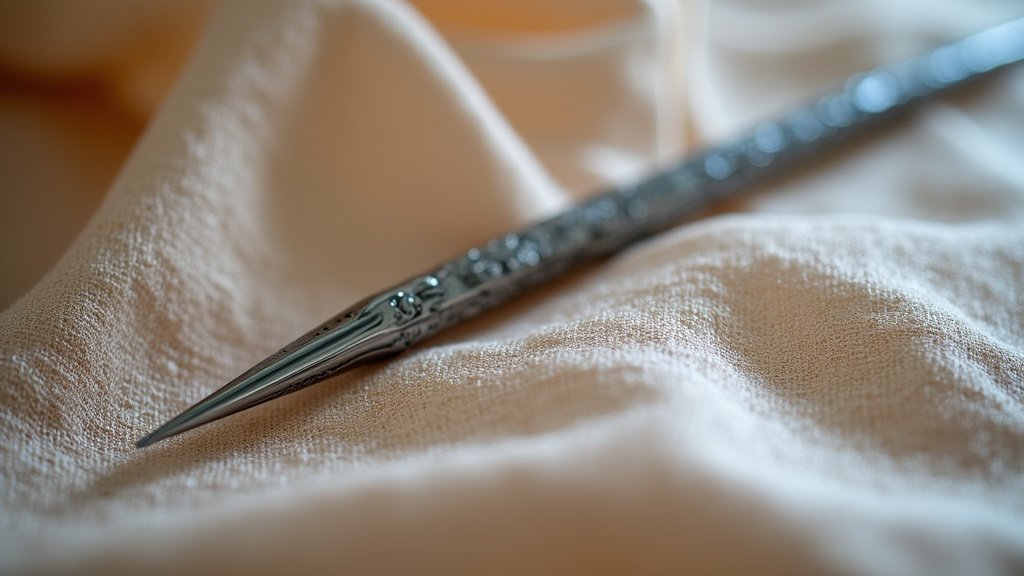
The Importance of a Fresh Needle
This might sound simple, but it’s incredibly important. How old is the needle currently in your sewing machine? A dull or bent needle can cause more problems than an incorrect type. We’ve all been there, pushing through with a needle that’s seen better days. For silk, this is a recipe for disaster.
Needles become dull with use. Even a few projects can start to wear them down. A dull needle will fray your silk. It will create tiny holes that can turn into runs. It can also cause skipped stitches. This is because it’s not piercing the fabric cleanly. Many sewing experts suggest changing your needle every 6-8 hours of sewing time. For silk, you might want to be even more vigilant. Consider changing it for every new project. It’s a small investment for a frustration-free sewing experience.
A bent needle is equally problematic. It can create irregular stitches. It can even damage your machine’s throat plate. If you notice your stitches looking “off” or you hear a funny sound, check your needle. Is it bent? Is it dull? Replacing it is often the quickest fix. A new, sharp needle is your best friend when sewing silk.
Tips for Successful Silk Sewing with the Right Needle
Beyond just choosing the needle, a few other practices can help. These will ensure your silk projects turn out beautifully. They make the whole process more enjoyable.
- Always test first: Seriously, we can’t stress this enough. Use a scrap piece of your silk.
- Use a good quality thread: Silk thread or a fine polyester thread is best.
- Slow down your sewing speed: Silk is slippery. Go at a moderate pace.
- Consider a walking foot: This can help feed slippery fabrics evenly.
- Use a straight stitch plate: This small plate prevents fine fabrics from getting sucked into the machine.
- Don’t force it: If your needle is struggling, stop. Re-evaluate your needle choice.
By following these tips, you’re setting yourself up for success. You’ll navigate the challenges of silk sewing with confidence. Remember, the goal is a garment that looks and feels amazing. The right needle is a key component in achieving that.
“`Conclusion
Sewing silk doesn’t have to be intimidating. You’ve learned that the right needle is your most important tool. A fine, sharp needle, like a size 8 or 9 universal, microtex, or sharps, will glide through your fabric. This prevents snags and ensures beautiful stitches every time. Remember to always consider the specific type of silk you’re using. Match it with the appropriate needle size and type. And never underestimate the power of a fresh, new needle. Now, go forth and create something stunning with your silk projects!
Frequently Asked Questions
Can I use any sewing machine needle for silk?
No, you should avoid using just any needle for silk. Thick or dull needles can snag, tear, or create visible holes in the delicate fabric. Always opt for fine, sharp needles designed for delicate materials.
What’s the difference between a universal needle and a microtex needle for silk?
A universal needle has a slightly rounded point and is a good all-rounder. A microtex needle has an exceptionally sharp, fine point, which pierces silk fibers cleanly. Many sewers find microtex needles superior for achieving a polished finish on silk.
How do I know if my needle is dull or bent for silk sewing?
If you notice skipped stitches, thread fraying, or unusual sounds from your machine, your needle might be the culprit. A bent needle can cause irregular stitches, and a dull one struggles to pierce the fabric cleanly. It’s best to replace your needle if you suspect it’s no longer sharp.
Should I change my needle after every silk project?
While not strictly necessary for every single project, it’s a good practice, especially for delicate fabrics like silk. Needles dull with use, and a fresh needle ensures you avoid potential damage and frustration. For very fine silks, consider changing it even more frequently.
Can I use a size 80/12 needle on chiffon?
A size 80/12 needle is generally too thick for very lightweight silks like chiffon. For such delicate fabrics, you’ll want a much finer needle, such as a 60/8 or 70/10 microtex or sharps needle. Thicker needles can cause runs and snags in fine materials.