What Is Thread Weight in Quilting?
On this page (11 sections)
- Understanding Thread Weight for Your Quilting Projects
- The Basics of Thread Weight Numbers
- Common Thread Weights and Their Uses
- Thread Types and How They Relate to Weight
- Choosing the Right Weight for Piecing
- Choosing the Right Weight for Machine Quilting
- Choosing the Right Weight for Hand Quilting
- A Quick Guide to Thread Weight Selection
- Tips for Working with Different Thread Weights
- Conclusion
- Frequently Asked Questions
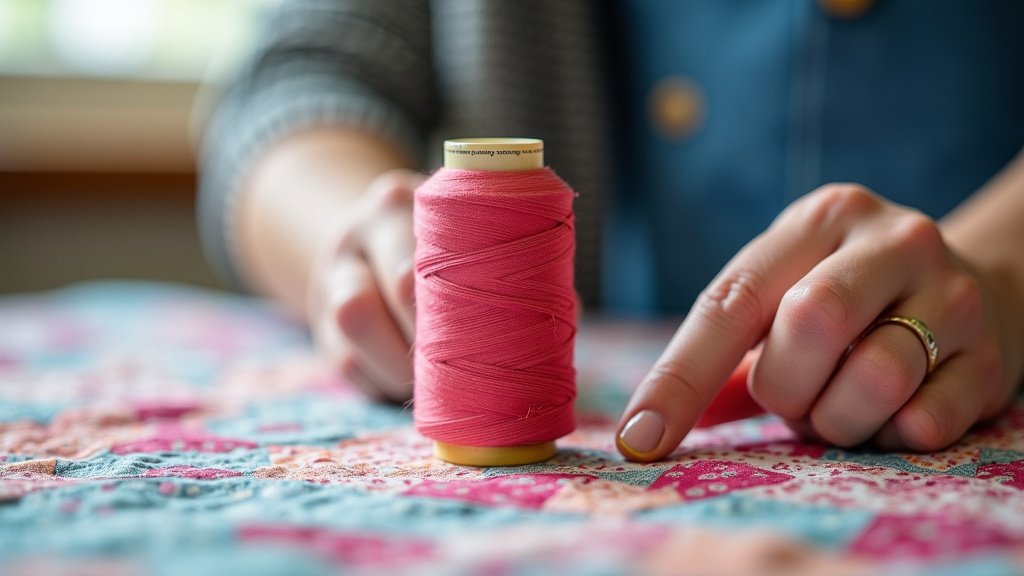
Thread weight in quilting refers to the thickness or diameter of the thread. It’s a crucial measurement that affects how your stitches look and how your quilt performs. You’ll often see it listed as a number, like 40wt or 12wt, where a lower number means a thicker thread. Understanding this helps you choose the right thread for your project.
Different thread weights are designed for different quilting tasks. Thicker threads are great for visible stitching, like embroidery or hand quilting, where you want the thread to stand out. Thinner threads are ideal for machine quilting and piecing, as they create a more subtle look and are less likely to cause skipped stitches or tension issues. Choosing the correct weight ensures your quilt looks its best and is durable for years to come.
- Thread weight indicates thread thickness, with lower numbers being thicker.
- It impacts stitch appearance and quilt durability.
- Thicker threads are good for decorative stitches.
- Thinner threads are best for machine piecing and quilting.
- Selecting the right weight is key for a polished finish.
Let’s get into the nitty-gritty of thread weight and how to pick the perfect one for your next quilting project.
Understanding Thread Weight for Your Quilting Projects
Thread weight is a simple measurement that makes a big difference. It tells you how thick or thin your quilting thread is. You’ll see numbers like 40wt, 50wt, or even 12wt. The lower the number, the thicker the thread. This might seem backward, but it’s how thread weight is measured.
Choosing the right thread weight is like picking the right tool for a job. Using a thick thread for fine machine piecing can be tricky. A thin thread might break easily during hand quilting. We want your projects to look amazing and hold up over time. So, let’s break down what these numbers mean for you. Choosing the right thread weight is like picking the right tool for a job; learn if you can use regular thread for quilting.
The Basics of Thread Weight Numbers
Thread weight is based on how many yards of that thread it takes to weigh one pound. So, if it takes 40,000 yards of a thread to weigh one pound, it’s a 40wt thread. If it takes 50,000 yards, that’s a 50wt thread. This means 50wt is thinner than 40wt because more yards are needed to reach that same pound weight.
Think of it like yarn. A chunky yarn is a lower weight number than a fine lace-weight yarn. The same principle applies to quilting thread. Understanding this relationship is the first step to making informed thread choices. It directly impacts the look and feel of your finished quilt.
Common Thread Weights and Their Uses
Different thread weights are best suited for specific quilting techniques. You’ll find yourself reaching for certain weights more often than others. Here’s a rundown of the most common ones and what they’re good for:
Lightweight Threads (60wt and higher)
These are your super-fine threads. They are almost invisible when used for quilting. 60wt and 80wt threads are perfect for bobbin work or very fine English Paper Piecing. They create a nearly seamless look. You can also use them for delicate machine quilting where you don’t want the thread to show at all.
Mediumweight Threads (30wt to 50wt)
This is the workhorse category for most quilters. 50wt thread is a very popular choice for both machine piecing and machine quilting. It’s strong and thin enough to go through your machine easily. It also creates a nice, subtle stitch definition.
A 40wt thread is a bit thicker. It’s still great for machine quilting but offers a slightly more visible stitch. Some quilters prefer 40wt for piecing if they like a bit more substance. Many quilt patterns and designers recommend 40wt or 50wt.
Heavyweight Threads (12wt to 30wt)
These thicker threads are meant to be seen. They add texture and dimension to your quilting. 12wt and 20wt threads are fantastic for hand quilting, sashiko, and decorative machine stitching. They really make your stitches pop!
You can also use them for topstitching on garments or bags. When using these heavier threads, you might need a larger needle. Your sewing machine might also need some tension adjustments. It’s worth experimenting to see what works best.
Thread Types and How They Relate to Weight
The material your thread is made from also plays a role. Common quilting threads include cotton, polyester, and silk. Each has its own properties that interact with its weight.
Cotton Threads
Cotton threads are a natural fiber. They have a beautiful matte finish. 50wt cotton thread is a staple for piecing and quilting. It’s strong and holds up well. It also shrinks slightly with the fabric, which can add to the puckering effect in quilting.
Heavier cottons, like 12wt, are often used for hand quilting or decorative work. They have a rustic feel. You’ll find them in many quilting cotton lines.
Polyester Threads
Polyester is a synthetic fiber. It’s known for its strength and durability. 60wt or 80wt polyester thread is often used for bobbin thread. It’s strong and less likely to break. It also has a slight sheen, which can be nice for machine quilting.
Many all-purpose polyester threads are around 40wt. They are a good option for piecing and quilting if you want a strong, consistent thread. They are less likely to stretch than cotton.
Specialty Threads
There are also metallic, variegated, and silk threads. These often come in various weights. Metallic threads are beautiful for adding sparkle. They can be tricky to use and often come in weights like 40wt. Silk thread is strong and smooth. It can be used for both piecing and quilting, often in lighter weights.
Choosing the Right Weight for Piecing
When you’re stitching pieces of fabric together, you want a thread that is strong and precise. 50wt cotton thread is widely recommended for piecing. It’s thin enough to get a good seam allowance. It’s also strong enough to hold the fabric pieces securely.
Many quilters find that a 40wt thread works well too. It offers a bit more strength. Some machines handle thicker threads better than others. If you find your machine is skipping stitches with a 50wt, try a 40wt. The key is a thread that doesn’t create bulk in the seam. You also want it to be strong enough for handling. Research has shown that consistent seam allowances are vital for accurate piecing (National Quilting Association). Research has shown that consistent seam allowances are vital for accurate piecing.
Choosing the Right Weight for Machine Quilting
Machine quilting is where thread weight really shines. The thread becomes a design element. For general machine quilting, 40wt or 50wt threads are excellent choices. They offer good stitch definition without being overwhelming.
If you want your quilting stitches to stand out and add texture, consider a 30wt or even a 20wt thread. These thicker threads create a more dramatic effect. For background quilting or when you want the stitches to disappear, a 60wt or 80wt thread is ideal. You can even use a different weight for your bobbin thread.
Using a Different Bobbin Thread Weight
It’s common practice to use a thinner thread in the bobbin. 60wt or 80wt polyester thread is often used for bobbins. This helps prevent bulk in your quilt. It also ensures that the bobbin thread doesn’t show through to the top of your quilt. This is especially important for intricate quilting designs.
Using a contrasting thread color in the bobbin can also be a fun design choice. Just make sure the weight works with your top thread. You might need to adjust your machine tension accordingly. This is something many experienced quilters experiment with.
Choosing the Right Weight for Hand Quilting
Hand quilting is a bit different. You often want a thread that glides easily through the layers of your quilt. Heavier threads, like 12wt or 16wt, are popular for hand quilting. They create a lovely, visible stitch line.
Cotton hand quilting threads are a great choice. They have a slight texture and a beautiful matte finish. You’ll find they are strong and easy to work with. Don’t be afraid to experiment with different weights to see what feels best in your hands. The goal is a consistent, beautiful stitch that you enjoy creating.
A Quick Guide to Thread Weight Selection
Here’s a handy way to think about thread weight selection for your projects:
- For Piecing: Aim for 50wt or 40wt cotton or polyester.
- For General Machine Quilting: 40wt or 50wt cotton or polyester is excellent.
- For Visible Machine Quilting (Texture): Try 20wt to 30wt cotton or specialty threads.
- For Invisible Machine Quilting: Use 60wt or 80wt polyester in the bobbin or for subtle topstitching.
- For Hand Quilting: 12wt to 16wt cotton hand quilting thread is a top choice.
- For Decorative Stitching: Experiment with heavier weights (12wt-30wt) and specialty threads.
Tips for Working with Different Thread Weights
As you experiment, you’ll learn what works best for your machine and your style. Here are a few tips to keep in mind:
Needle Choice Matters
The size of your needle should match your thread. Thinner threads work best with smaller, sharper needles (like 80/12 or 70/10). Thicker threads need larger needles (like 90/14 or 100/16). Using the wrong size needle can lead to skipped stitches or thread breakage.
Tension Adjustments
When you switch thread weights, you’ll often need to adjust your machine’s tension. A general rule is that if you use a thicker thread on top, you might need to loosen the top tension slightly. If you use a thinner thread on top, you might need to tighten it. Always test on scrap fabric first!
Testing is Key
Before you start quilting your masterpiece, always test your thread. Stitch out a few lines on a practice piece of fabric. Check for even stitches, no skipped stitches, and no excessive thread breakage. This small step can save you a lot of frustration later on.
Conclusion
Understanding thread weight is key to achieving beautiful, durable quilts. You’ve learned that a lower number means a thicker thread, and different weights serve distinct purposes. Whether you’re piecing delicate seams, machine quilting intricate designs, or hand quilting a cozy heirloom, selecting the right thread weight makes a noticeable difference. Don’t be afraid to experiment with weights and thread types. Next time you reach for your thread, consider this guide to make an informed choice that enhances your quilting project.
Frequently Asked Questions
What happens if I use the wrong thread weight?
Using the wrong thread weight can cause issues like skipped stitches, thread breakage, or uneven seams. A thread that’s too thick can create bulk, while one that’s too thin might not be strong enough for certain techniques. Always consider your project’s needs before selecting your thread.
Can I use the same thread weight for piecing and quilting?
You can, but it’s often best to use different weights. A thinner thread like 50wt is usually preferred for piecing to keep seams flat. For machine quilting, a 40wt or 50wt is common for a balanced look, while thicker threads add texture and thinner ones create a subtle effect.
Do I need to change my needle when changing thread weight?
Yes, you absolutely should. Thinner threads work best with smaller, sharper needles, while thicker threads require larger needles. Using a needle size that matches your thread weight helps prevent skipped stitches and ensures smooth sewing.
How can I tell if my machine tension is set correctly for my thread?
The best way to tell is by testing on a scrap piece of fabric. Look for even stitches on both the top and bottom of your fabric with no loops or puckering. You may need to adjust your machine’s tension slightly when switching thread weights.
What’s the difference between cotton and polyester thread weight?
While the weight number indicates thickness for both, cotton thread offers a matte finish and a bit of shrinkage, which some quilters prefer for a vintage look. Polyester thread is stronger, smoother, and less likely to stretch, making it great for durability and high-speed machine use.