Why Is Polyester Thread Too Slippery in My Sewing Machine?
Polyester thread can seem too slippery when the spool unwinds unevenly, the thread path adds little control, or the needle and tension setup do not suit the thread. Re-seat the spool, check the guide and bobbin, then test on scrap fabric.
On this page (10 sections)
- Why does polyester thread seem too slippery for a machine?
- How do you stop polyester thread from unwinding too fast?
- What should you check in the upper thread path?
- Can the needle make polyester thread look too loose?
- How should you check the bobbin?
- Which polyester thread setup helps with everyday sewing?
- Is the thread cutter causing the feeding problem?
- Can a needle threader help with slippery thread?
- What is the correct order for fixing slippery polyester thread?
- How do you choose the next fix?
Polyester thread can seem too slippery when it unwinds unevenly, misses a guide, or passes through the machine with the wrong needle or tension setup. Re-seat the spool, raise the presser foot, thread every guide, and test on a scrap before changing several settings at once.
The problem may look like a thread defect, but the spool position and thread path often deserve the first check. A loose spool can spin too freely, while a missed guide can make the upper thread feed in short pulls.
Why does polyester thread seem too slippery for a machine?
Polyester thread feels slippery because its smooth surface can move quickly through the spool, guides, needle eye, and fabric. That smooth movement is not automatically a fault, but it can expose poor spool control or incorrect threading more clearly.
Look at the spool while turning the handwheel slowly. If the spool rocks, lifts, or spins without steady resistance, stop sewing and correct its position before touching the tension dial.
Check whether the thread is crossing the spool edge or falling behind the spool. The thread should leave the spool in the direction shown by your machine's instructions, then travel through each guide in order.
If the upper thread is not holding correctly, read Why Your Machine is Not Holding the Thread for a separate check of thread capture and retention problems.
How do you stop polyester thread from unwinding too fast?
Seat the spool firmly and use the correct spool holder or cap for your machine. The spool should turn without wobbling, but it should not move sideways or slide off its pin during sewing.
Raise the presser foot before threading. This opens the tension discs on many machines and gives the thread a better chance of entering the intended path.
Pull several inches of thread through the guides by hand. You should feel steady resistance, not a sudden snag or a completely loose path.
Check the spool for a rough edge, split rim, or thread caught under a notch. A damaged spool can interrupt feeding even when the machine is threaded correctly.
A small machine may have limited room around its spool pin. If the mini machine spool holder is broken, repair that support before troubleshooting the thread itself.
What should you check in the upper thread path?
Rethread the machine from the beginning with the presser foot raised. Do not pull the thread halfway out and assume it will return to every guide.
Follow the path from the spool to the first guide, down to the tension area, around the take-up lever, and toward the needle. The exact route varies by machine, so use the path printed on the machine or in its manual.
Make sure the thread passes through the take-up lever. A missed take-up lever can create slack that looks like slippery thread, especially when the needle moves quickly.
Inspect the thread guide for a burr or damaged edge. A rough guide can snag, fray, or redirect the thread.
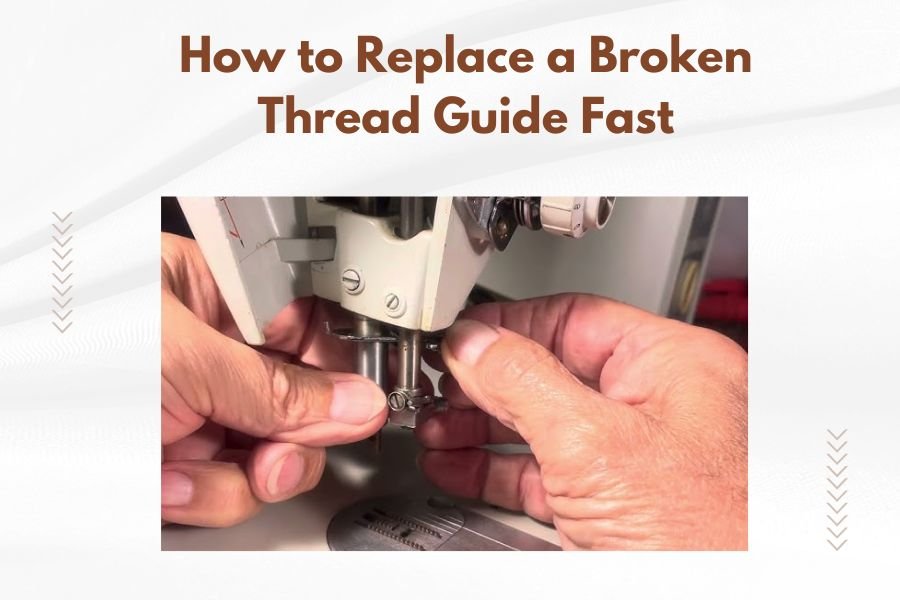
If you find a broken guide, use How to Replace a Broken Thread Guide Fast before continuing.
Keep the thread away from the handwheel, needle clamp, and presser foot. These moving parts can pull the thread sideways and create uneven feeding.
Can the needle make polyester thread look too loose?
Yes, the wrong or damaged needle can make polyester thread appear loose, looped, or poorly controlled. Replace a bent or dull needle and insert the new one fully, with the flat side facing the direction required by your machine.
A sharp needle with the right size for your fabric can help the thread pass cleanly through the material. The SCHMETZ Microtex Sharp Sewing Machine Needles are size 80/12 and have a slim acute point for detailed sewing, quilting, and topstitching.
This 5-needle card suits a sewer who wants several matching size 80/12 needles for home machine work. The needles are compatible with domestic sewing machines and are designed for materials including polyester, silk, cotton, batik, microfiber, foils, artificial leather, coated materials, cork, and bamboo.
Skip this size when your fabric or thread combination calls for a different needle size. The needle should match the fabric and thread rather than being chosen only because the thread feels slippery.
How should you check the bobbin?
Remove and reinstall the bobbin so the thread follows the machine's marked direction and passes through its tension area. A bobbin that is upside down, loosely wound, or poorly seated can create loops underneath the fabric.
Check that the bobbin case is clean and that no thread tail is trapped near the race. Turn the handwheel by hand after reinstalling the bobbin and watch the first stitch form.
Hold both thread tails behind the presser foot for the first few stitches. This keeps the tails from being pulled into the needle plate before the seam is established.
If loops appear underneath, do not keep tightening the upper tension immediately. Start with the threading and bobbin checks in Why Is My Quilting Machine Thread Looping Underneath?.
Which polyester thread setup helps with everyday sewing?
Use a consistent thread, needle, fabric, and stitch test before sewing the project. This makes it easier to tell whether the problem comes from the thread path, the machine setting, or the material.
Coats & Clark All Purpose Sewing Thread is 100% polyester, medium weight 35wt, and comes as 400-yard white spools in a 6-pack. It is intended for sewing machines and hand stitching.
This thread suits someone who wants matching white polyester thread across several projects. Six 400-yard spools can also make it easier to keep a spare nearby while checking whether a single spool is feeding unevenly.
The smooth thread still needs a stable spool position and a correctly threaded machine. If one spool behaves differently from the others, compare its rim, winding, and unwinding direction before changing the machine.
For a broader setup checklist, see Best Machine Settings for Polyester Thread. Change one setting at a time and sew a short test line after each change.
Is the thread cutter causing the feeding problem?
A thread cutter usually is not the first place to look, but a damaged cutter area can catch loose thread tails. Keep the thread clear of the cutter and inspect the area if the thread is being pulled sideways after trimming.
Do not force the cutter through a thick thread bundle. Trim the thread with a separate tool if needed, then check whether the machine's cutter is leaving a sharp edge or trapping the thread.
If you use a Brother machine and the cutter is not working, read Why Will My Brother Thread Cutter Not Cut? for that specific problem.
Can a needle threader help with slippery thread?
A needle threader can help you place the thread through the needle eye without fraying the end. It does not correct spool tension or upper-thread routing, so use it after the machine path is set correctly.
The Bohin 81980 Super Automatic Needle Threader is a plastic, orange-finish tool for hand sewing, quilting, and embroidery. It is designed for needle sizes 1 through 11 and includes one needle threader.
Choose it for hand finishing, quilting, or repair work after machine sewing. It does not replace correct machine threading, and it is not a solution for a bobbin or tension problem.
Keep the thread end clean and cut square before using a threader. A frayed end can still resist the eye even when the tool is the right size.
What is the correct order for fixing slippery polyester thread?
Check the spool, threading path, needle, bobbin, and test stitches in that order. This sequence keeps you from masking one problem by changing another setting.
- Stop sewing and raise the presser foot.
- Re-seat the spool and check its holder or cap.
- Pull the thread through every guide and the take-up lever.
- Replace a bent, dull, or poorly inserted needle.
- Reinstall the bobbin in the marked direction.
- Hold both thread tails for the first stitches.
- Sew on scrap fabric using the intended stitch.
- Adjust tension in small steps only if the setup is correct.
If the thread still slips, frays, breaks, or loops, check the needle plate, guides, bobbin case, and tension area for damage. A machine that continues to misfeed after careful rethreading may need service.
How do you choose the next fix?
For polyester thread that seems too slippery for your machine, start with spool control and rethreading before buying a different thread. Replace the needle when it is damaged or mismatched, and check the bobbin whenever loops appear underneath.
Choose SCHMETZ Microtex size 80/12 when a sharp needle suits your fabric and detailed stitching. Choose Coats & Clark 35wt polyester when you want a consistent white thread for machine or hand sewing.
Choose the Bohin tool for hand needle threading, not machine tension.
Once the basic setup is stable, use the related repair guides above for broken guides, cutter trouble, or a damaged mini-machine spool holder.
Frequently asked questions
Why does polyester thread slide off the spool?
Polyester thread may slide off when the spool is not seated correctly, the spool cap does not hold it in place, or the thread unwinds from the wrong direction. Refit the spool, follow the machine's threading path, and test whether the thread feeds smoothly before sewing.
Can a needle cause polyester thread to loop?
Yes. A bent, damaged, or poorly matched needle can contribute to skipped stitches, loops, or thread breaks.
Replace the needle, insert it fully in the correct direction, and rethread both the upper path and bobbin before adjusting tension.
Should polyester thread have more tension?
Not always. First confirm that the presser foot is raised while threading, the thread is seated in every guide, and the bobbin is installed correctly.
Change tension in small steps only after those checks, using the same fabric and thread for each test.
Is polyester thread suitable for a sewing machine?
Yes, polyester thread is commonly used for machine sewing, but the machine still needs the correct threading path, needle, bobbin setup, and tension. Medium-weight polyester thread can work for many projects, while fabric thickness and stitch type affect the best setup.