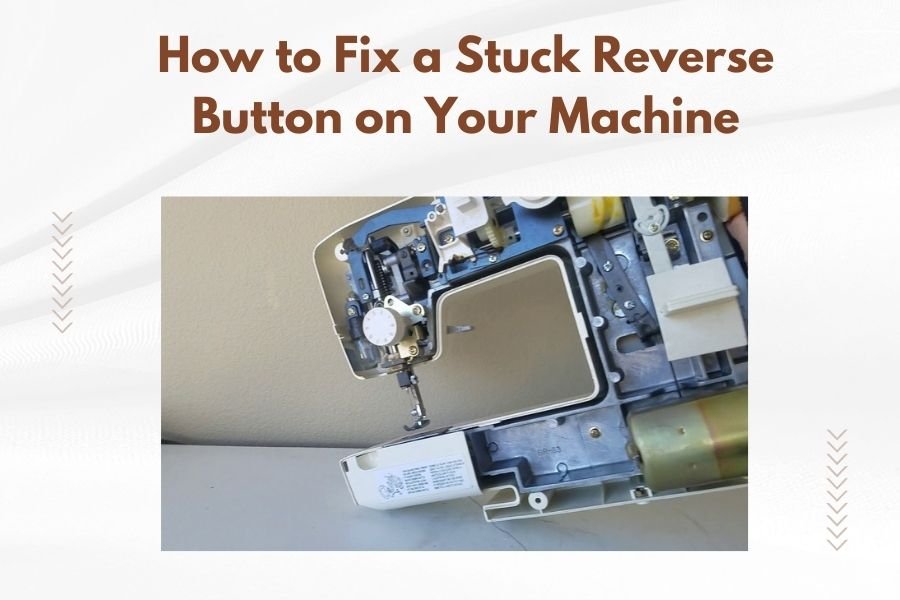
How to Fix a Singer Simple Stuck in Reverse
A Singer Simple stuck in reverse stitch is most often fixed by releasing the reverse lever, cleaning lint from the feed area, and checking that the stitch length is not locked. If it still feeds backward, the feed dogs or reverse mechanism may need professional service.
On this page (9 sections)
- How do you check the reverse lever on a Singer Simple?
- Can a stitch length setting cause a Singer Simple stuck in reverse?
- How do you clean lint from the feed dog area?
- What should you test on scrap fabric first?
- When does stuck reverse mean a worn feed dog problem?
- How do you know if the reverse linkage is broken or jammed?
- How do you maintain a Singer Simple so reverse does not stick again?
- When should you stop and call a repair shop for reverse feed issues?
- Which books help you learn machine feeding and repair basics?
A Singer Simple stuck in reverse stitch happens when the machine keeps feeding fabric backward, even after you release the reverse control. Check the lever, clean the feed dog area, and confirm the stitch length setting before you try any repair.
Most mild cases clear with cleaning and a gentle reset.
A stuck reverse feed can also feel like a general feeding problem. Fabric may crawl, bunch, or pull toward you while the needle sews.
That pattern points to the feed system, not to your fabric or thread.
How do you check the reverse lever on a Singer Simple?
The reverse lever should move freely and return to forward when you let go. If it feels stiff or stuck partway, lint or a bent linkage may be holding it.
Unplug the machine, raise the needle, and lift the presser foot. Find the lever or button for your model, often near the needle bar or stitch controls.
Move it gently through its full travel.
Do not force it if it resists. Force can damage the plastic lever, spring, or linkage.
If a general guide to Why Your Machine Won’t Stitch in Reverse: Fixes covers your model, read that section first. It helps separate a control problem from a feed problem.
Press and release the lever again. It should spring back cleanly.
If it stays down, stays up, or moves without changing the feed, the issue may be inside.
Can a stitch length setting cause a Singer Simple stuck in reverse?
Yes, a stitch length at zero or a very short setting can make forward feeding look weak or backward. Check the dial or slider before you open anything.
Turn it to a normal range, such as 2.5 mm for a test seam, since zero gives little or no forward progress.
Make sure you are not holding a reverse button, because holding the control can keep reverse engaged on some models.
Release it fully and test again on scrap fabric with the presser foot down.
If you have a stuck reverse button problem, lint or thread may be holding it in. Clean around the button channel with a dry brush, since a gritty feel usually means it needs cleaning, not force.
How do you clean lint from the feed dog area?
Lint packed around the feed dogs is a common cause of odd feeding. Cleaning is safe with the machine unplugged and the needle plate removed as your manual allows.
Raise the needle and remove the needle plate and bobbin cover if allowed. Brush lint from around the feed dogs, bobbin case, and plate openings.
Do not use compressed air, since it can push lint deeper.
Turn the handwheel slowly toward you and watch the feed dogs rise and move in a small oval motion. If they barely move, drag, or stay in one position, a How to Fix Stuck Feed Dogs: Step-by-Step guide can help you judge whether cleaning is enough.
Vacuum with a hose only if your manual allows it, and keep it away from the belt and motor vents. Replace the plate, lower the presser foot, and test on scrap fabric.
How do you clean around the reverse mechanism without opening the case?
Brush the outside of the lever, the needle plate, and the bobbin area, then test the lever again. You do not need to open the machine for this first pass.
Work with the machine unplugged and the needle up. Brush lint from the lever slot, the stitch length dial, and the area under the needle plate.
A wooden stick or brush can reach lint that a cloth misses.
Do not spray oil into the lever slot. Oil can attract more lint and can stain fabric.
Singer says to oil only the points named in your manual, with the oil made for sewing machines.
If the lever moves freely after cleaning, make a short test seam. If feeding is still backward, the problem is likely deeper than surface lint.
What should you test on scrap fabric first?
Test on two layers of plain cotton with the presser foot down and a normal stitch length. This gives the feed dogs a fair chance to grip.
Use a new needle if the old one is bent or dull. Thread the machine fully, including the thread take-up lever.
Hold the thread tails lightly for the first few stitches, then let the machine feed the fabric without pulling.
Sew forward for a few inches. The fabric should move away from you in small, even steps.
Then press reverse briefly. It should feed toward you, then return to forward when you release the control.
If forward feeding pulls fabric sideways or skips, the feed dogs may be clogged or the pressure may be wrong. If reverse never releases, the control or linkage is suspect.
When does stuck reverse mean a worn feed dog problem?
Feed dogs that are worn, lowered, or clogged can make reverse feel stuck. The machine may sew backward slowly or fail to feed forward at all.
With the needle plate removed, look at the feed dogs. The metal teeth should stand above the plate when raised.
If one side is lower or the teeth look smooth and shiny, wear may be the cause. Lint packed between the teeth can also stop them gripping.
Brush front to back, then turn the handwheel and brush again as they move. If cleaning does not restore a clear oval motion, a technician may need to adjust feed dog height or timing, since guessing at timing screws can make feeding worse.
A longarm issue is separate. A Fix a Stuck Longarm Carriage: Troubleshooting guide is for longarm frames, not a Singer Simple on a table.
How do you know if the reverse linkage is broken or jammed?
A lever that moves but does not change the feed, or will not move at all, points to a linkage problem. That is the point to stop and get service.
Unplug the machine and move the lever gently through its range. Listen for a click or a change in resistance.
If it moves freely but fabric still feeds backward, the link between the control and the feed bar may be loose or broken.
If it will not move, a bent part, a jammed spring, or packed lint inside the case may block it. Do not tap the lever with a tool or pry the slot open.
A shop can open the case, check the linkage, replace a worn spring, and test the feed motion. Ask the shop to also check feed dog height and timing while the machine is open.
How do you maintain a Singer Simple so reverse does not stick again?
Clean the feed area and bobbin area often, and use a light touch on the reverse control. Prevention is mostly lint control.
Brush lint from the feed dogs and bobbin area after each large project, or more often with fleece, denim, or batting scraps, since those materials shed more lint than cotton.
Use a new needle for each project and change it sooner if you sew over pins or thick seams. A bent needle can cause skipped stitches that look like a feed problem.
Keep the manual for your exact model number, since Singer Simple models differ in lever shape and plate removal.
The Alison Smith The Sewing Book helps because it covers more than 300 techniques with illustrated step by step sequences. It is a 352 page guide in English from DK, at 9.31 x 1.13 x 11.19 inches and 3.82 pounds, and it explains seams, hems, darts, gathers, and collars, plus pattern reading and fabric choice.
When should you stop and call a repair shop for reverse feed issues?
Stop if the lever will not move, the feed stays backward after cleaning, or the machine makes grinding noises. Those signs point to a worn or broken part.
Unplug the machine and do not sew through the problem. Continued sewing can jam the needle plate, bend the needle bar, or tear fabric.
Note what you checked, such as cleaning, lever movement, and stitch length, and tell the shop. Ask the shop to check the reverse linkage, feed dog height, and timing.
A singer 132k6 sewing machine stuck in reverse page covers a related industrial model, but the steps transfer only in part to a home Singer Simple. For a different brand with a similar symptom, a deluxe viscount sewing machine stuck in reverse guide may help you compare levers and feed controls.
Which books help you learn machine feeding and repair basics?
Technique books help you confirm that your fabric, needle, and stitch settings are right. They will not fix a broken linkage, but they can save you a service call if the fault is user related.
All-Star Quilts of Valor: 25 Patriotic Patterns from Star Designers has 128 pages, measures 8.5 x 0.5 x 11 inches, and weighs 2.31 pounds. It includes 25 patriotic quilt patterns from well known designers, with clear instructions for personalizing colors and fabrics.
It suits quilters who want a project after a repair, not a repair manual.
Encyclopedia of Classic Quilt Patterns has 367 pages, measures 8.25 x 0.75 x 10.75 inches, and weighs 2.65 pounds. It includes more than 101 projects and covers quick piecing through rotary cutting.
Its long pattern library helps you practice even feeding on quilt blocks before you return to a large quilt.
Pick The Sewing Book if you need machine technique basics. Pick All-Star Quilts of Valor if you want a focused pattern set.
Pick Encyclopedia of Classic Quilt Patterns if you want a large reference library. For a Singer Simple stuck in reverse stitch, clean and check the lever first, then decide whether the fault is lint, feed dogs, or linkage, and use a shop for that last step.
Frequently asked questions
Why is my Singer Simple stuck in reverse stitch?
It is usually a stuck reverse lever, lint in the feed dog area, or a stitch length setting that keeps the feed moving backward. Clean the area, move the lever gently, and test on scrap fabric.
If the needle still feeds backward, the reverse mechanism may be worn or jammed and needs service.
Can I force the reverse lever back to forward?
No. Forcing the lever can bend the linkage or crack a plastic part.
Unplug the machine, raise the needle, move the lever with light pressure, and clean the feed area first.
If it will not move, stop and have a technician inspect the mechanism.
What should I check first on a Singer Simple?
Start with power off, the reverse lever position, stitch length, and lint around the feed dogs. Remove the needle plate only if your manual allows it.
Test with the presser foot down on scrap fabric.
Clean the bobbin area while you are there, since lint there can affect feeding.