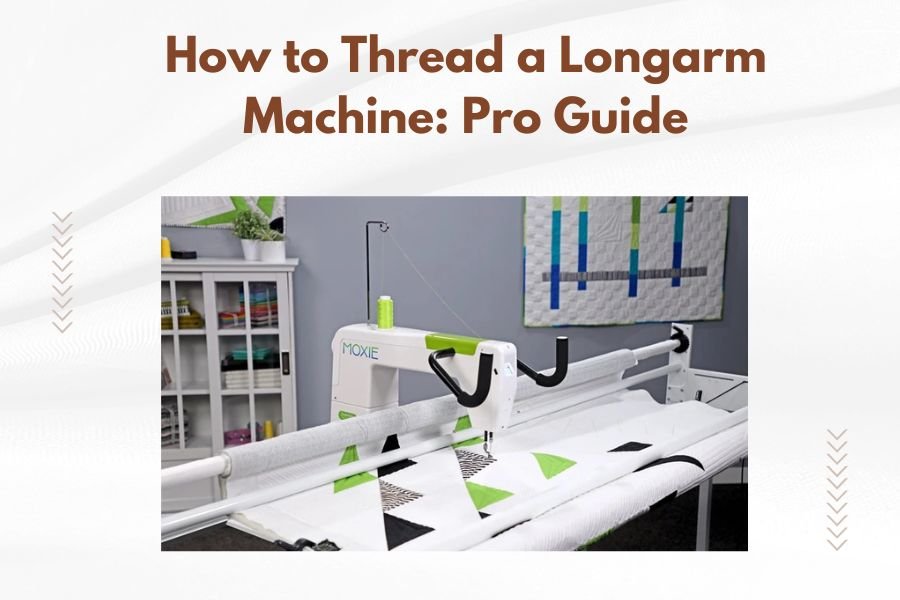
How to Thread a Grace Longarm with a Small Spool
To thread a Grace longarm with a small spool, seat the spool so thread pays off smoothly, follow the machine's guide path, and check tension with a test stitch. A small spool needs a steady pin, a clean path, and no extra drag between the spool and the needle.
On this page (10 sections)
- How does a small spool change thread delivery on a Grace longarm?
- What do you need before you start threading?
- How do you seat a small spool on the pin?
- How do you thread a Grace longarm with a small spool step by step?
- How do you check tension after threading with a small spool?
- What causes skipped stitches with a small spool?
- When should you use a book for threading and pattern help?
- Which quilt pattern books help you plan around small spools?
- How do you maintain thread delivery for long sessions?
- Grace longarm threading with a small spool: what to remember
To thread a Grace longarm with a small spool, seat the spool on a stable pin, run thread through each guide in order, and test tension before you quilt.
Grace longarm machine threading with a small spool works best when thread leaves the spool in a straight line and reaches the needle without extra bends.
Keep your manual open beside the machine.
Thread paths vary by model and frame setup, so follow the diagrams for your Grace machine.
How does a small spool change thread delivery on a Grace longarm?
A small spool feeds thread in shorter turns, so the pin and path matter more.
The thread must leave the spool cleanly and travel to the first guide without catching.
A large cone sits heavy and steady.
A small spool is lighter and can bounce if the pin is loose.
That bounce can add slack, then the thread tightens again.
You may see loops at the needle or uneven stitches.
Seat the spool firmly and check that it spins freely.
If it wobbles, reseat it.
Keep the thread path short.
The fewer bends between spool and needle, the steadier the feed.
Choose thread weight that suits your needle.
Our guide to Best Quilting Thread For Longarm Machines helps you match thread to needle and fabric.
Also check Best Bobbin Thread For Longarm Machines so top and bobbin threads work as a pair.
What do you need before you start threading?
You need a clean machine, a stable spool pin, the right needle, and scrap fabric for tests.
Gather these items before you thread, so you can check your work as you go.
Clean lint from the bobbin area, thread guides, and tension discs.
Lint can change how thread slides.
Do not oil parts unless your Grace manual tells you to.
Fit the needle size and type your thread needs.
A worn needle can cause skipped stitches that look like tension trouble.
Replace a bent or dull needle before you judge the thread path.
Put a fresh bobbin in place and set a scrap sandwich under the foot.
You will use it to test tension after threading.
Keep new thread, scissors, and a seam ripper close at hand.
If you are new to longarm threading, start with How to Thread a Quilting Machine?.
That guide covers the basic path and terms you will use here.
How do you seat a small spool on the pin?
Seat the spool so it turns freely, sits flat, and feeds thread from the top in the direction of the guides.
A loose spool is a common cause of uneven feed.
Slide the spool onto the pin and add the disc or cap if your machine uses one.
The spool should not slide side to side.
It should also not spin so loosely that thread falls off in loops.
Leave a short tail of thread off the spool.
Pull gently to check the direction it unwinds.
Thread should come off without twisting around the pin.
If it rubs the pin or cap, reposition the spool.
Place the spool where thread can reach the first guide in a straight line.
A sharp angle at the first guide adds drag.
Move the spool or pin only if your machine allows it.
Check the spool after a few stitches.
Small spools turn fast and can eat through thread quickly.
Watch the level so you do not run out mid-row.
How do you thread a Grace longarm with a small spool step by step?
Follow the guide path in order, from spool to needle, and seat the thread fully in each guide.
Do not skip a guide, even if the path looks optional.
Threading the top path on a Grace longarm
Start at the spool.
Bring thread to the first guide, then through the tension discs, then to each guide in turn.
Seat thread in each checked guide so it cannot slip out during sewing.
Thread the take-up lever at its highest point if your manual calls for that position.
Turn the handwheel by hand to raise the needle bar first.
This makes the path easier to follow.
Continue to the needle.
Thread the needle from the direction your manual shows.
Leave a tail of several inches.
Hold the tail while you take the first stitches, so it does not pull back through the needle.
For a broader longarm overview, see How to Thread a Longarm Machine: Pro Guide.
It explains guides and tension in plain terms.
How do you check tension after threading with a small spool?
Sew a test on scrap fabric, then read the stitches on both sides before you change any setting.
Tension checks save time on a real quilt.
Use the same fabric layers and batting you plan to quilt.
Sew straight lines at your normal speed.
Stop and look at the top side, then flip the scrap and look at the bobbin side.
Balanced tension shows smooth stitches on both sides.
Loops on top can mean low top tension or a threading miss.
Loops on the back can mean high top tension or low bobbin tension.
Change one setting at a time.
Move tension in small steps.
Sew a new test line after each change.
Keep the scrap so you can compare lines side by side.
Rethread top and bobbin before you adjust tension again.
A missed guide can mimic a tension problem.
Thread path first, then settings.
What causes skipped stitches with a small spool?
Skipped stitches often come from a missed guide, a dull needle, or thread that jerks as it leaves the spool.
Check the path before you change parts.
Rethread the top fully.
Confirm thread sits in every guide and in the tension discs.
Check the needle is seated correctly and not bent.
A needle that is in backward can skip stitches on many machines.
Look at the spool as you sew.
If the spool bounces or thread loops off the edge, the pin or cap may be loose.
Reseat the spool and check the first guide for a sharp bend.
Slow your speed for one test row.
If stitches smooth out, speed may be part of the issue.
Longarm work rewards a steady pace, especially with lighter spools.
Clean lint from the bobbin case and needle area.
Buildup can alter thread flow and cause uneven stitches without any setting change.
When should you use a book for threading and pattern help?
A clear sewing book helps when you want step-by-step technique practice beyond one threading job.
Books give you projects to test tension and stitch quality.
The Sewing Book by Alison Smith runs 352 pages and covers more than 300 techniques with step-by-step photos.
It covers seams, hems, darts, gathers, and collars, plus pattern reading and ten homeware and clothing projects.
That range suits quilters who also sew garments or home pieces.
Use a technique book to practice straight seams and curves on scrap fabric.
Those practice runs also test your small spool setup.
You will learn to read stitch quality before you start a large quilt.
Keep the book near your machine for quick checks of seam types and fabric choices.
It will not replace your Grace manual, but it can build the hand skills that make threading easier.
Which quilt pattern books help you plan around small spools?
Pattern books help you plan thread use, since small spools hold less thread than large cones.
Count fabric and thread needs before you start a quilt.
All-Star Quilts of Valor has 128 pages and 25 patriotic patterns from named designers.
It includes patterns such as "V Is for Victory," "Shine On," and "Stars and Stripes."
The patterns suit quilters who want a clear project with a purpose.
Encyclopedia of Classic Quilt Patterns by Patricia Wilens has 367 pages and more than 101 projects.
It covers quick piecing, rotary cutting, and a wide range of classic blocks.
That size makes it a long-term reference for block construction.
Pick a pattern that fits your thread supply.
A small spool suits accent colors and smaller quilts.
For a full-size quilt in one color, plan to change spools or use a larger cone.
How do you maintain thread delivery for long sessions?
Keep the spool, guides, and bobbin area clean, and check spool level often during long runs.
Small spools need more attention than large cones.
Wipe guides and tension discs with a clean, dry cloth.
Remove lint from the bobbin area after each quilt session.
Do not use compressed air unless your manual allows it.
Check spool level at natural breaks.
Note how many rows one small spool sews.
That note helps you plan color changes and avoids running out in the middle of a motif.
Store small spools upright in a covered container.
Dust and rough handling can fray the outer layers.
Thread that is nicked or dirty may break or feed unevenly.
Replace thread if you see fuzz, stiffness, or color fade.
Old thread can snap under longarm speed.
Fresh thread gives you a fair test of tension and path.
Grace longarm threading with a small spool: what to remember
Seat the spool firmly, follow every guide, test tension on scrap, and rethread before you adjust settings.
Those steps solve most small spool problems.
Use a small spool when you need a special color, blend, or weight, or when a large cone will not fit your setup.
Seat it flat, keep the path short, and watch the spool level.
Compare your setup with a how to thread a juki 654de guide only for general threading order, not for Grace guide positions.
Each machine differs.
For a different longarm path, see how to thread a forte longarm machine.
Keep your Grace manual as the main source.
Use books for technique practice and pattern planning.
Test on scrap, read both sides of the stitches, and change one setting at a time.
Frequently asked questions
Why does a small spool feed differently on a Grace longarm?
A small spool holds less thread and turns faster, so it can unwind unevenly if the pin is loose or the thread catches. Seat it snugly, keep the path short and straight, and check that thread leaves the spool without looping or dragging on the spool edge.
Can I use a small spool instead of a large cone on a longarm?
Yes, many quilters use small spools for specific colors or blends. You need a stable spool pin, a clear thread path, and a tension test on scrap fabric.
Change spools more often, since a small spool runs out sooner than a large cone.
What should I check if tension changes after I change spools?
Check the bobbin thread, needle size, thread path, and spool seating first. Rethread the top and bobbin, then test on two layers of scrap.
Small changes in thread weight or fiber can shift tension, so adjust in small steps and sew a test after each change.