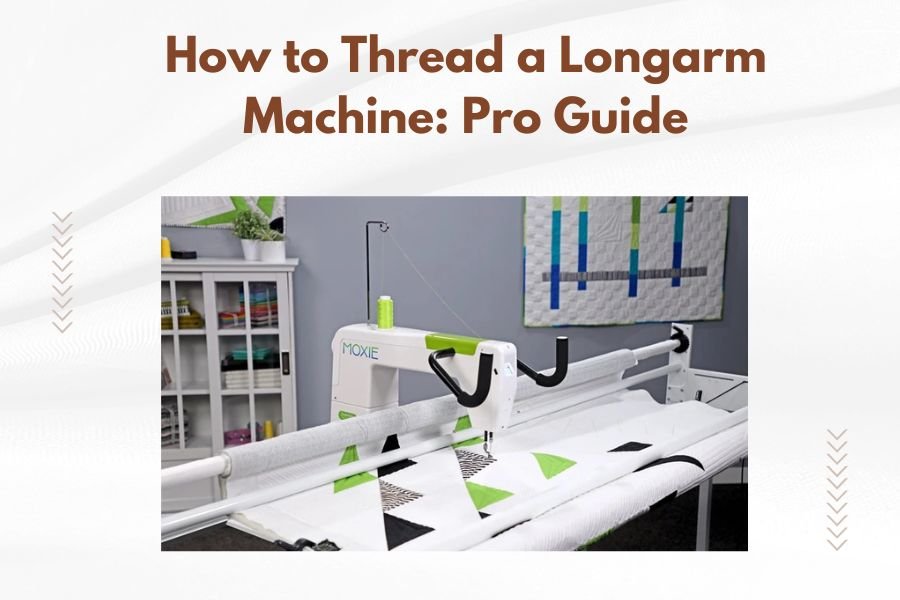
How to Thread a Forte Longarm Machine
To thread a Forte longarm machine, guide the thread from the spool through each upper guide, the tension path, take-up lever, needle-bar guides, and the needle eye. Keep the thread seated in every guide before testing the stitch.
On this page (8 sections)
- What should you do before threading a Forte longarm machine?
- How do you thread the upper path?
- How do you thread the needle on a Forte longarm?
- Which thread should you use for the Forte?
- How do you check the tension after threading?
- What should you do when a Forte thread breaks?
- How can you avoid common threading mistakes?
- What is the correct way to thread a Forte longarm machine?
To thread a Forte longarm machine, guide the thread from the spool through every upper guide, the tension path, take-up lever, lower guides, and needle eye. Keep the thread seated in the correct order, then sew a slow test line on a scrap quilt sandwich.
Threading works best when the machine is stopped, the needle is raised, and the thread path is easy to see. If your Forte model has printed arrows or a threading diagram, use those markings as the final reference.
What should you do before threading a Forte longarm machine?
Raise the needle, switch the machine off, and place the thread spool securely on its holder. Clear loose thread from the guides and confirm that the needle is straight and fully inserted.
Cut the thread cleanly so the end passes through the guides without fraying. A longarm machine can lose tension when thread catches on a rough spool edge, a loose tail, or a guide that it skipped.
For a Grace longarm and small spool, see small-spool threading steps.
Choose a needle that matches the thread and quilt materials. The SCHMETZ Microtex needle is size 80/12, has a slim acute point, and comes as a 5-needle card for detailed stitching on compatible home sewing machines.
The Microtex point is suited to detailed stitching and materials such as cotton, batik, polyester, microfiber, silk, foils, artificial leather, coated materials, cork, and bamboo. A longarm machine may require a different needle system, so confirm the Forte manual before fitting it.
How do you thread the upper path?
Start at the spool and follow the Forte's upper thread guides in order. Keep light tension on the thread as you move from one guide to the next, but don't pull hard enough to bend a guide or drag the spool.
Use this sequence as a practical check:
- Place the spool on the spool holder.
- Pass the thread through the first guide above or near the spool.
- Continue through each upper guide in the direction marked on the machine.
- Bring the thread down toward the tension assembly.
- Seat it between the tension discs or through the marked tension channel.
- Guide it upward through the take-up lever.
- Bring it back down through the lower thread guides.
The take-up lever matters because it controls thread movement as the needle travels. If the thread skips this lever, you may see loose loops, uneven tension, or thread pulling from the needle during the first stitches.
For a broader diagram and troubleshooting notes, see How to Thread a Quilting Machine?. The general order is similar, but the exact guide positions can differ between machines.
How do you thread the needle on a Forte longarm?
Finish the path through the needle-bar guides, then pass the thread through the needle eye in the direction shown by the machine. Leave a manageable tail behind the needle before beginning the test seam.
After the thread leaves the last lower guide, bring it to the needle bar. Pass it through any small guide above the needle, then thread the eye without twisting the strand around the needle.
A needle threader can help when the eye is difficult to see. The Bohin 81980 Super Automatic Needle Threader is a plastic, 1-count tool designed for needle sizes 1 through 11 and includes a magnetic needle picker.
Use the Bohin tool only if its mechanism suits the needle installed in your machine. It is designed to assist with hand sewing, quilting, and embroidery, so don't force it into a needle eye that does not align with the tool.
The threader measures about 3 x 2 x 1.25 in. Store it near the machine if you switch between machine threading and hand-finishing tasks.
Which thread should you use for the Forte?
Match the thread weight and fiber to the Forte instructions, needle, bobbin, and quilt fabric. A balanced upper and bobbin setup usually makes tension adjustment easier.
Coats & Clark All Purpose Sewing Thread is 100% polyester, medium weight 35wt thread. It comes in white with 400 yards on each of 6 spools.
This thread may suit a reader who wants matching white spools for repeated sewing tasks. It is not automatically the right choice for every Forte setting, so compare the thread weight with your machine's manual and the bobbin thread before stitching a full quilt.
For more guidance on thread selection, read Best Quilting Thread For Longarm Machines and Best Bobbin Thread For Longarm Machines.
How do you check the tension after threading?
Test the thread on a scrap quilt sandwich before quilting the project. Stitch slowly and inspect both sides for balanced loops, skipped stitches, thread breaks, or bobbin thread pulled to the top.
If the upper thread forms loose loops, stop and recheck the tension path and take-up lever. If the bobbin thread shows on top, the upper thread may not be seated correctly or the tension may need adjustment.
Make one change at a time. Rethread the upper path before turning tension controls, because a missed guide can look like a tension problem.
Keep the machine needle raised while checking the path. Remove the thread and start again if it has wrapped around a guide or slipped outside a tension disc.
What should you do when a Forte thread breaks?
Stop sewing, raise the needle, and remove the broken thread before rethreading from the spool. Do not simply tie a new strand to the old tail and continue through the guides.
Check the spool edge, upper guides, tension discs, take-up lever, needle eye, and quilt surface for places that could catch the thread. Replace the needle if it is bent, damaged, or no longer produces clean stitches.
Thread breaks can also happen when the thread, needle, fabric, and machine speed do not suit one another. Reduce speed for the test, use a fresh thread tail, and confirm that the bobbin is inserted as the Forte instructions show.
If you use a different longarm model later, How to Thread a Longarm Machine: Pro Guide explains the shared threading principles. For a small-spool setup on another brand, see How to Thread a Grace Longarm with a Small Spool.
How can you avoid common threading mistakes?
Follow the thread path in one continuous direction and check each guide before sewing. Most setup problems come from skipped guides, an empty tension path, a missed take-up lever, or a needle threaded in the wrong direction.
Keep these checks beside the machine:
- The spool turns freely without catching.
- The thread passes through every marked upper guide.
- The thread sits inside the tension path.
- The take-up lever has captured the thread.
- The lower guides are threaded in order.
- The needle is correctly installed and threaded.
- The thread tail is long enough for the first stitches.
- A test line looks balanced on both sides.
If you are moving between machines, do not copy the path from memory. For example, How to Thread a Brother CS7000X covers a different machine setup and should not replace the Forte's own threading diagram.
What is the correct way to thread a Forte longarm machine?
Use the Forte's marked path from spool to needle, seat the thread in the tension area and take-up lever, then test on scrap fabric before quilting. Choose the needle and thread only after checking that their type and weight suit the machine.
Pick the SCHMETZ needle when the Forte setup calls for a size 80/12 sharp needle. Choose the Bohin threader for compatible needle-threading assistance, and choose the Coats & Clark thread when its 35wt polyester specification fits your project and machine guidance.
The decision rule is simple: rethread first, adjust tension second, and change needle or thread only after the path is confirmed. For another reference before starting, return to How to Thread a Quilting Machine?.
Frequently asked questions
How do you thread a Forte longarm machine?
Place the thread spool on its holder, then follow the marked upper guides toward the tension area. Pass the thread through the tension path, take-up lever, lower guides, and needle eye.
Keep the thread tail behind the needle, then test slowly on a scrap quilt sandwich.
Which way does the thread go through a Forte longarm needle?
Thread the needle in the direction shown by your Forte machine's needle and manual markings. Many longarm needles are threaded from front to back, but confirm the needle position and orientation before sewing because the correct direction depends on the machine's needle system.
Why does the thread keep coming out of the tension discs?
The thread may have missed the tension path or entered while the presser foot was down. Raise the foot if your Forte setup allows it, loosen the thread path, and reseat the thread through each guide and the tension discs before checking the take-up lever.
What thread works in a Forte longarm machine?
Choose thread that suits the machine, needle, quilt fabric, and bobbin setup. The Coats & Clark All Purpose Sewing Thread is a 100% polyester, medium weight 35wt thread with 400 yards on each of 6 white spools, but check your Forte instructions before changing thread types.