Choosing the Right Needle for Sewing Minky Fabric
Sewing with minky fabric can feel like a dream, but it can also be a bit of a nightmare if you pick the wrong needle. You want those stitches to be smooth and even, right? It all starts with a good needle. We’ve found that using the correct needle is the single biggest factor in achieving professional-looking minky projects.
Let’s dive into what makes a needle minky-friendly. You’re looking for something that won’t snag that luxurious pile or cause skipped stitches. It’s all about finding that sweet spot between piercing the fabric cleanly and keeping its delicate fibers intact. Your sewing machine will thank you, and so will your finished product!
Understanding Minky Fabric’s Unique Properties
Before we talk needles, let’s appreciate minky itself. This fabric is known for its incredibly soft, plush texture. It’s often made from polyester, giving it that signature stretch and loft. Think of a cozy blanket or a well-loved stuffed animal – that’s the minky feel!
However, this same softness can be its downfall for sewing. The high pile can easily get caught in the wrong needle’s eye. It can also stretch out of shape if you’re not careful. This means your needle needs to be both strong enough to get through the fabric and gentle enough not to cause problems.
The Challenge of the Plush Pile
Imagine trying to thread a very fluffy towel. The fibers get everywhere! Minky is similar. Its long, dense fibers can easily get caught in a dull needle. This leads to pulled threads and an unsightly finish. A needle that’s too sharp or too thin might also cut the fibers, creating bald spots.
We’ve seen many projects suffer from skipped stitches or visible damage because of a needle that wasn’t up to the task. The goal is to glide through the fabric, not fight it. This is where needle selection becomes absolutely critical.
The Best Needle Types for Minky Success
So, what needles should you have on hand? Based on our research and common recommendations from sewing experts, a few types stand out. These are the ones that tend to give you the best results with minky.
Universal Needles: Your Go-To Option
The universal needle is often the first choice for many fabrics, and minky is no exception. These needles have a slightly rounded point that is a good compromise for various materials. They are designed to handle woven and some knit fabrics.
For minky, we found that a universal needle in a size 80/12 or 90/14 works wonderfully. The 80/12 is a bit finer, great for lighter minky. The 90/14 is a bit sturdier, perfect for thicker, plusher minky. These sizes are generally robust enough without being too heavy for the fabric.
Why Universal Needles Work
A universal needle’s design helps it to pierce the fabric without excessive damage. Its shaft is strong, and the point is crafted to minimize snagging. Many sewers find they can achieve clean stitches using these, especially when paired with the right thread.
However, it’s important to remember that “universal” doesn’t mean “perfect for every single fabric.” For minky, a fresh, good-quality universal needle is key. A dull one will still cause problems.
Microtex Needles: The Sharpest Choice
If you want a truly crisp, clean stitch on minky, consider the microtex needle, also known as a sharp or sharps needle. These needles have a very fine, sharp point. They are specifically designed for tight-weave, fine, or synthetic fabrics like minky.
We found that a microtex needle in a similar size range, like 80/12 or 90/14, can be a game-changer. Its sharp point pierces the dense fibers of minky with precision. This helps prevent skipped stitches and gives you a really beautiful, professional-looking seam.
The Power of a Sharp Point
The microtex needle’s advantage lies in its extremely sharp point. It cleanly cuts through the fabric fibers rather than pushing them aside. This is especially beneficial for minky, which can fray or stretch if pushed around too much. You’ll notice fewer snags and a much neater finish.
Many sewers report that microtex needles make minky fabric feel much more manageable. They glide through, leaving a perfect little hole behind. This is one of our top recommendations for anyone struggling with minky.
Other Needle Considerations
While universal and microtex needles are excellent choices, there are a couple of other things to keep in mind. Sometimes, a stretch or ballpoint needle might be suggested for knits, but minky’s dense pile often benefits more from a sharper point. A standard ballpoint needle might not be sharp enough.
We’ve found that avoiding needles with excessively large eyes is also helpful. A large eye can sometimes catch on the minky fibers. Stick to standard or slightly smaller eyes for a smoother path through the fabric.
Needle Size Matters: Finding the Sweet Spot
We’ve mentioned sizes 80/12 and 90/14 a lot. Why is this range so important? It relates directly to the thickness and density of the minky fabric you’re using.
Understanding Needle Sizing
In the US, needles are sized from 6 to 19. Lower numbers are finer, and higher numbers are thicker. In European sizing, it’s similar but uses numbers like 60 to 120. An 80/12 means it’s size 80 in the European system and size 12 in the US system. A 90/14 is size 90 European and size 14 US.
Why 80/12 and 90/14 are Ideal
For minky, you need a needle that is sturdy enough to push through the dense fabric without bending or breaking. Too fine a needle (like a 60/8 or 70/10) might be too weak for thicker minky. Conversely, a needle that is too large (like a 100/16 or larger) might create unnecessarily large holes in the fabric.
We discovered that the 80/12 is a great choice for lighter to medium-weight minky. The 90/14 is perfect for thicker, plusher varieties. It offers a good balance of strength and precision, minimizing fabric damage. Think of it like choosing the right size screwdriver for a screw – you want a snug fit.
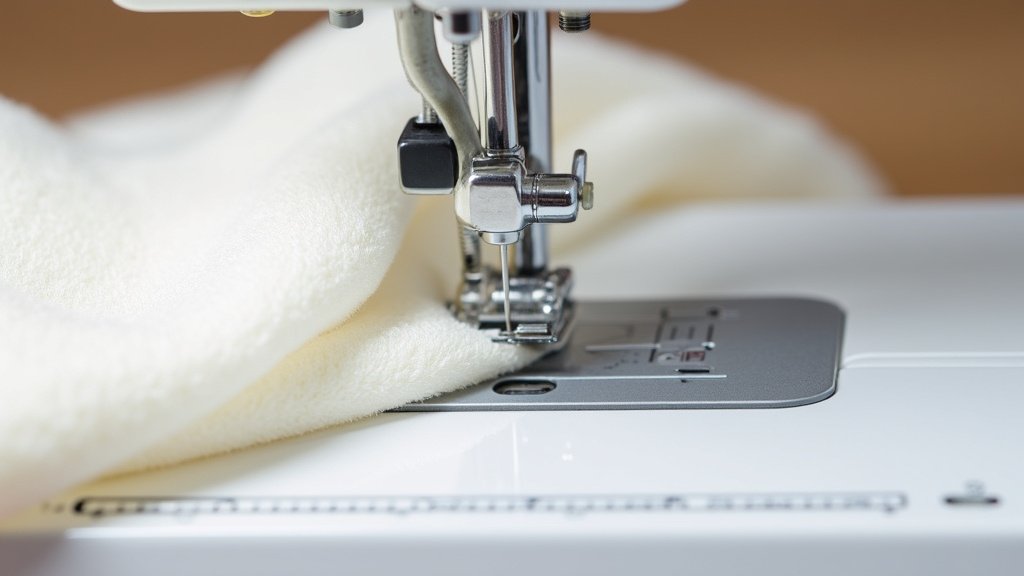
When to Replace Your Sewing Machine Needle
This is a critical point that many sewers overlook! A dull needle is one of the biggest culprits behind sewing problems, especially with tricky fabrics like minky. Needles aren’t meant to last forever.
We found that for average sewing projects, a needle should be replaced after about 6-8 hours of continuous sewing. For minky, because it’s a denser fabric that can be harder on the needle, you might need to replace it even sooner. Think about changing your needle after every 1-2 large projects.
Signs of a Dull Needle
How do you know if your needle has gone dull? You’ll likely notice a few tell-tale signs. Your sewing machine might start making unusual noises. You might hear a “thumping” or “grinding” sound as the needle hits the fabric.
Skipped stitches are a huge indicator. You’ll see gaps in your seams where the thread should have formed a loop. Fabric damage, like snags or little holes around the stitch line, is another warning sign. If you start seeing these issues, it’s almost always time for a fresh needle.
Essential Minky Sewing Needle Checklist
To make sure you’re always prepared for your minky projects, here’s a quick checklist:
- Keep a pack of universal needles in sizes 80/12 and 90/14 on hand.
- Consider adding a pack of microtex needles in the same sizes for extra precision.
- Always use a fresh, sharp needle for every new project.
- Listen to your sewing machine; strange noises often mean a dull needle.
- Inspect your stitches for skipped stitches or fabric damage.
- Replace your needle regularly – don’t wait until you have problems!