
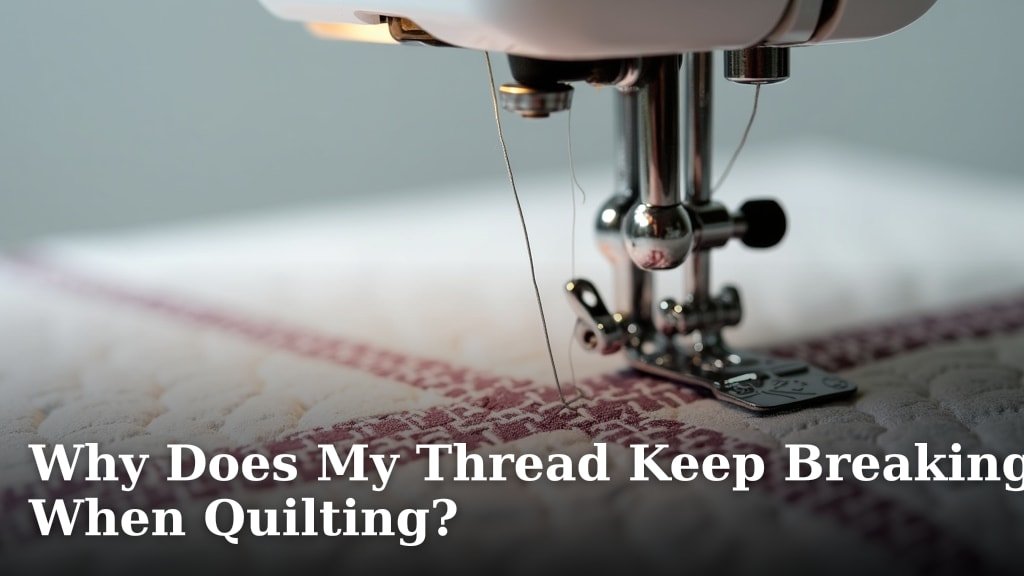
Thread breaks when quilting primarily due to incorrect tension settings, a needle that’s too small or dull, or using low-quality thread. This frustrating problem often stems from a few simple, fixable issues in your setup.
Many quilters face this snag, which can pause your project and test your patience. We found that common culprits include mismatched components like your fabric, thread weight, or even the bobbin case. Getting everything aligned is key to smooth stitching.
- Check your machine’s tension first; too tight or too loose can snap the thread.
- Ensure your needle is the right size for your thread and fabric type.
- Use high-quality thread to avoid weak spots and fraying.
- Look for burrs on the needle plate or bobbin case that might catch the thread.
- Keep your machine clean and well-oiled to reduce friction.
Below, we’ll dive into each of these reasons and show you simple steps to troubleshoot, so you can get back to quilting without the breaks.
Conclusion
Dealing with breaking thread can feel like a major roadblock, but it’s almost always a solvable puzzle. You’ve now seen that the problem usually boils down to a few key areas: your machine’s tension, your needle choice, and the quality of your thread. Remember that a quick check of these elements can save you a lot of frustration. The goal is to create a smooth path for your thread from spool to fabric.
Take a moment before your next session to **revisit your tension settings and needle**. A small adjustment here can make a world of difference. If you’re still facing breaks, try switching to a brand-new needle and a high-quality thread. You have the tools to fix this and get back to enjoying your quilting project.
Frequently Asked Questions
What thread brand do you recommend to prevent breaking?
We have found that investing in reputable brands like Aurifil, Gutermann, or Mettler significantly reduces breaks. These threads are more consistently manufactured and have less lint, which helps them glide smoothly through your machine and fabric layers.
My thread keeps breaking only when I sew over thick seams. Why?
This is a common stress point. When the needle hits multiple layers, the resistance increases, which can snap the thread. **Slow down** significantly over these humps and consider using a “hump jumper” or a thicker needle, like a 90/14, to help penetrate the bulk without excessive strain.
Could my old sewing machine be the problem?
An older machine might have internal burrs or worn tension discs that catch the thread. Have your machine serviced and cleaned professionally. Often, a good tune-up where all thread paths are inspected can resolve persistent breaking issues that simple fixes don’t touch.
Is there a specific thread weight I should use for quilting?
Yes, **thread weight matters**. A 40-weight or 50-weight cotton thread is standard for piecing and general quilting. Using a thread that is too heavy (like a 30-weight) for your needle can cause shredding, while a thread that is too fine might break under the tension of quilting.
How do I know if I’m using the right needle for my thread?
A simple rule is to match the thread to the needle’s eye. The thread should flow smoothly through the eye without shredding. If you see fraying as it enters the needle, **size up your needle**. For example, if using a 40-weight thread, try a 90/14 needle instead of a 80/12.
