What Is the Best Stitch Length for Piecing?
On this page (8 sections)
When piecing quilts, the best stitch length is typically around 2.0 to 2.5 mm. This setting offers a balance for durability and a clean, finished look. It’s often recommended by many experienced quilters for creating sturdy seams that hold up well in finished projects. Using this stitch length ensures your piecing is secure without being overly bulky.
Choosing the right stitch length is more than just a number; it’s about creating strong, reliable seams. A stitch that’s too long can pull apart with use. Conversely, a stitch that’s too short can create puckers or weaken the fabric. We found that many quilters settle on a stitch length between 2.0 and 2.5 mm for most piecing tasks.
- The ideal stitch length for quilting piecing is generally 2.0-2.5 mm.
- This length provides strong, durable seams.
- Too long a stitch can lead to seams pulling apart.
- Too short a stitch can cause puckering and fabric weakness.
- Experimentation is key to finding your personal preference.
Let’s walk through why this stitch length is so popular and what happens if you stray too far from it. We’ll cover how your machine and thread choice play a role too.
Choosing Your Quilting Stitch Length for Piecing
The sweet spot for piecing stitches is usually between 2.0 and 2.5 millimeters. This length creates seams that are strong and hold up well. It’s a widely accepted range among quilters for good reason.
Why Stitch Length Matters in Piecing
Think of your quilt seams as the bones of your project. If they’re too weak, the whole quilt can suffer. The right stitch length ensures your pieced blocks stay together, wash well, and last for years. It’s about building a solid foundation for your beautiful work.
The Risks of Stitch Length Gone Wrong
What happens when your stitch is too far off the mark? Let’s break it down. It’s not just about aesthetics; it’s about the longevity and integrity of your quilt.
When Your Stitch is Too Long
If you set your stitch length too long, say 3.0 mm or more, your seams might start to fray. Imagine pulling on a thread that’s only tied once every half-inch. That’s a lot of space for the fabric to come apart! Over time, especially after washing, these seams can pull apart. This can lead to holes or weakened areas in your quilt top. Many sewing machine manuals suggest longer stitches for garment construction, where less stress is placed on seams. Quilting seams, however, endure more wear and tear.
When Your Stitch is Too Short
On the flip side, a stitch that’s too short, like 1.0 mm or even less, can cause its own set of problems. Tiny stitches create a lot of thread going through the fabric. This can actually weaken the fabric by perforating it too much. You might also notice that your fabric starts to pucker or gather. It’s like trying to gather fabric with a very tight stitch – it bunches up. This puckering can make it hard to sew pieces together accurately. It also creates a bulkier seam line that can be visible.
Finding Your Ideal Stitch Length
Most modern sewing machines can handle stitch lengths between 0.0 mm and 5.0 mm. For quilting piecing, we’re looking for a specific range within that. Many quilters find that a 2.0 to 2.5 mm setting is the perfect balance.
This range provides enough stitches per inch to create a strong, secure seam. It doesn’t go so far as to perforate the fabric excessively. You get the best of both worlds: durability and a relatively flat, unobtrusive seam.
Understanding Your Sewing Machine Settings
Your sewing machine is your partner in this creative process. Knowing how to adjust and utilize its features is key. Stitch length is one of the most fundamental settings you’ll adjust.
How to Adjust Stitch Length
Most sewing machines have a dial or a digital display to control stitch length. You’ll typically see numbers that correspond to millimeters. If you’re unsure how to change this setting on your machine, consult your user manual. It’s usually a straightforward process, but it’s good to be sure.
Machine Differences and Stitch Length
It’s important to remember that stitch length can vary slightly between different sewing machine brands and models. A 2.5 mm setting on one machine might look slightly different from a 2.5 mm setting on another. This is why testing your stitch on scraps is so important. You want to see how the machine handles your chosen thread and fabric at that specific setting.
Thread and Needle: The Supporting Cast
While stitch length is primary, your thread and needle choice also play a role. They work together to create the perfect seam.
Thread Weight and Stitch Length
The weight of your thread matters. For standard piecing, a good quality cotton thread in the 40-50 weight range is common. If you use a very thick thread, you might need to adjust your stitch length slightly. Conversely, a very fine thread might require a slightly shorter stitch for strength. However, for most standard piecing, sticking to the 2.0-2.5 mm range with typical quilting thread will serve you well. Learn more about using cotton thread in our guide to quilting thread.
Needle Size and Fabric Type
Your needle size should correspond to your fabric. A universal needle in the 80/12 or 90/14 size is a good starting point for quilting cottons. A needle that’s too large can create bigger holes. A needle that’s too small might struggle with thicker fabrics or multiple layers. The goal is a clean puncture that doesn’t damage the fabric fibers unnecessarily.
Testing Your Perfect Stitch Length
Before you dive into your quilt project, take a moment to test. This is one of the most helpful habits you can develop as a quilter. It saves frustration down the line.
The Scrap Fabric Test
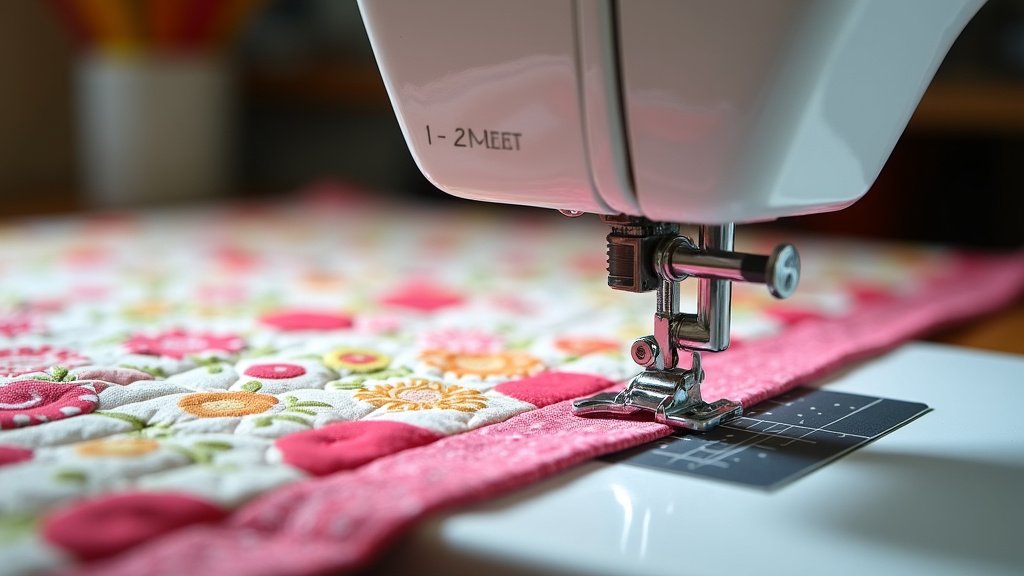
Grab a few scraps of the same fabric you’ll be using for your quilt. Set your machine to 2.0 mm and sew a short seam. Then, try 2.2 mm, and then 2.5 mm. Feel the seam. Look at it. Does it lay flat? Does it feel secure? Does the fabric pucker?
You can even take your test seams and give them a gentle tug. See how well they hold up. You’re looking for a seam that feels strong and stable. It should also look neat and not create excessive bulk.
What to Look For in a Test Seam
A good piecing stitch should:
- Be consistent in length.
- Not pucker the fabric.
- Feel secure when gently pulled.
- Not create excessive bulk in the seam allowance.
- Allow the fabric to lie relatively flat.
Checklist for Optimal Piecing Stitches
To ensure you’re set up for success, run through this quick checklist:
- Confirm your machine’s stitch length setting.
- Test your chosen stitch length on fabric scraps.
- Use good quality quilting thread.
- Select an appropriate needle size for your fabric.
- Gently tug on your test seams to check for durability.
- Adjust as needed until you achieve a strong, flat seam.
Conclusion
You’ve learned that the ideal stitch length for piecing quilts typically falls between 2.0 and 2.5 mm. This range provides the best balance for creating seams that are both strong and tidy. Straying too far from this can lead to seams that pull apart or fabric that puckers. Remember, your sewing machine, thread, and needle all work together. Always test your settings on scraps before starting your project. This simple step ensures your quilting journey is smooth and your finished quilts are beautifully constructed and durable.
Frequently Asked Questions
What if my sewing machine only shows stitch length in inches?
If your machine displays stitch length in inches, you’ll want to aim for approximately 0.08 to 0.10 inches. Most quilters find this range very similar to the millimeter settings of 2.0 to 2.5 mm. It’s always a good idea to test on scraps to confirm how it looks and feels.
Can I use a longer stitch length for very thick fabrics?
While it might seem intuitive, a longer stitch isn’t always better for thick fabrics, as it can lead to seams pulling apart. Instead, focus on using the correct needle size for your fabric and ensuring your machine is in good working order. The 2.0-2.5 mm range usually still works well, but always test first.
Will my thread choice affect my stitch length?
Yes, your thread can play a role. If you’re using a very fine, delicate thread, you might want to lean towards the shorter end of the recommended range (closer to 2.0 mm) for extra strength. Conversely, a thicker thread might be fine with the upper end (closer to 2.5 mm), but avoid anything too long.
How do I know if my stitch length is too short?
Signs of a stitch length that’s too short include your fabric gathering or puckering as you sew, or if the seam line appears excessively bulky. You might also notice the fabric feels weaker or tears more easily along the seam line due to excessive perforations.
Is it okay to use a longer stitch for basting or temporary seams?
Absolutely! A longer stitch length, perhaps 3.0 mm or more, is perfectly suitable for temporary basting stitches. These stitches are meant to be removed easily and don’t need the same durability as permanent piecing seams. Just remember to switch back to your piecing length for actual construction.