Which Longarm Quilting Machine Fits a Small Space?
A space-saving longarm and frame setup starts with the room, the quilt size and how you want to guide the fabric. A sit-down longarm often fits a compact room more easily; choose a frame when you have space for the full frame, loading access and machine travel.
On this page (9 sections)
- Which space-saving longarm and frame setup suits your room?
- How do you measure the frame footprint and working clearance?
- How large should a frame be for the quilts you make?
- What should you compare before buying a small-space longarm?
- How do you set up a longarm in a compact room?
- What use and care habits help a small setup work well?
- What common space-planning mistakes should you avoid?
- Which alternatives work alongside a longarm?
- Which setup should you choose for your room?
A space-saving longarm and frame setup begins with the room you have and the quilts you plan to finish. A sit-down longarm keeps the quilt on a table as you guide it, while a frame longarm holds the quilt on rollers and moves the machine across it.
The machine's size alone doesn't tell you whether the whole workspace will fit. Include the table or frame, quilt movement, loading access, operator position and the paths you need to move through the room.
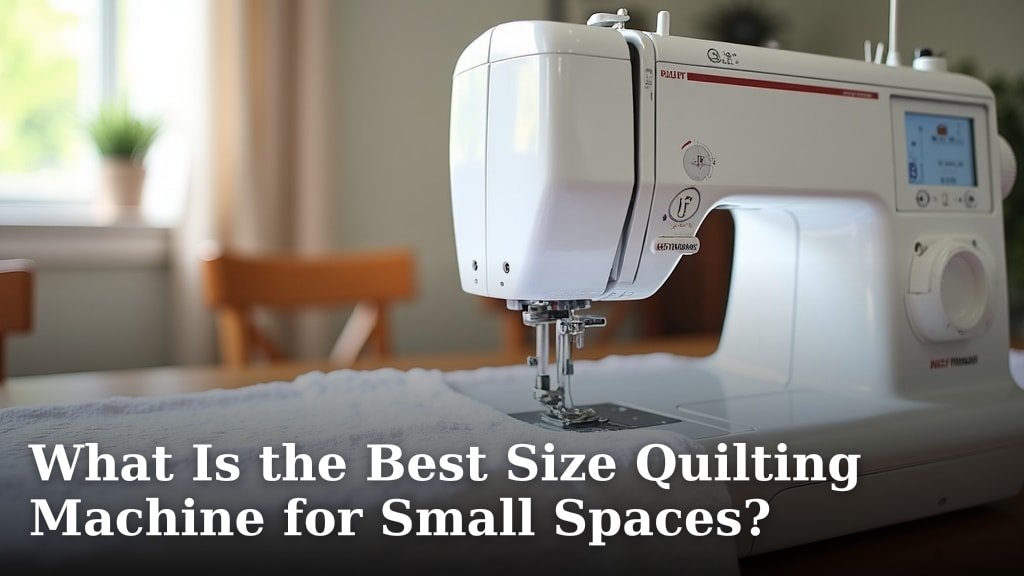
For a broader look at compact options, see what size quilting machine works in a small space. If a table setup seems more practical, our guide to sit-down longarms for small spaces explains how that arrangement works.
Which space-saving longarm and frame setup suits your room?
A sit-down longarm is often the easier layout to fit in a compact room, while a frame needs a clear area around its full footprint. The right choice depends on how you prefer to move the quilt and whether you can leave the equipment set up.
| Setup | How you handle the quilt | Space to plan for |
|---|---|---|
| Sit-down longarm | Guide the quilt across a table beneath the machine | Table, quilt spread and seated operating area |
| Compact-frame longarm | Mount the quilt on rollers and move the machine over it | Frame length and width, machine travel and access |
| Full-frame longarm | Keep the quilt mounted while the machine covers a larger area | Frame footprint, loading access and walking room |
A frame can look compact when it's empty, but a quilt extends beyond the needle area during loading and quilting. Account for handles, rails, table extensions and the route you need to walk around the frame.
A sit-down arrangement removes the long frame, but it still needs enough table surface for the quilt to move without catching on a wall, shelf or nearby furniture. Decide based on the largest quilt you work on regularly, not just a small sample project.
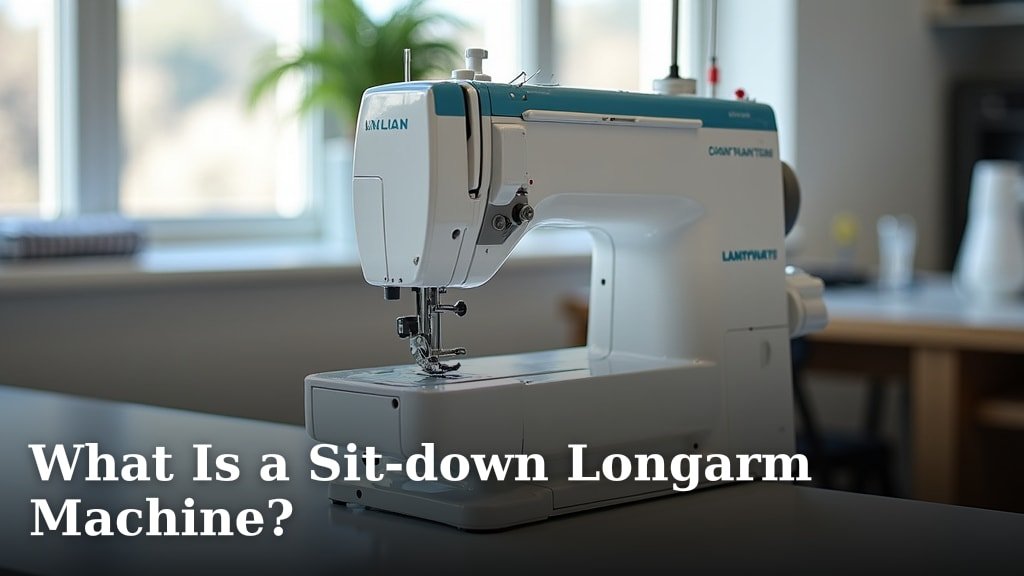
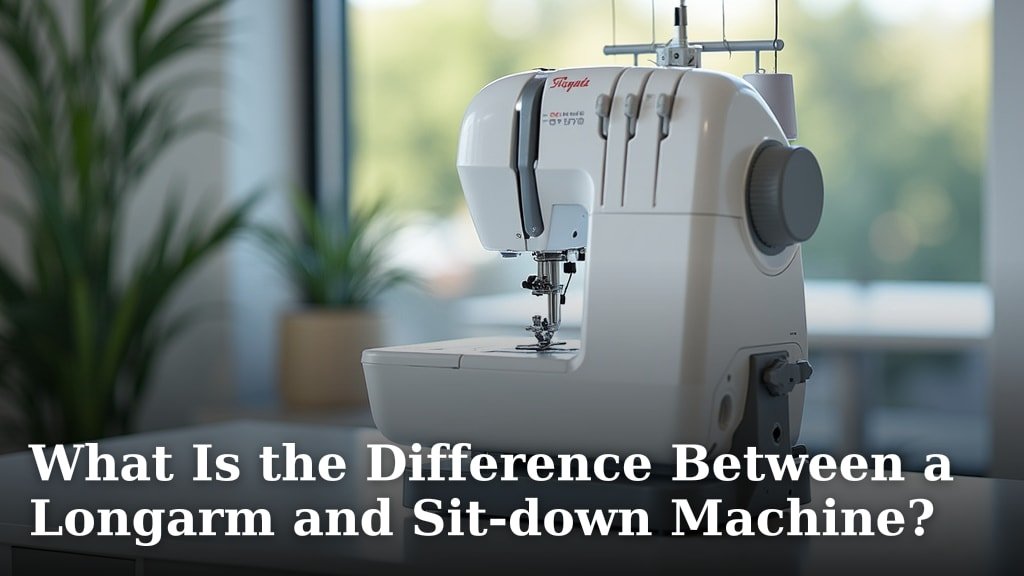
If you're comparing the two approaches, read how a longarm differs from a sit-down machine. For a basic explanation of the table-based setup, see what a sit-down longarm machine is.
How do you measure the frame footprint and working clearance?
Measure the whole working area, including the frame or table, quilt movement and access for loading. Use the manufacturer's dimensions and installation instructions, then check the layout in the room before ordering.
Make a short measurement list:
- Machine and support: Measure the outside width and depth, including rails, handles and any attached table.
- Quilt loading area: Mark where you'll stand to attach or adjust the quilt.
- Walking access: Include required clearance, then confirm you can reach the sides you need.
- Quilt movement: Leave space for fabric to spread without hitting furniture or a wall.
- Delivery route: Measure doors, hallways and tight turns. Check packaged dimensions when available.
- Power and controls: Keep outlets and controls reachable, with cords out of walkways.
Use painter's tape to mark the machine and frame edges on the floor. Add outlines for the loading area and the main paths you'll walk while operating the setup.
For a sit-down station, place a chair at the marked table and check that your knees, feet and arms have room. For a frame, walk around the outline and reach the places where you expect to load or adjust the quilt.
Then test the setup with a folded blanket or spare fabric over the table or frame area. This won't reproduce a full quilt's weight or size, but it can reveal whether nearby shelves, chairs or storage interrupt your normal movements.
How large should a frame be for the quilts you make?
Choose a frame that supports your regular quilt sizes and still fits the room with access around it. A longer frame can hold larger projects, but it uses more floor space and can restrict movement.
A small frame may be enough for wall quilts, baby quilts and other modest projects. If you often quilt bed-size pieces, compare the frame's supported quilt dimensions and the room needed to load fabric onto it.
Look at both the quilting area and the frame's outside dimensions. The area where the machine can stitch may be smaller than the space occupied by rails and supports, so those measurements answer different questions.
Your finishing method matters too. If you can quilt larger projects in sections, you may be able to work with a smaller frame or a sit-down machine.
If you want to keep a full quilt mounted at once, choose a frame designed for that project size and confirm the room can accommodate its working footprint.
Don't size a frame around a project you might make once if it would make every regular session harder. A setup that lets you comfortably finish the quilts you make most often is usually the more useful fit.
What should you compare before buying a small-space longarm?
Compare quilt capacity, operator access and the equipment's full working footprint before considering extra features. A setup can be compact on paper but awkward to use if the machine can't travel freely or you can't reach the quilt.
Use these checks to narrow your choices:
- Frame length and width: Count the complete frame, not only the quilting area.
- Machine travel: Confirm the head can reach the intended quilting area without hitting walls or furniture.
- Quilt capacity: Match the setup to the largest projects you expect to quilt regularly.
- Table shape: A sit-down model needs a surface that supports the quilt as you guide it.
- Loading access: A frame needs room to mount fabric and adjust its rollers.
- Room use: Consider whether the setup can remain assembled or needs to be moved between projects.
- Delivery path: Check doorways and turns before a bulky machine or frame arrives.
If your main goal is sewing and quilting smaller projects, compare a sewing and quilting machine for small spaces. If you want computerized stitch control in a compact setup, see our guide to computerized quilting machines for small spaces.
How do you set up a longarm in a compact room?
Set up the machine on a stable surface, preserve the clearance in its instructions and keep the quilt's path open. A careful layout prevents everyday obstacles from becoming part of the quilting workspace.
Start by clearing the area and marking the planned footprint. Place the frame or table so it doesn't block a door, closet or route you use often, and position outlets where cords won't cross a walking path.
Assemble the equipment according to its instructions. Check that the frame or table sits evenly, then confirm the machine can travel across the intended work area without bumping nearby walls or furniture.
Before loading a quilt, move through the space as you expect to while quilting. Check that you can reach controls, stand or sit comfortably, and get to the sides needed to load fabric or adjust the setup.
For frame systems, follow the machine and frame maker's guidance for loading and advancing a quilt. These steps vary by system, so use the instructions for your exact model rather than assuming that every roller or clamp works the same way.
What use and care habits help a small setup work well?
Keep the work area clear, support the quilt and follow the machine's maintenance instructions. A tidy, well-planned station makes it easier to move fabric without pulling it into nearby objects.
Before a session, clear loose tools from the table and floor, check that cords remain out of the way and make sure the quilt can travel across the work area. Keep frequently used items within reach without placing them where they can snag the fabric.
For a sit-down machine, let the table support the quilt instead of allowing its weight to pull against the needle area. For a frame machine, check that the quilt is secured and advances evenly according to the frame's instructions.
Remove lint and clean or oil the machine only as directed by its manufacturer. Use the specified tools and locations, and avoid adding oil where the manual doesn't call for it.
When you finish, cover or store the machine as its instructions recommend. If you need to reclaim the room, plan storage for removable accessories and frame parts before choosing a model that requires frequent disassembly.
What common space-planning mistakes should you avoid?
The most common mistake is measuring the machine while ignoring the frame, quilt and operator. A setup that fits in an empty room may still block the paths you need for loading and sewing.
Watch for these planning errors:
- Measuring only the machine head instead of the full frame or table.
- Choosing a frame based on the quilting area while overlooking its outside dimensions.
- Forgetting that quilt fabric spreads beyond the needle or table edge.
- Placing the setup against a wall that blocks loading or machine travel.
- Leaving no room to sit, stand or reach the controls comfortably.
- Assuming a frame will pass through doorways without measuring the delivery route.
- Buying for an occasional oversized quilt when the setup will make regular projects inconvenient.
- Planning to fold or move equipment without confirming that the model supports that arrangement.
A floor plan helps, but a taped outline gives you a better sense of how the space feels. Walk the route, pull out a chair and check access to storage before you settle on a layout.
Which alternatives work alongside a longarm?
**A conventional sewing machine or serger can support piecing and finishing in a compact sewing room, but neither replaces a longarm's quilting workspace. For decorative stitching, compare serpentine stitch sewing machines.
The Brother CS7000X review covers one home machine option.** These machines may be useful if you need one station for general sewing or edge finishing.
The Brother 1034D measures 10 in deep by 11 in wide and weighs 8 lb. Its serger functions and included standard, gathering and blind-stitch feet suit finishing tasks, but it doesn't hold or quilt a large quilt on a frame.
The Janome HD1000 is a conventional sewing machine for general sewing and occasional free-motion work. If you want more room for quilt fabric, compare large-throat sewing machines for quilting.
For more models, browse the best Janome sewing machines. It may suit a quilter who needs a flexible machine for smaller projects, but it isn't a frame-mounted longarm.
The SINGER 4411 has a 15 in machine width, so leave additional room for fabric and your hands when planning a station. For another brand to compare, see Juki sewing machines.
Its top drop-in bobbin and heavy-duty metal frame support sewing tasks, but the machine itself doesn't provide a longarm frame or its quilting capacity.
Which setup should you choose for your room?
Choose a sit-down longarm if floor space is tight and you're comfortable guiding the quilt across a table. Choose a frame longarm when you want the quilt held on rollers and your room can fit the full frame, loading area and machine travel.
A compact frame makes sense when you quilt projects that benefit from being mounted and can dedicate a clear rectangular area to the equipment. Skip it if the frame would block daily movement, prevent access to furniture or leave you without room to load the quilt.
A sit-down setup suits a room where you can provide a stable table and space for the quilt to move. Skip it if the table can't support your regular project sizes or you prefer the quilt to remain mounted while you move the machine.
A regular sewing machine or serger is a practical companion for piecing and finishing, but it won't deliver the same working setup as a longarm. For a space-saving longarm and frame decision, tape out the full layout first, then pick a sit-down model for tighter rooms or a frame when quilt capacity and clear access both fit.
Frequently asked questions
Can a longarm quilting machine fit in a small room?
Yes, if the machine and frame fit with enough space to use them. Measure the full footprint, including machine travel, quilt loading access and room to stand or walk around the setup.
A sit-down longarm may be easier to place in a compact room because it doesn't need a full-length frame.
How much room do you need around a longarm quilting machine?
There is no single clearance amount for every longarm. Check the manufacturer's installation guide for required gaps, then allow room to walk around the frame, reach the controls and load the quilt.
Tape the machine and frame outline on the floor to see whether the paths you need remain clear.
Is a sit-down longarm better for a small space?
A sit-down longarm can suit a small space because the quilt rests on a table and you guide it beneath the machine instead of moving a machine across a full frame. You still need table space, room for the quilt to spread and a comfortable position at the controls.
Can you use a longarm quilting machine without a frame?
Some longarms are designed for sit-down use with a table instead of a frame. A frame model holds the quilt in place while the machine moves across it.
Check the manufacturer's instructions for the specific machine because frame and table setups aren't interchangeable.
What should you measure before buying a longarm?
Measure the full outside footprint of the machine or frame, plus the room needed to load a quilt, move around it and operate the controls. Measure doorways and turns along the delivery route too.
Follow the manufacturer's installation instructions for ventilation, electrical access and required clearance.