What Is a Sit-down Longarm Machine?
On this page (3 sections)
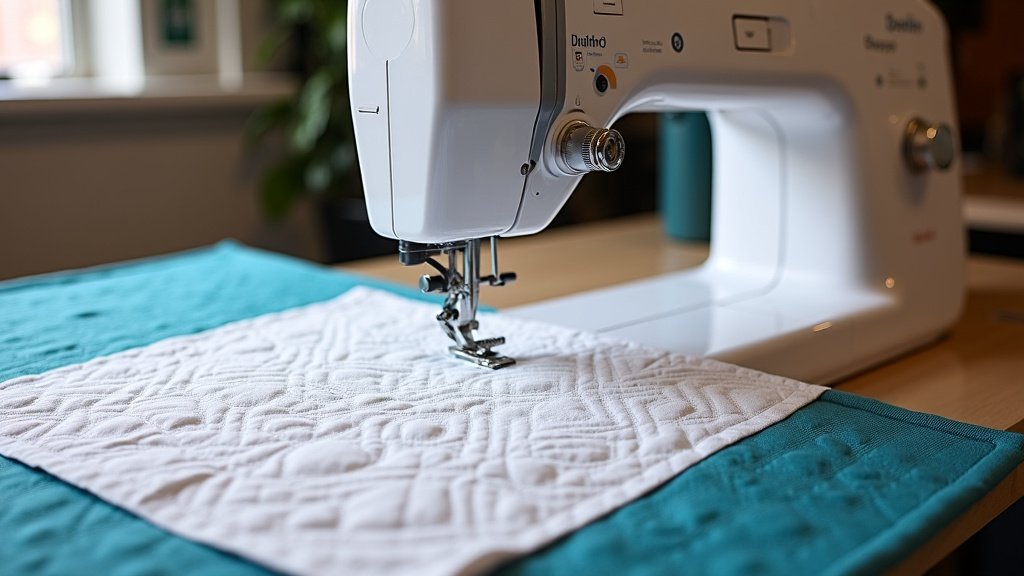
A sit-down longarm machine is a specialized sewing machine. It features an extra-long sewing arm. This allows for easier quilting and free-motion stitching on larger fabric pieces. Think of it as a super-powered sewing machine built for big projects.
Unlike a regular sewing machine, these machines are designed for quilting. The extended arm gives you more space to move fabric. This makes creating large quilts much more manageable. Many quilters find it a game-changer for their hobby.
- It’s a sewing machine for big projects.
- It has a very long arm.
- Great for quilting and free-motion sewing.
- Gives you more space to move fabric.
- Makes large quilts easier to finish.
Ready to learn more about this amazing tool? Below, we’ll cover what makes a sit-down longarm special and how it can help your quilting dreams come true.
Understanding the Sit-Down Longarm Quilting Machine
So, you’ve heard about these special sewing machines for big quilting projects. A sit-down longarm machine is essentially a heavy-duty sewing machine with a much larger working area. It’s designed to make quilting large pieces of fabric much easier than on a standard domestic machine. The name itself gives you a clue: you sit down to operate it, and it has a long arm extending from the needle. This gives you ample space to maneuver your quilt sandwich.
What Sets a Sit-Down Longarm Apart?
The most obvious feature is the extended throat space. This is the area between the needle and the machine’s body. On a regular sewing machine, this space is quite small, often only about 6 inches. On a sit-down longarm, this can be 12 inches or much more. This extra room is vital for quilting. It allows you to move a large quilt around freely underneath the needle. You won’t feel cramped or struggle to push bulky layers. It’s like going from a small studio apartment to a spacious loft – so much more room to create! This extra room is vital for quilting, allowing you to move a large quilt around freely underneath the needle.
Another key difference is the type of stitching they excel at. While any sewing machine can do straight stitches, sit-down longarms are built for free-motion quilting. This is where you can draw with your needle, creating all sorts of beautiful, freehand designs. The machines have powerful motors and smooth, precise stitch control. This helps you achieve consistent stitch lengths and beautiful patterns. Many quilters find that the stitches produced by a longarm are nicer and more even than on their regular machines, especially when quilting.
The Purpose of the Long Arm
Think about quilting a king-size quilt on a machine with a tiny throat space. You’d be constantly shifting the quilt, trying to keep it from bunching up. It’s a frustrating experience, for sure. The long arm on these machines acts as a large, stable platform. It supports the weight of the quilt while giving you the freedom to guide it. You can move the quilt in any direction without much effort. This makes the entire quilting process smoother and more enjoyable. It truly opens up possibilities for your quilt designs.
Key Components and How They Work
When you look at a sit-down longarm, you’ll notice a few key parts that are different or more robust than on a standard machine. Let’s break them down so you know what you’re looking at.
The Extended Throat Space
We’ve touched on this, but it’s worth reiterating. The throat space is the heart of the longarm. It’s the open area where the magic happens. More space means you can handle bigger projects with less fuss. Imagine trying to paint a mural on a small canvas versus a huge one. The larger canvas allows for bigger, bolder strokes and more detail. The longarm’s throat space does the same for your quilting.
The Sewing Machine Head
The actual sewing mechanism – the needle, presser foot, bobbin area – is housed in the machine head. On a sit-down longarm, this head is often designed for superior stitch quality and control. They usually have a powerful motor that provides consistent speed. This is essential for free-motion stitching. You want a machine that can keep up with your creative flow without skipping stitches or snagging fabric. Many models also feature larger bobbins, meaning you can stitch longer before needing to change the thread.
The Frame or Table
Unlike a mid-arm or frame-based longarm (which we won’t get into here!), a sit-down longarm typically sits on a sturdy table or frame. This table is designed to bring the machine head up to a comfortable height. It often has a large flat surface around the machine head. This surface helps support the weight of your quilt. Some tables have built-in storage or adjustable legs. The stability of this setup is crucial for smooth operation.
Who Benefits Most from a Sit-Down Longarm?
This machine isn’t just for professional quilters. Many home-based quilters find it a wonderful addition to their hobby. If you love quilting and often find yourself struggling with larger projects, this could be for you. Think about the types of quilts you want to make. Are you dreaming of large bed quilts, memory quilts with many blocks, or intricate appliqué designs? This machine isn’t just for professional quilters. Many home-based quilters find it a wonderful addition to their hobby, especially for larger projects.
If your current machine makes these projects feel like a chore, a sit-down longarm can transform your experience. Quilters who are interested in developing their free-motion quilting skills also find these machines incredibly helpful. The dedicated space and precise control make practicing new patterns much more effective. You can truly focus on the artistic side of quilting without fighting your machine.
Sit-Down Longarms vs. Other Longarms
It’s helpful to know that not all longarms are the same. Sit-down longarms are just one type. We’ve seen how they differ from regular sewing machines. But how do they compare to other longarm quilting machines?
| Feature | Sit-Down Longarm | Frame-Based Longarm |
|---|---|---|
| Size of Throat Space | Typically 12+ inches | Often 15+ inches, sometimes much larger |
| Operation Style | You guide the quilt on a flat table | Machine head moves on a frame over the quilt |
| Primary Use | Free-motion quilting, edge-to-edge designs, smaller projects | Complex quilting, intricate edge-to-edge, large-scale projects |
| Space Requirement | Requires a large table, similar to a sewing cabinet | Requires significant floor space for the entire frame |
| Learning Curve | Generally considered easier to learn for beginners | Can be steeper due to frame mechanics and speed |
As you can see, the main difference is how the quilt is moved. With a sit-down, you move the quilt across the machine. With a frame-based longarm, the machine moves over the quilt. This makes the sit-down style feel more familiar to those used to domestic machines. Many quilters start with a sit-down longarm as an upgrade from their regular sewing machine. It’s a way to get into longarm quilting without the investment and space required for a full frame system.
Is a Sit-Down Longarm Right for You? A Quick Checklist
Thinking about making the leap? Ask yourself these questions:
- Do you find yourself frustrated with limited space on your current sewing machine for quilting?
- Are you eager to explore free-motion quilting designs beyond simple straight lines?
- Do you primarily quilt projects that are medium to large in size (like queen or king quilts)?
- Do you have the space for a larger table or sewing cabinet to accommodate the machine?
- Are you looking for a machine that offers superior stitch quality for your quilting?
- Do you want to save time and effort on finishing your quilts?
If you answered “yes” to most of these, then a sit-down longarm might be an excellent investment for your quilting journey. It’s about making your passion project more manageable and enjoyable.
Conclusion
You’ve learned that a sit-down longarm machine is a specialized sewing tool designed to make quilting large projects much easier. Its extended throat space and focus on free-motion stitching offer greater control and creative freedom. Unlike a frame-based longarm, you move the quilt yourself on a stable table. If you dream of tackling bigger quilts without frustration and want to enhance your artistic quilting skills, a sit-down longarm could be the perfect next step for your sewing journey. Ready to see what you can create? Consider visiting a local quilt shop to try one out!
Frequently Asked Questions
Is a sit-down longarm hard to learn?
Most quilters find sit-down longarms easier to learn than frame-based models. Because you control the fabric movement, it feels more intuitive if you’re used to a regular sewing machine. With practice, you’ll quickly get the hang of guiding your quilt.
Can I use a sit-down longarm for regular sewing tasks?
While you technically can, these machines are optimized for quilting and free-motion work. Their primary strength is handling large quilt sandwiches with ease. For everyday garment sewing or piecing small blocks, your standard domestic machine might be more efficient.
What kind of table do I need for a sit-down longarm?
You’ll need a sturdy table or cabinet designed to support the machine’s weight and provide a stable, flat surface. Many manufacturers offer specific tables that bring the machine to a comfortable sewing height and offer ample space around the needle area.
Do sit-down longarms have a walking foot?
Some sit-down longarms come with or can accept a walking foot, which is helpful for piecing and straight-line quilting. However, their main purpose is free-motion quilting, where you don’t typically use a walking foot.
How much space does a sit-down longarm setup take up?
The machine itself sits on a table, so the space requirement is similar to that of a large sewing cabinet. You’ll need enough room for the table and comfortable access around it to maneuver your quilts.