
The main difference between a longarm and sit-down machine is how you move the quilt. With a longarm machine, you stand and move the machine head over a stationary quilt. A sit-down machine lets you sit, moving the quilt fabric under a stationary needle.
You might wonder which machine is right for you. It really depends on your quilting style and space. Both machines help you create beautiful quilts. We found that each has unique benefits for different quilters.
- Longarms move the needle over the fabric.
- Sit-down machines move the fabric under the needle.
- Your workspace and comfort matter most.
- Both options help you finish quilting projects.
Let’s look at these two quilting machines in more detail. We’ll help you understand which one best suits your quilting journey.
Understanding Longarm vs. Sit-down Quilting Machines
Longarm and sit-down machines offer different ways to quilt. Your choice often comes down to comfort and the type of projects you love to make.
What is a Longarm Quilting Machine?
A longarm quilting machine is a specialized sewing machine with a very long arm. This long arm lets you quilt large projects with ease. You usually find these machines on a big frame.
How Does a Longarm Machine Work?
When you use a longarm, you stand at the machine. The quilt top, batting, and backing are loaded onto rollers on a large frame. You then move the machine head over the fabric to create your stitches. It’s like drawing on your quilt with the machine.
This method keeps your quilt fabric flat and stable. You don’t have to push or pull the bulky quilt yourself. Many quilters find this less physically taxing for big projects.
Key Benefits of Longarm Machines
- Larger projects are much easier to manage.
- You get a clear view of your entire quilting area.
- Less strain on your arms and shoulders compared to moving a large quilt.
- Ideal for free-motion quilting and pantographs.
- Can often quilt faster once you get the hang of it.
What is a Sit-down Quilting Machine?
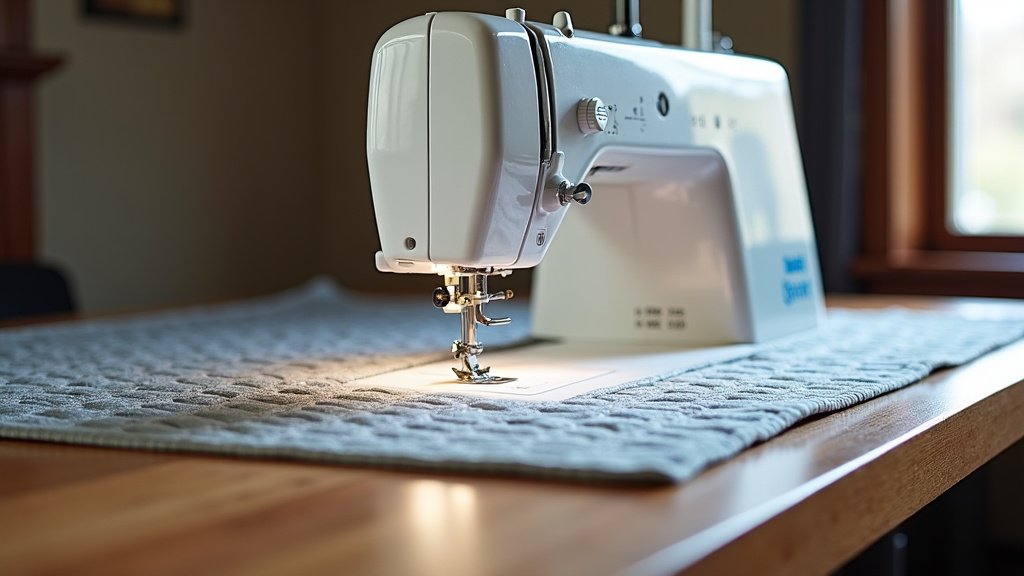
A sit-down quilting machine looks a lot like a regular sewing machine. However, it often has a larger throat space and sometimes a bigger table. You sit down comfortably to use it.
How Does a Sit-down Machine Work?
With a sit-down machine, the machine head stays still. You sit and move the fabric under the needle to create your stitches. It’s very similar to how you free-motion quilt on a domestic machine, but with more room.
This method requires you to manipulate the quilt yourself. You guide the fabric to form your designs. It feels very natural if you’re already used to a home sewing machine.
Key Benefits of Sit-down Machines
- Familiar feel, much like a regular sewing machine.
- Often more space-efficient than a longarm with its frame.
- Generally lower initial cost.
- Great for free-motion quilting and custom designs.
- You can quilt while seated, which many find comfortable.
Comparing Longarm and Sit-down Machines: Which One for You?
Choosing between these two machines depends on your quilting goals. Think about your available space, your budget, and how you like to quilt. Both are wonderful tools, just for different purposes.
Space and Setup Requirements
Consider how much room you have for your quilting passion. This is often a deciding factor for many quilters, as we found in our research.
Longarm Space Needs
A longarm machine needs a dedicated room or a very large area. The frame itself can be 10 to 14 feet long. You also need space to walk around it. If you live in a smaller home, this might be a challenge.
Many quilters dream of a dedicated “quilting studio” for their longarm. It really helps to have that kind of space.
Sit-down Space Needs
A sit-down machine is much more forgiving. You’ll need a sturdy table with enough surface area for your quilt. This could be in a corner of a spare room or even your living room. We found that many quilters can set up a sit-down machine in a much smaller footprint.
You can often use an existing sewing table or a large craft table. It makes it easier to fit into your home.
Cost Considerations for Quilting Machines
Both types of machines represent a significant investment. However, there’s a clear difference in average pricing, according to our research into the market.
Longarm Machine Pricing
Longarm machines are generally more expensive. They can range from $8,000 to over $30,000. This price includes the machine head, the frame, and often additional accessories like computer systems for automation.
This higher price reflects the larger size, specialized engineering, and frame system. It’s a serious investment for a serious quilter.
Sit-down Machine Pricing
Sit-down quilting machines are usually more budget-friendly. You can find good models ranging from $1,500 to $8,000. Some high-end models might be more, but they are typically much less than a longarm.
This price difference makes sit-down machines more accessible. They are often a great stepping stone for quilters moving beyond a basic home machine.
Quilting Style and Project Types
Your preferred quilting techniques will also guide your decision. Do you love big, intricate designs, or smaller, custom work?
Best Uses for Longarm Machines
Longarm machines excel at large, all-over designs. Think pantographs, where you follow a continuous design across the whole quilt. They are also fantastic for highly detailed custom work on large quilts.
If you plan to quilt for others or handle king-sized quilts regularly, a longarm is often the preferred tool. It makes quick work of big projects.
Best Uses for Sit-down Machines
Sit-down machines are ideal for custom free-motion quilting. You have more control over intricate designs in smaller areas. If you enjoy manipulating the fabric to create unique textures, this machine is a great fit.
They are excellent for art quilts, smaller throws, and garments. You get a very hands-on feel with your quilt.
A Quick Comparison Table
Here’s a simple table to help you visualize the main differences we’ve discussed. This might help you quickly see which machine aligns with your needs.
| Feature | Longarm Machine | Sit-down Machine |
|---|---|---|
| How you quilt | Move machine head over stationary fabric | Move fabric under stationary needle |
| Typical position | Standing | Sitting |
| Space required | Large, dedicated room (10-14ft frame) | Standard table size, less space |
| Average Cost | $8,000 – $30,000+ | $1,500 – $8,000 |
| Best for | Large quilts, pantographs, production | Custom free-motion, smaller projects |
| Learning Curve | Can be steep, different feel | Familiar, similar to domestic machine |
Making Your Decision: A Checklist
Before you commit to either a longarm or a sit-down machine, ask yourself these questions. This will help you find the perfect match for your quilting journey.
- Do I have enough dedicated space for a large frame?
- What is my comfortable budget for a new quilting machine?
- Do I prefer to stand or sit while I quilt for long periods?
- What size quilts do I primarily make (e.g., throws, king-size, art quilts)?
- Am I looking for speed and efficiency, or more hands-on artistic control?
- How comfortable am I with learning a completely new way of quilting?
Thinking through these points will clarify your priorities. We believe that the “best” machine is truly the one that makes you happy and productive.
Conclusion
Choosing between a longarm and a sit-down quilting machine truly comes down to your personal quilting journey. We found that your available space, budget, and preferred quilting style are the biggest factors. Both machines offer fantastic ways to bring your quilt ideas to life, just in different ways.
Think about how you like to work and the types of projects you enjoy most. Use our comparison and checklist to weigh the options. We encourage you to visit a local quilt shop or show to try both types of machines. Feeling them in action is the best way to make your final decision.
Frequently Asked Questions
Can I do free-motion quilting on both longarm and sit-down machines?
Yes, you can do free-motion quilting on both types of machines. Longarms are excellent for large-scale free-motion across big quilts. Sit-down machines offer a familiar feel, much like a domestic machine, making them great for custom free-motion designs on smaller areas.
Is one machine type faster than the other for quilting a project?
Generally, longarm machines can be faster, especially for very large quilts or repetitive patterns like pantographs. This is because you don’t have to constantly reposition the bulky fabric. Sit-down machines can also be fast, but require more physical manipulation of the quilt, which can slow down very large projects.
Do I need special threads or needles for these machines?
Both longarm and sit-down machines can use standard quilting threads and needles. However, some quilters find that certain thread weights or needle types work better for specific techniques or fabrics. Always check your machine’s manual for recommended specifications.
Can a sit-down machine handle a king-size quilt?
Yes, a sit-down machine can handle a king-size quilt. It will require significant maneuvering and careful rolling or scrunching of the fabric. It can be physically demanding, but many quilters successfully complete large projects on sit-down machines with patience and practice.
What is the learning curve like for each machine?
The learning curve for a sit-down machine is often less steep if you’re already comfortable with a home sewing machine. A longarm machine can feel very different, requiring you to learn to move the machine head smoothly. Both will take practice to master free-motion quilting designs effectively.
