
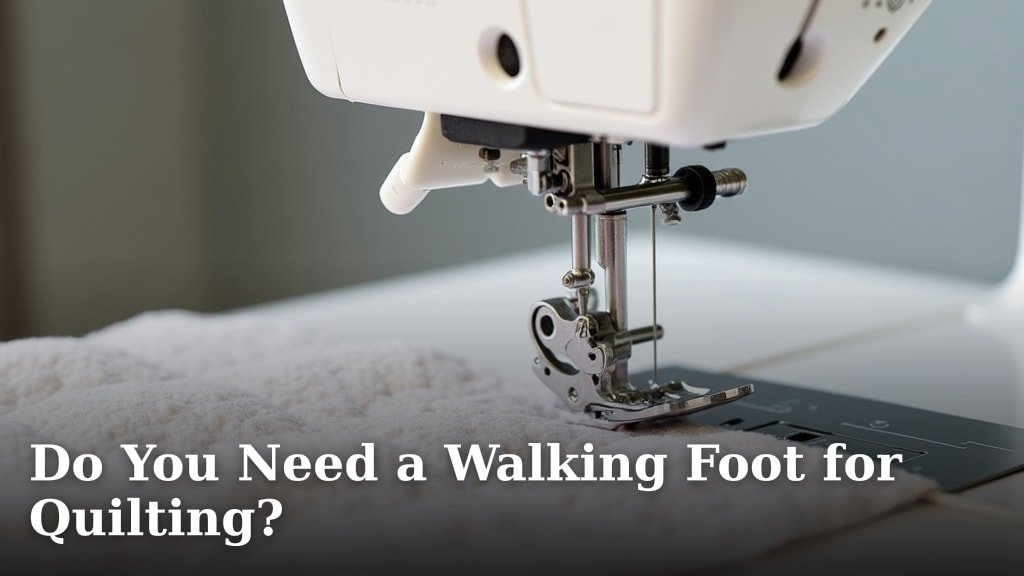
Yes, you absolutely need a walking foot for quilting if you want smooth, professional results, especially with layers. It’s not just a nice-to-have accessory; it’s essential for managing fabric as you stitch. Without one, you’ll likely struggle with puckering and uneven seams. Our guide on whether you can quilt without a walking foot offers alternative techniques and considerations.
A walking foot is specially designed to feed multiple layers of fabric through your sewing machine at the same rate. This helps to prevent shifting and stretching, which are common headaches when quilting. It makes a big difference in the finished look of your projects and reduces frustration significantly.
- A walking foot is often essential for quilting.
- It helps feed multiple fabric layers evenly.
- Prevents puckering, shifting, and uneven seams.
- Greatly improves the finished quality of your quilts.
- Reduces quilting frustration for many sewers.
Are you wondering why this simple attachment is such a game-changer for quilters? Let’s dive into all the details and explore exactly how a walking foot works and when you should always use one.
Why a Walking Foot is Your Quilting Best Friend
A walking foot is truly a game-changer for quilters. It solves many common problems you might encounter, making your projects smoother and much more enjoyable. Think of it as an extra set of hands helping to guide your fabric perfectly.
Understanding How a Walking Foot Works
Unlike a standard presser foot, a walking foot has its own set of feed dogs. These small, toothed mechanisms work in sync with your machine’s lower feed dogs. They grip the top layer of fabric and move it forward at the same rate as the bottom layers.
This synchronized movement is key to preventing fabric distortion. Without it, your machine’s lower feed dogs pull the bottom fabric, while the standard presser foot tends to push the top fabric. This creates a difference in how the layers move, leading to puckering.
The Mechanics Behind Even Feeding
- Your machine’s feed dogs pull the bottom fabric.
- A standard foot presses down, sometimes holding the top fabric back.
- This creates a “drag” on the top layer, causing uneven feeding.
- A walking foot has its own teeth that grip and move the top layer.
- This ensures all layers advance together, smoothly and consistently.
When to Absolutely Use Your Walking Foot
While a walking foot is great for many sewing tasks, there are specific situations where it becomes virtually indispensable. These are the moments when you’ll truly appreciate its unique capabilities.
Quilting Layers Together
This is the most obvious and important use. When you’re stitching together your quilt top, batting, and backing, you have three distinct layers. A walking foot ensures these layers don’t shift or bunch up as you sew.
Imagine trying to sew a thick sandwich without something holding the top slice. It would slide around, right? Your quilt layers are similar. The walking foot acts like that steady hand, keeping everything aligned.
Sewing with Tricky Fabrics
Some fabrics are just more challenging to work with. If you’ve ever sewn with knits, flannel, or slippery materials like satin, you know the struggle. These fabrics love to stretch, slide, or misbehave.
A walking foot helps maintain control over these materials. It reduces stretching and puckering, giving you much cleaner seams. We found that quilters who sew with minky or fleece often consider their walking foot a lifesaver.
Matching Stripes or Plaids
Have you ever sewn two pieces of striped fabric together only to find the stripes don’t line up at the seam? It’s frustrating! A walking foot can significantly improve your chances of success.
Because it feeds the fabric evenly, it minimizes the shifting that causes misaligned patterns. This means you’ll spend less time unpicking and more time admiring your perfectly matched seams.
Dealing with Bulk or Many Seams
Quilts often have many seams, especially if you’re making intricate blocks. When these seams meet, they create bulk. Sewing over these thicker areas can be difficult for a standard foot.
The walking foot handles bulk like a champ. It glides over thicker spots, ensuring your stitches remain consistent and your machine doesn’t get bogged down. This is especially useful when “stitching in the ditch” or quilting over seam allowances.
Comparing Standard vs. Walking Foot for Quilting
Let’s take a quick look at how a standard presser foot stacks up against a walking foot when it comes to quilting tasks. You’ll quickly see why one is clearly preferred.
| Feature | Standard Presser Foot | Walking Foot |
|---|---|---|
| Fabric Feed | Bottom feed dogs only; top layer can shift | Upper and lower feed dogs; all layers move together |
| Puckering/Shifting | High risk, especially with multiple layers | Significantly reduced risk |
| Layer Control | Can be difficult to keep layers aligned | Excellent control, minimal shifting |
| Handling Bulk | May struggle, leading to skipped stitches | Glides over thick seams with ease |
| Suitable For | Single layers, garment sewing, light fabrics | Quilting, binding, tricky fabrics, multi-layers |
As you can see, for almost every aspect of quilting that involves multiple layers, the walking foot offers a clear advantage. It’s built for these challenges.
Choosing the Right Walking Foot for Your Machine
Not all walking feet are universal. You need to make sure you get one that fits your specific sewing machine model. The good news is that most major sewing machine brands offer walking feet designed for their machines.
Key Considerations When Buying
Before you buy, here’s what to keep in mind:
- Machine Brand and Model: Always check compatibility. Your machine’s manual or the manufacturer’s website will list compatible accessories.
- Shank Type: Sewing machines usually have a high shank, low shank, or slant shank. Your walking foot must match. Most modern machines are low shank.
- Attachment Method: Some walking feet snap on, others screw on. Ensure it matches your machine’s setup.
If you’re unsure, ask for help at your local sewing machine dealer. They can guide you to the correct accessory for your machine.
Tips for Using Your Walking Foot Effectively
Once you have your walking foot, a few simple tips can help you get the best results. It’s not just about attaching it; it’s about using it wisely.
- Attach It Properly: Make sure the arm of the walking foot sits over the needle clamp screw. This is crucial for its feeding mechanism to work.
- Adjust Stitch Length: Sometimes a slightly longer stitch length (e.g., 2.5 to 3.0 mm) works best with a walking foot, especially for quilting.
- Go Slow and Steady: Let the walking foot do the work. Don’t pull or push your fabric too much. Guide it gently.
- Check Your Tension: You might need to adjust your top tension slightly to achieve perfectly balanced stitches with the added thickness of your quilt sandwich.
- Use Proper Needles: For quilting, a sharp quilting needle or a topstitch needle can also help penetrate all layers cleanly.
Beyond Quilting: Other Uses for a Walking Foot
While we’re focusing on quilting, don’t think your walking foot is a one-trick pony. It can be incredibly useful for other sewing projects too!
You might find yourself reaching for it when hemming jeans, sewing on thick binding, or even when working with delicate fabrics that tend to slip. It’s a versatile tool that earns its keep in any sewing room.
Is a Walking Foot a “Must-Have” for Every Quilter?
Many quilters consider a walking foot a non-negotiable tool. While it’s technically possible to quilt without one, the difference in quality and frustration levels is immense. If you plan to make more than one or two simple quilts, it’s an investment that pays for itself many times over.
When You Might Not Absolutely Need It (Initially)
If you are just starting out with a very simple, small quilt, and you’re not overly concerned with absolute perfection, you might get by without it for your first project. However, you’ll likely notice some puckering or shifting.
For more experienced quilters, or for any project where a smooth, professional finish is important, a walking foot is the answer. It truly elevates your quilting game.
So, the short answer remains a resounding “yes” for serious quilters. It’s one of those accessories that transforms a challenging task into a much more manageable and enjoyable one.

Conclusion
As you’ve seen, a walking foot is far more than just another sewing accessory for quilters. It’s an investment in the quality and enjoyment of your craft. It takes the struggle out of managing multiple fabric layers, ensuring your projects are smooth and pucker-free.
You’ll find your stitches are more consistent and your finished quilts look much more professional. Stop fighting with shifting fabrics and start truly enjoying the quilting process. If you’re serious about quilting, make adding a walking foot to your toolkit your next step!
Frequently Asked Questions
Can I quilt without a walking foot?
Yes, you can technically quilt without a walking foot, especially for small or simple projects. However, you’ll likely encounter challenges with fabric shifting and puckering. A walking foot significantly improves the process and the final result.
What’s the main benefit of a walking foot for quilting?
The primary benefit is its ability to feed multiple layers of fabric evenly. This prevents the top layer from shifting or stretching independently. It results in smoother, flatter quilt tops with consistent stitching.
How do I know which walking foot fits my sewing machine?
You need to check your machine’s brand, model, and shank type (high, low, or slant). Your sewing machine manual or manufacturer’s website will have this information. Local sewing machine dealers can also help you find the correct one.
Can a walking foot be used for other sewing tasks?
Absolutely! A walking foot is incredibly versatile. It’s excellent for sewing slippery fabrics like satin, thick materials like denim or fleece, and for matching patterns like stripes or plaids. It handles bulk and prevents distortion in many projects.
Does a walking foot fix all quilting problems?
While a walking foot solves many common quilting issues like shifting and puckering, it’s not a magical fix for everything. Proper pinning, basting, and tension adjustments are still important. It works best when combined with good quilting practices.
