
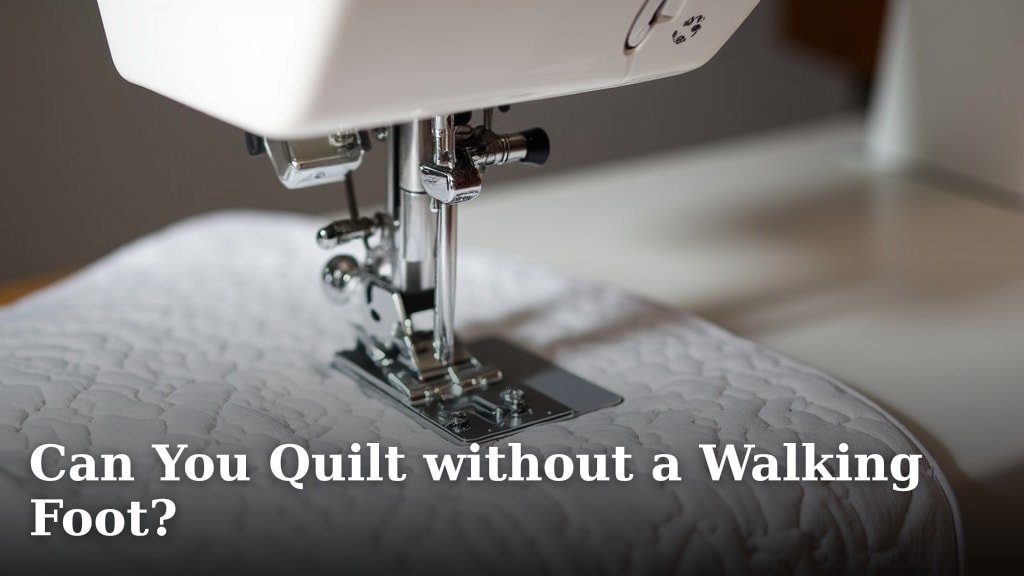
Yes, you absolutely can quilt without a walking foot, especially for smaller projects or if you’re just starting out. While a walking foot is super helpful for many quilting tasks, it’s not strictly essential for every stitch.
Many quilters successfully create beautiful pieces using just their regular presser foot. You might find you need to adjust your technique a bit, but it’s entirely possible to get great results without one. Don’t let not having a walking foot stop your creative flow!
- You can quilt without a walking foot.
- Regular presser feet work for many projects.
- Adjust your technique for smooth stitching.
- Hand quilting is always an option.
- Don’t let gear hold you back!
Ready to see how? Let’s explore the methods and tips for quilting beautifully without a walking foot, making sure your projects turn out just right.
Quilting Successfully Without a Walking Foot
You absolutely can quilt beautifully without a walking foot! It just means you’ll rely on some tried-and-true techniques and a bit more attention to detail. Many quilters have made stunning projects for years without ever owning one. It’s all about understanding how fabric moves and how to guide it.
The main challenge without a walking foot is managing the layers of your quilt sandwich. Your machine’s feed dogs pull the bottom fabric, but the top layers can sometimes shift or stretch. This is called “quilting drag.” Don’t worry, we have strategies to help you conquer it.
Understanding Your Machine’s Regular Presser Foot
Your standard presser foot is designed for general sewing. It holds the fabric down while the feed dogs underneath move it forward. For single layers, it works perfectly. When you add batting and backing, the extra bulk can make those layers resist moving at the same speed.
Think of it like this: the bottom fabric is on a conveyor belt, but the top layers are just resting on it. Without even pressure from above, the top can lag behind or get pushed around. A walking foot acts like a second set of feed dogs on top, moving all layers together.
How a Standard Presser Foot Interacts with Layers
When you’re quilting, you have three layers: the quilt top, the batting, and the backing. Your machine’s feed dogs only grab the bottom layer (your backing fabric). The regular presser foot pushes down on the top layer, creating friction.
This friction can cause the top layer to stretch or pucker. The feed dogs are doing their job, but the top isn’t getting the same consistent pull. This is why you sometimes see pleats or gathers on your quilt top after stitching.
Preparing Your Quilt Sandwich for Success
Excellent preparation is your best friend when quilting without a walking foot. A well-prepared quilt sandwich makes all the difference in managing fabric movement. This step is even more important than usual.
Think of it as laying a solid foundation for a house. If the foundation is wobbly, the rest of the house will have problems. The same goes for your quilt layers.
Basting Methods to Prevent Shifting
Basting holds your three layers together before you start quilting. Without a walking foot, you need really good basting. We found that thorough basting dramatically reduces puckering and uneven stitches.
Here are some popular basting methods:
- Pin Basting: Use plenty of safety pins. We recommend placing them every 3-4 inches across the entire quilt. Make sure they go through all three layers.
- Spray Basting: A temporary fabric adhesive spray can create a secure bond between layers. This is often preferred for smaller projects. It creates a smooth surface.
- Thread Basting: Hand-stitching long, loose basting stitches can also work. This is more time-consuming but offers very stable layers.
Adjusting Your Machine Settings
Your sewing machine has several settings you can tweak to help with quilting without a walking foot. These small adjustments can make a big impact on your results. Don’t be afraid to experiment a little.
Just like learning to drive a car, you adjust the mirrors and seat for comfort. Similarly, you adjust your machine for optimal quilting performance.
Stitch Length and Tension Tips
When machine quilting, you’ll want to adjust both your stitch length and thread tension. These are key for smooth, even stitches.
- Increase Stitch Length: A slightly longer stitch (e.g., 3.0-3.5 mm) can help reduce puckering. Shorter stitches grab the fabric more frequently, increasing the chance of drag.
- Adjust Tension: Start with your machine’s standard tension setting. If you see loops on the top or bottom of your fabric, adjust the tension slightly. Typically, you might need to loosen the top tension just a tiny bit.
Techniques for Smooth Machine Quilting
Beyond machine settings and basting, how you physically guide your fabric is crucial. Your hands become the “walking foot,” gently coaxing the layers through the machine.
Think of it like steering a boat. You don’t just point it; you make small, continuous adjustments to keep it on course.
Guiding Your Fabric Evenly
Use your hands to gently flatten the quilt sandwich in front of and behind the needle. Don’t pull or push too hard, just guide it smoothly. We found that even, gentle pressure helps prevent stretching.
Here’s a simple checklist for guiding your fabric:
- Keep your hands flat on the quilt top.
- Apply gentle, consistent pressure.
- Smooth out any wrinkles before they reach the needle.
- Avoid pulling the quilt through the machine.
- Let the feed dogs do most of the work.
- Stop and adjust if you feel resistance or see puckers forming.
Using the Right Needles and Thread
Choosing the correct needle and thread can also make a difference. These small details can prevent skipped stitches or thread breaks, which interrupt your quilting flow.
We’ve seen that a fresh, sharp needle works wonders:
- Needle Size: A universal needle in size 80/12 or 90/14 is a good starting point. You want a needle strong enough to go through multiple layers without bending.
- Thread Type: Use good quality 50wt cotton thread for quilting. It’s strong and creates a nice, subtle stitch. Polyester threads can also work, but cotton is a traditional favorite.
Free-Motion Quilting Without a Walking Foot
Free-motion quilting (FMQ) is where you drop the feed dogs and move the fabric freely to create designs. A walking foot isn’t used for FMQ anyway, so this is a great technique to master!
FMQ bypasses the issue of the feed dogs and walking foot entirely. It’s like drawing with your needle, and you’re in full control of the movement.
Setting Up for Free-Motion Quilting
For FMQ, you’ll need to make a few changes to your machine setup. This allows you to move the quilt in any direction you choose.
Here’s what you need:
- Drop Your Feed Dogs: This is essential. Most machines have a lever or button to do this. If yours doesn’t, you might have a feed dog cover plate.
- Install a Darning Foot (or FMQ Foot): This special foot floats just above the fabric, allowing you to move the quilt freely. It doesn’t press down like a regular presser foot.
- Reduce Foot Pressure: If your machine allows, lower the presser foot pressure. This helps the quilt glide more easily.
Hand Quilting as an Alternative
If machine quilting without a walking foot feels too challenging, or if you simply prefer a more traditional approach, hand quilting is always an option. It’s a beautiful, meditative process.
Many quilters find hand quilting to be incredibly relaxing. It creates a unique texture and look that machine quilting can’t quite replicate.
The Charm of Hand Quilting
Hand quilting involves stitching through all three layers with a needle and thread, entirely by hand. It gives your quilt a soft, dimpled texture and a classic, heirloom feel. We’ve found that it’s a wonderful way to connect with your project.
It takes more time, but the results are truly special. You have complete control over every stitch, making it perfect for intricate designs or delicate fabrics.
Comparing Machine Quilting Techniques Without a Walking Foot
Let’s look at the different ways you can quilt without that special foot. Each method has its own benefits and might suit different projects or quilters.
Choosing the right technique depends on your project size, desired look, and comfort level. It’s good to have options!
| Technique | Pros | Cons | Best For |
|---|---|---|---|
| Straight-Line Quilting (Regular Foot) | Uses existing machine parts; good for simple designs; builds precision. | Prone to puckering if basting is poor; requires careful guiding. | Small projects (placemats, table runners), straight lines, grid quilting. |
| Free-Motion Quilting (Darning Foot) | No walking foot needed; full creative freedom; no feed dog drag. | Steeper learning curve; requires practice for even stitches. | All quilt sizes, intricate designs, custom quilting. |
| Hand Quilting | Beautiful texture; portable; relaxing; ultimate control. | Very time-consuming; can be hard on hands; slow process. | Heirloom quilts, small projects, meditative crafting. |
Troubleshooting Common Issues
Even with the best preparation, you might run into a few bumps. Don’t get discouraged! Quilting is a skill that improves with practice and problem-solving.
Many quilters experience the same issues. It’s part of the learning process, not a sign you’re doing something wrong.
Dealing with Puckers and Uneven Stitches
Puckering is the most common issue when quilting without a walking foot. It happens when the fabric layers aren’t moving at the same rate. Uneven stitches can also pop up.
- Increase Basting: Add more pins or spray basting to really secure the layers.
- Re-Check Tension: Adjust your top or bobbin tension slightly. We often find a small tension tweak fixes a lot.
- Longer Stitch Length: A slightly longer stitch can help smooth things out.
- Gentler Hand Guiding: Make sure you’re not pulling or pushing the fabric too hard.
- Slow Down: Stitching at a slower, more consistent speed gives you more control.
- Practice on Scraps: Always test your settings on a small quilt sandwich scrap before working on your main project.
Conclusion
You’ve seen that quilting without a walking foot is totally doable. It takes some preparation, careful machine adjustments, and a gentle touch. Don’t let a missing tool stop your creative drive. We’ve shown you how proper basting, adjusting stitch length, and guiding your fabric can lead to beautiful results.
Remember, free-motion quilting and hand quilting are also fantastic options. They don’t need a walking foot at all! Pick up a project you’ve been dreaming of. Give these techniques a try, and enjoy the satisfaction of creating something wonderful with what you have.
Frequently Asked Questions
Can I quilt large quilts without a walking foot?
Yes, you can. It requires more meticulous basting and careful handling to prevent shifting and puckering. We suggest quilting in smaller sections or using a spray basting method for maximum stability on larger projects.
What’s the biggest challenge when not using a walking foot?
The main challenge is managing the multiple layers of fabric. Without the even pressure from a walking foot, the top layer can stretch or pucker. This makes good basting and gentle guiding really important.
Will my stitches look different without a walking foot?
They might. You might notice some slight variations or less uniformity compared to using a walking foot. However, with practice and proper technique, you can achieve very pleasing and consistent stitches.
Is free-motion quilting easier than straight-line quilting without a walking foot?
Many quilters find free-motion quilting easier in some ways because you drop the feed dogs. This eliminates the “drag” issue. It does have a learning curve for controlling your designs, though.
Do I need special thread if I’m not using a walking foot?
Not necessarily. Good quality 50wt cotton thread works well for most quilting without a walking foot. We found that using a fresh, sharp needle is more impactful for smooth stitching than a specific thread type.
