9 Best Quilting Hoops for Machine Quilting (November 2026)
The best quilting hoops for machine quilting include the Dritz 3202 Plastic No-Slip Quilting Hoop for adjustable tension, the Morgan Plastic No-Slip Quilting Hoop 9" for a compact round hoop, and the The Grace Company Table Top Hoop Quilting Frames for learning with a home machine.
On this page (4 sections)
The best quilting hoops for machine quilting help you guide fabric while keeping a manageable area taut. The Dritz 12 in hoop is the strongest general pick here; choose a Martelli hoop for free-motion controls, or a Grace table frame if you want the machine to travel over a supported quilt.
Hoops and frames serve different setups. A hand-guided hoop grips a section of the quilt as you move it under the needle, while a table frame holds a larger area and supports a different style of movement.
Our picks at a glance
-
1
 Best for adjustable tension
Dritz 3202 Plastic No-Slip Quilting Hoop
9.7/10 our score
See it on Amazon -
2
 Best for a compact round hoop
Morgan Plastic No-Slip Quilting Hoop 9"
9.1/10 our score
See it on Amazon -
3
 Best for learning with a home machine
The Grace Company Table Top Hoop Quilting Frames
8.8/10 our score
See it on Amazon
- 4
 Check it
Nurge Rectangle Plastic Embroidery Snap Frame
Best for a rectangular work area - 5
 Check it
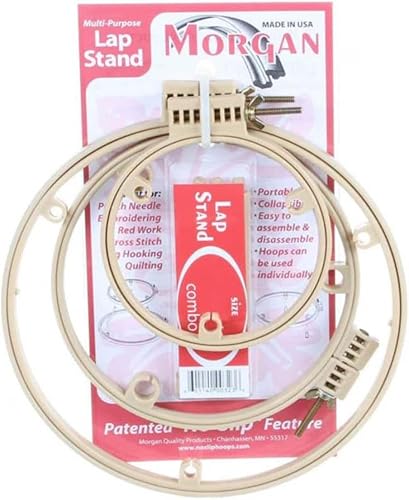
Morgan Quality Products 7"/10"/14" Lap Stand Hoop
Best for hands-free lap quilting - 6
 Best for two hoop sizesCheck it
- 7
 Best for an 11 in free-motion hoopCheck it
- 8
 Check it
The Grace Company Cutie Breeze Table Top Hoop
Best for a portable table frame - 9
 Best for smaller quilting areasCheck it
How these quilting hoops compare for machine work
The best choice depends on whether you want a simple grip, a free-motion guide, or a table frame. We compared their stated sizes, fabric-holding features, access around the presser foot, and machine-fit details.
Our score weighs specs and features against what you need when controlling quilt movement under a machine.
| Product | Best for | Shape | Size | Tension | Our score |
|---|---|---|---|---|---|
| Dritz 3202 Plastic No-Slip Quilting Hoop | adjustable tension | Round | 12 in diameter | Adjustable wing nut | 9.7 |
| Morgan Plastic No-Slip Quilting Hoop 9" | a compact round hoop | Round | 9 in | 9.1 | |
| The Grace Company Table Top Hoop Quilting Frames | learning with a home machine | 8.8 | |||
| Nurge Rectangle Plastic Embroidery Snap Frame | a rectangular work area | Rectangular | 8 x 11.5 in | 8.6 | |
| Morgan Quality Products 7"/10"/14" Lap Stand Hoop | hands-free lap quilting | 8.4 | |||
| Martelli | two hoop sizes | 8.1 | |||
| Martelli | an 11 in free-motion hoop | 11 in | 8.1 | ||
| The Grace Company Cutie Breeze Table Top Hoop | a portable table frame | 7.9 | |||
| Martelli | smaller quilting areas | 8 in | 7.8 |
Best quilting hoops for machine quilting
The Dritz hoop leads for adjustable tension and a broad round work area, while the other picks suit specific machine spaces and working styles. Check your throat clearance and the room around your presser foot before choosing a size.
Dritz 3202 Plastic No-Slip Quilting Hoop: Best for adjustable tension
- 12 in round hoop
- Interlocking tongue-and-groove grip
- Adjustable wing nut
- Smooth plastic construction
The interlocking design grips fabric, and the wing nut lets you adjust tension. Its 12 in diameter gives you a broader work area than a smaller hoop.
Pros
- Adjustable tension
- 12 in working area
- Interlocking grip
Cons
- Round hoop may limit the quilting area near its edge
- Hand guided rather than a table frame
The Dritz 3202 is a strong everyday choice if you want a round hoop with an adjustable grip. Its 12 in diameter gives you room to work on a broader section than a 9 in hoop.
The interlocking tongue-and-groove design holds fabric taut, and the wing nut lets you adjust tension. That simple adjustment can help when you need to secure a quilt sandwich without pulling the fabric unevenly.
Its smooth plastic construction and neutral tan color keep the design straightforward. Because it is a hand-guided hoop, plan to reposition it as you work across a larger quilt.
Choose this if you want a larger hoop and direct tension control. Check that the hoop clears your machine's throat and presser foot, especially when the foot is lowered.
Morgan Plastic No-Slip Quilting Hoop 9": Best for a compact round hoop
- 9 in round hoop
- Inner rim adds grip
- Plastic construction
The inner rim adds bite to hold fabric taut, and the 9 in size is a compact option for smaller working areas.
Pros
- Inner rim helps hold fabric
- Smaller than the 12 in Dritz hoop
- Plastic construction
Cons
- Tension control can be harder with larger hoops
- No separate adjustment feature is specified
Morgan's 9 in no-slip hoop is a compact round choice for smaller quilting areas. Its inner rim adds bite to help hold the fabric taut.
The smaller diameter can be easier to manage around a machine with limited throat space. It also means you'll cover less quilt between repositioning than with a 12 in hoop.
Morgan notes that tension can be difficult to control with larger hoops, so the 9 in size may suit quilters who prefer a more compact grip. There is no separate adjustment feature specified, so set the fabric evenly before securing it.
Choose this for a simple, smaller hoop with an inner grip. For free-motion steering controls or a presser-foot opening, compare the Martelli options below.
The Grace Company Table Top Hoop Quilting Frames: Best for learning with a home machine
- For many machines with 8–13 in throat length
- Up to 11 x 15 in quilting space
- Designed for beginners
The Mini Quilter is a table frame for domestic machines with a throat length between 8 and 13 in. Its stated quilting space is up to 11 x 15 in, though smaller machines have less room.
Pros
- Works with many home sewing machines
- Defined throat-length range
- Intended as a learning tool
Cons
- Smaller machines have less quilting space
- Frame takes more setup space than a hand-held hoop
The Grace Company Mini Quilter is a table-top frame for learning machine quilting on a home sewing machine. It works with many machines with a throat length between 8 and 13 in, and its quilting area reaches up to 11 x 15 in.
A smaller sewing machine has a smaller usable area, so don't assume every setup reaches the maximum. For broader machine setup advice, read a sewing machine quilting guide.
Confirm your machine's throat length and how it sits on the frame before buying.
This is a different kind of support from a hand-held hoop: the quilt sits in the frame while the machine moves across the work area. It is intended for small projects and for learning the frame approach.
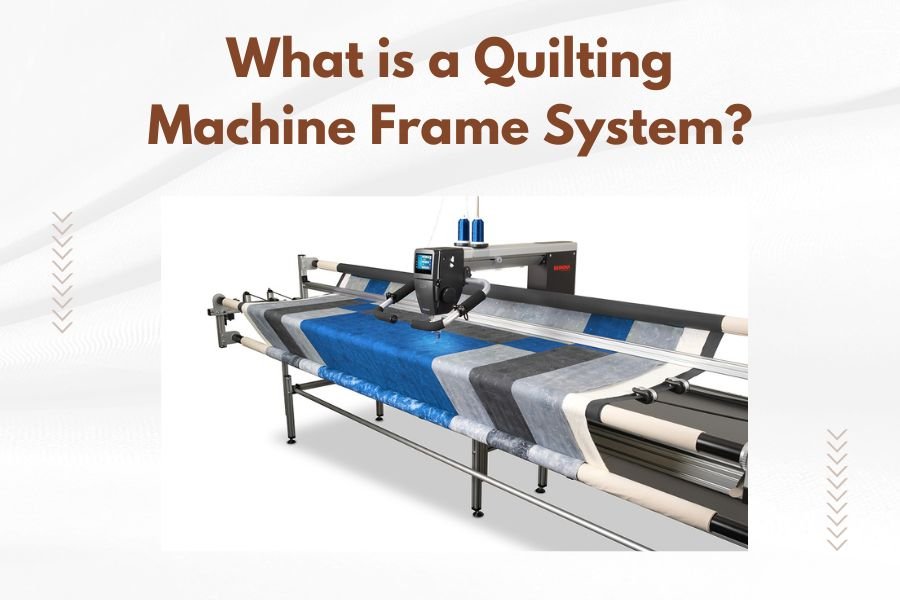
Choose it if you want to explore frame-style quilting with a domestic machine. For a broader overview of what a quilting machine frame system is, see how frames support the quilt and guide movement.
Nurge Rectangle Plastic Embroidery Snap Frame: Best for a rectangular work area
- 8 x 11.5 in rectangular frame
- Four pipe pieces and snap clips
- Plastic construction
This rectangular frame uses snap clips to hold fabric around an 8 x 11.5 in work area. It is described for quilting and other needlework, so check that its frame style suits your machine setup.
Pros
- Rectangular working area
- Modular pieces for compact storage
- Clips secure the fabric
Cons
- Snap-frame format may not suit every machine setup
- No machine throat-space fit is specified
Nurge's rectangular snap frame gives you an 8 x 11.5 in work area. Four plastic pipe pieces form the frame, and snap clips secure fabric along its edges.
The rectangular shape can make it easier to work within a defined area than a round hoop, especially for straight rows or blocks. The frame is described for quilting as well as embroidery, but its machine fit is not specified.
Treat it as an option to consider only after checking how the frame and clips clear your presser foot and machine bed. The clips twist outward on the frame to adjust fabric tension, so work around all sides for an even hold.
Choose this if the rectangle and modular storage suit your setup. If you need a hoop designed around machine clearance, Martelli's opening and knobs are more directly aimed at free-motion quilting.
Morgan Quality Products 7"/10"/14" Lap Stand Hoop: Best for hands-free lap quilting
- 7, 10, and 14 in hoops
- Collapsible lap stand
- Hoops can also be used separately
This stand raises a hoop above your lap and leaves both hands free. It is primarily aimed at hand quilting and needlework rather than guiding a quilt beneath a machine.
Pros
- Three hoop sizes
- Collapsible for travel
- Hoops can be used separately
Cons
- Lap stand is not a machine frame
- Requires a suitable place to sit and work
The Morgan lap stand is best for hand quilting at a chair or table. It comes with 7, 10, and 14 in hoops and raises the work above your lap to leave both hands free.
The collapsible stand can be taken apart and stacked for travel. Its hoops can also be used separately, so the stand has more than one hand-work setup.
This is not a table frame for guiding a sewing machine over a quilt. Keep it in consideration if you hand quilt and want supported work, but choose a machine-compatible hoop or frame for stitching under a needle.
For people who alternate between machine and hand work, the different formats can complement each other. A lap stand offers hands-free hand stitching, while a frame or hoop handles the machine setup.
Martelli: Best for two hoop sizes
- 8 and 11 in sizes
- Easy-grip knobs
- Presser-foot opening
- Non-slip fabric grip
The two-size set gives you an 8 in hoop for less throat space and an 11 in hoop for more. A gap provides access around the presser foot when positioning or moving the hoop.
Pros
- Two sizes in one set
- Knobs help guide the hoop
- Presser-foot opening
Cons
- Check hoop size against your machine throat
- Round hoops need repositioning as you quilt
The Martelli two-size set covers both smaller and larger free-motion work areas. Husqvarna Viking owners can compare free-motion quilting feet for their machine.
For a pattern guide to use during free-motion work, compare acrylic quilting templates.
It includes 8 and 11 in hoops, with easy-grip knobs and an opening for presser-foot access.
The 8 in size is aimed at machines with less throat space, while the 11 in size suits larger spaces. For a repeatable geometric design, consider quilting grid stencils.
That range helps if your projects vary, but the larger hoop still needs enough clearance to move freely.
The non-slip material grips fabric, and the knobs give you a place to guide the hoop. The opening also lets you reposition the fabric or move the hoop without removing the whole project.
Choose this set if you want two sizes and direct steering controls. If you already know an 11 in hoop fits your machine, the single-size option below may be enough.
Martelli: Best for an 11 in free-motion hoop
- 11 in round hoop
- Easy-grip knobs
- Presser-foot opening
- Non-slip fabric grip
This 11 in Martelli hoop suits quilters who want the larger of the brand's two stated sizes. Its grip, knobs, and presser-foot opening support fabric control and repositioning.
Pros
- 11 in working area
- Knobs for guiding fabric
- Opening helps with repositioning
Cons
- A larger hoop needs enough throat space
- One size in this option
This 11 in Martelli hoop suits a machine with enough throat space for the larger of the brand's two stated sizes. It shares the easy-grip knobs, non-slip fabric control, and presser-foot opening found across the Martelli options.
The opening gives you a way to slide the hoop around the presser foot for repositioning or thread trimming. Knobs make it easier to guide the hoop as you move the quilt under the needle.
Choose this if you want the 11 in format and have checked the clearance. If your machine's space is tighter, the 8 in option is a more cautious fit.
The Grace Company Cutie Breeze Table Top Hoop: Best for a portable table frame
- Fits many machines with at least 8 in throat space
- Fits on a desk or table
- Frame, carriage, machine top plate, and clips included
The Cutie Breeze is a table frame that lets the machine move over the quilt. Grace says compatible machines need at least 8 in of throat space, feed dogs that can disengage, and a width under 11.5 in.
Pros
- Works on a desk or table
- Frame and carriage included
- Can be stored when not in use
Cons
- Needs a large table footprint while set up
- Machine compatibility depends on several measurements
The Grace Company Cutie Breeze is a table frame for moving a domestic sewing machine over the quilt. It fits many machines with at least 8 in of throat space, and the frame can sit on a desk or table.
Grace lists additional fit checks: the machine must disengage its feed dogs and be less than 11.5 in wide. The package includes the frame, carriage, machine top plate with handles, and rail clips.
Its 53 x 27 in footprint needs a suitable surface while set up. The ability to store it when not in use may help if your sewing area has to serve other tasks.
Choose the Cutie Breeze if you want a table-frame approach and your machine meets the compatibility checks. For help deciding between frame styles, read how to choose the best quilting machine frame.
Martelli: Best for smaller quilting areas
- 8 in round hoop
- Easy-grip knobs
- Presser-foot opening
- Non-slip fabric grip
The 8 in Martelli hoop is the smaller option for machines with less throat space and smaller quilting projects. Knobs and a presser-foot opening help with steering and repositioning.
Pros
- Smaller size for tighter work areas
- Knobs help guide the hoop
- Presser-foot opening
Cons
- Less working area than an 11 in hoop
- One size in this option
The 8 in Martelli hoop is the smaller free-motion option for machines with less throat space. It includes the brand's easy-grip knobs, non-slip fabric grip, and presser-foot opening.
The smaller size is useful when a larger ring would be harder to maneuver around the machine. You'll need to reposition it more often as you quilt a wide area, but it can be easier to control on smaller projects.
Choose this hoop when clearance is the priority and you want the same basic handling features as the 11 in Martelli. If you quilt larger projects regularly, compare the 11 in hoop or two-size set.
How to choose a quilting hoop for your machine
Match the hoop to your machine's throat space, the quilt area you want to control, and how you prefer to move the work. A hoop that grips well still needs enough room to pass beneath the presser foot without catching.
What hoop size fits your machine's throat space?
An 8 in hoop is the smaller Martelli option, while the 11 in size needs more clearance. The Dritz hoop measures 12 in across, and Morgan's compact option is 9 in.
Measure the usable opening with your machine set up for quilting. Allow space for the hoop itself, your hands, and the direction you need to move the quilt.
Do you want a hoop or a table frame?
A hoop grips one section of fabric and moves with your hands, which suits quilters who want direct control of a small area. A table frame supports a wider working zone and changes how the machine and quilt move relative to each other.
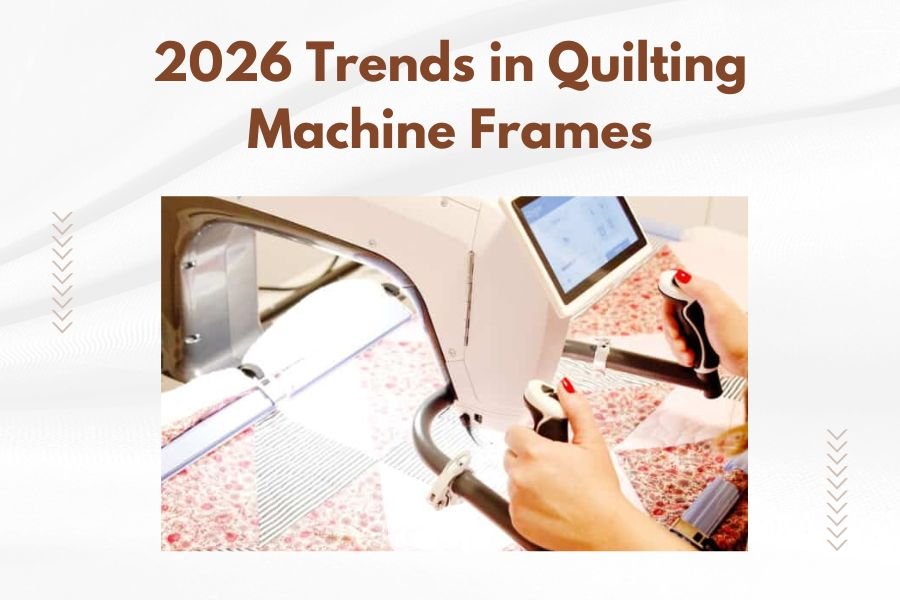
The 2026 trends in quilting machine frames can help you compare table-top frame formats. For a frame setup, also check whether your machine fits its stated measurements before you plan the work area.
How should fabric sit in the hoop?
Fabric should be held securely and evenly, without stretching the quilt sandwich out of shape. Adjust the grip around the whole hoop and inspect the area near the needle before stitching.
A no-slip design or inner rim can help control movement, but it does not replace careful placement. Reposition the hoop when you reach its edge instead of forcing a long reach across the fabric.
What else affects machine quilting control?
Lighting and a stable work area both matter when you guide a quilt. A work light for your quilting machine can make the needle area easier to see as you steer.
If you are preparing a frame instead of using a hand-held hoop, leader cloth can connect the quilt to the frame rails. See how to make leader cloth for a quilt frame before setting up that style of support.
Which quilting hoop should you choose?
Choose the Dritz 3202 if you want an adjustable 12 in round hoop, the Morgan if you prefer a compact 9 in grip, or a Martelli if presser-foot access and steering knobs matter most. Pick the Grace Mini Quilter or Cutie Breeze when you want a table-frame workflow and your machine fits.
If you're also choosing a machine, our guide to the best quilting machine for seniors covers features that can make setup and operation easier. Match the machine and hoop to your throat space, project size, and preferred way to move the quilt.
Our top 3 picks at a glance
-
1
Best for adjustable tension
Dritz 3202 Plastic No-Slip Quilting Hoop
9.7/10 our score
See it on Amazon -
2
Best for a compact round hoop
Morgan Plastic No-Slip Quilting Hoop 9"
9.1/10 our score
See it on Amazon -
3
Best for learning with a home machine
The Grace Company Table Top Hoop Quilting Frames
8.8/10 our score
See it on Amazon
Frequently asked questions
What size quilting hoop should I use on a sewing machine?
Choose a hoop that fits the space around your machine's throat and presser foot. An 8 in hoop is a smaller option, while 11 or 12 in hoops give you more working area if your machine has room.
Check clearance with the presser foot lowered before you begin.
Are quilting hoops and embroidery hoops the same?
Some hoops are sold for both quilting and embroidery, but their shapes and handling can differ. A free-motion quilting hoop may include knobs and an opening for the presser foot, while a snap frame holds fabric with clips.
Pick one that fits your machine and the way you plan to move the quilt.
Can you machine quilt with a lap stand hoop?
A lap stand raises a hoop above your lap and is designed to leave both hands free for hand quilting or needlework. It is not the same as a table frame that supports machine quilting.
Choose a lap stand for hand work, and check machine clearance and frame compatibility for quilting under a sewing machine.
Do quilting hoops stop fabric from slipping?
A no-slip grip or inner rim can help hold fabric in place, but you still need to set the fabric tension evenly. Avoid stretching the quilt sandwich so tightly that it distorts.
Reposition the hoop as needed and keep the area under the needle clear.