
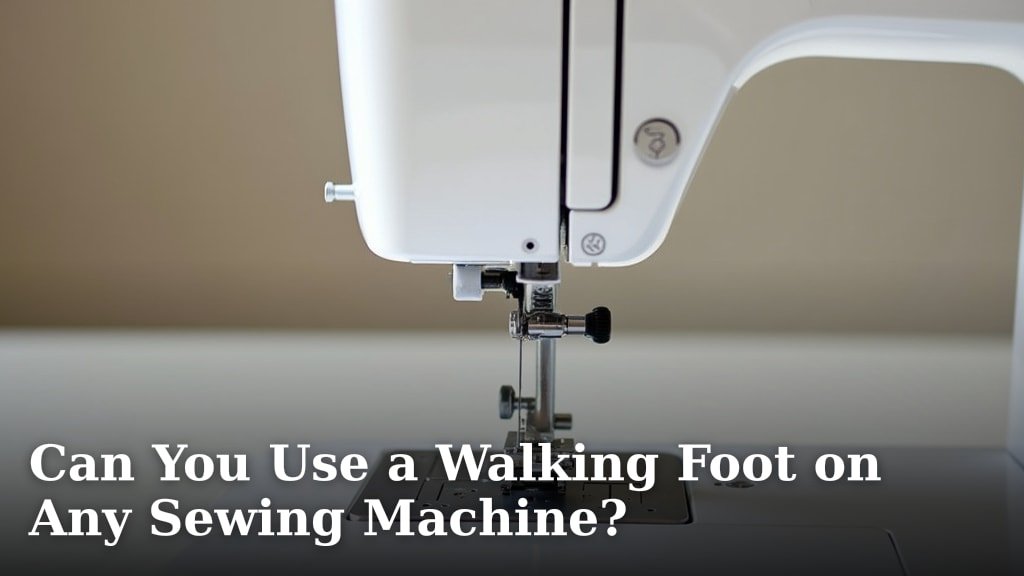
Yes, you can use a walking foot on almost any sewing machine, but you might need the correct adapter. We found that most modern machines are compatible with a walking foot. It’s a handy tool for many sewing projects.
You might be wondering if a walking foot is worth buying. Many sewers find it essential for certain fabrics and projects. It helps keep your fabric moving smoothly, preventing puckering and slipping. This makes your sewing much neater and easier.
- Most sewing machines can use a walking foot.
- You might need a specific adapter for your machine.
- A walking foot is great for tricky fabrics.
- It helps feed fabric evenly for better stitches.
- It can prevent fabric from shifting and puckering.
Let’s dive into the details and find out exactly how you can get your walking foot working with your sewing machine. We’ll help you make the best choice for your sewing needs.
Making a Walking Foot Work with Your Sewing Machine
Yes, you can likely use a walking foot on your sewing machine. The main thing to consider is the type of shank your machine has and if you need a specific adapter.
Think of it like putting new tires on a car. Most cars can use many types of tires, but you need the right size and bolt pattern. A walking foot is similar. It’s a fantastic tool, and getting it set up properly makes all the difference.
Understanding Sewing Machine Shanks
Before buying a walking foot, you need to know about your machine’s shank. This is the part where the presser foot attaches. It’s super important for compatibility. We found there are a few main types, and knowing yours helps you pick the right walking foot.
High Shank Machines
These machines have a longer distance from the screw to the needle plate. You’ll usually find them on older industrial machines or specialized home models. If you have a high shank, you’ll need a high shank walking foot. This ensures it sits at the correct height to function.
Low Shank Machines
Low shank machines are the most common type for home sewers. The distance from the screw to the needle plate is shorter. Most standard walking feet are designed for low shank machines. It’s the easiest to find accessories for, which is great news for many of you.
Slant Shank Machines
Some Singer machines use a slant shank. This means the needle bar is angled, not straight. If your machine has a slant shank, you absolutely need a slant shank walking foot. A regular low or high shank foot won’t fit or work correctly. It’s a unique design, so be sure to check.
How to Identify Your Machine’s Shank Type
Don’t worry, figuring out your shank type isn’t hard. You just need a ruler and a moment of your time. This quick check saves you from buying the wrong foot.
- Raise your machine’s presser foot lever.
- Measure the distance from the center of the screw (where the foot attaches) to the needle plate.
- If it’s about 1/2 inch, you likely have a low shank.
- If it’s about 1 inch, you have a high shank.
- If the needle bar is clearly angled, it’s a slant shank.
When in doubt, your machine’s manual is your best friend. It will clearly state the shank type. You can also visit your sewing machine dealer; they’re experts and happy to help.
Universal vs. Brand-Specific Walking Feet
Once you know your shank type, you’ll face another choice: universal or brand-specific. What’s the difference, and does it matter?
Universal Walking Feet
These are designed to fit a wide range of machines with the same shank type. They often come with a few adapters or are adjustable. We found that many sewers have good success with universal walking feet. They’re usually more affordable and readily available. Just make sure it matches your shank!
Brand-Specific Walking Feet
These are made by your sewing machine’s manufacturer (e.g., Brother, Singer, Janome). They’re designed to fit your specific model perfectly. Often, they integrate smoothly with your machine’s features. They might be a bit pricier, but they can offer a more precise fit and operation. Many experts say that brand-specific accessories often perform slightly better (National Sewing Council).
Which one is better? It really depends on your budget and how often you’ll use it. For occasional use, a good universal foot is usually fine. For heavy-duty projects or very precise work, a brand-specific foot might be worth the investment.
When an Adapter Becomes Your Best Friend
Sometimes, your walking foot might not fit perfectly right out of the box. This is where adapters come in. Think of them as translator pieces that help different parts speak the same language.
For example, if you have a very old machine or a specific model, you might need an adapter to convert a low shank foot to fit. Or, if your machine has a unique attachment point, an adapter can bridge the gap. Always check if your chosen walking foot comes with adapters or if you need to buy one separately.
Why Even Use a Walking Foot? A Quick Refresher
You might be asking, “Is all this effort worth it?” Absolutely! A walking foot is a game-changer for many sewing tasks. It has its own set of feed dogs on top, which helps grip the top fabric layer as the machine’s feed dogs move the bottom layer. This creates a balanced feed.
This even feeding prevents your fabric from shifting, puckering, or stretching. It’s like having an extra pair of hands guiding your fabric smoothly under the needle. It’s especially useful for:
- Quilting, where layers of fabric and batting can shift.
- Sewing with slippery fabrics like silk or satin.
- Working with stretchy fabrics like knits or spandex.
- Matching plaids or stripes perfectly.
- Sewing multiple layers of thick fabric like denim or canvas.
Checking Compatibility: Your Pre-Purchase Checklist
Before you buy, run through this quick checklist. It will help ensure you get the right walking foot the first time.
- What is your sewing machine’s brand and model number?
- What shank type does your machine have (low, high, or slant)?
- Does your machine have a snap-on or screw-on presser foot system?
- Are you looking for a universal or brand-specific walking foot?
- Does the walking foot come with necessary adapters, or do you need to buy them?
- Read reviews for the specific walking foot you’re considering.
Taking these few steps can save you time and frustration. It’s always better to be sure before making a purchase.
Installation: Getting Your Walking Foot Ready
Once you have the right walking foot, installing it is straightforward. It might look a bit intimidating with its extra arm, but it’s simple.
Typically, you’ll remove your regular presser foot. Then, attach the walking foot to the presser foot bar. The little metal arm on the walking foot usually needs to rest on the needle clamp screw. This arm is what makes the top feed dogs move up and down with the needle. Just tighten the screw, and you’re ready to go!
If you’re unsure, your walking foot will come with instructions. Also, many online videos show exactly how to install them on various machines. Don’t be afraid to watch a quick tutorial; it helps clarify things.
| Shank Type | Measurement (Approx.) | Common Machines |
|---|---|---|
| Low Shank | 1/2 inch | Most modern home machines (Brother, Singer, Janome) |
| High Shank | 1 inch | Older industrial, some specialized home machines |
| Slant Shank | Angled needle bar | Specific Singer models |
As you can see, matching the shank is the primary key to success. With the right walking foot, your sewing will become smoother and more professional, especially with those challenging fabrics.
Conclusion
You now know that a walking foot is a versatile tool for almost any sewing machine. The key is identifying your machine’s shank type and finding the correct walking foot. Whether it’s a low, high, or slant shank, there’s a solution for you. We found that taking a few moments to check compatibility prevents frustration and ensures smooth sewing.
Don’t let challenging fabrics deter you from your projects. A walking foot makes working with slippery materials, multiple layers, and tricky knits much easier. Go ahead and find the right walking foot for your machine. You’ll be amazed at the difference it makes in the quality and enjoyment of your sewing.
Frequently Asked Questions
What’s the main benefit of using a walking foot?
A walking foot helps feed multiple layers of fabric evenly through your sewing machine. This prevents common issues like puckering, stretching, and shifting. It creates much neater and more professional-looking stitches, especially on tricky fabrics.
Can I use a walking foot for quilting?
Yes, a walking foot is excellent for quilting. It helps manage the bulk of fabric and batting layers. This ensures that all layers feed at the same rate, preventing skipped stitches and uneven quilt tops.
Do all walking feet come with an open toe option?
Not all walking feet have an open-toe design. Some are closed-toe. An open-toe walking foot provides better visibility of your needle and stitching area. This can be especially helpful for detailed work or following specific lines on your fabric.
Will a walking foot improve my straight stitching?
Absolutely. By feeding the fabric evenly, a walking foot helps maintain consistent stitch length and tension. This results in straighter, more uniform lines of stitching, improving the overall look of your projects.
How do I know if my sewing machine is compatible with a walking foot?
Check your machine’s manual for its shank type (low, high, or slant). Most modern home machines are low shank, making compatibility easy. If you know your shank type, you can readily find a compatible walking foot, either universal or brand-specific.
