Can You Quilt with a Walking Foot and Free Motion Foot Together?
On this page (8 sections)
- Navigating Your Quilting with Different Feet
- The Walking Foot: Your Straight-Line Champion
- The Free Motion Foot: Unleashing Your Creativity Now, let’s talk about the free motion foot, often called a “free-motion embroidery foot” or “darning foot.” This is where you get to play and get creative. It allows your fabric to move freely under the needle. How a Free Motion Foot Works A free motion foot has a spring-loaded mechanism. This lifts the foot up and down as you move your fabric. When you lower the presser foot, it disengages the feed dogs on your machine. You then use your hands to move the quilt sandwich around. This lets you stitch in any direction and create curves and loops. It’s like drawing with your sewing machine needle! When to Use Your Free Motion Foot This foot is perfect for all your decorative quilting. Think of things like stippling, meandering, or swirling patterns. If you want to quilt custom designs, add detailed motifs, or create texture, this is the foot you need. It allows for true artistic freedom. Stippling and Meandering These are classic free-motion techniques. Stippling is a series of random, squiggly lines that fill an area. Meandering is similar but often has slightly more defined loops. Both create wonderful texture and dimension. Your free motion foot lets you guide the fabric smoothly for these. Custom Designs and Motifs Want to quilt little hearts, stars, or even your initials? The free motion foot makes it possible. You can stitch custom designs directly onto your quilt. This adds a personal touch that really makes your quilt special. It’s a fantastic way to personalize your work. The Switch-Up: When and How to Change Feet
- Tips for a Smooth Transition
- Comparing the Feet: A Quick Look
- Your Quilting Checklist for Switching Feet
- Conclusion
- Frequently Asked Questions
Yes, you can quilt with a walking foot and free motion foot together, but not at the exact same time! Your sewing machine requires you to switch between the two. Each foot serves a distinct purpose for different quilting techniques. You’ll use your walking foot for straight-line quilting and your free motion foot for decorative patterns.
Many quilters wonder if they can achieve both smooth straight lines and fancy free-motion designs without constant machine adjustments. The good news is that by understanding when to use each foot, you can create beautiful quilts with both efficient quilting and artistic flair. It’s about knowing the right tool for the job and when to make the swap.
- Yes, you can use both feet.
- You must switch feet; they don’t work simultaneously.
- Walking foot is for straight lines.
- Free motion foot is for decorative stitching.
- Swapping is straightforward and quick.
Let’s get into the details of how and when to use each foot to make your quilting process smoother and more effective.
Navigating Your Quilting with Different Feet
You’re probably wondering if you can switch up your quilting style on a single project. The short answer is yes, but with a little bit of manual effort. You can absolutely quilt with both a walking foot and a free motion foot, but your sewing machine needs your help. You have to swap them out. They don’t magically work together.
The Walking Foot: Your Straight-Line Champion
Let’s talk about the walking foot first. This is your go-to tool when you need perfect, even straight lines. Think of it as a little extra pair of hands for your fabric. It helps feed the top layer of your quilt sandwich along with the bottom layer.
How a Walking Foot Works Its Magic
A walking foot has a series of feed dogs that move the fabric from the top. These work in sync with the feed dogs on your machine’s throat plate. This synchronized movement prevents the layers from shifting or bunching up. You get beautifully straight lines, every time. It’s like having a tiny conveyor belt for your quilt.
When to Reach for Your Walking Foot
You’ll want your walking foot when you’re doing straight-line quilting. This is common for quilting in the ditch. That means stitching right along the seam lines of your quilt blocks. It’s also perfect for simple straight-line patterns, like grids or diagonal lines across the quilt. This foot ensures consistent stitch length and tension.
Quilting in the Ditch Made Easy
For that classic “quilt in the ditch” look, the walking foot is your best friend. It keeps your stitching perfectly aligned with the seams. This gives your quilt a clean, professional finish. You don’t have to worry about puckering or uneven stitches.
Simple Straight-Line Designs
If your quilt design calls for straight lines, whether horizontal, vertical, or diagonal, the walking foot is the tool for the job. It makes achieving these straight lines so much easier than trying to do it with a standard presser foot. Many quilters find this foot significantly reduces frustration.
The Free Motion Foot: Unleashing Your Creativity
Now, let’s talk about the free motion foot, often called a “free-motion embroidery foot” or “darning foot.” This is where you get to play and get creative. It allows your fabric to move freely under the needle.
How a Free Motion Foot Works
A free motion foot has a spring-loaded mechanism. This lifts the foot up and down as you move your fabric. When you lower the presser foot, it disengages the feed dogs on your machine. You then use your hands to move the quilt sandwich around. This lets you stitch in any direction and create curves and loops. It’s like drawing with your sewing machine needle!
When to Use Your Free Motion Foot
This foot is perfect for all your decorative quilting. Think of things like stippling, meandering, or swirling patterns. If you want to quilt custom designs, add detailed motifs, or create texture, this is the foot you need. It allows for true artistic freedom.
Stippling and Meandering
These are classic free-motion techniques. Stippling is a series of random, squiggly lines that fill an area. Meandering is similar but often has slightly more defined loops. Both create wonderful texture and dimension. Your free motion foot lets you guide the fabric smoothly for these.
Custom Designs and Motifs
Want to quilt little hearts, stars, or even your initials? The free motion foot makes it possible. You can stitch custom designs directly onto your quilt. This adds a personal touch that really makes your quilt special. It’s a fantastic way to personalize your work.
The Switch-Up: When and How to Change Feet
The key to using both feet effectively is understanding that you need to swap them out. Your sewing machine is designed to work with one or the other, not both at the same time.
The Process of Changing Feet
Changing a presser foot is usually a very simple process. Most modern machines have a quick-release lever. You’ll typically lower the presser foot lever to release tension on the old foot. Then, you press another button or flip a lever to detach it. To attach the new foot, you align it under the needle and lower the lever until it clicks into place. It often takes less than a minute.
When to Make the Change
You’ll decide when to switch based on your quilting plan. If you start with straight-line quilting using your walking foot, you’ll switch to the free motion foot when you’re ready for decorative stitching. Conversely, if you begin with free-motion designs, you’ll swap to the walking foot for any straight-line elements. It’s a good idea to plan your quilting sequence beforehand.
A Step-by-Step Example
Let’s say you’re quilting a simple checkerboard pattern. You’d start by attaching your walking foot. You would then quilt all your horizontal and vertical lines. Once those are done, you’d switch to your free motion foot. Then, you could add some stippling or meandering in the squares to give it some texture. This planned approach makes the process flow smoothly.
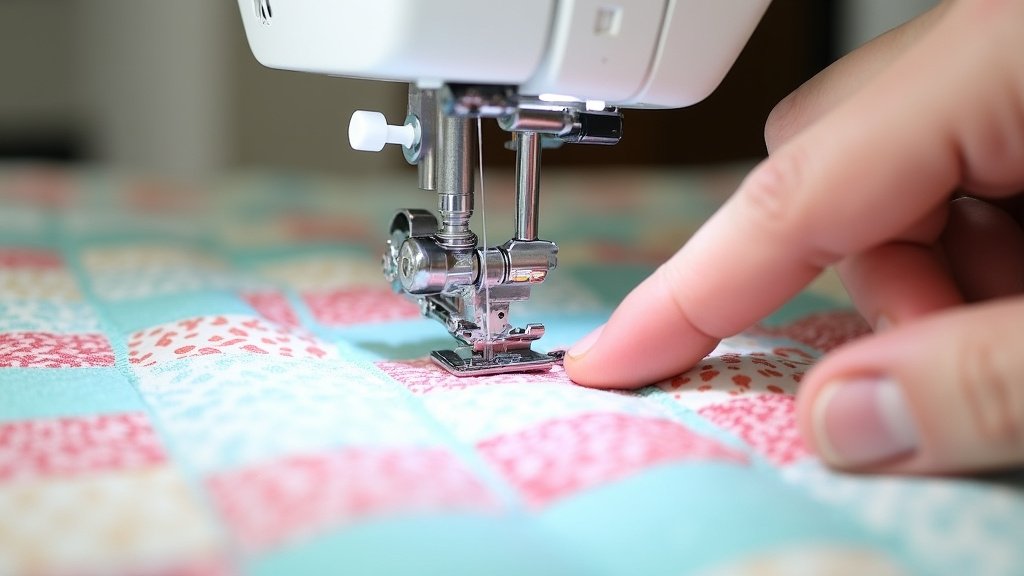
Tips for a Smooth Transition
Making the switch between feet doesn’t have to be a hassle. A few simple tips can make the process much easier.
- Always lower the presser foot lever when changing feet. This releases tension and makes removal easier.
- Ensure the new foot is securely attached. A wobbly foot can cause stitch problems.
- Check that your feed dogs are in the correct position. Lower them for free motion and ensure they are up for the walking foot.
- Test your stitches on a scrap piece of fabric after changing feet. This helps catch any issues before you sew on your quilt.
- Keep your manual handy. If you’re unsure about your machine’s specific foot-changing mechanism, your manual is the best guide.
Comparing the Feet: A Quick Look
To help you remember the differences and when to use each, here’s a simple comparison:
| Feature | Walking Foot | Free Motion Foot |
|---|---|---|
| Primary Use | Straight-line quilting | Decorative and custom quilting |
| Fabric Movement | Synchronized feeding of top and bottom layers | Fabric moves freely by hand |
| Feed Dogs | Engaged and working | Disengaged (usually) |
| Best For | Quilting in the ditch, grids, straight lines | Stippling, meandering, freehand designs, custom motifs |
| Stitch Control | Consistent stitch length and straight paths | Freedom to stitch in any direction |
Your Quilting Checklist for Switching Feet
Ready to tackle your quilt with confidence? Here’s a quick checklist to make sure you’re prepared:
- Confirm your machine is unplugged before changing feet.
- Gather both your walking foot and your free motion foot.
- Have a small piece of scrap fabric ready for testing.
- Know where your machine’s presser foot lever is located.
- Check your machine manual for any specific instructions.
- Take a deep breath and enjoy the creative process!
Conclusion
You now know that quilting with both a walking foot and a free motion foot is absolutely possible and highly recommended for varied projects. Remember, the key is simply switching between them as your quilting plan dictates. Your walking foot excels at providing consistent, straight lines, perfect for quilting in the ditch or creating grids. Your free motion foot gives you the freedom to add decorative stippling, meandering, or custom designs. Mastering the quick swap between these two essential tools will greatly expand your quilting repertoire. So, don’t hesitate to try both on your next quilt and enjoy the enhanced creative possibilities!
Frequently Asked Questions
Do I really need to switch feet for different quilting styles?
Yes, you do. Your sewing machine is designed for one presser foot to be attached at a time. Each foot, the walking foot and the free motion foot, serves a specific purpose that requires different mechanics. You’ll manually swap them out to achieve the best results for straight lines versus free-form designs.
Can I use a walking foot for decorative quilting patterns?
While a walking foot is fantastic for straight lines, it’s not ideal for decorative free-motion quilting. Its purpose is to move the fabric evenly from the top and bottom. This synchronization prevents free movement, which is essential for creating curves, loops, and custom designs with a free motion foot.
Is it difficult to switch between a walking foot and a free motion foot?
Not at all! Most modern sewing machines have a very user-friendly system for changing presser feet. It typically involves releasing a lever and clicking the new foot into place. This process often takes less than a minute, allowing for a quick transition between quilting techniques.
What happens if I try to free-motion quilt with my walking foot attached?
If you attempt to free-motion quilt with your walking foot attached, you’ll likely find it very difficult to move your fabric. The walking foot’s mechanism is designed to feed the fabric evenly. This prevents the free, hand-guided movement necessary for stippling, meandering, or any freehand stitching.
How do I know which foot to use first on my quilt project?
Consider your overall quilt design. If your project involves many straight-line quilting elements, start with the walking foot. Once those are complete, you can switch to the free motion foot for any decorative fill or custom motifs. Planning your quilting sequence beforehand makes deciding which foot to use first much easier.