
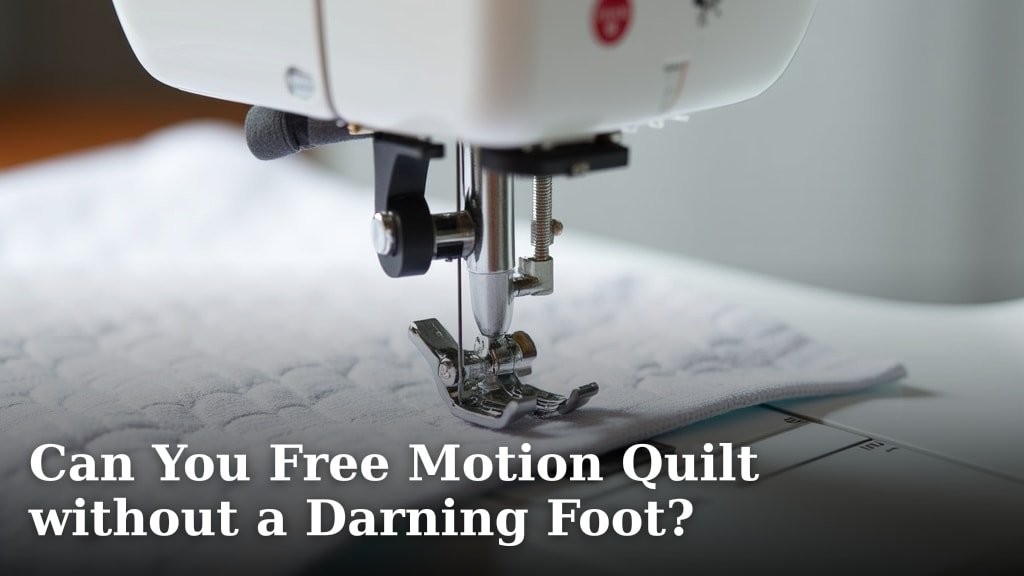
Yes, you can free motion quilt without a darning foot, but it comes with some challenges. While a darning foot (or free-motion foot) is designed for this task, you can still get by with a standard presser foot if you know the right tricks and adjust your machine settings.
Many quilters find themselves in this situation, whether they’ve misplaced their darning foot or their machine didn’t come with one. The key is to understand how to manage fabric movement and prevent skipped stitches, ensuring your quilt top stays smooth and your stitches look great.
- You can free motion quilt without a darning foot.
- It’s more challenging and requires practice.
- You’ll need to adjust your stitch length and tension.
- Using a walking foot is not a substitute for free motion.
- Consider adding a darning foot for easier quilting.
Let’s walk through exactly how this works and what you need to do to succeed without that special foot.
Free Motion Quilting Without a Darning Foot: The Possibility
Yes, it’s absolutely possible to free motion quilt without a specialized darning foot. It just means you’ll need to make some adjustments and be ready for a bit more of a challenge. Think of it like driving a car without power steering – you can do it, but it takes more effort and skill.
The darning foot, sometimes called a free-motion foot, has a specific job. It hovers just above your fabric, allowing you to move your quilt in any direction. Without it, your standard presser foot will apply continuous pressure, which can make fabric movement difficult. But don’t despair! With the right approach, you can still achieve beautiful results.
Understanding the Role of a Darning Foot
Before we dive into quilting without one, let’s quickly understand what a darning foot does. This little tool is designed to make free motion quilting much smoother. It typically has an open toe or a C-shaped opening, giving you a clear view of your stitching area.
The main function of a darning foot is to allow the feed dogs (those little teeth under your needle plate) to disengage. This lets you move your fabric freely in any direction – forward, backward, sideways, or in circles. It also provides enough pressure to keep the fabric flat while still allowing movement, preventing skipped stitches and puckering.
What Happens Without a Darning Foot?
When you use a standard presser foot for free motion quilting, you face a few common issues. First, the foot presses down firmly on your fabric. This makes it hard to move the quilt smoothly. You might feel like you’re fighting your machine.
Second, the feed dogs are still engaged. They want to pull the fabric forward in a straight line. This creates tension between your desire to move the fabric freely and the machine’s natural mechanism. This tension can lead to uneven stitches or even damage your needle if you’re not careful.
Preparing Your Machine for Free Motion Quilting
Getting your sewing machine ready is the first crucial step. You’ll need to make some key adjustments to mimic the conditions a darning foot provides. This involves changing your stitch settings and sometimes even your machine’s physical setup.
Lowering or Covering Your Feed Dogs
This is perhaps the most important step. Your machine’s feed dogs are designed to move fabric forward in a straight line. For free motion quilting, you need to disable them. Most sewing machines have a lever or a switch to lower the feed dogs. Check your machine’s manual if you can’t find it.
If your machine doesn’t have a way to lower the feed dogs, don’t worry. You can buy a feed dog cover plate. This is a small, smooth plastic or metal plate that snaps over your feed dogs, essentially making them flat and ineffective. It’s an inexpensive solution that works well.
Adjusting Stitch Length and Tension
Since you’re controlling the fabric movement, you also control the stitch length. Set your stitch length to zero or the shortest possible setting. This tells the machine not to move the fabric automatically. Your hands will dictate how long each stitch is by how fast you move the quilt.
Tension is another critical factor. Many quilters find they need to adjust their top tension slightly. Start with your usual tension setting. If you see loops on the top or bottom of your fabric, adjust the tension in small increments. A good starting point might be to slightly loosen your top tension, but experiment on scraps first.
Techniques for Quilting Without a Darning Foot
Once your machine is prepped, it’s time to focus on your technique. This is where practice truly makes perfect. Don’t expect flawless results on your first try – even with a darning foot, free motion quilting takes time to master.
Using a Standard Presser Foot
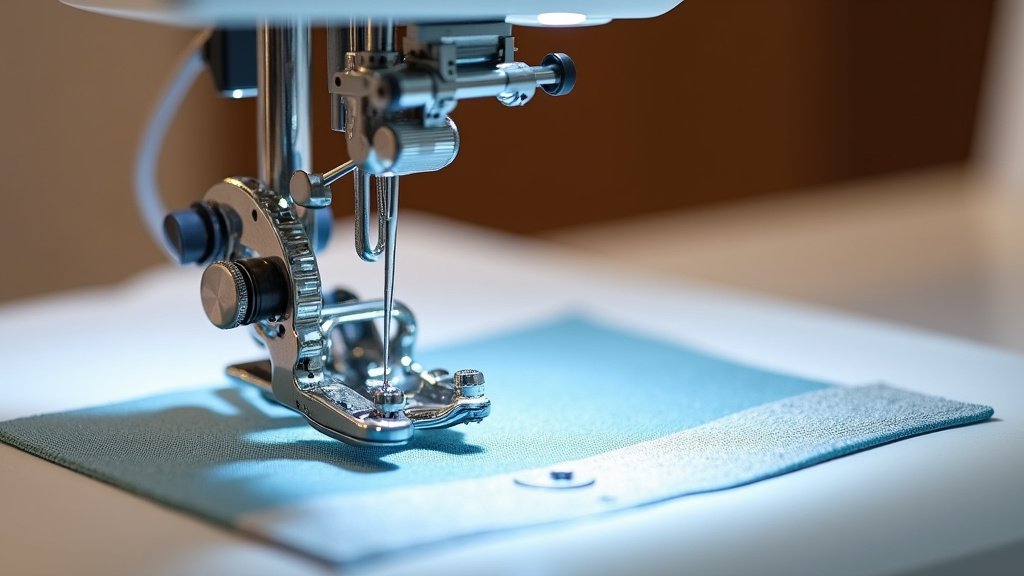
Since you won’t have a darning foot, you’ll be using your standard presser foot. Here’s the trick: you need to reduce the pressure it puts on your fabric. Some machines have a presser foot pressure adjustment dial. If yours does, turn it to the lowest setting.
If your machine doesn’t have a pressure adjustment, you’ll need to be extra mindful of how you move your fabric. You’ll essentially be moving the quilt sandwich with more force, almost lifting it slightly as you stitch, to overcome the foot’s pressure. This takes a delicate touch.
Fabric Handling and Movement
This is where the magic happens. You need to become one with your quilt! Spread your quilt out on a large, flat surface. A supreme slider or a piece of Teflon sheet on your machine bed can help the fabric glide more easily.
Use quilting gloves or grippy thimbles. These give you better control and grip on your fabric, reducing hand fatigue. Keep your hands flat on the quilt, not gripping it tightly. Move your entire arm and shoulder, not just your wrists, for smoother, more fluid movements (National Quilters Association).
Here’s a small checklist for better fabric handling:
- Ensure your work surface is clear and large.
- Wear quilting gloves for better grip.
- Use a supreme slider on your machine bed.
- Keep your hands flat and wide on the fabric.
- Move your arms and shoulders, not just wrists.
- Practice moving the quilt before putting the needle down.
Managing Stitch Quality
Without a darning foot, skipped stitches can be a common issue. This often happens when the fabric isn’t moving smoothly under the needle, or if there’s too much drag. To minimize this, ensure your needle is sharp and new. A universal 90/14 needle is a good all-around choice for quilting.
Maintain a consistent speed. Try to match the speed of your needle (how fast it’s going up and down) with the speed of your fabric movement. If you move the fabric too fast for the needle, you’ll get long stitches. Too slow, and you’ll get tiny, bunched-up stitches. It’s a dance between your foot pedal and your hands.
Comparing the Experience: With vs. Without a Darning Foot
To give you a clearer picture, let’s compare the experience of free motion quilting with and without a darning foot. This can help you decide if investing in one is worth it for your quilting journey.
| Feature | With Darning Foot | Without Darning Foot (Standard Foot) |
|---|---|---|
| Fabric Movement | Smooth, easy in all directions. | More resistance, harder to move freely. |
| Visibility | Excellent, clear view of stitches. | Can be obstructed by the presser foot. |
| Stitch Consistency | Easier to achieve even stitches. | Requires more skill and practice to be consistent. |
| Skipped Stitches | Less common due to proper fabric pressure. | More prone to skipped stitches. |
| Learning Curve | Gentler, easier to learn. | Steeper, more challenging to master. |
| Fatigue | Less hand and arm fatigue. | More taxing on hands and arms. |
When to Consider Getting a Darning Foot
While you can certainly make do without a darning foot, there comes a point where investing in one makes sense. If you find yourself consistently frustrated, or if free motion quilting becomes a regular part of your projects, a darning foot is a game-changer.
It significantly reduces the learning curve and makes the process much more enjoyable. Think of it as upgrading your tools to make your hobby more fulfilling. Many quilters report a huge difference in their ability to create intricate designs once they get the right foot. You might find your creativity unleashed!
Conclusion
Free motion quilting without a darning foot is definitely achievable, though it asks for a bit more from you. You’ve learned how to prepare your machine by lowering feed dogs and adjusting tension, and honed your technique for smooth fabric movement. It’s a journey that requires patience and practice, but the satisfaction of quilting your own designs is worth it.
While a darning foot simplifies the process, knowing these alternative methods gives you confidence and flexibility. Don’t let not having the “right” foot stop you from creating beautiful quilts. Grab some scrap fabric, adjust your machine, and start practicing your free motion swirls and stipples today!
Frequently Asked Questions
Can I use a walking foot for free motion quilting instead of a darning foot?
No, a walking foot is not suitable for free motion quilting. A walking foot is designed to move all layers of your fabric evenly forward in a straight line, which is the opposite of the free movement needed for free motion quilting. You need to be able to move your fabric in any direction.
What kind of needle should I use for free motion quilting without a darning foot?
A sharp, new needle is always best for quilting. A universal 90/14 or a quilting-specific needle (like a Topstitch 90/14) works well. Using a fresh needle helps prevent skipped stitches and ensures your stitches are clean, especially when you’re managing fabric movement more actively.
How can I make my quilt sandwich glide more easily without a darning foot?
To reduce drag, try using a supreme slider or a piece of Teflon sheet on your machine’s sewing bed. These slick surfaces help your quilt sandwich move with less friction. Quilting gloves also give you a better grip, allowing you to guide the fabric more smoothly and with less effort.
Will free motion quilting without a darning foot damage my sewing machine?
No, free motion quilting without a darning foot will not damage your sewing machine. As long as you follow the proper steps like lowering your feed dogs and adjusting tension, you’re using your machine within its intended capabilities. It just might be a bit more challenging for you as the quilter.
How do I practice free motion quilting without a darning foot if my stitches are always uneven?
Consistency comes with practice. Start with simple designs on scrap fabric, focusing on coordinating your hand speed with your machine’s speed. Don’t press down too hard on the fabric; let it glide. It takes time to develop muscle memory, so keep practicing short bursts until you find your rhythm.
