Can You Quilt a Queen Size Quilt on a Sit-down Machine?
On this page (8 sections)
- Quilting Your Queen Size Quilt on a Sit-Down Machine: Is It Possible?
- Preparing Your Quilt Sandwich for a Sit-Down Machine
- Setting Up Your Workspace for Success
- Techniques for Quilting a Queen Size Quilt
- Tips for Making the Process Easier
- Is It Worth It? Your Queen Size Quilt Journey
- Conclusion
- Frequently Asked Questions
Yes, you absolutely can quilt a queen size quilt on a sit-down sewing machine. Many quilters successfully manage this large project with the right techniques and patience. It’s definitely doable on your home machine, even if it takes a bit longer than on a longarm.
When you’re working with a queen size quilt, the biggest challenge is managing the bulk and weight of the fabric layers. You’ll need to consider how you will support the quilt sandwich as you move it. We found that using a larger workspace and some simple tools can make a huge difference.
TL;DR:
- Yes, you can quilt queen size quilts on a sit-down machine.
- It requires managing bulk and supporting the quilt.
- Using a larger sewing space helps.
- Patience and specific techniques are key.
Let’s walk through exactly how you can make quilting your queen size quilt a success on your sit-down machine.
Quilting Your Queen Size Quilt on a Sit-Down Machine: Is It Possible?
You’re probably wondering, “Can I really quilt a queen size quilt on my home sewing machine?” The short answer is a resounding yes! It might feel like trying to herd cats, but with the right approach, it’s totally achievable. Many quilters have successfully tackled large quilts on their sit-down machines, proving it’s not just for longarm quilters.
The main hurdle is managing the sheer size and weight of a queen quilt. You’ll be dealing with a lot of fabric! But don’t let that discourage you. With some clever strategies, you can make this process smooth and even enjoyable. We’ve gathered some helpful tips that can make a big difference.
Preparing Your Quilt Sandwich for a Sit-Down Machine
Before you even think about stitching, proper preparation is key. This is especially true when working with a queen size quilt on a smaller machine. Getting your quilt sandwich ready correctly will save you a lot of frustration later on.
Choosing the Right Batting and Backing
The materials you choose for your quilt batting and backing can significantly impact how easy it is to quilt. For a queen size quilt, consider using a lighter-weight batting. This reduces bulk and makes the quilt easier to maneuver under your needle. Brands often offer different loft options; a low or medium loft is usually best.
When it comes to backing fabric, a smooth, tightly woven cotton is generally recommended. Avoid slippery fabrics, as they can make the layers shift more easily. You’ll also want to ensure your backing fabric is at least 4-6 inches larger than your quilt top on all sides. This extra fabric gives you plenty of room to secure it and manage it as you quilt.
The Basting Process: Holding It All Together
Basting is your chance to secure all three layers—top, batting, and backing—together. This step is absolutely critical for large quilts on a sit-down machine. You want everything to stay put while you’re guiding it.
Methods for Successful Basting
There are a few popular basting methods. Pin basting is a common choice. Use plenty of safety pins, placing them about a hand-width apart across the entire quilt. Make sure the pins lie flat and don’t pucker the fabric.
Another option is spray basting. This involves using a temporary fabric adhesive spray. It’s quick, but you need a well-ventilated area. Lay your backing flat, spray it, then carefully smooth your batting over it. Repeat for the quilt top. We found spray basting can offer a smoother finish if done correctly.
Some quilters also like thread basting. This involves using a long needle and large stitches to hold the layers together. It’s more time-consuming but provides a very secure hold.
Setting Up Your Workspace for Success
Your sewing machine is only part of the equation. Your workspace needs to be optimized to handle the size of a queen quilt. Think of it as creating a stable, supportive environment for your project.
Maximizing Your Sewing Machine Area
Most sit-down machines have a smaller throat space compared to longarms. This is where the quilt “shrugs” or folds. To manage this, you’ll want to extend your sewing surface. Adding an extension table to your machine is highly recommended. This provides a flat, stable surface for the quilt to rest on as it goes through the machine.
Ensure your table is level with your machine bed. Any height difference can cause drag or snagging. Research tables specifically designed for your sewing machine model if possible. A larger, flat surface prevents the quilt from drooping or pulling unevenly.
Supporting the Quilt Layers
This is perhaps the most important part of quilting a large quilt on a small machine. You need to support the weight of the quilt. Imagine trying to carry a heavy tray of food; you need to balance it. Your quilt is no different!
As you feed the quilt through the machine, the part not yet quilted will hang off the table. You need to support this weight. Many quilters use quilting frames or cradles that attach to their machine. These frames act like a shelf, holding up the bulk of the quilt.
Another popular method is using a large, flat surface around your machine. Some quilters use extra tables pushed right up to their sewing machine. You can even use large, sturdy cardboard or foam boards. The goal is to keep the quilt flat and prevent gravity from pulling it down. This reduces strain on your machine and makes guiding the quilt much easier.
Techniques for Quilting a Queen Size Quilt
Once your machine and workspace are ready, it’s time to focus on the quilting itself. The techniques you use will help you navigate the quilt smoothly and achieve beautiful results.
Choosing Your Quilting Design
For a queen size quilt on a sit-down machine, simpler quilting designs are often easier to manage. All-over, repetitive patterns are excellent choices. Think about stitch-in-the-ditch, straight-line quilting, or simple meandering. These designs are less likely to require complex maneuvering of the quilt.
Complex patterns with lots of sharp turns or dense stitching can become very challenging with large quilts. You might find yourself struggling to keep the quilt smooth. Research projects that showcase quilting on smaller machines to get inspiration.
Guiding the Quilt: Your Role
The key to success is how you guide the quilt. You are the director of this show! Keep your hands on the quilt layers, not on the machine itself. Your hands guide the quilt smoothly through the machine.
Start by quilting from the center outwards. This helps prevent puckering and ensures the quilt lies flat. As you stitch, gently ease the quilt along. Don’t force it. If you feel resistance, stop, readjust your positioning, and try again. Patience is your best friend here.
Managing Bulk and Corners
As you quilt towards the edges, you’ll encounter more bulk. Fold the unquilted sections of the quilt neatly. Imagine folding a large piece of paper so it fits through a small slot. Tuck excess fabric out of the way. Keep it as flat as possible to avoid thick areas interfering with your stitching.
Corners can be tricky. Sew to the corner, pivot the quilt, and then continue stitching. If your design requires you to stop precisely at a corner, lift the presser foot, leave the needle down, and carefully turn the quilt. This ensures clean, sharp corners for your quilting lines.
Using the Right Presser Foot
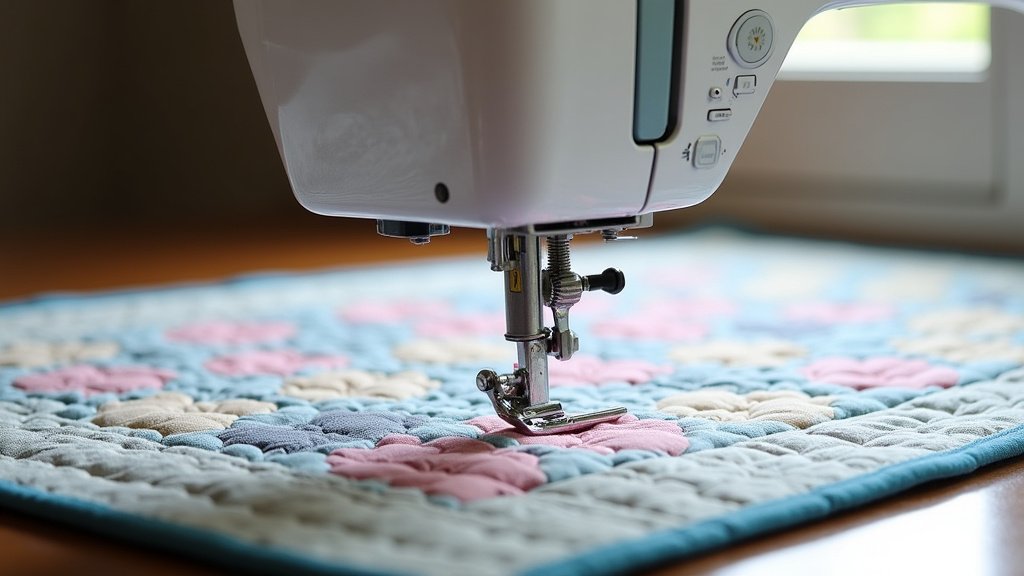
The presser foot you use can make a difference. For free-motion quilting, a darning or free-motion foot is essential. This type of foot has a spring that lifts the fabric slightly, allowing you to move the quilt freely in any direction.
Ensure your machine’s feed dogs are lowered. This allows for free movement. If your machine doesn’t have a separate darning foot, check your manual for how to lower the feed dogs and engage free-motion quilting.
Tips for Making the Process Easier
Here are a few extra nuggets of wisdom we’ve found helpful for quilters tackling large projects on sit-down machines.
Break It Down into Sections
Don’t try to quilt the entire queen size quilt in one marathon session. That’s a recipe for burnout! We found that breaking the project into smaller sections makes it much more manageable. Focus on quilting one quadrant or a few rows at a time.
Take breaks. Your shoulders, back, and hands will thank you. Even small, consistent efforts add up over time. Celebrate each completed section!
Consider Your Quilting Plan
Before you start stitching, have a clear idea of your quilting plan. This doesn’t mean you can’t be spontaneous, but knowing your overall design helps. Some quilters even draw a quilting diagram for their quilt top. This visual guide can be incredibly helpful.
Think about where you want to place your quilting lines. Will they be dense or sparse? Will they follow the piecing or create a new pattern? A little planning upfront can prevent quilting disasters later.
Don’t Be Afraid to Ask for Help or Support
If you have friends who quilt, or belong to a quilting group, don’t hesitate to ask for advice or even an extra pair of hands. Sometimes, just having someone to help you manage the weight of the quilt as you guide it can be a lifesaver. Many quilters also share their setup tips in online forums or communities.
You might also consider outsourcing just the quilting part if you’re truly struggling with the physical aspect. Many longarm quilters offer services for people who have pieced their own tops but don’t want to do the quilting themselves. This is a great option if your machine or workspace is simply not conducive to large quilts, but you still want your beautiful quilt top brought to life.
Is It Worth It? Your Queen Size Quilt Journey
Quilting a queen size quilt on a sit-down machine is definitely an undertaking. It requires patience, preparation, and some creative problem-solving. However, the satisfaction of completing such a large project on your own machine is immense. You’ve invested time and skill into every stitch.
The key is to manage the bulk and support the weight effectively. With the right setup and techniques, you can achieve beautiful quilting results. So, gather your supplies, prepare your workspace, and get ready to quilt your masterpiece!
Your Sit-Down Quilting Checklist:
- Ensure your backing fabric is at least 4-6 inches larger than your quilt top.
- Use plenty of safety pins or spray adhesive for secure basting.
- Attach an extension table to your sewing machine for a larger flat surface.
- Consider using a quilting frame or additional tables to support the quilt’s weight.
- Choose simpler quilting designs like straight lines or meandering.
- Support the weight of the quilt by keeping it flat and preventing it from hanging.
Conclusion
You’ve now seen that quilting a queen size quilt on your trusty sit-down machine is entirely within your reach! It’s about preparation, patience, and smart setup. By managing the bulk with adequate support and choosing the right techniques, you can absolutely achieve beautiful results. Don’t let the size intimidate you; break it down, enjoy the process, and get ready to admire your finished masterpiece. Your next step is to assess your workspace and gather any needed accessories, like an extension table, and then start planning your quilting design!
Frequently Asked Questions
Will quilting a queen size quilt stretch my sewing machine?
While a very heavy quilt can put a strain on any machine, proper support is key to preventing undue stress. By ensuring the weight of the quilt is off your machine bed and supported by an extension table or quilting frame, you significantly reduce the risk of stretching or damaging your machine. Focus on guiding the fabric smoothly.
How can I prevent my queen size quilt from dragging on the floor?
The best way to prevent dragging is to build up your sewing surface. Use an extension table that’s level with your machine bed and consider adding extra tables or sturdy supports around your machine to create a large, flat area. Quilting frames are also designed specifically to hold the bulk of the quilt up.
Is spray basting recommended for large quilts on a sit-down machine?
Spray basting can be very effective for large quilts as it helps keep layers smooth and prevents shifting, which is crucial when maneuvering on a smaller machine. Just be sure to work in a well-ventilated area and apply the spray evenly to avoid sticky spots or bald areas. Many quilters find it speeds up the basting process for big projects.
What kind of quilting designs are easiest for a queen size quilt on a sit-down machine?
Simpler, all-over quilting patterns are your best bet. Think about stitch-in-the-ditch, straight-line quilting, or gentle meandering designs. These require less intricate maneuvering and are forgiving, making them ideal for managing bulk and weight without excessive frustration on a smaller machine.
How do I deal with the bulk of the quilt when I get to the edges?
As you approach the edges, neatly fold the unquilted portion of the quilt. Imagine folding a large piece of fabric to fit through a small opening. Keep these folds as flat and tidy as possible to prevent them from interfering with your stitching or creating thick spots under the presser foot. Gently ease the folded fabric out of the way.