What Size Needle Should You Use for Quilt Piecing?
A size 80/12 universal or quilting needle is a useful starting point for piecing standard quilting cotton. Try a 70/10 for finer fabric or thread, or a 90/14 when heavier fabric or thread needs more support; test on scraps and follow your machine manual.
On this page (8 sections)
- What size needle is best for quilt piecing?
- Does piecing need a different needle from quilting?
- Which needle type works for piecing cotton?
- How should thread and fabric affect needle size?
- What can cause skipped stitches while piecing?
- Which needle products fit specific piecing needs?
- How do you test a needle before piecing a block?
- What should you choose for your quilt piecing?
For piecing standard quilting cotton, start with a size 80/12 needle and adjust for the fabric and thread. For a jelly roll quilt, see thread recommendations for jelly roll quilts.
A 70/10 may suit finer materials, while a 90/14 can help with heavier fabrics or thread; sew a test seam before piecing a full block.
Quilt piecing joins fabric pieces into a quilt top. It does not require the same needle choice as stitching through a quilt top, batting and backing together.
The right size should pass through the fabric cleanly and form even stitches without damaging the thread. If you want a broader sizing overview, see How to Select the Right Quilting Needle Size.
What size needle is best for quilt piecing?
Size 80/12 is a practical starting point for ordinary quilting cotton. It balances a fine needle opening with enough strength for common cotton fabric and general-purpose piecing thread.
Needle sizes often show two numbers, such as 80/12. The first is the metric size and the second is the US size.
As the numbers increase, the needle is generally thicker.
| Needle size | Consider it for | Check before piecing |
|---|---|---|
| 70/10 | Fine fabric or fine thread | Make sure the needle doesn't bend or skip stitches |
| 80/12 | Standard quilting cotton and regular piecing thread | Confirm the seam looks even on a scrap |
| 90/14 | Heavier fabric or thread | Check that the larger needle hole doesn't show |
This is a starting guide, not a rule for every brand of fabric, thread or machine. Needle systems and sizing can vary, so check the machine manual and the needle package.
How to choose a needle size for quilt piecing
Choose the smallest size that sews a clean, even seam through your fabric with your chosen thread. A needle that's too small may deflect or struggle, while an unnecessarily large one can leave a more visible hole.
Begin with the size recommended for your machine and fabric. If stitches skip, the needle bends, or thread frays, check that the needle is installed correctly and threaded well before changing sizes.
If the needle appears too large for delicate cotton, try one size down. For a thicker fabric or thread, test one size up and check both sides of the seam for skipped stitches or damage.
For more sizing factors, read How to Choose a Quilting Needle Size?.
Does piecing need a different needle from quilting?
Often, yes: piecing and quilting have different jobs. Piecing joins two or more fabric sections, while quilting stitches through a layered sandwich that includes batting and backing.
For piecing, focus on the fabric and piecing thread that pass under the presser foot. A size 80/12 universal or quilting needle is often a reasonable first test for standard cotton.
For quilting through a sandwich, the needle must pass through more layers. A quilting needle may be useful for that task, but the size still depends on the fabric, batting, thread and machine.
Don't choose a needle just because it says “quilting” on the package. Read the size and needle system, then match them to the machine and the work in front of you.
Which needle type works for piecing cotton?
A universal needle is a common starting choice for quilting cotton, and a quilting needle is another option to test. The size and condition matter along with the point style.
Use a needle made for your machine rather than assuming all needles fit all machines. Domestic machines usually call for a different system from long-arm machines, so verify the manual before buying.
A needle should be straight and undamaged. Insert it as the manual directs, often with the flat side facing a specified direction, and tighten the clamp securely.
Replace a needle that is bent, dull or damaged. If the machine starts making a new thumping sound or stitches skip, pause and inspect the needle before continuing.
How should thread and fabric affect needle size?
Match the needle to the thicker or more demanding part of the seam. Fine thread and lightweight fabric usually call for a smaller needle, while heavier thread or fabric may need a larger one.
Thread should pass through the needle eye without scraping or fraying. If the eye is too small, the thread may shred; if the needle is too large, the hole can become visible in a tight piecing seam.
Pre-wash or handle fabric according to your project plan, and test a seam using the same layers and thread you intend to piece. Check that the stitches lock evenly and the fabric feeds without puckering.
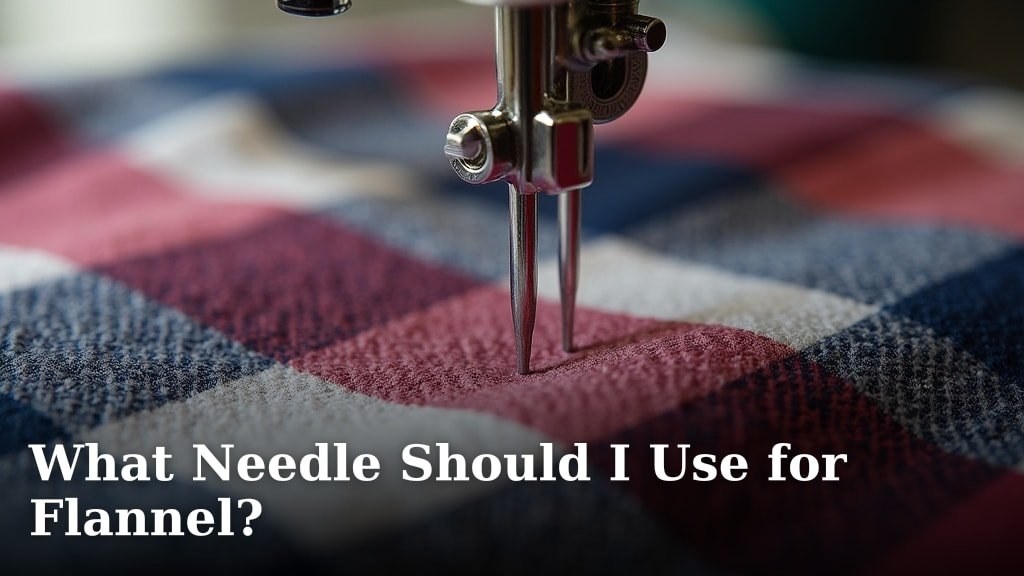
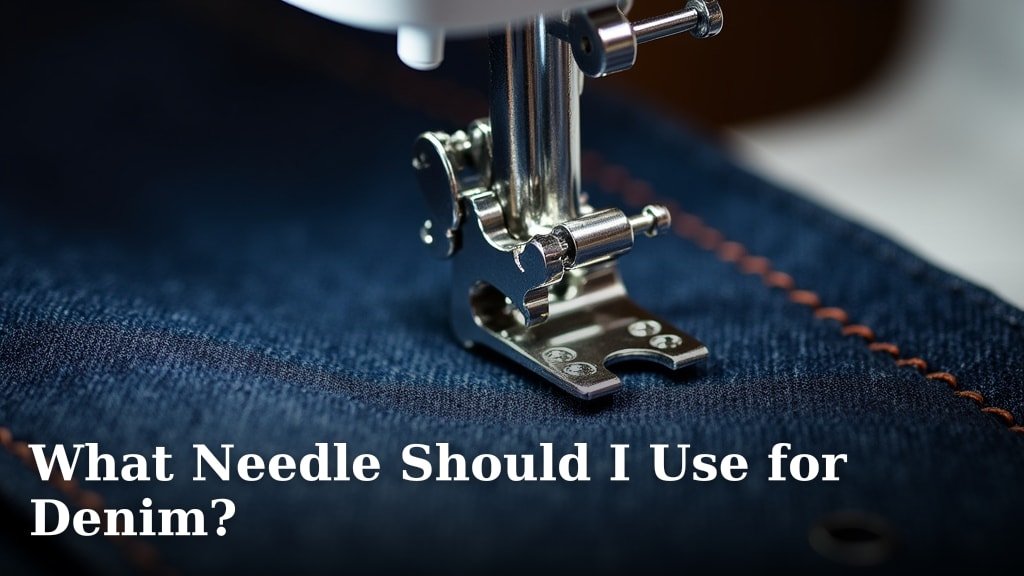
Fabric type can affect needle choice. For example, What Needle Should I Use for Flannel? covers a fabric that can behave differently from standard quilting cotton, while What Needle Should I Use for Denim? addresses a heavier material.
What can cause skipped stitches while piecing?
A damaged or incorrectly installed needle is a common place to start troubleshooting skipped stitches. Check the needle, threading and machine setup before assuming you need a different size.
Try these steps in order:
- Stop sewing and check for a bent or damaged needle.
- Confirm the needle is fully inserted and oriented as your manual shows.
- Rethread the machine with the presser foot raised if your manual calls for it.
- Check that the bobbin is inserted and wound correctly.
- Sew slowly on a scrap made from the same fabric layers.
- If skips remain, try a fresh needle in a suitable size.
A larger needle is not automatically the fix. Skipping can come from threading, tension, needle installation, fabric handling or a machine issue, so change one thing at a time.
Which needle products fit specific piecing needs?
Choose products by machine type, needle system and intended thread or fabric. The examples below have different uses, and the long-arm options are not substitutes for a domestic-machine needle unless your machine supports that system.
Superior Threads' #100/16 Topstitch needle is intended for heavier threads and fits home sewing machines. That size is larger than the usual starting point for standard piecing cotton, so consider it when the thread or material calls for a bigger needle.
This Groz-Beckert needle uses systems including 134 and 135X5, with size choices ranging from metric 90 to 160. It's described for long-arm machines that need a round-shaft needle, so verify compatibility before choosing it for any machine.
This Groz-Beckert needle is also a long-arm option with the 134MR system. Its size range is described for different fabric weights; check your machine manual to confirm the system and shaft type before ordering.
How do you test a needle before piecing a block?
Sew a short test seam on scraps that match your quilt pieces. This lets you check stitch formation, fabric handling and needle marks before using the needle on a full block.
Use the same fabric layers, thread, stitch length and presser foot pressure planned for the project. Sew a few inches, then inspect the top and underside for skipped stitches, loops, fraying or puckering.
If the seam looks clean, continue with the block. If it doesn't, change one variable at a time, such as installing a fresh needle or trying a size up or down.
What should you choose for your quilt piecing?
Choose 80/12 for a first test with standard quilting cotton, then adjust to 70/10 for finer fabric or thread, or 90/14 for heavier material or thread. Use the machine manual to confirm needle system and installation, and test before sewing your blocks.
Once the quilt top is assembled, choose a needle for the layered sandwich and quilting method. For a different machine setup, see How to Quilt with a Twin Needle?.
When you plan the finished quilt, the piecing needle won't affect its dimensions. Use What Size Is a Baby Quilt? if you need a size reference for a baby quilt.
What size needle should I use for quilt piecing with standard cotton?
Start with size 80/12 for standard quilting cotton and regular piecing thread. Test on scraps, then try a smaller needle for finer materials or a larger one for heavier thread or fabric if the stitches are not clean.
Follow your machine manual for the correct needle system and installation.
Can I use a 100/16 needle to piece a quilt?
A 100/16 needle may be useful with heavier thread, but it's larger than a typical starting size for standard cotton piecing. A larger needle can leave a more visible hole, so test the seam on scraps and use it only when the thread or fabric calls for that size.
Is a long-arm needle suitable for a home sewing machine?
A long-arm needle is suitable only if the machine takes that needle system and shaft type. The Groz-Beckert 134 and 134MR examples above are described for long-arm machines that need round-shaft needles.
Check your home machine's manual before using one.
Should I use a new needle for every quilt?
Use a fresh needle when the current one is bent, dull, damaged or causing stitch problems. How often to replace it depends on the needle, fabric and amount of sewing.
If you hear new noise or see skipped stitches, stop and inspect the needle before continuing.
Frequently asked questions
What size needle should I use for quilt piecing?
Start with a size 80/12 universal or quilting needle for standard quilting cotton and regular piecing thread. Use a finer size for delicate fabric or thread, and consider a larger size for heavier material or thread.
Check your machine manual and sew a test seam on scraps.
Is a 90/14 needle too large for piecing?
A 90/14 can work when your fabric or thread is heavier, but it may leave a larger hole than needed in lightweight quilting cotton. Try the smallest needle that forms even stitches without deflection, skipped stitches or thread damage, and check the seam on a scrap first.
Should I use a quilting needle or a universal needle for piecing?
Either can work for ordinary quilting cotton when the needle size suits the fabric and thread. A quilting needle has a point designed to pass through layered fabric, while a universal needle is a common general-purpose choice.
Check your machine manual and test the seam before sewing a whole block.
When should I change a piecing needle?
Change the needle if it is bent, damaged or dull, or if you notice repeated skipped stitches, unusual noise or damaged thread after checking setup and threading. A fresh needle also makes a useful troubleshooting step when a seam suddenly changes, but match its system and size to your machine.