Juki HZL-LB5020 Review: Worth It? (November 2026)
The Juki HZL-LB5020 is a compact computerized sewing machine for basic sewing, piecing and portable quilting. Its 20 stitch patterns, drop feed, free arm and manageable 18.1 lb weight make it flexible, while its compact format suits smaller work areas.
On this page (9 sections)
- Juki HZL-LB5020 reviews: what does it do well?
- What are the key Juki HZL-LB5020 features?
- Is the HZL-LB5020 suitable for piecing?
- How does the compact size affect quilting?
- What accessories are included?
- How should you set up the Juki HZL-LB5020?
- How do you use the drop feed system for free motion quilting?
- How should you care for the machine?
- Is the Juki HZL-LB5020 worth choosing?
The Juki HZL-LB5020 is a strong compact choice for basic sewing, piecing and portable quilting. It brings together 20 stitch patterns, an LCD screen, an auto needle threader, drop feed and needle up/down positioning in a machine that weighs 18.1 lb.
That mix suits sewists who want one manageable machine for everyday tasks and smaller quilt work. The controls are spread across basic sewing, edge work and free motion quilting, so you do not need to learn a separate setup for each project.
The LCD screen makes stitch selection clear when you set up a seam or a decorative detail. The auto needle threader can save time when you start a new project or change thread, and needle up/down positioning helps when you pause, turn or prepare to pivot fabric.
For quilting, the drop feed system lets you lower the feed dogs and guide fabric by hand. Variable speed override adds another layer of control, which can help you slow the pace while you learn a line or work around a corner.
The compact size and 18.1 lb weight make it easier to move from storage to a table and back again. The included hard case supports that routine, although you should still carry the machine with both hands and place it on a firm, level surface.
The main reason to choose it is control in a smaller format. The main trade-off is that a compact machine gives you less working room for large quilt layers than a larger quilting-focused model.
It also suits a smaller sewing space where a larger machine would be hard to store. Free arm sewing helps with narrow or curved sections, while the 7 point feed dog system supports regular fabric movement during standard sewing.
Beginners may like the simple path from setup to a test seam on scrap fabric. More experienced sewists may use the same machine for classes, repairs, travel or smaller projects without giving up drop feed and speed control.
Juki HZL-LB5020 reviews: what does it do well?
The Juki HZL-LB5020 does best when you need a manageable machine for everyday sewing and smaller quilting projects. Its feature set covers straight sewing, decorative stitch use, buttonholes, free arm work and free motion quilting.
JUKI identifies the machine as a computerized sewing machine with basic to advanced functions. We compared its stated features with the needs of a quilter who values portability, simple controls and flexible setup.
Juki HZL-LB5020 Computerized Sewing Machine: Best for portable basic quilting
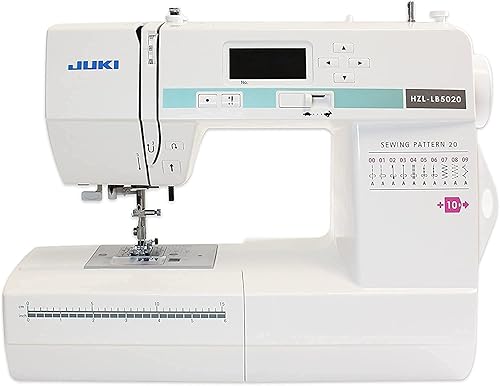
- 20 stitch patterns
- LCD screen
- Auto needle threader
- Drop feed system for free motion quilting
- 18.1 lb weight
A compact JUKI machine with basic to advanced functions for sewing, piecing and portable quilting. The free arm, drop feed system and needle up/down positioning add useful control for varied projects.
Pros
- 20 stitch patterns
- LCD screen
- Auto needle threader
- Drop feed for free motion quilting
- Hard case included
Cons
- Compact size limits the work area compared with larger quilting machines
- The available stitch set is focused rather than extensive
The machine has 20 stitch patterns, a 7 point feed dog system and variable speed override. Those features give you several ways to control fabric movement and sewing speed, which matters when you move between piecing, edge work and slower detail sewing.
Who should consider the HZL-LB5020?
Choose it if you want a compact JUKI machine for piecing, basic sewing and occasional free motion quilting. It also fits a sewing space where you need to put the machine away between sessions.
The 18.1 lb weight is useful for moving the machine from storage to a table. It is not weightless, so carry it with both hands and use a stable surface before sewing.
This machine also suits beginners who want an LCD screen, an auto needle threader and a 1-step buttonhole function. More experienced sewists may value the same controls when they want a simple machine for travel, classes or smaller projects.
You may want a larger machine if your main work involves broad quilt panels or if you prefer a wider sewing area. Compare the best Juki sewing machines when you need to weigh compact size against other machine formats.
What are the key Juki HZL-LB5020 features?
The most useful HZL-LB5020 features are the 20 stitch patterns, drop feed system, free arm and speed control. Together, they cover several common sewing tasks without requiring a separate machine for every technique.
The LCD screen gives you a clear place to select and view stitch choices. The auto needle threader can reduce one small setup task, especially when you change thread or prepare the machine for a new project.
The 7 point feed dog system helps move fabric during regular sewing. For free motion quilting, the drop feed system lets you disengage the normal fabric-feeding action so you can guide the material by hand.
Needle up/down positioning is helpful when turning fabric or stopping during a quilting line. Set the needle position based on the task, then keep your hands clear of the needle area while the machine runs.
The free arm is useful for sewing smaller or curved areas that are difficult to place around a flat bed. It can help with narrow sections, but it does not replace careful fabric handling.
Is the HZL-LB5020 suitable for piecing?
The HZL-LB5020 suits basic quilt piecing because it combines a feed dog system, variable speed override and needle up/down positioning. These controls can make it easier to guide fabric sections and pause at corners.
For accurate piecing, prepare your fabric before turning on the machine. Cut pieces carefully, keep seams consistent and press each unit as your pattern directs.
Use a slower speed when aligning short pieces or approaching a corner. The variable speed override lets you limit the machine's pace, which can give you more time to guide fabric without relying only on foot pressure.
The machine's 20 stitch patterns also give you options beyond a basic straight seam. For quilt construction, however, a dependable seam and careful cutting matter more than having a very large stitch menu.
If you are comparing this machine with a larger HZL model, read our Juki HZL-G220 review for another point of comparison. A larger machine may make more sense when the size of your quilt layers matters more than easy storage.
How does the compact size affect quilting?
The HZL-LB5020 measures 10 inches deep by 20 inches wide by 18 inches high, so check your table, storage shelf and carrying route before buying. Its compact format helps with portability, but the available space around the needle is still important for quilting.
A small sewing surface can work well for blocks, repairs and smaller projects. Larger quilt sections need more support so their weight does not pull against the needle area or shift the fabric while you sew.
Place the machine on a firm, level table. Keep the power cord and foot control clear of walkways, and leave enough room to support fabric on both sides of the machine.
The included hard case makes storage and transport more practical. Use it when moving the machine, but still lift carefully because 18.1 lb can become awkward if you carry it by an unstable grip.
For a comparison focused on a larger JUKI quilting machine, see what are the Juki TL-2010Q dimensions and throat size. Throat space is one of the measurements to check when you regularly handle larger quilt sections.
What accessories are included?
The HZL-LB5020 includes several presser feet, needles, bobbins, tools, a foot control and a hard case. That gives you a useful starting set for common sewing and finishing tasks.
Included presser feet are the standard zig-zag foot, applique or satin stitch foot, blind hem foot, zipper foot, one-step buttonhole foot and overedge foot. The selection covers several tasks without requiring you to start with only one general-purpose foot.
The machine also includes a seam ripper, lint brush, 2 spool caps, spool seat, multi-function screwdriver tool, extra spool pin and spool felt. A pack of 3 needles and 4 bobbins is included as well.
The power cord and foot control are included for operation. The manual DVD and warranty card are part of the included materials, along with the hard case.
Check that the accessories you need are present before starting a project. Keep small feet, bobbins and tools together so setup does not become a search through several drawers.
How should you set up the Juki HZL-LB5020?
Set up the HZL-LB5020 on a stable surface, connect the power cord and foot control, then thread it according to the manual. Use the auto needle threader only after the needle is in the correct position and the machine is stopped.
Begin with a simple test seam on a fabric scrap. This lets you confirm that the thread path, bobbin placement and stitch choice are ready before you sew a project piece.
Use the LCD screen to choose a stitch pattern. For piecing, start with the stitch and settings that match your pattern instructions rather than changing several controls at once.
The 1-step buttonhole function is useful when you need consistent buttonholes. Practice on a scrap first, especially when the fabric has layers or interfacing.
Change the presser foot when the task requires it. The included zipper, blind hem, overedge and applique or satin stitch feet are designed for different sewing jobs, so using the matching foot can make setup clearer.
How do you use the drop feed system for free motion quilting?
Use the drop feed system when you want to guide the quilt manually for free motion quilting. Lowering the feed dogs changes how the fabric moves, so practice first on a small sample.
Prepare the quilt sandwich on a clear work surface and support its weight as you sew. Keep the fabric smooth without pulling it sharply through the needle area.
Start with a slow speed and a simple motion. The variable speed override can help limit the pace while you learn how the machine responds to your hand movement.
Needle up/down positioning can help when you pause or turn. Stop with the needle safely positioned, raise the presser foot when needed and reposition the fabric without forcing it.
Free motion work depends on practice, fabric control and suitable thread and needle choices. The HZL-LB5020 provides the drop feed feature, but the final stitch quality still depends on your setup and technique.
How should you care for the machine?
Basic care means cleaning lint from the bobbin and feed areas, changing needles when needed and following the manual for oiling or service. The included lint brush and screwdriver tool can help with routine access and cleaning.
Turn off and unplug the machine before cleaning around the needle, bobbin or feed dog area. Remove lint gently rather than pushing debris deeper into the mechanism.
Use a fresh, suitable needle when the current one becomes bent, damaged or dull. A damaged needle can affect stitch formation and may damage fabric.
Keep the hard case available when the machine is stored. Covering and protecting the machine helps keep dust away from the sewing area between projects.
Do not force the handwheel, presser foot or needle. If a thread jam does not clear with the normal steps, stop and follow the manual's troubleshooting guidance.
Is the Juki HZL-LB5020 worth choosing?
The Juki HZL-LB5020 is worth choosing when you want a portable computerized machine with practical quilting controls. Its 20 stitch patterns, LCD screen, free arm, drop feed and needle up/down positioning cover a useful range of basic sewing and piecing work.
Choose the HZL-LB5020 if storage space, portability and straightforward controls are high priorities. Its 18.1 lb weight and included hard case make it easier to move than a heavier machine, while the accessory set gives you several ways to begin sewing.
The included feet cover common jobs, from standard zig-zag sewing to blind hemming, zipper work and one-step buttonholes. That range helps you match the foot to the task instead of forcing one presser foot to handle every seam.
For piecing, the feed dog system, variable speed override and needle positioning work together during setup and sewing. You can slow the pace near junctions, stop in a planned needle position and keep fabric aligned before you continue.
For free motion work, the drop feed system changes the way fabric moves under the needle. Practice on a small sample first, support the quilt weight on the table and keep movements smooth rather than pulling the fabric hard.
Choose a different format if you regularly work with large quilt layers and need more room around the needle. A compact machine can handle the work in sections, but a wider sewing area may make large panels easier to support and turn.
Care is part of the value here, so clean lint from the bobbin and feed areas, unplug the machine before cleaning and replace needles when they bend or dull. Keep the hard case for storage and follow the manual for service guidance.
This assessment weighs the stated specs and features against the needs behind Juki HZL-LB5020 reviews. For basic sewing, piecing and portable quilting, the machine's control options make it a well-rounded compact choice.
Frequently asked questions
Is the Juki HZL-LB5020 good for quilting?
The Juki HZL-LB5020 suits basic quilting, piecing and free motion work because it has a 7 point feed dog system, drop feed system, needle up/down positioning and variable speed override. Its compact design is better for portable projects and smaller work areas than for handling very large quilts.
How many stitches does the Juki HZL-LB5020 have?
The Juki HZL-LB5020 has 20 stitch patterns. An LCD screen helps you select and view stitches, while the 1-step buttonhole function handles buttonholes.
This set covers common sewing and piecing needs without presenting itself as a machine with a very large decorative stitch library.
Is the Juki HZL-LB5020 portable?
The Juki HZL-LB5020 weighs 18.1 lb and measures 10 inches deep by 20 inches wide by 18 inches high. That makes it easier to move between storage and a work surface than a heavier full-size machine, although you should still use the included hard case and support it securely while carrying.
What comes with the Juki HZL-LB5020?
The Juki HZL-LB5020 includes a standard zig-zag foot, applique or satin stitch foot, blind hem foot, zipper foot, one-step buttonhole foot and overedge foot. It also includes a seam ripper, lint brush, spool accessories, screwdriver tool, extra spool pin, needles, 4 bobbins, power cord, foot control, hard case, manual DVD and warranty card.