9 Best Juki Sewing Machines (November 2026)
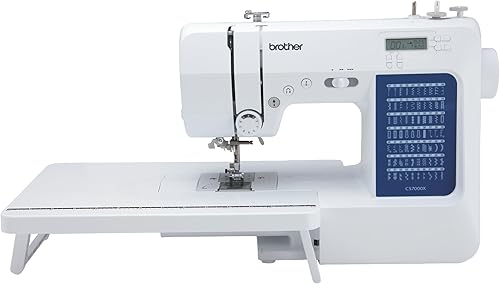
The best Juki sewing machines for home sewing and quilting include the SINGER® Quantum Stylist 9960 Computerized Sewing for stitch variety and customization, the Brother Sewing Machine for basic everyday sewing, and the Brother CS7000X Sewing and Quilting Machine LCD for a roomy quilting workspace.
On this page (6 sections)
The best Juki sewing machine depends on whether you need a general-purpose home machine or a straight-stitch model for quilting. This roundup’s products are SINGER and Brother alternatives, so use their features as comparison points while you research Juki machines.
Juki has several machine types, and the right one depends on your projects, workspace and preferred controls. Start with our best Juki HZL sewing machine guide for Juki-specific options, or compare Juki HZL-LB5020 reviews if that model is on your shortlist.
Our picks at a glance
-
1
 Best for stitch variety and customization
SINGER® Quantum Stylist 9960 Computerized Sewing
9.7/10 our score
See it on Amazon -
2

-
3
 Best for a roomy quilting workspace
Brother CS7000X Sewing and Quilting Machine LCD
9.7/10 our score
See it on Amazon
- 4
 Check it
Brother HC1850 Sewing and Quilting Machine
Best for stitch variety with a wide table - 5
 Check it
Brother XR3774 Sewing and Quilting Machine
Best for a simple quilting setup - 6
 Check it
Brother XR9550 Computerized Sewing and Quilting Machine
Best for computerized stitch selection - 7
 Best for thick fabrics and layersCheck it
- 8
 Check it
Brother SE700 Sewing and Embroidery Machine
Best for adding embroidery - 9
 Check it
Brother XM3700 Sewing Machine 37 Built-in Stitches
Best for small everyday projects
Which sewing machine features matter for Juki shoppers?
Home sewing and quilting machines differ in workspace, stitch selection and included accessories. These features help you decide what to look for in a Juki model.
A wide table can support fabric around a quilt, while a larger needle-to-arm space leaves more room beside the needle. If you mostly hem clothes or sew small items, a free arm may be more useful than an extra-wide work surface.
Computerized machines offer stitch selection through controls or a screen, while simpler options focus on a smaller set of built-in stitches. Think about how often you’ll use decorative stitches, buttonholes or lettering.
If you’re also comparing machines for a new sewing practice, see our best sewing and quilting machine for beginners guide. For a machine that stays at home, our best sewing and quilting machine for home use guide gives another comparison.
How we chose these alternatives
We compared model features with common home sewing and quilting needs, including workspace, stitch range and accessories. These picks are not Juki machines, so use them to set a feature baseline while researching Juki models.
Our score weighs specs, features and buyer feedback against what you’re shopping for.
| Product | Best for | Stitches | Workspace | Controls | Our score |
|---|---|---|---|---|---|
| SINGER® Quantum Stylist 9960 Computerized Sewing | stitch variety and customization | 600 built-in; 1,172 applications | Large extension table included | Speed control and start/stop button | 9.7 |
| Brother Sewing Machine | basic everyday sewing | 27 built-in | Free arm | 9.7 | |
| Brother CS7000X Sewing and Quilting Machine LCD | a roomy quilting workspace | 70 built-in | Wide table and larger needle-to-arm space | 9.7 | |
| Brother HC1850 Sewing and Quilting Machine | stitch variety with a wide table | 185 built-in | Wide table included | 9.6 | |
| Brother XR3774 Sewing and Quilting Machine | a simple quilting setup | 37 built-in | Wide table included | 9.6 | |
| Brother XR9550 Computerized Sewing and Quilting Machine | computerized stitch selection | 165 built-in | Wide table included | 9.6 | |
| SINGER® | thick fabrics and layers | Free arm | 9.6 | ||
| Brother SE700 Sewing and Embroidery Machine | adding embroidery | 9.5 | |||
| Brother XM3700 Sewing Machine 37 Built-in Stitches | small everyday projects | 37 built-in | Free arm | 8.6 |
Which Juki sewing machine alternatives stand out?
The SINGER Quantum Stylist 9960 leads this group for stitch variety, while Brother’s CS7000X brings a wide table and larger needle-to-arm space. The remaining picks suit narrower needs, from basic sewing to embroidery.
SINGER® Quantum Stylist 9960 Computerized Sewing: Best for stitch variety and customization
- 600 built-in stitches
- 1,172 stitch applications
- 13 presser feet
- Large extension table
A broad stitch selection, speed control and a large extension table support varied sewing and quilting projects. It includes an even-feed foot and a quarter-inch foot.
Pros
- 600 built-in stitches
- Large extension table
- Speed control and foot-pedal-free start/stop
Cons
- More stitch choices to sort through
- Not a Juki model
The SINGER Quantum Stylist 9960 suits sewists who want many stitch choices in one machine. It has 600 built-in stitches and 1,172 stitch applications, including essential, stretch and decorative options.
For quilting, it includes an even-feed foot, quarter-inch foot, quilting bar and large extension table. The start/stop button and speed control let you sew without a foot pedal and set a slower pace for detailed work.
This is a feature-rich alternative if you want to compare computerized controls with the Juki models you’re considering. If your main question is about Juki’s straight-stitch option, read our Juki TL-2010Q vs Juki TL-2000Qi comparison.
Brother Sewing Machine: Best for basic everyday sewing
- 27 built-in stitches
- 6 sewing feet
- Automatic needle threader
- Free arm
The XM2701 offers everyday stitch types, an automatic needle threader and a free arm for cuffs and sleeves. It is a simple option if you do not need a large quilting table.
Pros
- Automatic needle threader
- Free arm for small cylindrical items
- 27 built-in stitches
Cons
- No wide quilting table specified
- Not a Juki model
The Brother XM2701 is aimed at everyday sewing rather than a large quilting workspace. For a Singer model in this everyday category, see our Singer M1500 review.
Its 27 built-in stitches, automatic needle threader and free arm cover common tasks such as alterations, cuffs and sleeves.
Six sewing feet are included, along with an auto-size buttonhole. It has no wide quilting table, so consider another option if you expect to work with a large quilt sandwich often.
It offers a useful contrast to Juki machines with more specialized quilting features. Check that its 120-volt US power requirement suits your location before you choose it.
Brother CS7000X Sewing and Quilting Machine LCD: Best for a roomy quilting workspace
- 70 built-in stitches
- Wide table
- 10 sewing feet
- Large needle-to-arm workspace
A wide table and larger needle-to-arm space make the CS7000X a practical fit for quilt projects. It also has 70 built-in stitches and a fixed needle bar.
Pros
- Wide table included
- Large needle-to-arm workspace
- Protective hard case
Cons
- Intended for 120-volt use in the US
- Not a Juki model
The Brother CS7000X fits quilters who want more space around the needle and a wide table. It combines 70 built-in stitches with a quilt guide, 10 sewing feet and a protective hard case.
Brother specifies a fixed needle bar and a larger needle-to-arm workspace for larger projects, including quilts. Those details make it a useful alternative to compare with a Juki machine when workspace matters.
For a closer look at a different Juki home machine, read our Juki HZL-G220 review. Compare its Juki-specific details with the CS7000X’s table and workspace features.
Brother HC1850 Sewing and Quilting Machine: Best for stitch variety with a wide table
- 185 built-in stitches
- Wide table
- 8 presser feet
- LCD display
The HC1850 pairs a wide table with utility, decorative, quilting and alphanumeric stitches. Its LCD display and push-button selector help you choose settings.
Pros
- Wide table included
- Stitch selection on an LCD
- Includes quilting features
Cons
- Intended for 120-volt use in the US
- Not a Juki model
The Brother HC1850 offers 185 built-in stitches, including alphanumeric stitches, plus a wide table and LCD screen. It suits shoppers who want quilting features and extra stitch choices for decorative work.
Eight presser feet are included, and the machine has a stitch reference flip-chart and adjustable sewing speeds. Its quilting features include a spring-action quilting foot and free-motion capability.
This model is another computerized alternative for comparing stitch selection and workspace. It is intended for 120-volt use in the US, so check compatibility before buying.
Brother XR3774 Sewing and Quilting Machine: Best for a simple quilting setup
- 37 built-in stitches
- Wide table
- 8 sewing feet
- Automatic needle threader
The XR3774 keeps stitch selection modest while including a wide table and quilting stitches. Its automatic needle threader and top drop-in bobbin simplify setup.
Pros
- Wide table included
- Quilting stitches
- Machine cover included
Cons
- Intended for 120-volt use in the US
- Not a Juki model
The Brother XR3774 has 37 built-in stitches, including quilting stitches, plus a wide table and eight sewing feet. That makes it a simpler alternative for someone who wants a table for quilt fabric without a large stitch menu.
An automatic needle threader and top drop-in bobbin help with setup. The free arm also supports everyday sewing tasks beyond quilting.
If you’re deciding between a Juki straight-stitch machine and another model, compare what each one offers for your usual projects. A wide table can help manage fabric, but it does not replace checking the machine’s throat space.
For Viking measurements, see Viking sewing machine throat spaces.
Brother XR9550 Computerized Sewing and Quilting Machine: Best for computerized stitch selection
- 165 built-in stitches
- LCD display
- Wide table
- 8 sewing and quilting feet
The XR9550 combines an LCD screen with 165 stitches and a wide table. Drop feed also supports free-motion quilting and sewing.
Pros
- LCD stitch selection
- Wide table and hard cover
- Drop feed for free-motion work
Cons
- Intended for 120-volt use in the US
- Not a Juki model
The Brother XR9550 combines 165 built-in stitches with an LCD display, wide table and eight sewing and quilting feet. See our Brother XR9550 review for a closer look at this model.
It is a fit for shoppers who want to select stitches and settings through a screen.
The model supports drop-feed free-motion quilting and includes a hard cover. For regulated free-motion stitching, compare encoder and optical stitch regulators.
Its combination of computerized selection and quilting accessories gives you several features to compare with Juki home machines.
The protective foam inside the hard cover should stay in place. The machine is intended for 120-volt use in the US.
SINGER®: Best for thick fabrics and layers
- 97 stitch applications
- Heavy-duty metal frame
- Adjustable presser-foot pressure
- Quilting guide included
The SINGER 4423 offers adjustable presser-foot pressure and an extra-high lift for thick layers. A quilting guide is included, though no wide table is specified.
Pros
- Adjustable presser-foot pressure
- Quilting guide included
- Heavy-duty metal frame
Cons
- No wide table specified
- Not a Juki model
The SINGER Heavy Duty 4423 suits buyers who sew thick fabric layers as well as quilts. It has adjustable presser-foot pressure, an extra-high presser-foot lift and a heavy-duty metal frame.
It includes 97 stitch applications, a quilting guide and four presser feet. No wide table is included, so plan for additional support if you often handle large quilts.
This machine has a stated maximum rate of 1,100 stitches per minute. That gives you another feature to compare with Juki models.
Brother SE700 Sewing and Embroidery Machine: Best for adding embroidery
- 103 built-in sewing stitches
- 135 embroidery designs
- 4 x 4 in embroidery field
- Wireless LAN
The SE700 combines sewing and embroidery, with 103 sewing stitches and a 4 x 4 in embroidery field. Choose it when decorating fabric is part of the plan.
Pros
- Sewing and embroidery in one machine
- Wireless file transfer options
- Touchscreen design preview
Cons
- Embroidery features add complexity
- Not a Juki model
The Brother SE700 suits projects that combine sewing with embroidery. It has 103 sewing stitches, 135 built-in embroidery designs and a 4 x 4 in embroidery field.
A color touchscreen lets you preview and edit designs, and wireless LAN supports transferring embroidery files. For a first machine focused on this work, compare our beginner embroidery machine guide.
Choose this type of machine if embroidery is part of your plans, since those functions go beyond standard garment sewing and quilting.
For a Juki-only comparison, keep the SE700 as a feature reference rather than a direct match. It is intended for 120-volt use in the US.
Brother XM3700 Sewing Machine 37 Built-in Stitches: Best for small everyday projects
- 37 built-in stitches
- 5 sewing feet
- Automatic needle threader
- Free arm
The XM3700 provides everyday stitches and a free arm for cuffs, sleeves and other small cylindrical projects. Its accessory feet cover basic sewing tasks.
Pros
- Automatic needle threader
- Free arm for small projects
- 37 built-in stitches
Cons
- No wide quilting table specified
- Not a Juki model
The Brother XM3700 has 37 built-in stitches, five sewing feet, an automatic needle threader and a free arm. It suits everyday sewing and smaller projects.
The free arm is useful for cuffs, sleeves and other small cylindrical pieces. It has no wide quilting table, so it may be less suited to managing a large quilt top than models with wide tables.
Consider it if you need basic sewing functions alongside occasional quilting. It is not a Juki model, and its 120-volt US power requirement should fit your setup.
How do you choose between Juki machine types?
Choose a Juki model based on the work you do most often and the room your projects need. General-purpose home machines offer broader sewing functions, while a straight-stitch model focuses on that stitch type.
For a Juki overlocker, see the MO-1000 serger review. For help choosing between a serger and a general sewing machine, see our serger vs sewing machine guide.
For production work, compare Juki industrial sewing machines.
For frequent piecing and garment work, consider which stitches, buttonholes and convenience controls you’ll use. For larger quilting projects, compare table support and the space to the right of the needle.
If the TL-2010Q is on your list, review its dimensions and throat size before deciding whether the work area suits your quilt. Compare those measurements with the room you have for a table and machine.
Are Juki sewing machine reviews enough to choose a model?
Reviews can help you learn what owners report, but they cannot replace checking model features against your projects. Focus on repeated comments about setup, workspace and the kinds of sewing people do.
Search for reviews of the exact Juki model you’re considering, since features can differ across a brand’s machine types. Confirm the model details and power requirements before buying.
Which Juki sewing machine should you choose?
Choose a Juki HZL model if you want a home sewing machine with a broader range of functions, and compare the TL-2010Q if straight-stitch quilting is your focus. Use the alternatives here to identify whether stitch variety, a wide table, a free arm or embroidery matters most, then read the model-specific guides before deciding.
For Juki-specific options, start with our best Juki HZL sewing machines guide and compare the Juki HZL-LB5020 review with your project needs.
Our top 3 picks at a glance
-
1
Best for stitch variety and customization
SINGER® Quantum Stylist 9960 Computerized Sewing
9.7/10 our score
See it on Amazon -
2
-
3
Best for a roomy quilting workspace
Brother CS7000X Sewing and Quilting Machine LCD
9.7/10 our score
See it on Amazon
Frequently asked questions
Is Juki a good sewing machine brand?
Juki makes machines for different sewing needs, from home sewing to quilting and straight-stitch work. The right model depends on the fabrics, projects and workspace you have.
Compare the machine’s stated features with your needs, and check the model details before buying.
Which Juki machine is best for quilting?
The best Juki for quilting depends on whether you want a general-purpose machine or a straight-stitch model with room for quilt layers. Compare throat space, table options and the machine’s intended use.
Our guide to Juki TL-2010Q dimensions can help you assess that model’s workspace.
Are these products Juki sewing machines?
No. The products in this roundup are SINGER and Brother alternatives, not Juki machines.
They are included to help compare home sewing and quilting features such as stitch selection, wide tables and free arms.
Use the linked Juki guides to research Juki models specifically.
What should I compare when choosing a home quilting machine?
Start with the size of the quilt you plan to sew, then compare the available table and needle-to-arm workspace. Stitch options, included feet and controls also matter, especially if you want to do free-motion quilting.
Check voltage compatibility and the machine’s stated details before you decide.