What Stitch Width Should You Use for Quilting?
For most quilting, use a 0 mm stitch width with a straight stitch. Choose a wider setting only when your quilting pattern calls for a zigzag or decorative stitch, and check that the needle clears the foot and plate.
On this page (7 sections)
- What stitch width should you use for quilting?
- How is stitch width different from stitch length?
- When should you use a wider stitch width?
- How can you avoid a needle strike?
- What should you adjust for walking foot and free-motion quilting?
- Which references can help you plan a quilting project?
- What is the best stitch width for quilting on your machine?
The best stitch width for quilting is usually 0 mm when you use a straight stitch. Width controls how far the needle moves side to side, while stitch length controls how far it travels forward between stitches.
A wider stitch can suit a decorative or zigzag quilting pattern, but it is not a general setting for every quilt. Check your machine manual and confirm the needle clears the presser foot and needle plate before sewing.
What stitch width should you use for quilting?
Use 0 mm width for straight-line quilting. The needle stays centered as it makes a straight stitch, so there is no sideways needle movement to set.
For a zigzag or decorative pattern, set width to match the stitch design and the machine's allowed range. Test the setting on a quilt sandwich made from the same fabric, batting and backing before working on the quilt.
If polyester thread stitches unevenly, see sewing machine tension for polyester for adjustment guidance.
The words “width” and “length” describe different settings. For help choosing forward spacing, see Best Stitch Length for Quilting: Pro Guide.
How is stitch width different from stitch length?
Stitch width controls side-to-side needle movement; stitch length controls forward spacing between needle penetrations. For hand stitching, see hand quilting stitch length guidance.
A straight stitch has no side-to-side movement, while a zigzag uses width to set how far the needle swings.
Changing one setting does not automatically set the other. Choose stitch width for the quilting pattern, then choose stitch length for the look and fabric layers.
If you're quilting with a walking foot, read about stitch length for walking foot quilting. For free-motion work, see the guide to Best Stitch Length for Free Motion Quilting.
When should you use a wider stitch width?
Use a wider stitch only when your selected stitch needs the needle to move from side to side. The machine's stitch chart and manual can show which width range works with that pattern.
A straight-line design does not need added width. Decorative stitching can create a visible pattern, but make a sample first to check how it looks on your quilt layers and whether the foot and needle plate allow that movement.
How do you choose stitch width for quilting patterns?
Choose the width specified for the stitch pattern, within the range your machine supports. If the pattern gives no width, begin with a conservative setting and sew a sample, increasing width only if the result needs a broader swing.
Keep the presser foot and needle plate in mind. Some feet and plates are designed for straight stitching and may not leave room for a side-to-side needle path.
If your machine has a micro-stitch feature, learn what it changes in our Micro-Stitch Feature: Tiny Stitches, Big Results guide. A feature that adjusts stitch length does not by itself determine stitch width.
How can you avoid a needle strike?
Check that the needle can move freely through the full stitch width before sewing. Use the foot and needle plate intended for the stitch, and follow your machine manual's limits.
Lower the needle by turning the handwheel slowly through a full stitch cycle before starting. If it touches the foot or plate, stop and change the setup rather than sewing faster.
A straight-stitch plate or foot may not work with a wide zigzag. This guide to stitch width limiters explains how those accessories can restrict the needle's movement.
What should you adjust for walking foot and free-motion quilting?
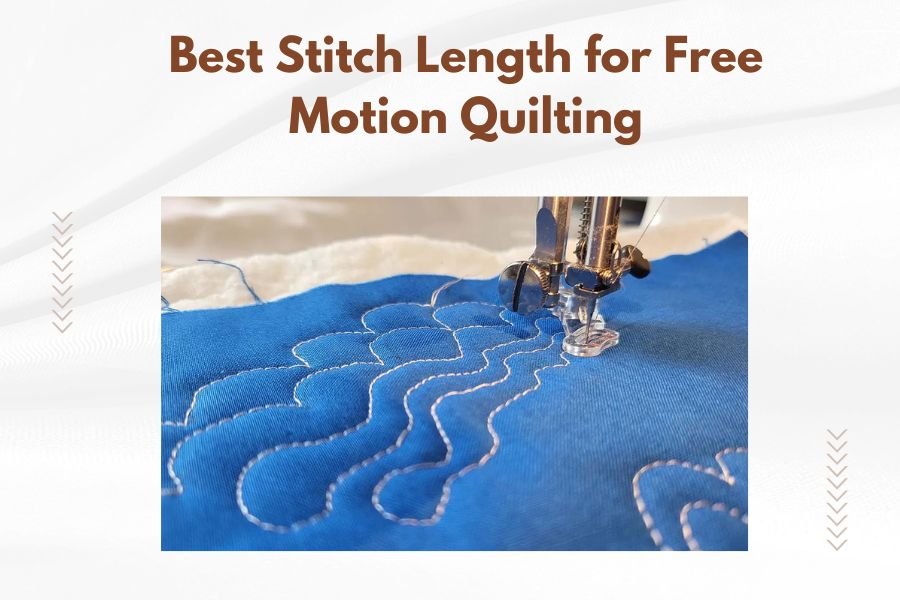
Keep width at 0 mm for straight-line walking-foot or free-motion quilting. The movement of the quilt changes the direction of the stitching, but it does not require the needle to swing side to side.
For frame quilting, see how to load a quilt without pins.
For even-looking results, match your technique and machine setup to the method. A stitch length regulator can help manage stitch spacing, while width remains a separate choice.
If you use a machine with several stitch settings, consult its manual before changing feet, plates or needle position. Our guide on how to use Singer Quantum Stylist 9960 covers setup for that model.
Which references can help you plan a quilting project?
Use a sewing reference for machine techniques and a quilt-pattern reference for design ideas. These books offer different kinds of guidance for planning and learning.
What is the best stitch width for quilting on your machine?
For straight quilting, set stitch width to 0 mm. For a decorative or zigzag pattern, follow the pattern and machine guidance, then confirm needle clearance with a sample.
Choose width for the pattern's side-to-side movement and length for forward spacing. If you are unsure, start with a straight stitch and review your machine manual before trying a wider setting.