9 Best Quilt Jacket Sewing Patterns (November 2026)
The best quilt jacket sewing patterns include the Rae Cumbie for exploring construction styles, the Clara Ashwood Quilt Coat for cutting a thrifted quilt, and the Creative Abundance's Laura Jacket Sewing Pattern for a printed patchwork jacket pattern.
On this page (7 sections)
- The best quilt jacket patterns for different sewing goals
- How do you choose a quilt jacket pattern?
- What construction style works best for a quilt jacket?
- What should you check before cutting quilted fabric?
- Which quilt jacket pattern is best for beginners?
- How can quilting change the fit of a jacket?
- Best quilt jacket pattern verdict
The best quilt jacket pattern for most quilters is Sewing Quilted Patchwork Jackets by Rae Cumbie, because it covers 4 construction approaches, 10 designs and 2 downloadable patterns. Clara Ashwood is the better guide for cutting a thrifted quilt, while Creative Abundance offers a focused printed jacket pattern.
A quilt jacket pattern needs to match more than your size. If you want a bundled project to start with, compare sewing kits with fabric and patterns.
Check the construction method, finished shape, batting plan, closure style and the thickness of the quilted layers you want to sew.
Use our guide on how to choose fabric for a quilt before you cut patchwork pieces or select a batting layer.
Our picks at a glance
-
1

-
2

-
3
 Best for a printed patchwork jacket pattern
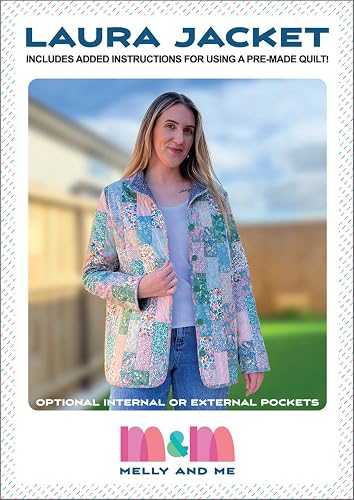
Creative Abundance's Laura Jacket Sewing Pattern
9.3/10 our score
See it on Amazon
- 4
 Check it
Liesl + Co Yanaka Jacket Sewing Pattern
Best for an unlined color-blocked jacket - 5
 Check it
Butterick Patterns Women's Open and Button Closure
Best for multiple open or buttoned styles - 6
 Check it
STYLEARC Style Arc Sewing Pattern
Best for a long shawl-collar jacket - 7
 Check it
Grainline Studio LLC Tamarack Jacket Sizes 14-30
Best for larger-size quilted coats - 8
 Check it
Simplicity S9239 Women's Button-Up Jacket Sewing Pattern
Best for several button-up variations - 9
 Check it
Grainline Studio LLC Tamarack Jacket Sizes 0-18
Best for a beginner-friendly quilted coat range
The best quilt jacket patterns for different sewing goals
The best quilt jacket pattern depends on whether you want a project book, a dedicated quilt coat, or a regular jacket shape that can carry quilted fabric. The top picks below are ordered by how closely they match the search for wearable quilt jacket patterns.
Rae Cumbie: Best for exploring construction styles
- 4 construction approaches
- 10 designs
- 2 downloadable jacket patterns
- 184 pages
This book gives quilters several ways to build a wearable quilt jacket, from layered jackets to garments made from existing quilts.
Pros
- 4 construction methods
- 10 designs
- Adult and child downloadable patterns
Cons
- Book format requires separate fabric and sewing supplies
Sewing Quilted Patchwork Jackets is the broadest choice for exploring how quilt jackets can be built. Rae Cumbie and Carrie Emerson cover 4 approaches, including loose linings, quilted sandwich layers, reversible jackets and jackets made from existing quilts.
The book includes 10 designs and 2 downloadable multi-size patterns, with one for an adult and one for a child. For a younger sewist who wants a starter project, see sewing kits for kids ages 8–12.
Multiple length options give you room to adjust the finished shape, while the fit and construction guidance helps you plan before cutting.
This is a strong choice if your fabric source may change from new yardage to orphan blocks, scraps or an already finished quilt. It also covers collars, cuffs, pockets, hem length, appliqué, layering and piece-by-piece construction.
For an animal appliqué idea, browse cat quilt patterns.
The trade-off is that this is a book rather than one paper pattern envelope. Choose it when you want several construction paths and design ideas, not just one fixed jacket.
Clara Ashwood Quilt Coat: Best for cutting a thrifted quilt
- Patterns XS-4X
- Fit checks before cutting
- Guidance for quilt condition
- 106 pages
This guide starts with quilt assessment and fit checks, then covers pattern reading, cutting, thick seams and making six coats from one master pattern.
Pros
- Broad XS-4X range
- Quilter-focused fitting advice
- Covers four ways to make the coat
Cons
- Book format requires a separate coat pattern project
Quilt Coat, No Regrets is aimed at quilters who are unsure whether an old quilt is suitable for cutting. It covers 4 kinds of quilts, 4 condition checks, a five-minute history check and 4 other ways to make the coat if cutting is not right.
The book has 106 pages and patterns in sizes XS-4X. It puts the fit check before cutting, including advice to test the size with something as thick as the quilted layers rather than thin fabric.
The construction guidance covers pattern terms, motif placement, wonky rows, shrinkage, stay-stitching, seam finishes and trimming batting from seam allowances. A heart quilt pattern can inspire a focal motif for a jacket panel.
It also explains how to make 6 coats from one master pattern.
Choose this guide if the emotional and practical risk of cutting a thrifted quilt is your main concern. It is less suited to someone who only wants a short pattern packet with no broader coat-planning material.
Creative Abundance's Laura Jacket Sewing Pattern: Best for a printed patchwork jacket pattern
- Physical pattern
- Step-by-step instructions
- Full-sized templates
- Sizes XS-XL
The Laura Jacket is a direct pattern choice for patchwork or a pre-made quilt, with batting options for a lighter or warmer jacket.
Pros
- Printed instructions
- Full-sized templates
- Designed for patchwork or a pre-made quilt
Cons
- Size range is XS-XL in the supplied size data
Creative Abundance's Laura Jacket Sewing Pattern is a direct choice for a printed patchwork jacket pattern. It includes step-by-step instructions and full-sized templates for sizes XS, S, M, L and XL.
The pattern can use a preferred fabric collection, scrap stash or a pre-made quilt. You can also choose the batting approach for the season, with bamboo described for a softer, thinner mid-season jacket and wool for more warmth.
This makes Laura useful when you already understand basic garment sewing and want a focused patchwork project. The pattern is recommended for intermediate sewers, so plan your fitting and layer thickness before cutting.
That intermediate rating matters in daily use, because a quilted jacket changes how a pattern drapes and sits at the shoulder and sleeve. A small test in similar thickness will show whether the finished shape will feel drapey or structured.
Its main trade-off is the supplied size range. If you need sizes beyond XS-XL, compare it with the Tamarack options or the broader XS-4X Clara Ashwood guide.
Liesl + Co Yanaka Jacket Sewing Pattern: Best for an unlined color-blocked jacket
- Semifitted slightly cropped shape
- No set-in sleeve
- No closures
- C and D cup options
The Yanaka is useful when you want a quilted-look jacket with an unlined, cardigan-like shape, color blocking and easier sleeve construction.
Pros
- C and D cup options
- Cut-on sleeves
- V-notch back hem
Cons
- Not a dedicated quilt coat pattern
The Yanaka Jacket is a good fit for a lighter, unlined jacket with a polished shape. It is semifitted and slightly cropped, with a gentle stand-up collar, cut-on sleeves, a sleeve gusset and no closures.
Color blocking makes it useful for quilted panels or coordinated fabric sections. For ideas built around a fabric panel, see panel quilt patterns.
The pattern also includes C and D cup options with added bust darts, which can help you plan a better fit for a fuller bust.
Sizes run from 0-20, and the pattern is designed for woven fabrics. Because it is not a dedicated quilt coat pattern, check the thickness of your quilted material before using the pattern pieces.
Pick Yanaka if you want a cardigan-like jacket with a cut-out V-notch back hem. Choose Laura or Tamarack when warmth, batting and quilted construction are central to the project.
Butterick Patterns Women's Open and Button Closure: Best for multiple open or buttoned styles
- 4 jacket patterns
- Open and button closure options
- Templates and instructions
- Sizes 14-22
This packet gives you four jacket designs, including open and button-closure versions, for a broader wardrobe project than one quilt coat shape.
Pros
- 4 jacket designs
- Open and buttoned options
- Fabric recommendations included
Cons
- Size range starts at 14
Butterick's Open and Button Closure pattern packet includes 4 women's jackets in sizes 14, 16, 18, 20 and 22. The designs can be made with or without button closures, giving you more than one way to finish the front.
The packet includes sewing templates, instructions, fabric recommendations, pattern pieces and sizing guides. That makes it useful for a sewist who wants several related jacket options from one pattern packet.
For a quilt jacket, the open design may be simpler when thick layers make button bands or closures harder to manage. A buttoned version can suit a more structured wardrobe piece if your fabric and batting stay flexible enough.
Care also affects the choice, because thicker quilted layers can make closures feel stiff and harder to press flat. Testing a button band or an open front in similar material will help you judge comfort before you commit.
The main limitation is the size range, which starts at 14. Measure against the pattern's sizing information before cutting because pattern sizes do not match ready-to-wear sizes automatically.
STYLEARC Style Arc Sewing Pattern: Best for a long shawl-collar jacket
- Three-quarter length
- Shawl collar
- Patch or in-seam pockets
- Sizes 04-16
The Loren Jacket offers a longer silhouette with a shawl collar and pocket choices, making it a useful base for a lighter quilted jacket.
Pros
- Three-quarter length
- Two pocket options
- Color-coded sizes
Cons
- Not specifically designed as a quilt jacket
The Style Arc Loren Jacket suits a longer silhouette with a three-quarter length, slim shawl collar and pocket choices. You can use patch pockets or in-seam pockets, depending on the look and construction you prefer.
Sizes 04-16 are included, with each size printed in a different color. The stated difficulty is Easy-Medium, and the instructions and pattern pieces are in English.
The design can work with wool, linen, ponte, crepe, faux fur, sweater knit or lurex. Those fabric suggestions point to a flexible jacket base, but a quilted version still needs a test for bulk around the collar, pockets and seams.
That bulk is the honest trade-off for a longer jacket, because extra length adds weight and can pull at the neckline when layers are thick. Choosing lighter batting and planning the collar test first can keep the drape closer to the intended shape.
Choose Loren when you want a longer jacket that can move across seasons. It is not specifically a quilt coat pattern, so Tamarack is the more direct match for quilted batting and quilting techniques.
Grainline Studio LLC Tamarack Jacket Sizes 14-30: Best for larger-size quilted coats
- Sizes 14-30
- 2 quilting designs
- Cotton or wool batting
- Roomy welt pockets
The larger-size Tamarack pattern is built around a warm quilted coat for spring and fall, with two quilting designs and practical welt pockets.
Pros
- Sizes 14-30
- Dedicated quilted coat design
- Two quilting designs
Cons
- Intermediate techniques include welt pockets and bias binding
The Tamarack Jacket in sizes 14-30 is the strongest dedicated option here for a larger-size quilted coat. It is designed for transitional seasons and includes 2 quilting designs, cotton or wool batting and roomy welt pockets.
The pattern uses straight seams, basic quilting, darts, welt pockets and bias binding. Its stated difficulty is Intermediate, so it suits a sewist who is comfortable handling several construction steps in a thicker layered garment.
Use the quilting designs as a starting point, then plan the placement around your blocks or fabric motifs. The welt pockets add function, but they also make this a more involved project than an open-front jacket.
Set-up benefits from a clear layout before cutting, because darts and bias binding need room to sit flat over quilted layers. A test piece can show how the binding edge behaves when the fabric has batting between the layers.
Choose this version when the 14-30 size range fits your measurements. The pattern is for the pattern only, so fabric and batting need to be planned separately.
Simplicity S9239 Women's Button-Up Jacket Sewing Pattern: Best for several button-up variations
- 3 jacket designs
- Button-up styles
- Length and collar options
- Sizes XXS-XXL
S9239 gives you three button-up jacket designs with different lengths, collars, sleeves and pockets for a customizable sewing project.
Pros
- XXS-XXL size range
- 3 jacket designs
- Illustrated instructions
Cons
- Not specifically designed for quilted layers
Simplicity S9239 is useful when you want 3 button-up jacket designs in one packet. The designs include different lengths, collar options, straight or flared sleeves and pocket variations.
Sizes run from XXS through XXL. The packet includes printed tissue pattern pieces, step-by-step illustrated instructions, fabric recommendations, sizing guides and the patterns and instructions needed for the project.
This can be a practical base for a lighter quilted jacket when you want a buttoned front and more than one silhouette. Measure first, then compare the pattern's finished shape with the thickness of your quilted layers.
That comparison is important because a button front needs to close without pulling across quilted thickness at the chest. Lighter layers and a test of the placket can make the finished jacket easier to wear and care for.
S9239 is not specifically presented as a quilt coat pattern. Choose it for style variety and button-up options, while choosing Tamarack when quilting details and batting are the main priority.
Grainline Studio LLC Tamarack Jacket Sizes 0-18: Best for a beginner-friendly quilted coat range
- Sizes 0-18
- 2 quilting designs
- Cotton or wool batting
- Roomy welt pockets
This Tamarack version is a dedicated quilted jacket pattern for sizes 0-18, with two quilting designs and cotton or wool batting options.
Pros
- Advanced Beginner skill level
- Dedicated quilt coat design
- Two quilting designs
Cons
- Fabric is not included
The Tamarack Jacket in sizes 0-18 is the better Tamarack choice for an Advanced Beginner who wants a dedicated quilted coat pattern. It uses standard machine sewing and includes 2 quilting designs.
The pattern is designed for spring and fall layering, with cotton or wool batting and roomy welt pockets. It is also described as a printed paper pattern, and fabric is not included.
Plan the quilting design before cutting so the stitched lines and fabric motifs work with the jacket pieces. The welt pockets and bias binding need more care than a simple open-front jacket, but they also give the finished garment a defined coat structure.
That structure is a real benefit for daily wear, because welt pockets keep hands warm and keep belongings more secure than a shallow patch pocket. The trade-off is extra time, since pockets and binding should be tested in layers close to the final thickness.
Choose this version when your measurements fall in sizes 0-18. If you need sizes 14-30, use the other Tamarack entry instead, since the two ranges are separate.
How do you choose a quilt jacket pattern?
Choose a quilt jacket pattern by matching the size range, construction skill, layer thickness and final shape to your project. A dedicated quilt coat pattern usually explains batting and quilting steps, while a standard jacket pattern may offer more closure or silhouette choices.
For a first project, look for clear fit guidance and a shape that does not add unnecessary bulk. An open or unlined style can be easier to manage than a fully layered coat with welt pockets, binding and closures.
The fabric decision matters just as much as the paper pattern. Use a planned layout for patchwork blocks, check the grain and consider how quilting lines will cross seams, pockets and hems.
If you plan to quilt the layers on a home machine, read our guide to quilting with a regular sewing machine before choosing a large coat project.
What construction style works best for a quilt jacket?
A layered or reversible construction works best when you want the quilted structure to be central to the garment. A standard woven jacket pattern works better when you want a familiar collar, button front or shorter fashion-jacket shape.
Rae Cumbie's book is the most flexible option because it covers 4 construction approaches. Laura is more focused, while Tamarack gives you a dedicated quilted coat shape with batting, quilting designs and welt pockets.
For a reversible jacket, plan both sides before cutting. Motifs, seam finishes and pocket placement need to look intentional from either direction, and added layers can change how the garment hangs.
Layered construction suits a sewist who wants the quilting itself to do the visual work. It can also feel warmer and more substantial, which is good for transitional weather but less simple to handle during sewing.
Reversible construction adds decision making at every seam, because finishes must work from both sides and pocket openings must suit both faces. That can be rewarding, but it rewards planning more than a single face jacket.
A standard woven pattern suits a sewist who wants a known jacket shape with less quilting preparation. It may be easier to fit and adjust, while still allowing quilted fabric to provide texture and warmth.
The construction choice should follow your fabric source as well as your style. New yardage may suit a planned layered build, while an existing quilt may suit a method built around that finished textile.
Care differs between styles, because reversible and layered jackets can feel heavier and need enough ease to move at the arm. Testing drape and seam bulk before cutting helps you avoid a jacket that is warm but hard to wear.
The weighing point is complexity against character. A dedicated method gives you quilt control, while a familiar jacket shape gives you simpler fitting and finishing.
Choosing the approach that matches your time and fabric will make the result feel more personal. The right construction style is the one you can sew calmly and wear often.
What should you check before cutting quilted fabric?
Check the quilt's condition, shrinkage, thickness and motif placement before cutting. A thrifted quilt may need a different plan from new fabric, especially if rows are not square or the material may unravel.
Clara Ashwood's guide is the best match for this stage because it covers quilt history, condition checks, fit testing, motif placement, squaring rows, washing for shrinkage and stay-stitching.
Make a paper or fabric test before cutting your best quilt. Use a material with similar thickness so the neckline, sleeves, hem and arm area reflect the final garment more closely.
Condition checks matter because weak areas can become stress points once a quilt is shaped into a jacket with arms and closures. Check seams, worn patches and overall strength before you cut a quilt that cannot support daily wear.
Shrinkage is easy to overlook with an older quilt. Wash or test the fabric in the way you plan to care for the jacket so movement shows before you place pattern pieces.
Thickness changes how a pattern sits, so thin fabric gives a false sense of fit. A similar weight sample will show whether the neckline stands away from the body or the sleeve hangs as expected.
Motif placement deserves the same care because a jacket front cuts a quilt into sections that were not designed as garment panels. Lay out the pieces and move them around the motifs to choose placement before cutting.
Squaring wonky rows can make cutting easier, but it changes the finished size of the quilted fabric. Plan that adjustment early to keep pattern pieces aligned with the grain and design.
Stay-stitching can help a quilt that may unravel, especially around edges that will be cut and handled. It adds a step, but it protects fabric while you manage layers that would shift.
Good checking takes time and may lead you to choose a different project for a particular quilt. That is better than forcing a cut and losing the fabric and garment shape.
Which quilt jacket pattern is best for beginners?
The best quilt jacket pattern for a beginner is the one with a manageable shape and clear instructions, not necessarily the pattern with the most features. A simpler open jacket can be easier than a coat with welt pockets, darts, binding and closures.
The Yanaka has no closures and no set-in sleeves, while the Tamarack in sizes 0-18 is described as Advanced Beginner. Butterick also offers open jacket designs and is described as easy to sew.
Start with a small sample of the quilting and seam finish you plan to use. This helps you see how the fabric behaves before committing to a full jacket.
How can quilting change the fit of a jacket?
Quilting makes fabric thicker and less flexible, which changes how sleeves, collars, facings and hems sit. Fit the garment with layers close to the thickness of the finished quilted fabric.
A pattern with cup options or clear adjustment guidance helps when the basic shape needs more than a length change. Yanaka includes C and D cup options, while Clara Ashwood covers several paper-based fit fixes.
Check ease around the upper arm and underarm before cutting. These areas need room for quilted layers to move without forcing the seams.
The upper arm is a common trouble spot because quilted layers add bulk where the sleeve meets the body. If that area is too tight, the jacket can pull across the back and make the sleeve feel short even when the length looks correct.
The underarm needs room too, because thick layers can bunch where the sleeve joins the side seam. A test in similar thickness will show whether you can raise your arm without the seam digging in.
Collars and facings also change with quilting, since stiffer fabric may not fold as softly as plain woven cloth. A sample collar test can show whether the neckline sits flat or pushes outward before you cut the main fabric.
Hems behave differently too, because quilted layers can make a hem feel bulky and less fluid. Check the hem with a sample to judge length and weight before the jacket is finished.
Paper adjustments help you fix width, length or shoulder fit before cutting. Drawing the change on the pattern lets you see the effect without risking the quilted fabric.
Grain and motif placement can affect fit because a piece cut on a slant may drape in a way that changes seam lines. Checking those details with actual quilted thickness gives a more honest result.
Proper fitting takes extra time and samples, but it is worthwhile because quilted fabric is harder to adjust once layers are stitched together. Plan fit as part of the design process rather than as a fix at the end.
Best quilt jacket pattern verdict
The best quilt jacket pattern overall is Rae Cumbie's Sewing Quilted Patchwork Jackets for its 4 construction approaches, 10 designs and 2 downloadable patterns. Pick Clara Ashwood if you are cutting a thrifted quilt, Laura for a focused printed patchwork pattern, and Tamarack for a dedicated quilted coat.
Choose Yanaka or Loren when the silhouette matters more than a dedicated quilt-coat method. Butterick and Simplicity provide several jacket designs, while the two Tamarack versions let you match the size range to your measurements.
The deciding point is the kind of project you want to sew and wear. A book with several construction paths suits an experimental sewist, while a single printed pattern suits a focused make with clear steps.
For a thrifted quilt, careful checking matters as much as the pattern itself. Condition, shrinkage and thickness should be tested before you commit to a cut that cannot be undone.
For patchwork from new fabric or scraps, plan the layout and quilting lines before cutting. That planning keeps motifs balanced across the front, sleeves and back panels.
Batting choice changes the feel of the finished jacket as well as its warmth. A thinner layer keeps the drape soft, while a warmer layer adds structure that needs more ease.
Fit should be tested in material as thick as the finished quilt, not in thin fabric that behaves differently. That small test can prevent problems at the neckline, arm and hem.
Beginners may prefer a simpler open shape with fewer closures and pockets. More experienced sewists may enjoy welt pockets, binding and darts for a more defined coat.
Size ranges differ across these options, so measurements matter more than ready-to-wear labels. Matching the pattern range to your body and layer thickness will give the best result.
| Product | Best for | Format | Length | Patterns | Our score |
|---|---|---|---|---|---|
| Rae Cumbie | exploring construction styles | First Edition book | 184 pages | 2 downloadable multi-size patterns | 9.7 |
| Clara Ashwood Quilt Coat | cutting a thrifted quilt | Independently published book | 106 pages | 9.5 | |
| Creative Abundance's Laura Jacket Sewing Pattern | a printed patchwork jacket pattern | Physical pattern | 9.3 | ||
| Liesl + Co Yanaka Jacket Sewing Pattern | an unlined color-blocked jacket | Physical pattern | 9.0 | ||
| Butterick Patterns Women's Open and Button Closure | multiple open or buttoned styles | EnhancedContent pattern | 8.8 | ||
| STYLEARC Style Arc Sewing Pattern | a long shawl-collar jacket | 8.6 | |||
| Grainline Studio LLC Tamarack Jacket Sizes 14-30 | larger-size quilted coats | 8.3 | |||
| Simplicity S9239 Women's Button-Up Jacket Sewing Pattern | several button-up variations | Physical pattern | 8.1 | ||
| Grainline Studio LLC Tamarack Jacket Sizes 0-18 | a beginner-friendly quilted coat range | 7.9 |
Our top 3 picks at a glance
-
1
-
2
-
3
Best for a printed patchwork jacket pattern
Creative Abundance's Laura Jacket Sewing Pattern
9.3/10 our score
See it on Amazon
Frequently asked questions
What is the best quilt jacket pattern for beginners?
The best quilt jacket pattern for beginners is one with a simple shape, clear instructions and manageable layers. Yanaka has no closures and no set-in sleeves, while the Tamarack sizes 0-18 version is described as Advanced Beginner. Start with a small quilting sample before cutting your main fabric.
Can you make a quilt jacket from an old quilt?
Yes, you can make a quilt jacket from an old quilt if its condition, thickness and size suit the project. Clara Ashwood's guide covers condition checks, fit testing, motif placement, shrinkage and other ways to make the coat if cutting the quilt is not suitable.
What batting is used for a quilt jacket?
The product options here mention cotton, wool and bamboo batting. Tamarack uses cotton or wool batting, while Laura describes soft, thin bamboo for a drapey mid-season jacket and wool for more warmth. Choose by the thickness and warmth you want, then test the layers before cutting.
Is the Tamarack Jacket pattern good for a quilt coat?
Yes, the Tamarack Jacket is a dedicated quilted coat pattern for spring and fall layering. It includes 2 quilting designs, cotton or wool batting and roomy welt pockets. The sizes 0-18 version is described as Advanced Beginner, while the 14-30 version is described as Intermediate.
What size quilt jacket pattern should I buy?
Choose the pattern by your body measurements and the finished garment ease, not by your usual ready-to-wear size. Compare the ranges carefully because these patterns differ: Yanaka runs 0-20, Laura XS-XL, Clara Ashwood XS-4X and the Tamarack options 0-18 or 14-30.


