5 Best Baby Quilt Patterns for Beginners (November 2026)
The best beginner baby quilt patterns include the Suzanne McNeill Big Blocks for fast large-block quilts, the Stephanie Soebbing Fat Quarter Patchwork Quilts for fat-quarter variety, and the Editors of Quarry Books Super Easy Quilting for learning from the basics.
On this page (5 sections)
The best beginner baby quilt patterns are clear, manageable designs with simple cutting and piecing steps. That kind of pattern lets you focus on learning the process instead of fighting confusing directions.
Choose Big Blocks for fast large pieces, Iris for a modern baby quilt, or Easy as ABC and 123 for a child-focused design. Each option suits a different way of working, so the right pick depends on your fabric and your comfort level.
A baby quilt is a useful first project because the finished size is smaller than a bed quilt. You can often keep the pieces on a table or a clear floor space while you plan the layout.
You still practice fabric selection, cutting, piecing, pressing, basting and quilting. Those skills transfer to larger quilts later, but the smaller scale means less fabric to handle at one time.
It also helps to choose a design that fits the fabric you already like. Precut squares, fat quarters, jelly rolls and scraps each change how you cut and how you arrange color.
A clear pattern should explain the cutting plan in plain steps. It should also show how the pieces join, so you can picture the finished block before you start sewing.
This guide compares 5 patterns and quilting books. We checked the stated formats, sizes, instructions and project range, then matched each pick to a different beginner need.
Some picks are single patterns with one clear finished size. Others are books with several projects, which can be useful if you want to make more than one quilt.
For a first quilt, think about time as well as skill. Large pieces usually move faster, while small repeated pieces need more careful sorting and pressing.
Think about your space too. A smaller quilt is easier to quilt on a home machine because you can turn and guide it with less hassle.
Think about who the quilt is for. A modern geometric design, a classic block layout and an alphabet theme will feel very different in a nursery or family home.
This comparison keeps those practical points in view. It looks at what each pick asks you to cut, how the instructions are set out and what kind of beginner it suits best.
Our picks at a glance
-
1

-
2
 Best for fat-quarter variety
Stephanie Soebbing Fat Quarter Patchwork Quilts
9.5/10 our score
See it on Amazon -
3
 Best for learning from the basics
Editors of Quarry Books Super Easy Quilting
9.3/10 our score
See it on Amazon
- 4
 Check it
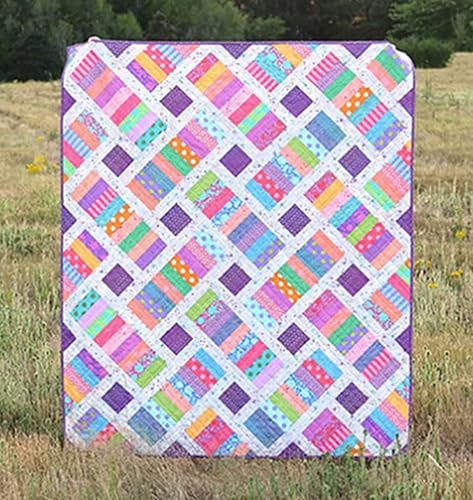
Kitchen Table Quilting Iris Quilt Pattern
Best for a modern geometric baby quilt - 5
 Check it
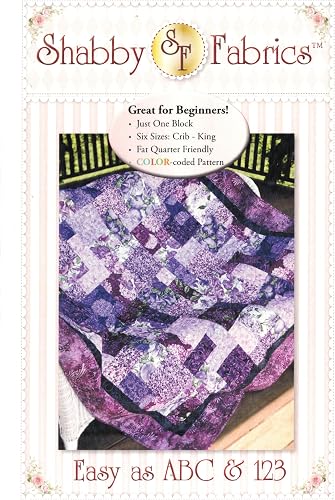
Shabby Fabrics Easy as ABC and 123 Quilt
Best for an alphabet baby quilt
The best beginner baby quilt patterns by project type
The best choice depends on how you want to work. For a classic block layout, see log cabin quilt patterns.
Pick large precut squares for fewer cutting decisions, a fat-quarter collection for more variety, or a focused baby pattern when the finished size matters most. A printed baby quilt panel is another option when you want a focal print with less piecing.
Our score weighs the stated features and project details against what someone shopping for beginner baby quilt patterns needs.
Suzanne McNeill Big Blocks: Best for fast large-block quilts
- 11 quilt patterns
- Layer Cake 10 in x 10 in squares
- Beginner-friendly instructions
- Step-by-step diagrams and color photos
Large blocks and precut 10 in squares keep cutting plans easier to manage. The book includes 11 beginner-friendly quilt patterns with diagrams, color photos and variations.
Pros
- Uses precut Layer Cake squares
- Includes 11 patterns
- Step-by-step diagrams
Cons
- Designed around 10 in squares
- Only 52 pages
Suzanne McNeill Big Blocks is the strongest choice for a beginner who wants large pieces and a fast-moving project. The book includes 11 easy quilt patterns built around Layer Cake 10 in x 10 in squares.
Large squares can make the cutting plan easier to understand because each piece starts with a consistent precut format. That does not remove the need for accurate seams, but it gives a new quilter fewer small pieces to organize.
The book includes step-by-step instructions, diagrams, color photos and variations. Those details help when you are learning how the written steps connect to the finished block.
Choose this book if you already have Layer Cake squares or want to build a baby quilt around coordinated precut fabric. The trade-off is that its projects are designed specifically around the 10 in square format, so you should check your fabric plan before starting.
For more options that include fabric and instructions together, compare these best baby quilt kits with fabric.
Stephanie Soebbing Fat Quarter Patchwork Quilts: Best for fat-quarter variety
- 12 beginner patterns
- Precut fat-quarter bundles
- Full-size patterns
- Step-by-step instructions and diagrams
This collection gives beginners 12 projects built around color-coordinated fat-quarter bundles. It also covers piecing, quilt sandwiches and finishing techniques.
Pros
- 12 projects
- Full-size patterns
- Uses color-coordinated bundles
Cons
- Some techniques go beyond basic piecing
- Requires fat-quarter planning
Stephanie Soebbing Fat Quarter Patchwork Quilts is best for beginners who want more color variety from coordinated fabric bundles. It includes 12 beginner patterns made with precut fat quarters.
Fat quarters give you more room for arranging color and print than a single repeated square format. Coordinated bundles can also reduce the guesswork of choosing a color scheme, which is useful when you are still learning how prints and solids work together.
The book includes full-size patterns, step-by-step instructions, helpful diagrams and staged photography. It also covers essential techniques such as piecing, making a quilt sandwich and finishing a quilt.
Choose it if you want a collection that can grow beyond one baby quilt. The trade-off is that the book includes techniques such as custom ruler work, free-motion quilting and straight-line quilting, so not every project will feel equally basic.
If you want a narrower starting point, compare the best baby quilt kits for beginners before choosing a fabric bundle.
Editors of Quarry Books Super Easy Quilting: Best for learning from the basics
- Beginner quilting guide
- Photo-illustrated instructions
- Pattern-reading help
- Baby quilt project
This broader guide explains tools, materials, stitches, pattern reading and troubleshooting before moving into beginner projects, including a baby quilt.
Pros
- Covers quilting basics
- Includes a baby quilt project
- Has troubleshooting guidance
Cons
- Not focused only on baby quilts
- Includes projects beyond quilts
Super Easy Quilting for Beginners is the best all-around learning guide for someone who has not yet built basic quilting skills. Its 144 pages cover tools, materials, stitches, pattern reading, troubleshooting and beginner projects.
The book includes a baby quilt project, but it is not limited to baby quilts. It also includes projects such as holiday coasters, pillows and placements, so you can practice smaller steps before moving into a quilt.
Photo-illustrated instructions can make it easier to compare your work with the intended process. The sections on troubleshooting are useful when a seam, cut or block does not line up as expected.
Choose this guide if your main need is learning the full process rather than picking one themed baby pattern. The trade-off is that you will need to select the baby quilt project from a wider collection.
A sewing machine can also affect how comfortable the quilting stage feels. Our guide to the best quilting machine for baby quilts covers that part of the setup.
Kitchen Table Quilting Iris Quilt Pattern: Best for a modern geometric baby quilt
- Baby, lap and twin sizes
- Fat-quarter friendly
- Works with jelly rolls or scraps
- Step-by-step guide
The Iris pattern gives beginners a modern geometric design with a stated 39 in x 39 in baby size. Its fabric flexibility helps you use fat quarters, jelly rolls or scraps.
Pros
- Dedicated baby size
- Modern geometric design
- Several fabric options
Cons
- Less broad instruction than a quilting book
- Geometric piecing needs careful cutting
Kitchen Table Quilting Iris is the best single pattern for a beginner who wants a modern geometric baby quilt. It includes a stated 39 in x 39 in baby size, along with lap and twin versions.
The pattern is fat-quarter friendly and can also use jelly rolls or scraps. That flexibility helps if you already have fabric at home and want to avoid planning around one exact bundle type.
The geometric design creates a stronger visual shape than a simple repeated block. For more geometric options, browse Jaybird quilt patterns.
For that reason, accurate cutting and consistent seams matter more than they would in a very loose scrappy design.
Choose Iris if you want a defined baby size and a modern look that can also scale to a lap or twin quilt. The trade-off is that a geometric pattern may show mismatched points more clearly, so take time with cutting and pressing.
For a broader modern comparison, see these best modern baby quilt kits.
Shabby Fabrics Easy as ABC and 123 Quilt: Best for an alphabet baby quilt
- Alphabet and number theme
- Fat-quarter friendly
- Color-coded instructions
- Sizes from crib to king
The alphabet and number theme makes this pattern a strong fit for a child-focused quilt. Color-coded instructions and one-block construction keep the project approachable.
Pros
- Child-friendly theme
- One-block design
- Several size options
Cons
- Theme may not suit every nursery
- More size options can add planning choices
Easy as ABC and 123 is the best pick for a child-focused project with an alphabet and number theme. It uses fat quarters, one block and color-coded instructions.
The design can suit a nursery, reading corner or family craft project where the letters and numbers are part of the appeal. It also includes instructions for crib, lap, twin, full, queen and king sizes.
The many size choices make the pattern useful beyond a baby quilt, but they also add a planning decision. Start with the crib-sized version if your goal is a smaller first project, then use the larger options later if you enjoy the design.
Choose this pattern when the theme matters as much as the quilting practice. For more baby quilt themes and kit styles, compare baby quilt kits for girls.
The trade-off is that the alphabet and number look will not fit every nursery style.
For color and theme ideas, compare the best baby quilt kits for boys, then choose fabric that works with the pattern's fat-quarter format.
How should a beginner choose a baby quilt pattern?
Choose the pattern by fabric format first, then check the finished size and the amount of instruction included. A project that matches fabric you already understand will usually be easier to start than one that requires a new cutting system and unfamiliar techniques.
Which beginner baby quilt patterns use precut fabric?
Precut fabric can make the first planning stage simpler because the pieces start in a standard format. Big Blocks uses Layer Cake 10 in x 10 in squares, while Fat Quarter Patchwork Quilts and Easy as ABC and 123 use fat quarters.
Iris can use fat quarters, jelly rolls or scraps. That gives you more freedom, but you still need to check how the chosen fabric format fits the cutting instructions.
Are baby boy quilt patterns for beginners different?
Baby boy quilt patterns for beginners are not technically different from other beginner baby quilts. The main choice is the fabric theme, color palette or print arrangement.
A geometric pattern such as Iris can work with many color schemes, while Easy as ABC and 123 creates a more specific child-focused look. For more contemporary ideas, compare modern quilt patterns.
If you want a softer or more traditional result, choose the fabric first and then match it to a simple block pattern.
How much instruction does a new quilter need?
A new quilter benefits from instructions that explain more than the block diagram. Super Easy Quilting covers tools, materials, stitches, pattern reading and troubleshooting, while the other books focus more directly on project patterns.
If you are unsure about batting, read what is the best batting for baby quilts before assembling the quilt sandwich. Batting choice changes the feel and handling of the finished project, so it is worth planning before you baste.
What should beginners prepare before sewing a baby quilt?
Beginners should prepare the pattern, fabric format, cutting plan, thread, batting and a clear pressing routine before sewing. Having those items ready helps you work in an orderly way from the first cut to the final binding.
Read the full instructions first, then separate the fabric into labeled groups so the first block is easier to follow. Labels can be simple notes on masking tape or small paper tags placed with each stack.
Measure and cut carefully instead of rushing to the sewing machine. A ruler, mat and rotary cutter should be checked before you begin, and the blade should be sharp enough to cut cleanly.
Small cutting errors can add up across repeated blocks, especially in geometric designs where points and edges need to align. Test one block first and check its size against the pattern before cutting the rest.
Press seams as the pattern directs and keep finished units organized. Pressing after each stage helps the seams sit flat and makes the next joining step easier to manage.
A simple layout on a table or clean floor can help you spot color placement issues before the rows are joined. Move pieces around while the layout is still unsewn, and take a photo if that helps you remember the plan.
Keep the workspace clear enough for both cutting and piecing. Crowded surfaces make it harder to find the next piece and can lead to mix ups between similar fabrics.
For a first quilt, choose a project with fewer small pieces if you want less handling. Big Blocks is the clearest match for that goal, while Iris offers a more structured geometric result when you are comfortable checking measurements.
How do beginners care for a baby quilt?
Follow the care instructions for the finished quilt's fabric, batting and binding. Those details matter because different materials respond differently to heat, water and handling.
The Easy as ABC and 123 pattern includes machine wash, tumble dry low and iron low care instructions, but other projects may use different materials. Check the pattern you used and the fabric labels you kept from your purchase.
Wash fabric before cutting only when the pattern or fabric plan calls for it. Prewashing can change the feel and size of cotton, so it should be a planned step rather than a habit.
Keep your fabric care choices consistent across the quilt. Different fibers or finishes can shrink at different rates, and a mixed plan may leave the finished quilt less even.
For a baby quilt, gentle washing is usually the safer starting point. Use a mild cycle and a mild detergent, and avoid bleach unless the fabric label clearly allows it.
Check the quilt after washing for loose seams or binding. A quick look while the quilt is still damp lets you fix a small issue before it becomes harder to repair.
Use a gentle approach when pressing and avoid stretching bias edges. Bias edges can pull out of shape, so support the fabric with your hands and use a light touch with the iron.
Let the quilt cool after pressing so the seams set in place. Moving it too soon can shift a seam that was just pressed flat.
Store the finished quilt clean and dry, and keep it away from sharp objects that can catch the quilting stitches. A folded stack in a drawer, a shelf or a cotton storage bag works well.
Avoid long storage in plastic, which can hold moisture. If the quilt will sit for a long time, refold it now and then so the same creases do not stay in place.
Inspect bindings and corners from time to time. Catching a loose stitch early is easier than repairing a worn edge after more use.
Which beginner baby quilt pattern should you choose?
Choose Big Blocks if you want 11 beginner-friendly patterns built around Layer Cake squares. That pick suits a beginner who has precut fabric on hand or wants a design based on large, easy to handle pieces.
Choose Fat Quarter Patchwork Quilts if you want the widest pattern collection among these picks and prefer coordinated fat-quarter bundles. It gives you more projects to explore as your skills grow.
Choose Super Easy Quilting if you need a full introduction to quilting skills. It covers tools, materials, stitches, pattern reading and troubleshooting, so it suits someone starting from the beginning.
Choose Iris for a modern 39 in x 39 in geometric baby quilt. It also comes in lap and twin sizes, which can be handy if you want to make a larger version later.
Choose Easy as ABC and 123 for a child-focused alphabet and number design. The theme makes it a strong fit for a nursery, a play area or a family learning project.
The best beginner baby quilt patterns are the ones that match your fabric, time and comfort with cutting. A pattern that fits your starting materials will usually feel easier from the first session.
Start with the clearest format for you, then save more detailed or larger versions for the next project. That order lets you build confidence in stages.
If you are unsure, look at the cutting list before you buy fabric. It will show whether the project uses large squares, fat quarters or smaller pieces that need more precise cutting.
Also check the finished size and make sure it fits your plans. A baby quilt, a lap quilt and a twin quilt need different amounts of fabric and different quilting space.
Match the level of instruction to your experience. A full guide helps if you are new to the whole process, while a single pattern is enough if you already know the basics.
Trade-offs are normal with every pick. Large blocks save cutting time, fat quarters add variety, and themed designs add charm but may suit fewer rooms.
Pick the design you can picture yourself finishing. A clear plan, suitable fabric and a size you can handle will make the first quilt a better experience.
Our top 3 picks at a glance
-
1
-
2
Best for fat-quarter variety
Stephanie Soebbing Fat Quarter Patchwork Quilts
9.5/10 our score
See it on Amazon -
3
Best for learning from the basics
Editors of Quarry Books Super Easy Quilting
9.3/10 our score
See it on Amazon
Frequently asked questions
What are the best beginner baby quilt patterns?
The best beginner baby quilt patterns have clear steps, manageable pieces and a finished size that does not require a large amount of fabric. Big Blocks suits large precut squares, Iris offers a 39 in x 39 in baby size, and Super Easy Quilting explains the basic skills behind a baby quilt.
What is the easiest quilt pattern for a baby quilt?
A large-block or one-block design is often the easiest place to start. Suzanne McNeill Big Blocks uses Layer Cake 10 in x 10 in squares, while Easy as ABC and 123 uses a one-block approach with fat quarters and color-coded instructions.
Are baby boy quilt patterns for beginners different?
Baby boy quilt patterns for beginners use the same core skills as other baby quilts. The main difference is usually fabric selection, such as choosing a color palette or theme that fits the nursery.
A simple geometric or block pattern lets the fabric do more of the visual work.
What fabric should beginners use for a baby quilt?
Beginners should start with fabric that matches the pattern format and is easy to cut accurately. Fat quarters, Layer Cake squares, jelly rolls and coordinated bundles can reduce measuring work.
Use our guide on how to choose fabric for a quilt before buying fabric.


