
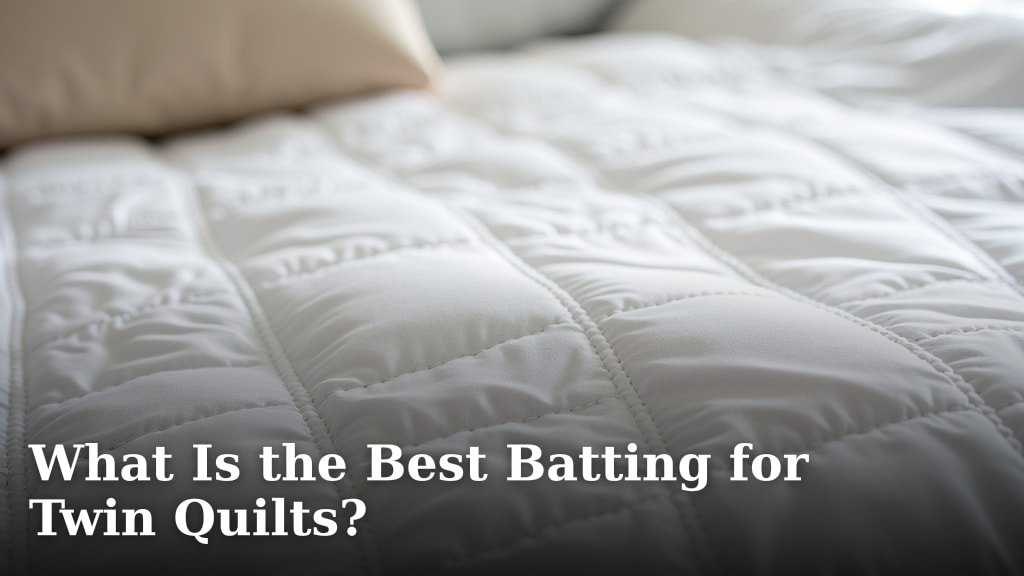
The best batting for twin quilts depends on your desired outcome, but generally, 100% cotton batting is a top choice for its breathability and natural feel. If you want a quilt that drapes well and has a smooth finish, batting with a lower loft is often preferred for twin sizes. Many quilters love cotton for its durability and ease of use.
When choosing batting, think about how you’ll use the quilt. For everyday use, something that’s easy to wash is a must. If you want a bit more warmth and puffiness, a slightly higher loft might be better. We found that batting options range widely, so considering the final look and feel of your quilt is key.
- For a breathable, natural quilt, choose 100% cotton.
- Lower loft batting offers a smoother drape for twin quilts.
- Consider ease of washing for everyday quilts.
- Higher loft batting provides more warmth and puffiness.
Ready to find the perfect batting for your twin quilt project? Let’s dive into the details so you can make an informed decision and create a quilt you’ll love for years to come.
Choosing the Right Batting for Your Twin Quilt
Selecting the perfect batting is key to bringing your twin quilt to life. You want a quilt that feels just right, whether it’s for a child’s bed, a guest room, or your own cozy haven. The batting is the heart of your quilt. It’s that fluffy layer nestled between your quilt top and backing. It provides warmth, dimension, and that lovely quilted texture you adore. We found that understanding your options will help you create a quilt that’s both beautiful and functional.
Think about how you want your quilt to look and feel. Do you envision a light, airy coverlet? Or perhaps a snuggly, plush blanket? Your choice of batting will heavily influence the final outcome. We looked into what makes different batttings tick. This guide will walk you through the most popular choices. You’ll learn what makes each one special for a twin-sized project.
Understanding Batting Types and Their Properties
Batting comes in many materials. Each offers a unique set of benefits. We found that the most common types are cotton, polyester, and blends. Each has its own characteristics regarding warmth, drape, washing ease, and shrinkage. Knowing these differences is the first step to making an informed decision for your twin quilt.
100% Cotton Batting: The Natural Choice
Many quilters swear by 100% cotton batting. It’s a favorite for good reason. It’s known for its breathability and natural feel, making it comfortable year-round. Cotton is also quite durable, which is great if your quilt will see a lot of use. We found that it tends to be relatively thin, offering a lower loft that drapes beautifully. This gives your quilt a lovely, slightly crinkled look after washing, often called “quilting cloud.”
Pros of Cotton
One of the biggest advantages of cotton is its breathability. This means it’s less likely to make you feel too hot or too cold. It’s like wearing a natural fiber shirt on a summer day. We found that cotton batting also washes exceptionally well. It tends to shrink slightly, which helps create that wonderful, soft, puckered look in the quilting stitches. This characteristic is highly sought after by many quilters for its classic appearance.
Cons of Cotton
Cotton can be a bit heavier than synthetic options. This might be something to consider if you’re making a quilt for someone who needs a very lightweight option. Also, while durable, it can be prone to tearing if handled roughly during the quilting process, especially if it’s a very fine weave. We found that 100% cotton can also be a bit pricier than polyester.
Polyester Batting: The Versatile Performer
Polyester batting is another very popular choice. It’s known for its lightweight feel and excellent warmth. It offers a wonderfully soft and lofty finish, giving your quilt a bit more puffiness. Polyester is also very resilient and won’t shrink much, if at all, when washed. This can be a great advantage if you prefer your quilt to maintain its original size and shape.
Pros of Polyester
Polyester is generally lighter in weight than cotton. This makes it a good choice for larger quilts like twins, where weight can become a factor. It’s also hypoallergenic, which is a bonus for sensitive individuals. We found that polyester is very durable and resists wrinkles well. It also offers excellent warmth without adding significant bulk. Many quilters appreciate that it doesn’t require as much quilting density to prevent bearding (fibers poking through the fabric).
Cons of Polyester
One of the main drawbacks of polyester is that it can sometimes feel a bit *too* synthetic. It doesn’t have the same natural breathability as cotton. On very hot nights, it might feel a bit warmer than you’d like. We also found that some lower-quality polyester batttings can have a tendency to pill over time. This can affect the overall look and feel of your quilt.
Cotton-Polyester Blends: The Best of Both Worlds?
What if you want some of the benefits of cotton and some of polyester? That’s where blended batting comes in. A common blend is 80% cotton and 20% polyester. These blends aim to give you the breathability and natural feel of cotton with the strength and reduced shrinkage of polyester. We found that these blends offer a good balance for many quilters.
Pros of Blends
The beauty of a blend is its ability to combine desirable traits. You get good breathability from the cotton content. The polyester adds durability and helps minimize shrinkage. This means your quilt will likely have a softer drape than 100% polyester but less shrinkage than 100% cotton. We found that many blends offer a mid-range loft, making them quite versatile.
Cons of Blends
The exact properties of a blend can vary greatly depending on the ratio of cotton to polyester. A blend with more polyester will feel and behave more like polyester. Conversely, a blend with more cotton will be closer to 100% cotton. We found that it’s important to check the specific blend ratio. This helps you understand how it will perform for your twin quilt project.
Key Factors to Consider for Your Twin Quilt
When you’re making a twin quilt, several factors come into play beyond just the material. Think about the finished product you want. How will the quilt be used? Who is it for? We found that considering these questions will help narrow down your batting choices.
Loft: The Thickness and Puffiness Factor
Loft refers to the thickness and fluffiness of the batting. For twin quilts, lower loft batting is often preferred. Why? Because twin quilts are often used as everyday bedding. A lower loft batting provides a smoother drape. This means the quilt will lie flatter and feel less bulky. It’s easier to manage and move around.
If you’re aiming for a more traditional, flatter quilt, low-loft is the way to go. We found that many quilters love this for its subtle texture and ease of handling. It’s also great for machine quilting, as it won’t stress your machine as much. However, if you desire a very puffy, cloud-like quilt, a higher loft batting might be more suitable. Just be aware that higher loft can sometimes make quilting more challenging and the quilt heavier.
Warmth and Breathability Needs
Consider the climate where the quilt will be used. For warmer climates or summer use, a breathable batting like 100% cotton is often ideal. It allows air to circulate, preventing overheating. For cooler climates or winter use, you might want a batting that offers more warmth. Polyester and some thicker cotton blends excel here. We found that many people opt for a mid-range loft batting for year-round comfort, striking a good balance between warmth and breathability.
Ease of Washing and Care
Will this twin quilt be a cherished heirloom meant for occasional display, or will it be a workhorse on a child’s bed? If it’s for everyday use, especially for kids or pets, ease of washing is crucial. We found that polyester and polyester blends tend to be the most durable and easiest to care for. They are often machine washable and dryable without significant shrinkage or loss of shape.
Cotton batting is also washable, but it will shrink. This shrinkage can be desirable for creating a crinkled look, but it means the quilt might not stay the exact size it was when you finished it. If your quilt top has delicate fabrics or embellishments, you might want to choose a batting that requires gentler washing. Always check the batting manufacturer’s care instructions before washing your finished quilt.
Quilting Method and Density
How you plan to quilt your twin quilt can also influence your batting choice. If you’re doing a lot of intricate machine quilting, a stable batting is best. Cotton and some blends hold up well under dense quilting. They resist stretching and distorting.
If you plan to hand quilt, you might prefer a batting that’s easy to push your needle through. Many quilters find cotton batting to be quite agreeable for hand quilting. We found that polyester batting can sometimes be a bit slippery, requiring more quilting stitches to hold it in place and prevent “bearding” (where the batting fibers poke through the quilt fabric).
A Quick Comparison: Batting for Twin Quilts
Here’s a snapshot to help you visualize your options:
| Batting Type | Typical Loft | Breathability | Warmth | Shrinkage | Weight | Best For |
|---|---|---|---|---|---|---|
| 100% Cotton | Low to Medium | Excellent | Moderate | Moderate (creates crinkle) | Medium | Drapey, classic look; breathable quilts |
| 100% Polyester | Medium to High | Moderate | High | Minimal | Light | Puffy, soft quilts; hypoallergenic needs |
| Cotton-Polyester Blend | Medium | Good | Good | Low to Moderate | Medium | Balanced feel; durable, easy-care quilts |
Your Twin Quilt Batting Checklist
Before you make your final choice, run through this quick checklist:
- Consider the desired drape and texture.
- Think about how warm the quilt needs to be.
- Factor in ease of washing and care.
- Decide if you prefer a natural or synthetic feel.
- Estimate the amount of quilting density you’ll use.
- Check the loft to ensure it matches your vision.
Conclusion
Choosing the best batting for your twin quilt comes down to understanding your goals. You’ve learned about the unique qualities of cotton for breathability, polyester for durability and loft, and blends for a balanced approach. Remember to consider the desired drape, warmth, and how easily the quilt needs to be cared for. Your twin quilt project is ready for its perfect core! Take this knowledge with you to the fabric store and select the batting that will bring your beautiful creation to life.
Frequently Asked Questions
Will cotton batting shrink in my twin quilt?
Yes, 100% cotton batting typically shrinks when washed. This is often a desirable effect that creates a lovely crinkled texture and softens the quilt. However, if you want your twin quilt to maintain its exact original size, you might consider pre-washing your batting or choosing a polyester blend.
Is polyester batting good for a warm twin quilt?
Polyester batting is known for providing excellent warmth. It tends to be loftier and traps more air, making it a great choice for cooler climates or if you desire a very cozy, puffy quilt. While warm, it may not be as breathable as cotton for very hot sleepers.
How much quilting is needed for different batttings?
Different batttings require varying quilting densities. Cotton and cotton blends are quite stable and can handle dense quilting without issues. Polyester batting, especially if it’s a lower quality, might require more quilting stitches to prevent the fibers from migrating or “bearding” through your fabric.
Can I use batting with a higher loft for a twin quilt?
You certainly can use higher loft batting for a twin quilt if you want a very puffy, cloud-like feel. Keep in mind that higher loft batting will make your quilt heavier and potentially more challenging to quilt through. It also might not drape as smoothly as a lower loft option.
What’s the best batting for a baby’s twin quilt?
For a baby’s twin quilt, 100% cotton batting is often recommended for its natural breathability and hypoallergenic qualities. Ensure it’s easy to wash, as baby quilts tend to need frequent cleaning. A lower to medium loft will provide comfort without being too heavy.
