How to Prevent Needle Breakage on Thick Seams?
On this page (9 sections)
- Conquering Thick Seams: A Guide to Preventing Needle Breakage
- Understanding Why Needles Break on Heavy Fabrics
- Selecting the Right Needle for Tough Jobs
- Optimizing Your Sewing Machine Settings
- Best Practices for Sewing Thick Seams
- Troubleshooting Common Needle Breakage Issues
- Your Quick Checklist for Preventing Needle Breakage
- Conclusion
- Frequently Asked Questions
Preventing needle breakage on thick seams is all about choosing the right needle and adjusting your machine’s settings. You can avoid those frustrating snaps by using a stronger, sharper needle designed for heavy fabrics and ensuring your machine has enough power.
Thick materials like denim, canvas, or leather put extra stress on your sewing machine’s components. If you’re struggling with needles breaking, it’s likely a sign that your current setup isn’t quite ready for the challenge. We’ve found that a few key adjustments make a big difference in handling tough sewing jobs.
- Use a heavy-duty sewing needle.
- Slow down your sewing speed.
- Ensure your machine’s presser foot is high enough.
- Check your thread tension.
Let’s dive into the specific steps you can take to protect your needles and get those thick seams sewn beautifully.
Conquering Thick Seams: A Guide to Preventing Needle Breakage
Sewing through thick materials can feel like a battle. Your needle snaps, your machine groans, and you wonder if it’s even possible. Don’t worry, you’re not alone! We’ve found that with the right approach, you can easily prevent needle breakage on those tough seams.
Understanding Why Needles Break on Heavy Fabrics
So, why does this happen? Thick fabrics are dense. They offer a lot of resistance. Your sewing machine needle has to push through many layers. This creates significant stress on the needle’s shaft. If the needle isn’t strong enough or if it hits an unexpected bump, it can snap.
The Role of Fabric Density and Layers
Think of it like driving a small car over a bumpy road. A lighter car might bounce around and struggle. A heavier, sturdier vehicle would handle it much better. Sewing needles are similar. The more layers you have, the harder the job for your needle. Fabrics like denim, canvas, upholstery fabric, and even multiple layers of cotton can present a real challenge.
Common Causes of Needle Stress
Needle breakage isn’t always just about the fabric. Sometimes, other factors contribute. Hitting a pin is a common culprit. It can immediately damage or bend your needle. A bent needle will then try to force its way through the fabric. This usually results in a snapped needle. Also, a needle that isn’t inserted correctly can cause problems. If it’s not all the way up in the shank, it won’t enter the fabric properly.
Selecting the Right Needle for Tough Jobs
The most direct way to stop needles from breaking is to use the correct needle for the job. Many sewers overlook this simple but vital step. We’ve found that using a needle specifically designed for heavy-duty sewing makes a world of difference.
Heavy-Duty Sewing Needles: Your First Line of Defense
What makes a needle “heavy-duty”? It’s usually about its construction and design. These needles are often made from stronger steel. They might have a thicker shaft. They are also designed to be very sharp. This allows them to pierce tough fibers more easily. Brands offer lines specifically for denim or leather.
Choosing the Correct Needle Size (Gauge)
Needle size matters a lot. For thicker fabrics, you generally want a larger gauge needle. A size 16 or 18 is often recommended. Standard needles are often size 10 or 12. A larger needle is sturdier and can handle the increased resistance. However, don’t go too big if your fabric isn’t exceptionally thick. A needle that’s too large can leave unnecessary holes in lighter parts of your project.
Types of Needles for Different Materials
Different tough materials benefit from specific needle types. For denim and canvas, a Denim or Jeans needle is excellent. These are built to penetrate multiple layers of tightly woven cotton. For leather and vinyl, you need something different. A Leather needle has a cutting point. This literally slices through the material rather than just piercing it. Be cautious with leather needles; they create larger holes that won’t disappear.
When to Replace Your Needle
Even the best needle isn’t immortal. A dull or damaged needle is more likely to cause problems. Many sewing experts recommend replacing your needle after every project, or even more often if you’re sewing heavy materials. We found that a needle that has sewn through a tough seam might be microscopically damaged. This damage can lead to skipped stitches or breakage on your next go. It’s a small investment for a smoother sewing experience.
Optimizing Your Sewing Machine Settings
It’s not just about the needle. Your machine’s settings play a big part in preventing stress on the needle. Adjusting these can save your needles and your sanity.
Controlling Your Sewing Speed
Speed is often the enemy when sewing thick seams. When your machine is running at its fastest, the needle is also moving at its fastest. This higher speed means less control. It also means less time for the needle to adjust if it encounters resistance. Slowing down your machine gives you more control. It allows the needle to push through the fabric more deliberately. Many machines have a speed control slider. If yours doesn’t, just use the foot pedal gently. A slower, steady pace is key.
Adjusting Presser Foot Pressure and Height
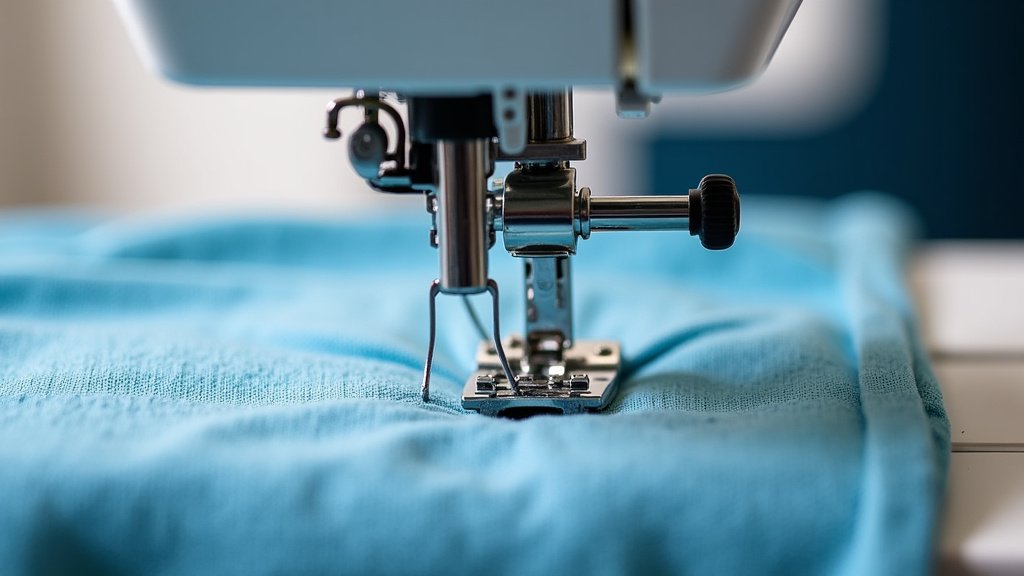
The presser foot holds the fabric in place. If it’s too tight, it can resist the fabric feeding. If it’s not high enough, it can prevent the needle from entering the fabric cleanly. For thick seams, you might need to adjust the presser foot pressure. Less pressure can help the fabric feed more smoothly. Always ensure the presser foot is lifted as high as possible when inserting or removing fabric. Then, lower it just before you start sewing. Some machines have a “walking foot” attachment. This is fantastic for feeding multiple layers of thick fabric evenly. A walking foot attachment is fantastic for feeding multiple layers of thick fabric evenly.
Understanding Thread Tension
Incorrect thread tension can also contribute to needle stress. If your upper thread tension is too tight, it pulls the fabric upwards. This can cause the needle to flex. If the lower tension is too tight, it can create drag. We found that for most medium to heavy fabrics, a slightly loosened upper tension is often beneficial. You may need to do some test stitching on scraps. Find a balance where your stitches are secure but not straining the needle.
Best Practices for Sewing Thick Seams
Beyond the needle and machine settings, a few extra steps can help. These are simple habits that can save you a lot of frustration.
Prepare Your Fabric Properly
Always press your fabric before sewing. A well-pressed seam allowance is easier to sew through. If you’re working with very thick materials, consider finger pressing the seam allowance open. This creates a flatter surface for the needle to travel over. For extremely bulky seams, some sewers even recommend a technique called “grading” the seam allowances. This means trimming alternate layers of fabric so they aren’t all piled up at the same point.
Use the Right Thread
Just as important as the needle is the thread. Use a A strong needle is essential for sewing through thick batting.strong thread that’s appropriate for your fabric. All-purpose polyester thread is good for many things. For very heavy fabrics like denim or canvas, consider a heavier polyester thread. You can also use cotton or a cotton-poly blend. A thread that’s too fine might break under stress. A thread that’s too thick might not fit through the needle’s eye properly or can cause excessive friction.
Sewing a Pilot Hole (Optional but helpful!)
For very tough spots, like the start of a thick seam or a cross-seam, you can create a small pilot hole. Use a seam ripper or a large needle to gently poke a starting point. This gives the machine needle a place to enter without having to force its way through multiple layers initially. This is especially useful when sewing over thick cross-seams, like the inseam of jeans.
Troubleshooting Common Needle Breakage Issues
Even with the best preparation, problems can arise. Here’s how to tackle them.
When the Needle Hits a Pin
This is a common accident. If you suspect you’ve hit a pin, stop immediately. Remove the needle and inspect it. Look for any bends or damage. If you see any, replace it. Check your fabric to ensure the pin didn’t cause a snag or tear. It’s always best to remove pins before sewing over that spot.
Machine Skipping Stitches
Skipped stitches often happen when the needle is dull or damaged. It can also occur if the needle isn’t seated correctly. Make sure your needle is fully inserted and tightened in the needle clamp. If you’ve tried a new, appropriate needle and are still skipping stitches, the issue might be with your machine’s timing. This is a more advanced issue that might require a repair.
Fabric Not Feeding Properly
If your fabric isn’t feeding evenly, it can cause the needle to hit the edge of the needle plate. This can bend or break your needle. Ensure your feed dogs are raised and clean. Try increasing the presser foot pressure slightly if your machine allows. A walking foot attachment can dramatically improve fabric feeding on thick layers.
Your Quick Checklist for Preventing Needle Breakage
Keep these points in mind for your next thick sewing project:
- Choose the right needle: Use a heavy-duty, larger gauge needle (size 16 or 18).
- Inspect your needle: Replace it often, and check for bends or damage.
- Slow down: Reduce your sewing speed for better control.
- Adjust presser foot: Ensure it’s high enough and consider pressure settings.
- Prepare fabric: Press seams flat and consider grading thick allowances.
- Use strong thread: Match your thread weight to your fabric.
Conclusion
You’ve got this! Preventing needle breakage on thick seams is entirely within your reach. By selecting the right heavy-duty needle and making a few smart adjustments to your machine settings, you can conquer those challenging fabrics. Remember to slow down your speed and ensure your presser foot is set correctly. Taking these steps will save you frustration and help you achieve beautiful, professional results on all your sewing projects. Keep these tips in mind, and happy sewing!
Frequently Asked Questions
What is the best needle size for sewing denim?
For sewing denim, you’ll typically want a Denim or Jeans needle in a larger gauge. A size 16 or 18 is usually recommended. These needles are specifically designed to penetrate dense, tightly woven fabrics like denim without bending or breaking as easily.
Can I use the same needle for leather and canvas?
No, it’s best to use different needles for leather and canvas. A leather needle has a cutting point to slice through the material, which creates larger holes. A denim or standard heavy-duty needle works well for canvas, providing strong penetration without the cutting action.
How often should I change my sewing machine needle?
Many sewers find it helpful to change their needle after every project, especially when working with thick materials. Needles can become microscopically dull or damaged even after a single tough seam. Replacing it often prevents skipped stitches and breakage.
What should I do if my needle keeps hitting the needle plate?
If your needle is hitting the needle plate, it’s a sign something is misaligned. For another way to help prevent needle damage, read the stitch width limiter guide. First, check that your needle is inserted correctly and fully seated in the needle clamp. Ensure your feed dogs are raised, and consider using a walking foot for better fabric feeding on thick layers.
Is it okay to sew over pins when working with thick fabric?
It’s strongly advised not to sew over pins, especially on thick seams. Pins can damage or bend your needle instantly, leading to breakage or skipped stitches. Always remove pins before your needle reaches them to protect your needle and your machine.


