How to Remove Fabric Stuck in Feed Dogs
Turn off and unplug the machine, raise the needle, remove the presser foot, and ease the fabric out without pulling hard. Clear lint and thread before checking the feed dogs and restarting slowly.
On this page (8 sections)
- What should you do first when fabric is stuck?
- How do you free fabric without damaging it?
- How do you clear a thread nest under the needle plate?
- Could the presser foot be causing the fabric to catch?
- What should you inspect after removing the fabric?
- How do you test the machine after a fabric jam?
- Can glue sticks help stabilize a delicate fabric edge?
- How can you stop fabric from getting stuck again?
To remove fabric stuck in feed dogs, turn off and unplug the machine, raise the needle and presser foot, cut trapped thread, and ease the cloth free with small movements. Never yank the fabric, force the handwheel, or reach near moving parts while the machine is powered.
A fabric jam often involves a thread nest below the needle plate, not only the feed dogs. Work from the safest access point your machine manual allows, then inspect the needle, bobbin area, and feed path before sewing again.
What should you do first when fabric is stuck?
Stop the machine and disconnect power before touching the fabric. Raise the needle to its highest position with the handwheel only if it turns easily, then lift the presser foot to release pressure on the cloth.
Remove your foot from the pedal and switch off the machine. Unplugging it prevents an accidental start while your fingers are near the needle, bobbin case, or feed dogs.
Give the machine a moment to settle before you start moving parts by hand. A calm pause helps you look at where the fabric is trapped instead of reacting in a rush.
It also keeps you from pressing the pedal by habit while you lean in close.
If the needle is bent or still trapped in the fabric, do not twist it sideways. Loosen the needle clamp only if your manual shows that step, or cut the thread around the needle and seek service if the needle cannot be released safely.
How do you free fabric without damaging it?
Cut the thread before moving the fabric. Use small scissors or thread snips to separate upper thread, bobbin thread, and any loops below the cloth.
Lift the presser foot and gently move the fabric backward or toward the side with the least resistance. If it will not move, stop pulling and inspect below the needle plate for a thread nest.
Do not pull delicate fabric through the needle hole. Sheer cloth can snag or stretch, especially when its unfinished edge catches under the foot.
The MLMW Ivory Chiffon Fabric by the Yard is a sheer chiffon fabric cut by the yard, with a 60 in width and 5 yard length. It suits readers working with delicate drapes, scarves, shawls, or flowing clothing who need to handle fabric gently around the feed dogs.
Keep the edge supported and use a fresh needle suited to your fabric. The unfinished edge can catch more easily than a finished edge, so avoid pushing loose fabric into the needle plate opening.
How do you clear a thread nest under the needle plate?
Remove the presser foot and needle, then open the bobbin area only as your machine instructions allow. A thread nest may hold the fabric against the feed dogs even when the upper thread looks loose.
Cut visible thread close to the fabric. Pull out short pieces instead of dragging one large knot through the cloth, and use tweezers only where they cannot touch wiring or damage the machine.
If the needle plate must be removed, place its screws in a small container. Lift the plate carefully, remove lint and thread from around the feed dogs, and check that the bobbin case is seated correctly before closing the area.
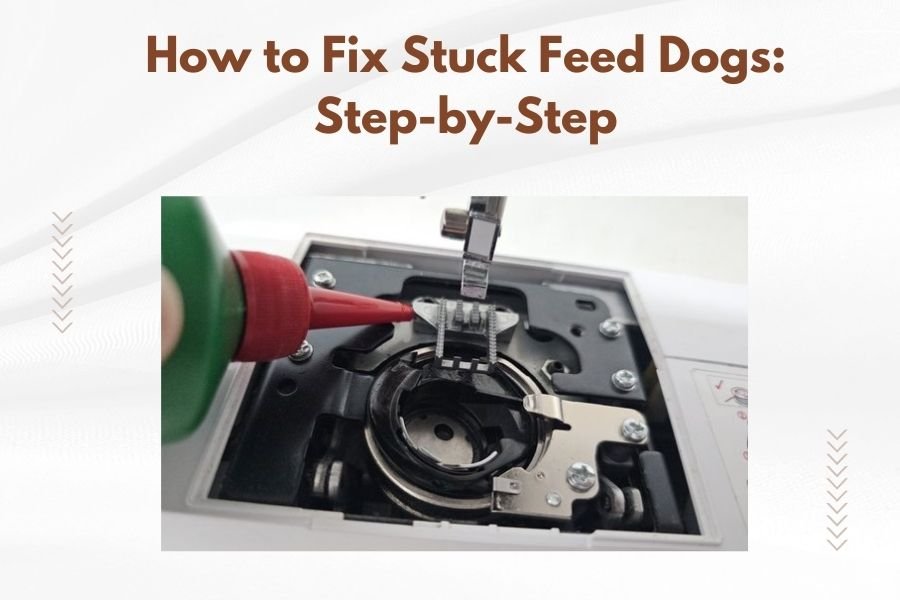
For a broader diagnosis, see Why Your Machine Won’t Feed Fabric: Fixes. If the feed dogs remain stuck after the jam is cleared, follow How to Fix Stuck Feed Dogs: Step-by-Step.
Could the presser foot be causing the fabric to catch?
A mismatched or poorly attached presser foot can hold fabric unevenly and contribute to catching. Confirm that the foot is fully attached, the needle clears it, and its opening suits the stitch you selected.
The SZBZ 11Pcs Presser Feet set includes snap-on feet for low shank sewing machines, including a roller foot, zipper foot, quilting foot, and button foot. It is intended for household DIY work, but it is not suitable for older vintage, mini, industrial, high handle, or inclined handle machines.
Measure the distance from the center of the thumb screw to the sewing board before using a replacement foot. The set describes a low shank as a 1/2 in measurement, so confirm your machine's shank rather than assuming compatibility.
Attach the foot with the needle raised and turn the handwheel slowly to confirm that the needle does not strike it. If your machine has a different shank style, keep the original foot in place and choose a compatible accessory.
A presser foot will not correct a feed mechanism that is jammed, lowered, damaged, or out of time. For fabric being pulled or distorted during sewing, see Why Is Your Sashiko Machine Pulling Fabric?.
What should you inspect after removing the fabric?
Check the needle, thread path, bobbin area, feed dogs, and presser foot before sewing again. Look for a bent needle, broken thread, lint packed between feed-dog teeth, or a needle plate that is not seated flat.
Replace a needle that is bent, blunt, or damaged. Rethread the upper path with the presser foot raised, insert the bobbin in the correct direction, and leave a short thread tail before testing.
Turn the handwheel slowly through one full needle cycle. The needle should move without touching the presser foot or plate, and the feed dogs should rise and move as the machine advances.
If the feed dogs do not rise, check whether the drop-feed control is engaged. How to Drop Feed Dogs for Better Free Motion explains why lowered feed dogs can stop moving fabric during free-motion work.
How do you test the machine after a fabric jam?
Test on a small fabric scrap at a slow speed. Start with the needle down, hold both thread tails behind the foot for the first few stitches, and watch whether the cloth moves evenly.
Use a straight stitch first rather than testing with a dense decorative stitch. Stop immediately if the thread bunches, the needle bends, the fabric pulls down, or the feed dogs make an unusual sound.
Do not push the fabric into the feed dogs. Let the machine move it while you guide it lightly, especially at seams, corners, and soft edges.
If a New Home machine is involved, read Why Is My New Home Sewing Machine Not Feeding Fabric? for checks specific to that problem. For a treadle model that will not advance cloth, see treadle machine feeding checks.
Can glue sticks help stabilize a delicate fabric edge?
A washable glue stick can help hold paper-based templates or temporary craft layers, but it is not a repair for a fabric jam. Keep adhesive away from the feed dogs, needle plate, bobbin area, and moving parts.
Elmer's All Purpose School Glue Sticks are washable, nontoxic, acid-free, photo-safe, and designed for paper, cardboard, foam board, display board, and similar craft materials. The package contains 30 sticks, each 7 grams.
Use only a very small amount on a paper template or a scrap-based preparation step, and let it dry as needed before sewing. Avoid treating a glue stick as a substitute for a stabilizer approved for your fabric or machine.
For chiffon, test any temporary method on a scrap first. Adhesive can transfer to the needle or plate and create a new feeding problem.
How can you stop fabric from getting stuck again?
Prevent repeat jams by starting with a stable edge, a clean bobbin area, and a presser foot that matches the work. Sew slowly over bulky joins and keep delicate fabric supported without pushing it into the feed dogs.
Use the correct needle size and thread for the fabric, follow the machine's tension guidance, and check that the feed dogs are raised for ordinary sewing. Keep the needle plate opening free of lint and thread.
For quilting, the feed dogs help move fabric in a controlled path. How Feed Dogs Affect Your Quilt Quality explains how their movement can affect stitch length and fabric handling.
Fabric stuck in feed dogs usually frees safely when you remove power, release the presser foot, cut the thread, and work slowly from the thread nest outward. If the machine still jams after cleaning and rethreading, stop sewing and have the mechanism inspected instead of forcing another pass.
Frequently asked questions
How do you remove fabric stuck in feed dogs?
Turn off and unplug the sewing machine, raise the needle and presser foot, then ease the fabric free with small movements. If thread or lint holds it underneath, remove the bobbin case or needle plate only as your manual allows.
Do not yank the cloth or force the handwheel.
Why does fabric get stuck under feed dogs?
Fabric can catch when thread nests underneath, the needle is bent, the presser foot is unsuitable, or the cloth is soft and loosely woven. A small starting edge, correct presser foot pressure, and steady feeding can reduce catching, but persistent jams need a machine check.
Can you pull fabric out of a sewing machine?
You can ease fabric out after switching off and unplugging the machine, but do not pull hard. Raise the needle and presser foot first, cut the thread close to the fabric, and release any trapped thread below the needle plate before moving the cloth.
How do you prevent fabric from getting stuck in feed dogs?
Use the right needle and presser foot for the fabric, begin with a stable fabric edge, and keep thread tension and the bobbin area clean. Sew slowly over bulky seams and support delicate cloth without pushing or pulling it through the feed dogs.