
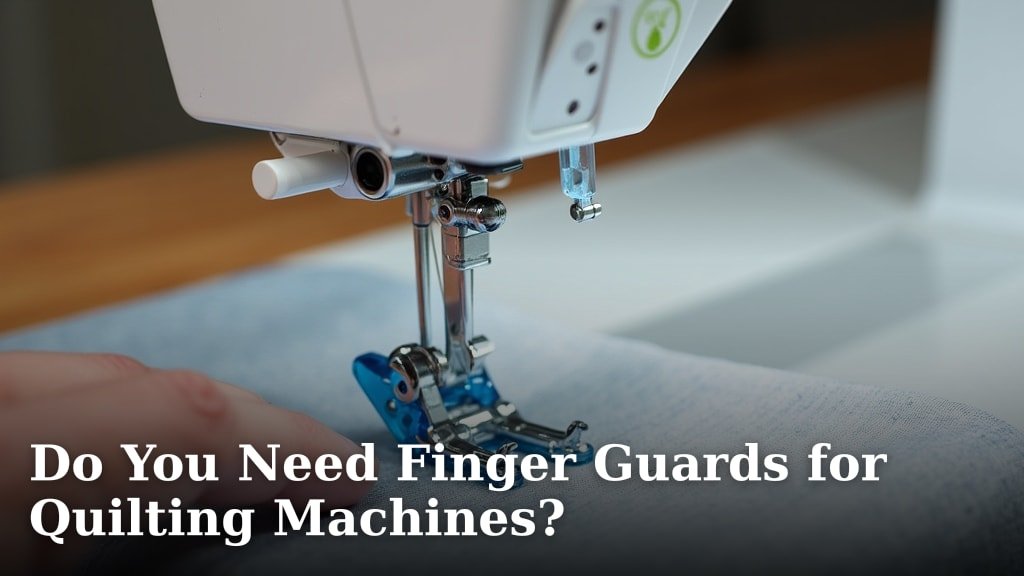
Do You Really Need Finger Guards on Your Quilting Machine?
The short answer is yes, they are a smart idea, especially if you’re new to quilting or working at high speeds. They provide a simple physical barrier that can help prevent painful needle strikes and cuts, which are common sewing injuries.
What Exactly Are Finger Guards?
Think of finger guards as small shields for your hands. They attach to the bed of your sewing or quilting machine, right near the needle. Their main job is to keep your fingers away from the fast-moving needle. You can find them in different materials like plastic or metal.
They are not a replacement for careful sewing. However, they act like a guardrail on a mountain road. They won’t stop you from making a mistake, but they can significantly reduce the damage if you do.
How They Work and What They Don’t Do
A finger guard creates a physical wall. When you’re guiding your quilt, your fingers stay on the safe side of the guard. The needle has less chance to snag or pierce your skin. Research from the U.S. Bureau of Labor Statistics shows that lacerations and puncture wounds are a frequent hazard in textile work (U.S. Bureau of Labor Statistics). While their data is broad, it highlights why protection matters.
They do not make you a better quilter. They do not guarantee 100% safety. But they add an extra layer of protection that many quilters find comforting.
Why Finger Protection is a Big Deal in Quilting
Quilting often involves moving fabric quickly and keeping your hands close to the needle. This is where accidents happen. A moment of distraction can lead to a quick, sharp poke.
Imagine you’re quilting a large, fluffy blanket. The layers are thick, and you’re focused on keeping the lines straight. Your hand gets too close to the needle, and—ouch. Suddenly, your project is stained with a drop of blood, and you have to stop to bandage your finger. A finger guard could have easily prevented that.
Common Quilting Injuries They Help Prevent
- Needle pokes and stabs: The most common injury. A finger guard stops the needle from reaching your skin.
- Cuts from the presser foot: Some guards also protect from the edge of the presser foot.
- Scrapes and abrasions: When guiding fabric, especially with a walking foot, your skin can rub against metal parts.
The CDC’s National Institute for Occupational Safety and Health (NIOSH) notes that ergonomic and physical safeguards reduce workplace injuries (NIOSH). The same principle applies to your home sewing station.
Should You Use a Finger Guard? It Depends on a Few Things
Not every quilter needs a finger guard. Your experience level, your quilting style, and even the type of fabric you use all play a role. Let’s break it down.
Beginner vs. Experienced Quilters
Beginners: If you’re just starting, your coordination with the machine is still developing. You might be more focused on the pattern and less on hand placement. A finger guard is highly recommended. It gives you a safer learning environment.
Experienced Quilters: You’ve built up muscle memory. You know where your hands should go. But even pros can get tired or complacent. Many experts say that wearing a guard is a good habit, especially for long sessions.
Quilting Style and Machine Type
Free-motion quilting (FMQ): This involves moving the quilt freely under the needle. Your hands are often close to the needle for control. Finger guards can be very helpful here.
Machine quilting with a frame: If you use a large quilting frame, your hands are usually on the bars, away from the needle. You might need less protection, but it’s still good to have.
Domestic sewing machines: The standard machine you use at home. The needle area is more confined, making accidental touches more likely.
Types of Finger Guards and What They Offer
Not all guards are the same. Choosing the right one depends on your machine and your needs. Here’s a quick comparison of the most common types.
| Type | Material | Best For | Pros & Cons |
|---|---|---|---|
| Plastic Clip-On | Plastic | Most domestic machines | Pros: Lightweight, easy to install. Cons: Can break if forced. |
| Metal Wire Guard | Metal wire | Longarm quilting machines | Pros: Durable, good visibility. Cons: Can be harder to see around. |
| Presser Foot Guard | Plastic/Metal | Standard sewing | Pros: Integrated with presser foot. Cons: May limit fabric handling. |
We found that the most popular choice for home quilters is the simple plastic clip-on guard. It’s affordable and does the job well for most projects.
How to Choose the Right Finger Guard for You
Picking a finger guard is straightforward. First, check your machine’s manual or model. Some machines have guards made specifically for them. Others use universal-fit models.
Next, think about what you’ll be doing. Are you doing delicate piecing or large-scale FMQ? A guard that’s easy to see through is better for detailed work. For fast, straight-line quilting, a sturdy metal guard might be better.
Finally, consider comfort. You don’t want a guard that feels bulky or gets in your way. It should feel like a natural part of your machine.
Checklist: Do You Need a Finger Guard?
Ask yourself these quick questions to decide. If you answer “yes” to three or more, a finger guard is likely a good investment.
- Are you new to machine quilting or sewing?
- Do you often quilt for long periods and feel tired?
- Do you do free-motion quilting where your hands are near the needle?
- Have you ever had a needle poke or minor cut while quilting?
- Do you work with thick, bulky fabrics that are hard to control?
- Is your machine in a well-lit area where you can clearly see your hands?
Tips for Safe Quilting With or Without a Guard
A finger guard is a great tool, but it’s part of a bigger safety plan. Here are some simple tips to keep your fingers safe.
Slow down when you need to. If you’re doing a tricky section, reduce your speed. This gives you more control and more time to react.
Use a stiletto or tweezers. For moving small pieces of fabric, use a tool instead of your fingers. This keeps your digits well away from the needle.
Keep your machine well-maintained. A clean, oiled machine runs smoothly. This reduces the chance of the needle hitting something unexpectedly.
As one quilter on a popular forum shared, “I always use a guard on my longarm. It lets me focus on the pattern, not on where my fingers are.” This sentiment is common among those who’ve had close calls.
What If You Decide Not to Use One?
It’s your choice. Many quilters sew without guards and are perfectly fine. They rely on their experience and careful habits. If you go this route, make sure your sewing area is bright. Take regular breaks to stay alert. And always keep your eyes on the needle area, even if you’re thinking about your next seam.
However, the risk is real. A quick search on sewing safety forums shows that even experienced people make mistakes. A finger guard is a low-cost way to reduce that risk.
Final Thoughts on Finger Guards and Your Safety
Your safety in the quilting room matters more than any finished project. Finger guards are a simple, inexpensive tool that can help protect you from common injuries. Whether you’re a beginner or a seasoned pro, they offer an extra layer of peace of mind.
Think about your own habits. Consider the types of quilts you make. Then, decide if a finger guard would help you stitch with more confidence. After all, the best projects come from a safe and happy maker.
Conclusion
Ultimately, a finger guard is a simple, low-cost tool that adds a powerful layer of safety to your quilting. It won’t make you a better quilter, but it can prevent the painful, project-stopping injuries that happen when hands get too close to the needle. We’ve found they are especially valuable for beginners, free-motion quilters, and anyone who spends long hours at the machine. Your next step is easy: evaluate your own habits and machine setup using the checklist in this article. If you see a need, a quick purchase can give you lasting peace of mind while you create.
Frequently Asked Questions
Will a finger guard get in my way while I quilt?
Most modern finger guards are designed to be unobtrusive. They sit low and close to the needle plate, providing a barrier without blocking your view of the fabric. The key is choosing a model that fits your machine and quilting style, like a clear plastic guard for detailed work.
Can I install a finger guard on any sewing or quilting machine?
Many guards are universal, but compatibility depends on your machine’s model and bed design. Always check the product description or your machine manual. Some brands offer guards made specifically for their longarm or domestic models for a perfect fit.
Are plastic finger guards durable enough for regular use?
For most home quilters, high-quality plastic guards are perfectly durable. They are lightweight and easy to see through. However, if you work with an industrial machine or a longarm at high speeds, a metal wire guard might be a more robust long-term choice.
Do I still need to be careful if I use a finger guard?
Absolutely. Think of it like a guardrail, not a force field. It reduces the risk of injury but doesn’t eliminate it. You should always maintain focus, use proper hand placement, and slow down for tricky sections, even with a guard installed.
Where is the best place to buy a quilting machine finger guard?
You can find them at major online retailers, specialty quilting supply websites, or directly from your machine’s manufacturer. It’s a good idea to search using your specific machine model name to find compatible options recommended by other quilters.
