8 Best Sewing Machines for Denim (November 2026)
The best sewing machines for denim include the Brother 1034D Serger Overlock Sewing Machine for finishing denim edges, the SINGER® for most denim projects, and the SINGER® 4423 for classic heavy-duty sewing.
On this page (5 sections)
The best sewing machine for denim for most home sewists is the SINGER® 4423, with a metal frame, 1,100 stitches per minute and 50% more power for denim and canvas. Choose VEVOR for up to 10 denim layers, or Brother ST531HD for home repairs and hems.
Denim is easy to sew when you match the machine to the seam thickness. A pair of jeans may be simple through flat fabric but difficult where several seams meet, so feeding control, presser-foot lift and a suitable needle matter as much as motor power.
If you also sew quilts and thick cotton, compare our guide to the best heavy duty quilting machine. For more heavy-fabric options, see the best heavy duty singer sewing machine.
Our picks at a glance
-
1
 Best for finishing denim edges
Brother 1034D Serger Overlock Sewing Machine
9.7/10 our score
See it on Amazon -
2

-
3

- 4
 Check it
VEVOR Industrial Lockstitch Sewing Machine
Best for thick denim stacks - 5
 Check it
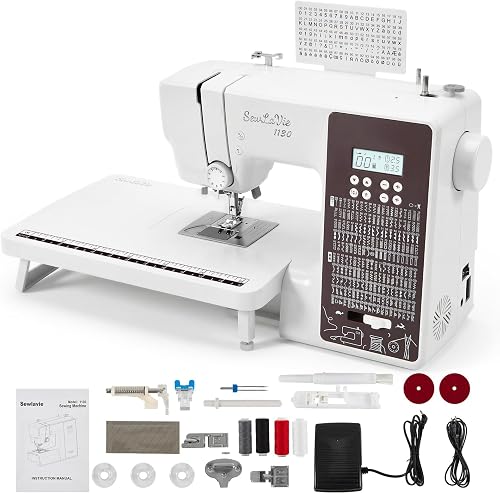
SewLaVie 1130 Computerized Sewing and Quilting Machine
Best for denim and creative stitches - 6
 Check it
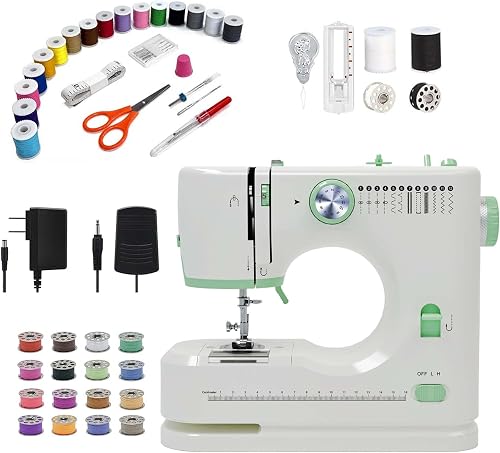
Stoigeld Small Sewing Machine for Beginners
Best for light denim practice - 7
 Check it
Brother ST531HD Strong & Tough 53 Stitch
Best for home denim repairs - 8
 Check it
Stoigeld Portable Sewing Machine for Beginners 2026
Best for occasional thin denim
Which sewing machines are best for denim?
The best sewing machine for denim is the one that matches your thickest seam without forcing the fabric. We compared layer capacity, frame design, feeding features, speed control and the type of work each machine supports.
Our score weighs specs, features and buyer feedback against what you're shopping for. Scores are not a promise of stitch quality in every fabric combination.
| Product | Best for | Machine type | Speed | Size and weight | Our score |
|---|---|---|---|---|---|
| Brother 1034D Serger Overlock Sewing Machine | finishing denim edges | 3 or 4 thread serger | 1,300 stitches per minute | 10 x 11 x 13 in; 8 lb | 9.7 |
| SINGER® | most denim projects | 1,100 stitches per minute | 6.25 x 15 x 12 in; 17.1 lb | 9.6 | |
| SINGER® 4423 | classic heavy-duty sewing | 6.25 x 15 x 12 in; 17.1 lb | 9.3 | ||
| VEVOR Industrial Lockstitch Sewing Machine | thick denim stacks | 5,000 stitches per minute | 9.3 | ||
| SewLaVie 1130 Computerized Sewing and Quilting Machine | denim and creative stitches | 6.6 x 16.9 x 11.8 in; 12.1 lb | 8.8 | ||
| Stoigeld Small Sewing Machine for Beginners | light denim practice | 10.3 x 9.5 x 4.4 in; 4.2 lb | 8.7 | ||
| Brother ST531HD Strong & Tough 53 Stitch | home denim repairs | 7.87 x 16.1 x 12.21 in; 14.3 lb | 8.5 | ||
| Stoigeld Portable Sewing Machine for Beginners 2026 | occasional thin denim | 0 to 400 stitches per minute | 10.3 x 9.5 x 4.4 in; 4.2 lb | 7.9 |
Best sewing machines for denim by project
The Brother 1034D leads this group for denim edge finishing, while the Meltwater Blue SINGER® 4423 is the best all-around home choice for seams, hems and thick layers.
Brother 1034D Serger Overlock Sewing Machine: Best for finishing denim edges
- 3 or 4 thread serger
- Handles multiple denim layers
- 1,300 stitches per minute
- Metal frame and interior components
The Brother 1034D is a strong choice when denim projects need clean overlock finishing. Its 3 or 4 thread setup handles multiple layers, while the color-coded guides and lower looper threader simplify setup.
Pros
- Handles multiple layers of denim
- 1,300 stitches per minute
- 3 included accessory feet
Cons
- Serger rather than a standard lockstitch machine
- 120-volt US-only use
The Brother 1034D Serger Overlock Sewing Machine is best when your denim project needs a finished edge as well as a strong seam. It is a 3 or 4 thread serger with a high-quality metal frame and interior components.
The machine can handle multiple layers of denim and other heavy materials. Its 1,300 stitches per minute speed is useful when you are finishing several seams, while the included foot pedal gives you speed control.
Threading is easier to follow with the color-coded upper guide and lower looper threading system. The lower looper threader and instruction manual also help when you change thread.
Three snap-on accessory feet are included: standard, gathering and blind stitch. The machine measures 10 x 11 x 13 inches and weighs 8 pounds, so it takes less room than the industrial pick.
Choose it for overlock finishing, rolled hems and clean denim edges. It is not a replacement for a standard lockstitch machine when you need regular straight seams, buttonholes or zippers.
SINGER®: Best for most denim projects
- 97 stitch applications
- 1,100 stitches per minute
- 50% more power for denim and canvas
- Adjustable presser foot pressure
This Meltwater Blue SINGER® 4423 combines heavy-duty denim handling with stitch choices for everyday sewing. Its adjustable presser foot pressure and extra-high lift help when fabric thickness changes.
Pros
- 50% more power for denim and canvas
- Metal frame and stainless-steel bedplate
- Automatic needle threader
Cons
- Heavier than compact home machines
- Manual tension adjustment
The SINGER® is the best all-around choice for most denim sewing because it combines thick-fabric power with useful controls for everyday work. For another home-machine option, read the Janome HD1000 review.
Its heavy-duty metal frame helps stability, and the stainless-steel bedplate supports smooth fabric feeding.
This machine offers 23 stitches that create 97 applications, including basic, stretch and decorative options. The extra-long stitch length option is useful for basting and thicker materials such as denim, canvas and leather.
Its motor runs at up to 1,100 stitches per minute and delivers 50% more power than standard sewing machines, according to the product description. Adjustable presser-foot pressure helps when you switch between lightweight fabric and denim.
The extra-high presser-foot lift gives more room for multiple layers. The free arm also suits pant hems, cuffs and collars, while the automatic needle threader and top drop-in bobbin reduce setup steps.
Choose it for jeans repairs, denim garments, quilting and mixed-fabric sewing. For a closer look at similar Singer models, read our Singer 4411 heavy duty sewing machine review.
SINGER® 4423: Best for classic heavy-duty sewing
- 97 stitch applications
- 1,100 stitches per minute
- 60% stronger motor
- Heavy-duty metal frame
The gray SINGER® 4423 gives denim sewists a familiar heavy-duty format with a 60% stronger motor and extra-high sewing speed. It includes feet and tools for hems, zippers and buttonholes.
Pros
- 60% stronger motor
- Heavy-duty metal frame
- Accessory kit included
Cons
- Plastic is listed as the material
- 120-volt corded use
The gray SINGER® 4423 suits sewists who want a familiar mechanical heavy-duty machine for denim. Its 60% stronger motor provides more piercing power for thick seams, while the metal frame supports stability during regular use.
It has 23 built-in stitches that create 97 applications. The automatic needle threader, stainless-steel bedframe and extra-high sewing speed support common denim tasks such as mending, hems and garment construction.
The machine reaches 1,100 stitches per minute. Its accessory kit includes an all-purpose foot, zipper foot, buttonhole foot, button sewing foot, quilting guide, needles, bobbins, screwdriver, auxiliary spool pin, spool pin felt, seam ripper and soft dust cover.
At 17.1 pounds, it is heavier than a portable beginner machine but still suited to a home sewing table. The 15 x 6.25 x 12-inch size needs a stable work area.
Choose it for classic denim repairs and clothing projects. Our Singer 4452 heavy duty sewing machine review is the next useful comparison if you're choosing among Singer heavy-duty machines.
VEVOR Industrial Lockstitch Sewing Machine: Best for thick denim stacks
- Sews up to 10 layers of denim
- 550-watt servo motor
- 5,000 stitches per minute
- Table stand included
The VEVOR industrial set is for a dedicated sewing space and repeated work through heavy denim. Its servo motor, table stand, knee lifter and adjustable-height table make it a different class of setup from home machines.
Pros
- Up to 10 layers of denim
- Servo motor with speed control
- Wide table and knee lifter
Cons
- 130.1-lb industrial setup
- Requires much more space
The VEVOR Industrial Lockstitch Sewing Machine is the strongest choice for repeated work through thick denim stacks. Its 550-watt servo motor reaches 5,000 stitches per minute and can sew through up to 10 layers of denim.
This is a full industrial setup with a metal frame, table stand, wide worktable and adjustable table height from 22.4 to 29.1 inches. The complete unit measures 21.06 x 47.24 x 29.13 inches and weighs 130.1 pounds.
An LCD panel lets you adjust sewing speed, needle up or down position and soft start. The 0.5-inch knee lifter leaves both hands on the fabric, while the 0.3-inch manual presser-foot lift helps with quick changes.
The machine includes an LED light, storage drawer and oil window. Its automatic lubrication and operation at no more than 80 dB are useful details for a dedicated work area.
Choose it for upholstery, bags, workwear and repeated thick seams. Skip it if you need a machine that can be packed away after each project.
SewLaVie 1130 Computerized Sewing and Quilting Machine: Best for denim and creative stitches
- 300 built-in stitches
- Feeds up to 9 layers of denim
- 7-point feed dog
- LCD screen and speed control
The SewLaVie 1130 suits sewists who want denim capacity plus computerized stitch selection. Its 7-point feed dog and LCD controls give thick projects more control than a basic compact machine.
Pros
- Feeds up to 9 denim layers
- 300 stitch patterns
- Start/stop button and speed slider
Cons
- More controls to learn
- Computerized rather than fully mechanical
The SewLaVie 1130 Computerized Sewing and Quilting Machine is a strong fit when you want denim capacity without giving up creative stitch choices. Its solid interior frame, strong motor and 7-point feed dog help it feed up to 9 layers of denim.
The machine has 300 built-in stitches, including utility patterns, twin-needle setups and alphanumeric fonts. An LCD screen lets you select stitches and adjust width and length.
Start/stop control and a speed slider let you sew without relying only on the foot pedal. Needle up or down positioning helps with corners, while the free arm suits sleeves and cuffs.
The detachable wide extension supports larger quilting projects. The package includes a wide table, presser-foot set, maintenance tools, needles, bobbins, foot controller, power cord and built-in storage box.
Choose it when denim is one part of a wider sewing and quilting routine. Its many controls may take longer to learn than the simple Singer mechanical models.
Stoigeld Small Sewing Machine for Beginners: Best for light denim practice
- 12 built-in stitches
- 2-speed control
- 4.2-lb compact design
- Works with light fabrics only
This Stoigeld is suitable for beginners who need a small machine for light fabric and occasional thin denim work. It is not a heavy-duty machine, so thick seams and heavy denim are outside its intended use.
Pros
- Compact and portable
- 2-speed control
- 32-piece starter kit
Cons
- Not for heavy denim or canvas
- Supports only light fabrics
The Stoigeld Small Sewing Machine for Beginners is suitable only for light denim practice and thin fabric projects. It is a compact household machine, not a commercial, industrial or heavy-duty machine.
It has 12 built-in stitches, including straight, zigzag, overlock and reverse stitches. Two-speed control lets a beginner work slowly before moving to a faster setting.
The machine measures 10.3 x 9.5 x 4.4 inches and weighs 4.2 pounds. Its 32-piece kit includes thread spools, a foot pedal, power cord, bobbins, needles and a threader.
Stoigeld specifies light fabrics such as thin cotton, linen and lightweight woven materials. It is not designed for heavy denim or canvas, so avoid thick jean seams and multiple bulky layers.
Choose it for learning, mending light fabric and occasional thin denim. If portability matters, compare lightweight sewing machines.
Choose the Brother ST531HD instead if jeans repairs are a regular part of your sewing.
Brother ST531HD Strong & Tough 53 Stitch: Best for home denim repairs
- Handles up to 6 layers of denim
- 53 built-in stitches
- Automatic needle threader
- 6 quick-change presser feet
The Brother ST531HD fits home sewing rooms that need denim repair, cuffs and hems without an industrial table. Its metal frame, finger guard and spring-action zigzag foot support changing fabric thickness.
Pros
- Handles up to 6 denim layers
- 53 built-in stitches
- Automatic needle threading
Cons
- Less denim capacity than industrial options
- US-only 120-volt use
The Brother ST531HD Strong & Tough 53 Stitch is a practical home machine for denim repairs, cuffs and hems. It handles up to 6 layers of denim with the included spring-action zigzag foot.
Its metal frame and metal needle plate support fabric feeding, while the automatic needle threader reduces setup work. The machine includes 53 built-in stitches, including blind hem, decorative and zigzag options.
Six quick-change feet are included: spring-action zigzag, non-stick, buttonhole, button sewing, zipper and blind stitch. The free arm is useful for cuffs, sleeves and skinny-jean hems.
The machine weighs 14.3 pounds and measures 7.87 x 16.1 x 12.21 inches. That is a manageable size for a home sewing room, but it is less portable than the compact Stoigeld models.
Choose it for home denim work when 6 layers cover your usual seams. Its capacity is below the SewLaVie and VEVOR, so match it to your thickest project.
Stoigeld Portable Sewing Machine for Beginners 2026: Best for occasional thin denim
- 12 built-in stitches
- 0 to 400 stitches per minute
- 2 denim layers maximum
- 4.2-lb compact design
The Stoigeld SM-725 Pro+ is a compact choice for beginners who may repair thin denim but mainly sew light fabrics. Its variable-speed foot pedal helps you learn slowly, but it is not intended for heavy-duty sewing.
Pros
- Variable speed from 0 to 400 stitches per minute
- Compact and lightweight
- Overload protection
Cons
- 2 denim layers maximum
- Not for commercial or heavy-duty work
The Stoigeld Portable Sewing Machine for Beginners 2026 works best for light fabrics and occasional thin denim. Its stated denim limit is 2 layers maximum, so it is not a choice for thick jean seams or heavy canvas.
The machine has 12 built-in stitches and a variable-speed foot pedal from 0 to 400 stitches per minute. Slow control can help a beginner practice straight seams without rushing.
It measures 10.3 x 9.5 x 4.4 inches and weighs 4.2 pounds. The starter set includes 32 thread spools, 20 practice fabrics and the necessary accessories.
Overload protection stops the machine during improper use. The product is intended for home DIY, beginner practice and clothing mending, not commercial, industrial or heavy-duty sewing.
Choose it when storage space matters more than denim capacity. For more than 2 denim layers, move up to the Brother ST531HD or one of the SINGER® heavy-duty machines.
What should you look for in a sewing machine for denim?
Look for a machine with enough presser-foot clearance, controlled feeding and a stated ability to handle your thickest denim stack. A metal frame can add stability, but layer capacity and seam control should guide the final choice.
How many denim layers do you need to sew?
Choose by the thickest point, not the flat fabric. The Brother ST531HD handles up to 6 layers, the SewLaVie 1130 feeds up to 9, and the VEVOR reaches up to 10 layers of denim.
A beginner machine may handle a single thin denim layer but still struggle where a hem folds over itself. Test those bulky points on scraps before starting the finished item.
Does speed matter for denim?
Speed matters less than control when you sew across a thick seam. The SINGER® machines reach 1,100 stitches per minute, the Brother 1034D reaches 1,300, and the VEVOR reaches 5,000 with industrial controls.
A slower controlled start can help keep the seam straight. The Stoigeld SM-725 Pro+ offers a 0 to 400 stitches-per-minute foot pedal when gradual speed matters more than output.
Should you choose a serger or a standard sewing machine?
Choose a standard sewing machine for straight seams, hems, buttonholes and zippers. Choose the Brother 1034D serger when you also want overlock finishing, rolled hems and clean edges.
Many denim projects use both machine types for different jobs. A serger does not replace the standard lockstitch functions needed for most garment construction.
How do you sew denim without skipped stitches?
Use a fresh needle suited to thick fabric, support the fabric as it enters the seam and sew slowly across bulky points. Keep the seam flat when possible, and test the thread tension and stitch length on a denim scrap first.
Avoid pulling the fabric through the machine. Let the feed system move it while you guide the seam, and use the machine's presser-foot lift or a suitable foot when the layers change height.
For quilting projects, read our guide on Can You Quilt Denim? for project planning and layer control.
Which machine should you choose?
Pick the SINGER® 4423 if you want the best balance for regular home denim sewing. Choose the Brother 1034D for finished edges, the VEVOR for frequent work through very thick stacks, and the Brother ST531HD for home repairs up to 6 layers.
Choose the SewLaVie 1130 if you want computerized stitches and quilting features with high denim capacity. The two Stoigeld machines make sense only when your projects are mostly light fabric with occasional thin denim.
Before choosing, measure your work area and identify the thickest seam you expect to sew. That decision rule will narrow the list faster than stitch-count comparisons.
Our top 3 picks at a glance
-
1
Best for finishing denim edges
Brother 1034D Serger Overlock Sewing Machine
9.7/10 our score
See it on Amazon -
2
-
3
Frequently asked questions
What is the best sewing machine for denim?
The best sewing machine for denim depends on layer thickness and project type. The SINGER® 4423 is the strongest general home choice here, while the Brother 1034D suits edge finishing and the VEVOR industrial machine suits repeated work through up to 10 denim layers.
Choose a machine with controlled feeding, enough presser-foot lift and a motor suited to your seam thickness.
Can a regular sewing machine sew denim?
Yes, a regular sewing machine can sew denim when the layers stay within its stated capacity. The Brother ST531HD handles up to 6 layers, while the Stoigeld beginner machines are intended for light fabrics and only limited thin denim.
Test the seam thickness on scraps before sewing the finished garment.
How many layers of denim can a sewing machine sew?
The machines in this guide range from 2 layers maximum on the Stoigeld SM-725 Pro+ to up to 10 layers on the VEVOR industrial lockstitch machine. The Brother ST531HD handles up to 6 layers, and the SewLaVie 1130 feeds up to 9 layers.
Layer count depends on denim weight, seam shape and the machine's presser-foot clearance.
What stitch length is best for denim?
A longer stitch is usually easier to manage on thick denim than a very short stitch. The SINGER® 4423 includes an extra-long stitch length option for thicker materials, including denim, canvas and leather.
Start on a scrap, check the seam balance and adjust tension or stitch length as needed.
Can you quilt denim on a home sewing machine?
Yes, you can quilt denim on a home sewing machine when the quilted layers fit under the presser foot and the machine feeds them evenly. The SINGER® 4423 and Brother ST531HD are home-focused options with heavy-fabric features.
Read our guide on Can You Quilt Denim on a Home Sewing Machine? before starting a thick quilt sandwich.


