Singer vs Janome: Which Brand Should You Choose? (November 2026)
Choose Singer for general sewing and heavy fabrics, or Janome for serging and supported embroidery machines. Your project type matters more than the brand name alone.
On this page (9 sections)
- Singer vs Janome: which brand fits your projects?
- Which brand is easier for general sewing?
- Which brand is better for seam finishing?
- What does each brand offer for embroidery?
- Which brand suits quilting better?
- Which machine is easier to set up?
- Do you need a cutting tool with either brand?
- How should you choose between Singer and Janome?
- Singer vs Janome: final decision
Choose Singer for general sewing and heavy fabrics, or Janome for serging and supported embroidery machines. The right pick depends on machine type, fabric, and setup time.
Singer and Janome do not cover identical jobs. The SINGER 4423 is a general sewing machine, while the Janome 8002D is an overlock machine.
That split matters for your first project. A general sewing machine handles straight seams, buttonholes, decorative stitches, and quilting tasks.
An overlock machine trims, stitches, and finishes edges in one step. It suits knits, raw edges, and polished seams on garments and home projects.
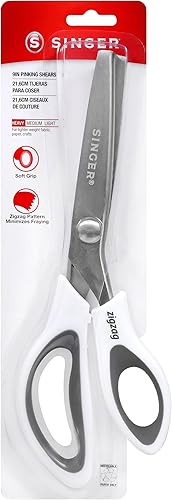
The other products are accessories, not main machines. The SINGER 9 in Pinking Shears cut a zigzag edge on woven fabric to help reduce fraying.
The Janome 64MB USB drive has USB Type A connectivity and 64 MB of storage for selected embroidery machines. Neither accessory replaces its main machine category.
Pinking shears cut an edge but do not stitch a seam. A USB drive moves files but does not sew or embroider.
Start with the work you will do most often. Clothing, seam repairs, quilt piecing, and thicker fabrics point to a general sewing machine.
Denim, canvas, and leather need power and pressure control for thicker layers. Lightweight fabrics and knits need gentler feeding to avoid puckering or stretching.
Setup time is a real trade off. A general sewing machine has a top drop-in bobbin and automatic needle threader for quicker starts.
An overlock machine uses 3 or 4 threads, so threading and tension checks take more care. Space matters too, as the SINGER 4423 weighs 17.1 lb and the Janome 8002D weighs 19 lb.
Measure your table before you choose a permanent spot. Name your first major project and list your usual fabrics, then pick the machine type that handles that work with the least extra effort.

Singer vs Janome: which brand fits your projects?
Choose Singer when one machine must handle everyday sewing, quilting and thicker fabrics. Choose Janome when seam finishing or a supported embroidery setup matters most.
The SINGER 4423 has 97 stitch applications, a 1-step buttonhole and a motor that reaches 1,100 stitches per minute. Its extra-high presser foot lift and adjustable presser foot pressure suit projects that move between lightweight fabric and thicker materials.
The Janome 8002D has a different role. It is a 3- or 4-thread overlock machine with differential feed, color-coded threading paths and speeds up to 1,300 stitches per minute.
That means a brand comparison alone can give the wrong answer. Compare the type of work first, then compare controls, setup and fabric handling within that category.
For more context on how major brands developed, see our history of top quilting machine brands.
Which brand is easier for general sewing?
Singer is the clearer fit for general sewing because the SINGER 4423 combines basic, stretch and decorative applications in one machine.
The 4423 includes an automatic needle threader, a top drop-in bobbin with a transparent cover and a manual tension control dial. Those features support routine tasks such as threading, checking thread supply and adjusting stitch balance.
Its 97 stitch applications include seams, decorative designs and stretch stitches. The extra-long stitch length option also suits basting and thicker materials such as denim, canvas and leather.
The machine has a heavy-duty metal frame and a stainless-steel bedplate. The frame adds stability, while the bedplate supports smooth fabric feeding.
Who should choose the SINGER 4423?
The SINGER 4423 suits you if you want one machine for clothing repairs, quilt piecing, decorative stitching and heavier home projects. It also offers a built-in free arm for pant hems, cuffs, collars and other small cylindrical pieces.
Its included accessories cover common setup needs, including an all-purpose foot, zipper foot, buttonhole foot, button sewing foot, needles, bobbins, a quilting guide and a soft-sided dust cover.
The machine weighs 17.1 lb and measures 6.25 in deep, 15 in wide and 12 in high. Measure your table and storage area before choosing a permanent setup.
Which brand is better for seam finishing?
Janome is the better fit when your main goal is trimming, stitching and finishing raw edges in one overlock step.
The Janome 8002D supports 3-thread and 4-thread overlock stitching. A 4-thread stitch can suit durable garment seams, while a 3-thread option can suit lighter finishing work.
Its differential feed helps control how fabric moves through the machine. That can help reduce puckering on lightweight fabric and stretching on knits, but you still need to adjust the settings for the fabric and stitch you use.
The machine reaches up to 1,300 stitches per minute. That speed can shorten long seam-finishing sessions, but an overlock machine does not replace a general sewing machine for every task.
Who should choose the Janome 8002D?
Choose the Janome 8002D if you sew garments, work with knits or want cleaner finished edges on home projects. The color-coded threading paths and marked tension dials give you a clear starting point during setup.
The machine measures 11 in deep, 12.5 in wide and 10.5 in high, and it weighs 19 lb. Its included components include a power cord, foot controller, instruction manual, needle pack, tweezers and 2 screwdrivers.
Plan extra time for threading and tension checks. Overlock stitches use multiple threads, so careful setup is part of getting balanced seams.
What does each brand offer for embroidery?
The Janome USB drive is useful only when your embroidery machine is one of its listed compatible models. This is an accessory, not a sewing machine, so check the model first.
The Janome 64MB USB drive has 64 MB of storage and USB Type A connectivity. It fits the MC15000, MC12000, MC11000, MC11000SE, MC350E, MC200E, MB4, and MB4N.
Check the exact model name before you rely on it for file transfers. A drive for selected Janome machines does not work with every Janome machine.
If your machine is not on that list, do not assume it will solve a transfer problem. Check your manual for the correct storage type, format, and accessory for your model.
Singer and Janome embroidery options should be compared by exact machine, file workflow, and supported accessories. The brand name alone does not confirm compatibility.
For Singer, the machine here is the SINGER 4423 general sewing machine. It offers 97 stitch applications, a 1-step buttonhole, and 1,100 stitches per minute.
It is not presented as an embroidery system with the same USB workflow. The Janome drive therefore does not create an equal embroidery comparison between the brands.
Storage size also sets a limit. At 64 MB, the drive suits a small set of designs rather than a large library.
Keep only the designs you plan to use next, and keep a backup copy on your computer. The drive is lightweight at 9.07 g, so it is easy to keep in a sewing kit.
It can stay with the machine so you do not need to search for it before a session. Keep the connector clean and dry, and remove the drive safely after each transfer.
If you own a listed model, this can be a handy spare or replacement. If you own an unlisted model, check the manual first before you spend money.
Which brand suits quilting better?
Singer suits general quilting better when you need piecing, basting, decorative stitches and control over thicker layers.
The SINGER 4423 includes a quilting guide and offers an extra-long stitch length for basting. Its adjustable presser foot pressure can help when you move between lighter fabrics and thicker quilt layers.
For quilting, focus on how your planned projects are built. A machine that handles piecing may still need a different setup for dense layers, long seams or specialty finishing.
Janome becomes more useful when your quilting workflow includes serged edges, garment-style construction or embroidery on one of its compatible machines. The Janome 8002D can finish edges, but it is not the same tool as a general sewing machine.
Our guide on how to choose the best quilting machine for your needs can help you match machine type to your projects.
For a closer brand comparison, read our guide to Singer sewing machine vs Brother. It can help if Singer is your leading choice but you are still comparing general sewing brands.
Which machine is easier to set up?
The SINGER 4423 has the simpler starting workflow for general sewing, while the Janome 8002D needs more threading and tension setup.
The Singer uses a top drop-in bobbin, automatic needle threader and manual tension dial. You still need to thread the machine correctly, insert the bobbin and choose a suitable needle and stitch.
The Janome 8002D uses 3 or 4 threads and has color-coded threading guidance. Follow the threading path in order, then test the stitch on a fabric scrap before starting a seam.
Keep the manual close during early setup. Thread path, needle choice, tension and differential feed settings affect the result, especially when you switch between woven fabric, lightweight fabric and knits.
Do you need a cutting tool with either brand?
Pinking shears help finish woven fabric edges, but they do not replace a sewing machine or serger.
The SINGER 9 in Pinking Shears cut a precise zigzag pattern that helps minimize fraying on woven seams. Their stainless steel blades and soft grip handle make them a useful hand tool for fabric preparation and decorative craft cuts.
Use them after measuring and marking your seam allowance. A zigzag edge can reduce loose threads, but it does not create a stitched seam or secure a garment opening.
The shears are ambidextrous and weigh 2.56 oz. Keep the blades clean and use them for suitable fabric and craft materials so the cutting edge stays consistent.
You can also compare this type of tool with our guide to the best Singer quilting machine when you are building a complete Singer-focused sewing setup.
How should you choose between Singer and Janome?
Pick the brand by your first major project, not by the name on the front. Your first project tells you which machine type you need most.
Choose the SINGER 4423 if you need a general sewing machine for quilting, clothing repairs, buttonholes, decorative stitches, and thick materials. Its 97 stitch applications and adjustable fabric controls give it a wide everyday role.
The 4423 reaches 1,100 stitches per minute and has 50% more power than standard sewing machines in its product description. Its metal frame and stainless steel bedplate support stable, smooth feeding.
Adjustable presser foot pressure and extra-high presser foot lift help when you move from lightweight fabric to thicker layers. That range suits denim, canvas, and leather work as well as lighter sewing.
Choose the Janome 8002D if you mainly want overlock seam finishing, stretch-fabric control, and faster edge work. It trims, stitches, and finishes in one step at up to 1,300 stitches per minute.
It is a different machine category, so compare it with other sergers rather than general sewing machines. Its 3 or 4 thread options and differential feed serve a narrower, more specific job.
Choose the Janome USB drive only if you own a listed compatible embroidery machine. Choose the SINGER pinking shears when fabric edge control is the immediate need.
If you are unsure, start with the machine you will use for most seams. Add a cutting tool or storage accessory later when that need is clear.
Singer vs Janome: final decision
Choose Singer for a broad sewing and quilting starting point, or Janome for overlock finishing and selected embroidery support. The job you need done should drive the choice.
Pick the SINGER 4423 for general sewing and thicker fabrics. It has 97 stitch applications, a 1-step buttonhole, and a top drop-in bobbin with a transparent cover.
Its automatic needle threader and manual tension dial support a quicker start for routine seams. Adjustable presser foot pressure helps you move between lightweight fabric and thicker materials like denim, canvas, and leather.
The extra-high presser foot lift helps with multiple layers. A built-in free arm helps with pant hems, cuffs, collars, and other small, cylindrical projects.
For quilting, it includes a quilting guide and extra-long stitch length for basting. Those details support piecing, decorative work, and thicker quilt layers in one general machine.
Pick the Janome 8002D for 3- or 4-thread seam finishing. It trims, stitches, and finishes seams in one step for garments, crafts, and home décor projects.
Its differential feed helps control fabric movement on knits and lightweight fabrics. That control can reduce puckering or stretching, though you should test settings on a scrap first.
It reaches up to 1,300 stitches per minute, which can shorten long finishing sessions. Faster work still needs careful threading, because 3 or 4 threads leave less room for error.
Color-coded threading paths and marked tension dials give a clearer setup guide. Plan extra time for threading and tension checks when you change fabric or stitch type.
Add the SINGER pinking shears for woven edge work, or the Janome USB drive only when your model is compatible. The shears cut a zigzag edge to help minimize fraying on woven seams.
They have stainless steel blades, a serrated cutting edge, and a white soft grip handle. They are ambidextrous and weigh 2.56 oz, so they suit hand finishing and decorative craft cuts.
The Janome USB drive has 64 MB of storage and USB Type A connectivity. It fits the MC15000, MC12000, MC11000, MC11000SE, MC350E, MC200E, MB4, and MB4N models.
If your model is not listed, check your manual for accepted storage before you buy. Check exact machine type, measurements, and compatibility before you order, as both machines need a stable surface.
Your final choice should match your usual work, not the longest feature list. General sewing points to Singer here, while overlock finishing points to Janome.
Frequently asked questions
Is Singer or Janome better for beginners?
Singer is often the simpler starting point when you want a general sewing machine for seams, quilting and basic repairs. Janome can be the better choice when your first priority is overlock finishing or a specific embroidery machine.
Compare controls, machine type and project needs before choosing.
Is Singer better than Janome for quilting?
Singer can suit quilting when you need general stitching, thicker fabric handling and adjustable presser foot pressure. The SINGER 4423 has 97 stitch applications, a metal frame and an extra-high presser foot lift.
Janome may suit you better if your quilting plan includes serging or supported embroidery.
What is the main difference between Singer and Janome?
Singer and Janome cover several machine types, so the main difference depends on the models you compare. The SINGER 4423 is a general heavy-duty sewing machine, while the Janome 8002D is a 3- or 4-thread overlock machine.
A Janome USB drive serves selected embroidery machines.
Should I buy a sewing machine or an overlock machine?
Buy a general sewing machine first if you need straight seams, buttonholes, decorative stitches and basic quilting work. Choose an overlock machine when seam finishing, edge trimming and stretch-fabric control are central to your projects.
Many sewists use both because they handle different jobs.


