How to Choose a Quilt Lifter for Your Sewing Machine
The best sewing quilt lifter supports the quilt without blocking your needle area or changing your machine's movement. Compare a flat support surface, adjustable height, clearance, and how easily you can reposition the quilt.
On this page (11 sections)
- What does a sewing quilt lifter do?
- Which quilt support problem are you trying to solve?
- What should you check before choosing a sewing quilt lifter?
- Is an extension table enough for sewing quilts?
- When should you use more than one support?
- Quilt lifter versus quilting frame
- How should you set up a quilt lifter?
- What can help with quilt planning and preparation?
- How do you reduce drag while quilting?
- What mistakes should you avoid?
- How do you choose the right sewing quilt lifter?
The best sewing quilt lifter gives a heavy quilt a broad, level place to rest while it moves through the machine. Choose support that matches your machine-bed height, leaves the needle area clear, and lets you move the quilt without pulling against the presser foot.
A quilt lifter can be a raised support, a table-side platform, or part of a larger quilting setup. The useful feature is not the name.
It is the way the support carries fabric weight and keeps the quilt path steady.
Before choosing one, watch where the quilt drags. It may fall off the front edge, bunch beside the needle, catch on the table, or pull backward as you stitch.
For a wider overview of support surfaces, start with our guide to the Best Extension Table For Quilters. An extension table may solve the problem when the main issue is a small or uneven sewing surface.
What does a sewing quilt lifter do?
A sewing quilt lifter supports quilt bulk so less fabric hangs from the sewing machine. That support can make it easier to guide thick layers without fighting downward drag.
Large quilts become difficult when their weight is concentrated on one side of the machine. The fabric can pull against the needle, change the direction of the quilt, or make it harder to keep a smooth stitching path.
A lifter helps by placing part of the quilt on a nearby surface. The best position depends on the direction you sew and the space around your machine.
Some quilters need support behind the machine because the quilt leaves the needle area toward the back. Others need support at the left side, where the bulk gathers during quilting.
A small support can also help with a table that sits lower than the machine bed. However, a poorly matched height can create a ridge, so measure before setting up.
Which quilt support problem are you trying to solve?
Choose a sewing quilt lifter based on where the quilt weight creates resistance. The right support for a front-to-back drag problem may not solve fabric bunching at the side.
Use this quick guide:
| Problem | Support priority |
|---|---|
| Quilt falls off the table | A wider surface beside or behind the machine |
| Fabric bunches near the needle | A smooth, level surface close to the machine bed |
| Quilt pulls backward | Support behind the machine |
| Quilt catches at the side | A support that extends the side working area |
| Machine sits in a deep table opening | A fitted insert or level surrounding platform |
| Large quilt is hard to turn | Multiple support points or a quilting frame |
Think about the quilt's movement before buying a support. The quilt should slide, fold, or roll in the direction you need without catching on an edge.
A lifter is not meant to force the quilt upward into the needle area. It should carry weight while allowing the feed system and your hands to control the fabric.
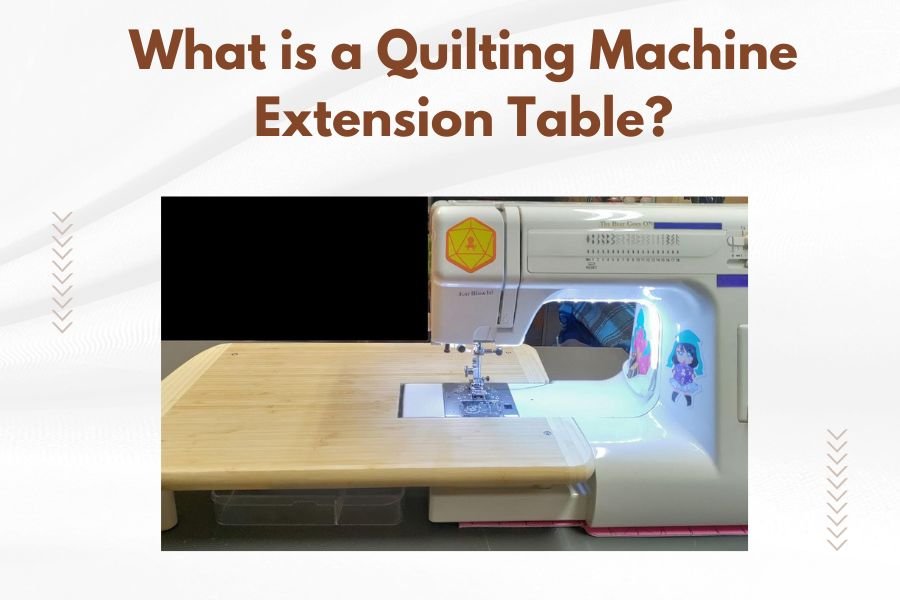
If you are unsure whether you need a lifter or a larger table, read What is a Quilting Machine Extension Table?. The difference is mainly about how much of the machine's working area needs support.
What should you check before choosing a sewing quilt lifter?
Check height, width, surface movement, clearance, and table stability before choosing a quilt lifter. These details affect whether the support reduces drag or adds another obstruction.
Match the support height to the machine bed
Measure from the floor or table to the machine bed. Then compare that measurement with the support position you plan to use.
A support that is too low may let the quilt sag between surfaces. A support that is too high may push the fabric upward and change how it reaches the needle.
The goal is a continuous path. It does not have to be perfectly flat for every quilt, but sudden steps and sharp edges can catch fabric.
Place a straight edge across the machine bed and nearby support if possible. Look for gaps, raised corners, or a slope that could make the quilt hang.
Choose enough surface area for the quilt
A narrow support may hold one section of fabric but leave the rest hanging. A wider surface gives you more room to fold or roll the quilt as you work.
You do not always need one large platform. Two smaller supports can work if they are stable and placed where the quilt needs help.
The available room around the machine matters too. A broad lifter can reduce drag but make it harder to sit, reach controls, or move your hands.
Measure the table and the space behind it before choosing a size. Include room for the quilt to extend beyond the support.
Keep the needle and presser foot clear
The lifter should support fabric around the machine, not interfere with the needle, presser foot, feed dogs, or hand controls. Leave enough clearance for the quilt to enter and leave the sewing area.
Check the position of the power cord, foot control, needle plate, bobbin access, and presser-foot lever. A support that blocks routine access can slow down every adjustment.
Also check whether you can remove the quilt without lifting the machine. Easy access matters when you need to change thread, inspect a seam, or clear a fold.
Look for a smooth fabric path
The quilt should move over a surface without catching on rough areas, exposed fasteners, or sharp corners. Any edge near the fabric path deserves attention.
A smooth surface is especially useful when the quilt has a delicate top or loose threads. Keep the support clean so dust and stray thread do not collect under the fabric.
Avoid placing loose objects on the support while sewing. Even small items can become obstacles when you are moving a large quilt.
Check how the support stays in place
A quilt lifter must remain steady while the quilt moves. If the support slides, rocks, or shifts away from the machine, it can create new drag.
Look at the table legs, contact points, and any clamps or fasteners used in the setup. Stability matters more than a large surface that moves under pressure.
Before beginning a quilt, push the empty support gently from different directions. Then place a folded quilt on it and repeat the check.
Is an extension table enough for sewing quilts?
An extension table may be enough when the quilt needs a larger level surface near the needle. It is often the simplest first step for a machine that has limited bed space.
An extension table surrounds or extends the machine bed. It gives the quilt more room to rest before and after it passes the needle.
This can reduce the sharp drop from the machine bed to a lower table. It also gives your hands more space to guide the quilt without lifting all its weight.
An extension table may not solve a quilt that hangs far behind the machine. In that case, you may need another surface behind the machine or a different arrangement of tables.
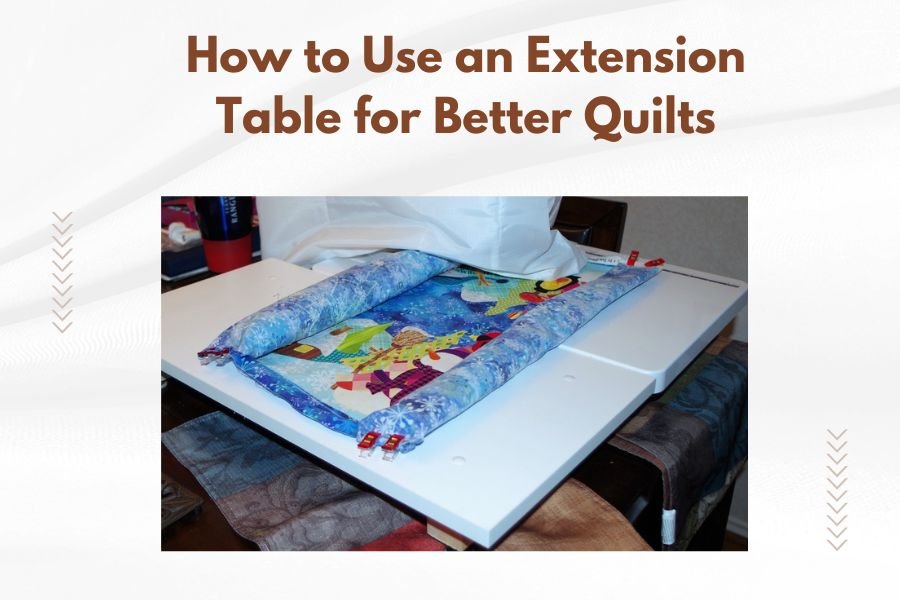
Read How to Use an Extension Table for Better Quilts for ways to position the quilt and keep the support surface useful during stitching.
Machine fit is also important. If you use a Janome MC6650, compare the machine's shape and bed area with the guidance in Which Extension Table Fits the Janome MC6650?.
When should you use more than one support?
Use more than one support when the quilt creates drag in two or more directions. A table beside the machine may help the side bulk, while a second surface behind it supports the section leaving the needle area.
A single platform can work for a small quilt or a simple sewing direction. Large quilts often move through several positions, so the best support location changes as you stitch.
Arrange the supports so the quilt does not fall into a gap. Even a small gap can become a catching point when you pull the quilt toward a new line.
Keep the supports at compatible heights. If one surface is much lower, the quilt may still hang between them.
You can also fold or roll the quilt to reduce the amount of fabric spread across the room. The fold should be loose enough that it does not create a hard ridge near the needle.
Quilt lifter versus quilting frame
A quilt lifter helps support fabric near a sewing machine, while a quilting frame holds the project in a more structured setup. Choose a lifter for local drag control and a frame when you need dedicated support for a larger project.
A lifter is usually part of your existing machine table. It can suit quilters who want to keep using a domestic sewing machine and improve the fabric path around it.
A frame takes more planning and space. It may be useful when the quilt is very large, when rolling and organizing the layers is a major concern, or when you want a separate quilting station.
The two options solve related but different problems. A frame does not automatically fix an awkward machine-bed height.
A lifter does not provide all the structure of a frame.
If you are considering a frame, read How to Choose the Best Quilting Machine Frame. Compare the frame's footprint, working height, quilt handling method, and fit with your machine.
How should you set up a quilt lifter?
Set up the sewing quilt lifter so the quilt rests on support before it pulls against the needle area. Test the fabric path with a small section before placing the full quilt under the presser foot.
Start by clearing the table around the machine. Remove objects that could catch the quilt or block the foot control.
Place the support where the quilt first begins to sag. If the quilt drops behind the machine, start with a rear support.
If it falls to the left, support that side first.
Adjust the height until the quilt travels without a sharp step. Move the quilt by hand through the planned path and watch for folds that catch.
Next, test the presser foot and needle area with a scrap or a small quilted section. Check that the support does not touch the machine's moving parts.
Once the path feels clear, arrange the larger quilt in loose folds. Avoid piling the entire project in one tight stack because that can make the quilt harder to reposition.
Recheck the support after sewing several inches. The quilt's center of gravity changes as more fabric moves to one side.
What can help with quilt planning and preparation?
Good preparation can reduce the amount of force needed at the machine. Mark the sewing path, baste the layers evenly, and keep the quilt supported before you begin stitching.
A reference book can help if you are still learning machine setup, fabric handling, and basic sewing techniques. {{product 0593964578 | A 352-page English guide with more than 300 techniques and 10 homeware and clothing projects for building general machine-sewing skills.}}
The Sewing Book is by Alison Smith and has dimensions of 9.31 x 1.13 x 11.19 inches. Its listed details include a February 4, 2025 publication date, DK as publisher, and a 3.82 lb item weight.
Its focus is broader than quilt support. It covers seams, hems, darts, gathers, collars, patterns, tools, materials, fabrics, and sewing projects, so it suits someone who wants a general reference beside a machine.
A quilting pattern book can help when you need block ideas or a project plan. {{product 0998983853 | A 206-page soft-cover, spiral-bound book with 42 vintage quilt block patterns and 28 total Christmas projects and quilt patterns.}}
It's Sew Emma Vintage Christ mas Quilt Book by Lori Holt of Bee in My Bonnet has product dimensions of 11 x 9 x 1 inches. Its blocks are available in 6 in and 12 in sizes, which can help you compare block scale before planning a quilt.
This book is more focused than The Sewing Book. Choose it for vintage block and Christmas project planning, not as a guide to machine support hardware.
For temporary paper layouts or craft planning, {{product B0013CDGT6 | 30 washable, nontoxic, acid-free, photo-safe glue sticks that apply smoothly and dry clear for paper, cardboard, and foam board projects.}}
Elmer's All Purpose School Glue Sticks are 7 grams each and come in a 30 count. They are intended for paper, cardboard, and foam board, so use them for compatible planning or craft tasks rather than applying them to the sewing machine or quilt layers without confirming suitability.
The package describes the sticks as washable, non-toxic, acid-free, photo-safe, and medium viscosity. They are not water resistant, and their stated uses center on school and craft work.
How do you reduce drag while quilting?
Reduce drag by supporting the quilt's weight, keeping the fabric path smooth, and moving the quilt in small controlled sections. The machine should not have to pull the full project across a low or crowded surface.
Use these habits:
- Support the quilt before it reaches the needle.
- Keep the quilt in loose folds rather than a tight, heavy pile.
- Reposition the folds when the weight shifts.
- Keep the support close enough that fabric does not sag into a gap.
- Guide the quilt without pulling it backward.
- Check that the presser foot and needle remain clear.
- Stop and flatten a fold instead of sewing over a trapped ridge.
Your hands should guide the quilt, not lift the full weight of it. If you feel resistance, stop the machine and find the point where the fabric is catching.
A quilt lifter may improve the fabric path, but it cannot correct every machine issue. Check the needle, thread path, presser-foot pressure, stitch settings, and machine manual when the quilt continues to pull or bunch.
You can also review How to Choose the Best Quilting Machine for Your Needs if the problem seems tied to the machine rather than the support surface.
What mistakes should you avoid?
Avoid choosing a lifter by size alone. A support that is large but unstable, too high, or difficult to access can make quilting harder.
The most common mistakes are:
- Ignoring the machine-bed height.
- Leaving a gap between the support and table.
- Blocking the foot control or power cord.
- Covering bobbin access or machine controls.
- Letting the quilt fall off the rear edge.
- Stacking the quilt so tightly that it cannot move.
- Using a support with rough or sharp fabric-contact areas.
- Starting a large quilt without testing the path.
- Assuming a frame and a lifter solve the same problem.
Do not force the quilt through a poor setup. Stop, move the support, and test again with the needle raised and the presser foot up.
Also avoid adding weight to the support to keep it stable unless the support instructions allow it. Extra weight can change the table balance or make the setup harder to move.
How do you choose the right sewing quilt lifter?
Choose the right sewing quilt lifter by matching the support location to the drag point, the height to the machine bed, and the surface size to the quilt bulk.
Pick a simple nearby support if a small section of the quilt keeps dropping. Choose a larger extension surface if the machine bed is too small for the area you need to guide.
Use more than one support when the quilt sags both beside and behind the machine. Consider a frame when you need a dedicated structure for a very large project or a separate quilting station.
Before you buy, measure the machine bed, table height, available floor space, and delivery route for any larger equipment. Then test the planned fabric path with the quilt folded as it will be during sewing.
The best setup is the one that keeps the quilt supported without blocking your controls. For sewing quilt lifters, choose local support for a specific drag problem, a wider extension table for limited bed space, and a frame when the whole project needs structured handling.
Frequently asked questions
What is a quilt lifter used for?
A quilt lifter supports part of a quilt while you sew, which can reduce the amount of fabric hanging from the machine bed. The goal is smoother handling of heavy layers, less pulling at the needle area, and easier repositioning as the quilt moves.
Do I need a quilt lifter for machine quilting?
You may benefit from a quilt lifter when a large quilt drags against the table or falls off the side of the machine. Smaller projects may need only the machine bed or an extension table, while bulky quilts often need support beside and behind the sewing area.
Is an extension table the same as a quilt lifter?
An extension table creates a larger, flatter sewing surface around the machine, while a quilt lifter usually refers to a support that helps raise or hold quilt bulk as it passes through. Some setups use both, depending on the machine, quilt size, and available table space.
How high should a quilt lifter be?
A quilt lifter should support the quilt close to the height of the machine bed without creating a step that catches the fabric. Check the machine bed height, table height, and support position together, then test the fabric path with a scrap before starting the quilt.
Can a quilt lifter replace a quilting frame?
A quilt lifter can reduce drag during machine quilting, but it does not replace a quilting frame. A frame holds or organizes the quilt in a different way and may suit very large projects, long-arm quilting, or quilters who need a dedicated structure.