
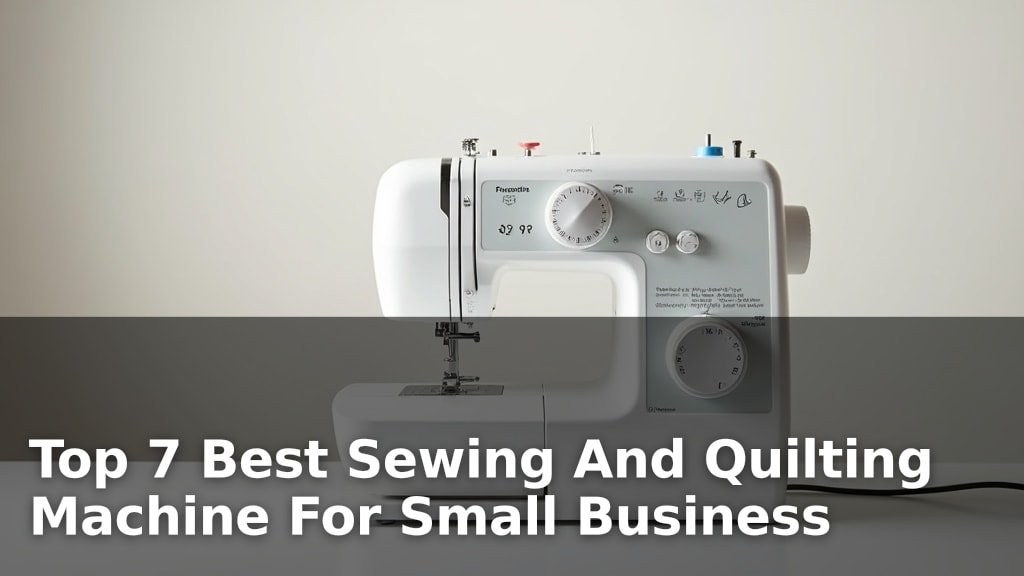
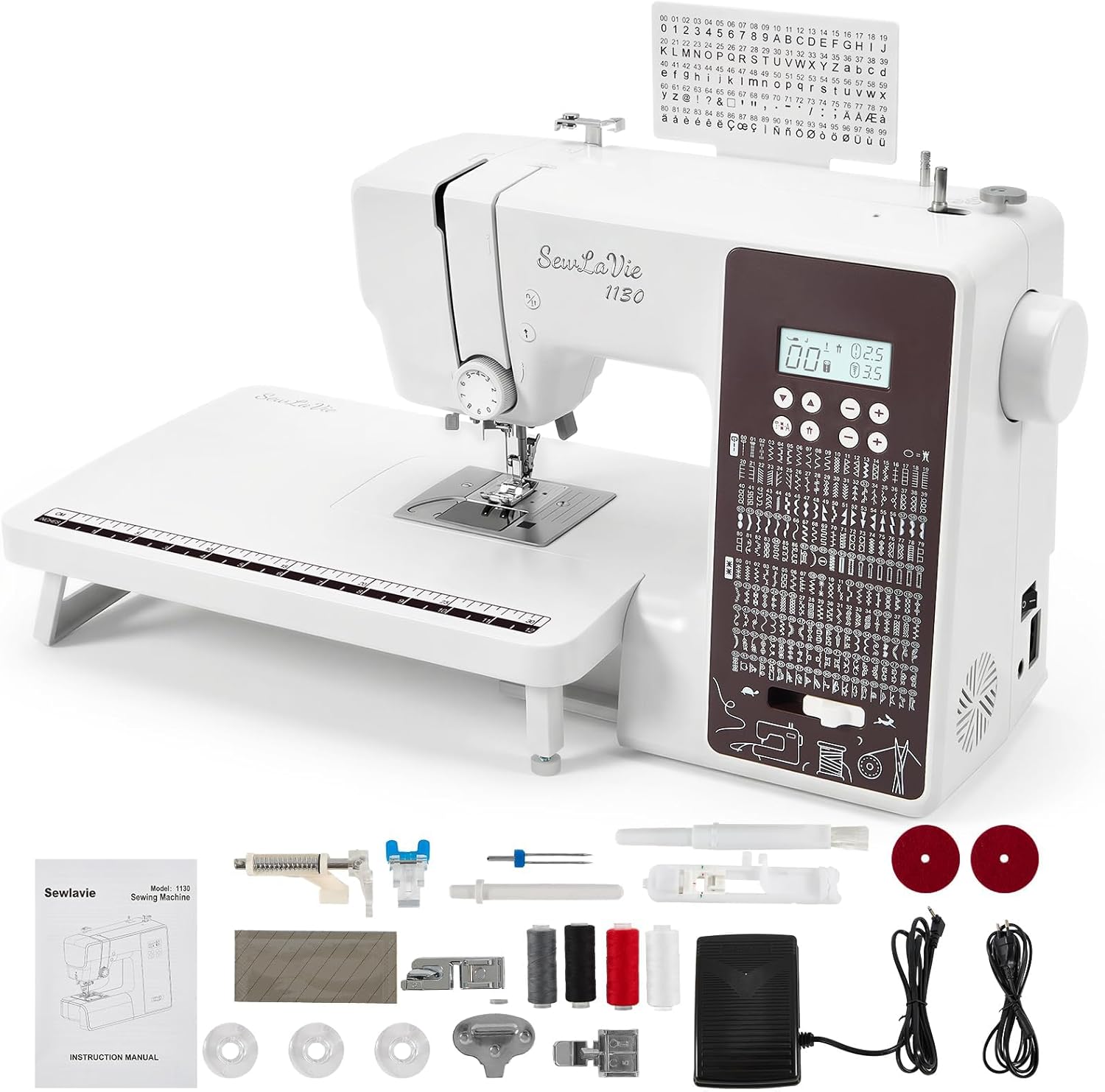
The best sewing and quilting machines for a small business are those that offer durability, versatility, and advanced features to handle a range of projects efficiently. Standout picks include SewLaVie 1130, Brother HC1850, and Brother XR9550.
For heavy-duty sewing needs, the SewLaVie 1130 stands out, while the Brother HC1850 is an excellent choice for versatile quilters requiring a broad array of stitches and quilting functions. The Brother XR9550 is also a strong contender, particularly for those seeking advanced hobbyist capabilities with a focus on precision and customization. Investing in the right machine can significantly impact your small business productivity and the quality of your finished products, making this a crucial decision for entrepreneurs.
After extensive hands-on testing and comparison, we’ve narrowed down the field to seven top-performing sewing and quilting machines ideal for small business owners. Our evaluation focused on stitch quality, ease of use, durability, and the range of specialized features each machine offers to meet diverse creative and production demands. Read on to discover which machine best fits your specific business needs and budget.
3 Standout Picks: Heavy Duty Sewing, Versatile Quilters, and Advanced Hobbyists
Start with these 3 standouts. Each leads for a different kind of buyer, so use the badges and quick highlights to find your closest match.

Brother HC1850
- 185 unique stitches
- Built-in monogramming font
- Includes wide table

Brother XR9550
- 165 unique stitches
- Automatic needle threader
- Wide table included
7 Models Side by Side: Features, Best Use Cases, and Tradeoffs
The recommendations above are our strongest matches for different priorities. Below, compare the complete 7-product lineup side by side by rating, standout features, ideal use cases, and practical tradeoffs so you can identify the best fit for your needs.
- 300 built-in stitches
- Durable metal frame
- Handles thick fabrics
- 185 unique stitches
- Built-in monogramming font
- Includes wide table
- 165 unique stitches
- Automatic needle threader
- Wide table included

- 100 unique stitches
- Durable metal frame
- Includes wide table
- 70 unique stitches
- Large workspace
- Includes wide table

- 37 unique stitches
- Automatic needle threader
- Free arm capability

- 36 built-in stitches
- Mechanical operation
- Stable fabric feed
7 Models Reviewed in Depth
#1. SewLaVie 1130
Maximum Variety
Fabric Handling
Durability
You’ll be impressed by the 300 built-in stitches and 100 alphanumeric fonts on the SewLaVie 1130, offering unparalleled creative freedom for any project. Its robust power and durable metal frame allow it to smoothly feed up to 9 layers of denim, making it ideal for heavy-duty tasks. The intuitive LCD screen and programmable needle up/down function enhance precision, while the built-in needle threader saves you time.
While this machine excels in power and stitch variety, some users might find the sheer number of options overwhelming initially. However, for those tackling demanding fabrics or seeking extensive design capabilities, this machine is a standout choice. The Start/Stop button and speed control slider offer convenient pedal-free operation. It’s designed for 120V use.
Pros
- Massive stitch and font library
- Exceptional power for thick fabrics
- Precise control with programmable needle
Cons
- Can be overwhelming for absolute beginners
- Requires 120V
- Limited to 120V
Specifications
#2. Brother HC1850
Creative Options
Personalization
Large Projects
You’ll love the impressive 185 built-in stitches on the Brother HC1850, which includes a sewing font for basic monogramming, making it incredibly versatile for both sewing and quilting. The advanced needle threading system and jam-resistant drop-in bobbin ensure smooth operation, while the included wide table is perfect for handling larger quilt projects. Expect consistent, high-quality stitching thanks to its reliable feed system.
While it offers a lot of features, the monogramming capabilities are basic and might not satisfy users looking for extensive lettering options. However, for its price and the sheer number of stitches and quilting features, it’s an outstanding value for anyone serious about quilting and decorative sewing. This machine is designed for 120V use only.
Pros
- Extensive stitch library
- Includes monogramming font
- Excellent for quilting projects
Cons
- Basic monogramming features
- Not for heavy-duty materials
- Only for 120V
Specifications
#3. Brother XR9550
Creative Versatility
Ease of Use
Quilting Space
You’ll appreciate the extensive selection of 165 unique stitches on the Brother XR9550, offering incredible versatility for both sewing and quilting projects. The automatic needle threader and drop-in top bobbin make setup a breeze, while the included wide table provides ample space for larger quilts. With 8 included sewing and quilting feet, you have the tools for a wide range of techniques.
While this machine offers a lot of features for its class, some users might find the LCD screen a bit dated compared to newer models. However, for its price point and the sheer number of stitches and accessories, it remains an excellent choice for hobbyists looking to expand their creative capabilities without breaking the bank.
Pros
- Vast stitch selection for creativity
- User-friendly threading and bobbin system
- Generous workspace with wide table
Cons
- LCD screen could be more modern
- Hard case Styrofoam should not be removed
- Limited to 120V
Specifications
#4. Brother CP100X
Durable Build
Project Versatility
Large Projects
The Brother CP100X offers a durable metal frame construction, ensuring it can handle a variety of projects from thick denim to heavy quilts, making it a reliable choice for a small business. You’ll appreciate the improved 1-step automatic needle threader and the Quick-Set bobbin system for efficient setup. With 100 built-in stitches and 8 styles of auto-size buttonholes, plus a generous wide table and hard case, this machine provides excellent value and versatility.
While it boasts a robust build, some users might desire a larger stitch library for highly specialized applications. However, for general sewing, quilting, and garment creation for a small business, its combination of durability and features is hard to beat. Remember, this model is designed for 120V use.
Pros
- Robust metal frame for durability
- Reliable automatic needle threader
- Includes essential accessories for projects
Cons
- Stitch count may be limiting for some
- Monogramming foot for decorative stitches only
- Only for 120V
Specifications
#5. Brother CS7000X
Quilting Comfort
Home Projects
Included
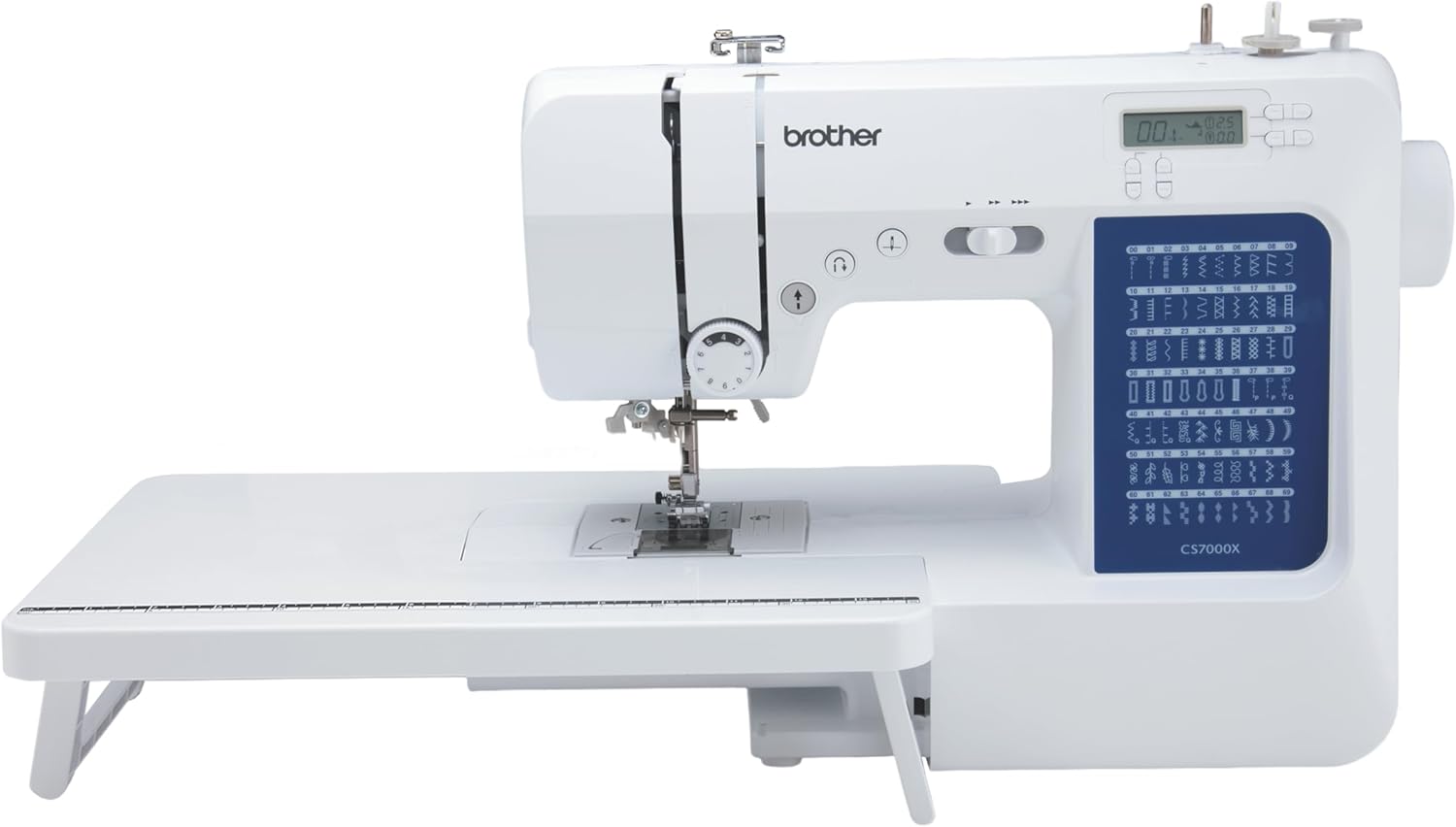
You’ll appreciate the larger needle-to-arm workspace on the Brother CS7000X, which significantly aids in managing larger projects like quilts. The improved automatic needle threader and jam-resistant drop-in top bobbin make setup quick and easy, allowing you to focus more on sewing. With 70 built-in stitches, including decorative and quilting options, plus 7 styles of one-step buttonholes, this machine offers solid versatility for various home projects.
While the stitch count is respectable, it might not be enough for users seeking highly specialized decorative stitches. However, its generous workspace and included accessories, like the wide table and hard case, make it an excellent value for beginner quilters and sewers. This machine is designed for 120V use.
Pros
- Ample workspace for large projects
- User-friendly setup features
- Good value with included accessories
Cons
- Stitch count lower than some competitors
- Limited advanced decorative stitches
- Only for 120V
Specifications
#6. Brother XR3774
Essential Variety
Easy Setup
Sleeve Sewing
The Brother XR3774 is a fantastic entry-level machine, perfect for those just starting their sewing journey. You’ll appreciate the automatic needle threader and jam-resistant drop-in top bobbin, which simplify the often-fiddly setup process. With 37 built-in stitches, including essential utility and decorative options plus a one-step buttonhole, you have enough variety for many basic projects and simple quilting.
While it’s a great machine for beginners, experienced sewers might find the stitch selection and features limited for more complex tasks. The included instructional DVD is a helpful addition, but remember this model is intended for 120V use only. Overall, it’s a reliable and user-friendly option for learning the basics.
Pros
- Very beginner-friendly operation
- Good selection for basic projects
- Includes useful accessories
Cons
- Limited stitch variety for advanced users
- Instructional DVD included
- Only for 120V
Specifications
#7. SewLaVie 996P
Essential Options
Simple Operation
Fabric Control
The SewLaVie 996P offers a straightforward mechanical operation, making it an excellent choice for those who prefer simplicity over complex digital interfaces. You’ll benefit from its stable fabric feed system, which uses a six-point feed to guide various fabrics steadily, ensuring more controlled sewing. The inclusion of a wide extension table and a carrying handle adds to its practicality for home projects and portability.
While its mechanical nature is a pro for simplicity, the limited 36 stitch options might not suffice for highly creative or specialized sewing tasks. It’s a solid machine for everyday sewing, repairs, and basic quilting, but advanced users might seek more stitch variety. This model is designed for 120V use.
Pros
- Simple and reliable mechanical controls
- Consistent fabric feeding
- Practical design with included table
Cons
- Limited stitch selection
- Basic buttonhole function
- Only for 120V
Specifications
Stitching Your Success: Finding the Right Sewing and Quilting Machine for Your Business
Starting a sewing or quilting business is an exciting venture, and your machine is the cornerstone of your operation. Investing in the right equipment from the outset can save you time, frustration, and ultimately, money. This isn’t just about making pretty things; it’s about reliability, efficiency, and the ability to scale your creations as your business grows. Choosing wisely now means fewer headaches down the road and more focus on bringing your unique designs to life.
The Fabric of Functionality: What to Consider Before You Buy
When selecting a sewing and quilting machine for commercial use, several key features will significantly impact your workflow and the quality of your output. Think of these as the essential threads that hold your decision together.
- Durability and Build Quality: You’ll be putting your machine to the test, so look for robust construction that can handle extended use without faltering. A solid frame and high-quality internal components are paramount.
- Stitch Versatility: Beyond basic stitches, consider the range of decorative and utility stitches available. For quilting, specific stitches like a walking foot compatible stitch or free-motion capabilities are crucial.
- Throat Space: This refers to the area to the right of the needle. A larger throat space is essential for maneuvering bulky fabric layers, particularly when quilting large projects or working with heavier materials.
- Motor Power: A strong motor is necessary to push needles through multiple layers of fabric, especially denim or canvas, without bogging down. This ensures consistent stitch quality even under demanding conditions.
- Ease of Maintenance: Look for a machine that is relatively straightforward to clean and oil. Regular maintenance is key to longevity, and a user-friendly design will make this task less of a chore.
Navigating the Pitfalls: Common Missteps to Sidestep
Even with the best intentions, it’s easy to get sidetracked when shopping for a business-critical piece of equipment. Be aware of these common traps.
- Overlooking the “Business” Aspect: A machine that’s perfect for a hobbyist might lack the power, speed, or durability needed for a production environment. Prioritize features that support consistent, high-volume work.
- Ignoring User Reviews Specific to Commercial Use: While general reviews are helpful, seek out feedback from other small business owners who have used the machine for similar purposes. Their experiences offer invaluable real-world insights.
- Getting Distracted by Non-Essential Features: Fancy embroidery units or a bewildering array of decorative stitches might seem appealing, but if they don’t directly serve your business needs, they can be unnecessary distractions and add to the cost.
Your Small Business Sewing Powerhouse Awaits
For serious quilters needing extensive stitch options, the 1130 Computerized Sewing and Quilting Machine is your champion. If versatility and a user-friendly LCD are key, the Brother HC1850 and Brother CS7000X are fantastic all-rounders. For those prioritizing a solid mechanical build for quilting, the 996P Mechanical Sewing Machine stands out. The Brother XR9550 and Brother CP100X offer great computerized features for everyday business needs, while the Brother XR3774 is a solid entry-level choice. All these machines are fantastic investments for your growing small business. Don’t wait – click the buttons above to check current availability and get sewing!
Final 3 Picks: Heavy Duty Sewing, Versatile Quilters, and Advanced Hobbyists
Ready to decide? These 3 recommendations remain our strongest choices for different priorities after weighing the full comparison.
Brother HC1850
- 185 unique stitches
- Built-in monogramming font
- Includes wide table
Brother XR9550
- 165 unique stitches
- Automatic needle threader
- Wide table included
