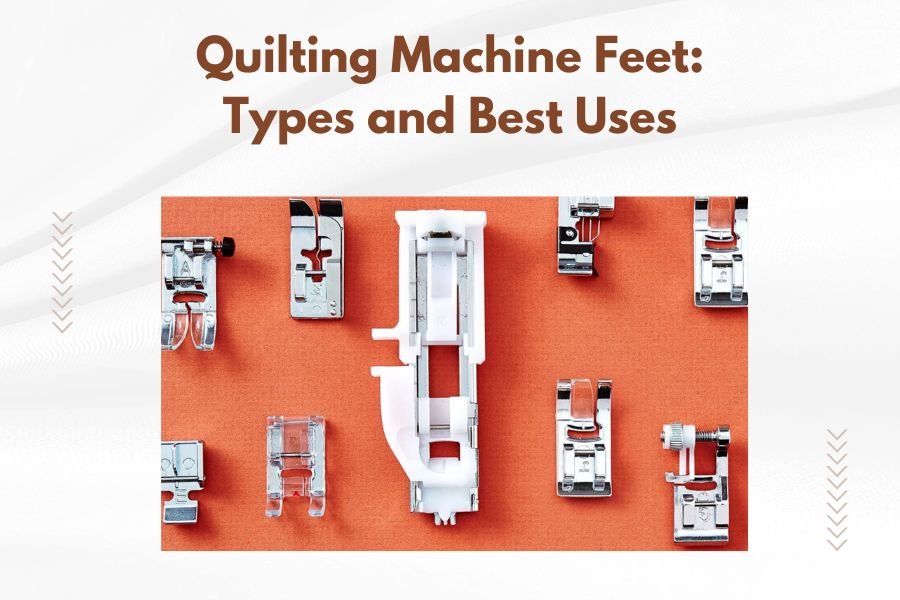
Quilting machine feet are specialized attachments that help you achieve different stitching techniques, fabric handling, and quilting patterns on your sewing machine.
The most common quilting machine feet include walking feet for even fabric feeding, free-motion feet for creative quilting, and quarter-inch feet for accurate seam allowances.
What Are Quilting Machine Feet and Why Do They Matter?
Think of quilting machine feet as specialized tools in your crafting toolkit. Just like you wouldn’t use a hammer to tighten a screw, you shouldn’t use your basic presser foot for every quilting task.
Each foot serves a unique purpose. Some help you stitch straight lines. Others let you create flowing, artistic patterns. The right foot makes your quilting smoother, faster, and more professional-looking.
Walking Foot: Your Best Friend for Layer Control
The walking foot might be the most popular quilting foot out there. And for good reason.
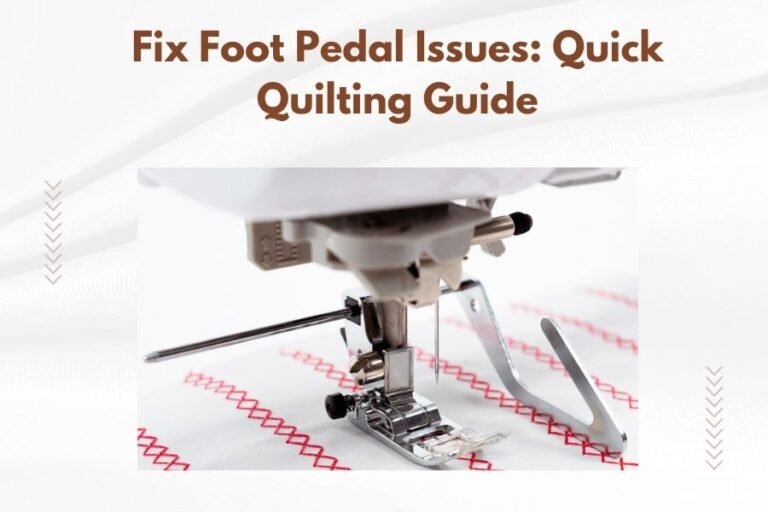
This foot has its own set of feed dogs that work with your machine’s built-in feed dogs. It grabs the top layer of fabric and moves it at the same speed as the bottom layer.
When to Use a Walking Foot
You’ll want to reach for your walking foot when working with multiple layers. It prevents puckering and shifting that can ruin hours of work.
- Straight-line quilting
- Binding attachment
- Quilting through thick batting
- Working with slippery fabrics like satin
- Matching plaids or stripes across seams
Walking Foot Benefits You’ll Notice Right Away
I found from quilting forums that people love how walking feet eliminate fabric bunching. Your quilt sandwich stays flat and even.
The foot also reduces strain on your machine’s motor. When layers move together smoothly, your machine doesn’t have to work as hard.
Free-Motion Quilting Foot: Unleash Your Creativity
Want to add artistic flair to your quilts? The free-motion foot is your gateway to creative quilting.
This foot lets you move your fabric in any direction. You control the stitch length and direction by moving the fabric manually.
Types of Free-Motion Feet
You’ll find several styles of free-motion feet. Each has its own benefits.
Open-Toe Free-Motion Foot
This foot gives you excellent visibility. You can see exactly where your needle lands, making it easier to follow quilting patterns.
Closed-Toe Free-Motion Foot
Better for beginners because it provides more stability. The closed front prevents fabric from bunching up under the foot.
Spring-Loaded Free-Motion Foot
This foot bounces up and down with each stitch. It holds the fabric down during needle penetration, then lifts to let you move the fabric freely.
Free-Motion Techniques You Can Master
- Stippling and meandering
- Feather patterns
- Custom lettering
- Floral and leaf designs
- Echo quilting around appliques
Quarter-Inch Foot: Precision for Piecing
Accurate seam allowances make or break a quilt. The quarter-inch foot takes the guesswork out of consistent seams.
This foot measures exactly 1/4 inch from the needle to the edge. You simply align your fabric edge with the foot’s edge for perfect seams every time.
Why Quarter-Inch Seams Matter
Research from quilting guilds shows that inconsistent seam allowances are the top reason blocks don’t fit together properly.
A difference of just 1/16 inch might seem tiny. But multiply that across dozens of seams, and your blocks can be off by inches.
Types of Quarter-Inch Feet
Basic Quarter-Inch Foot
Simple and effective. The right edge sits exactly 1/4 inch from your needle position.
Quarter-Inch Foot with Guide
Features a raised edge or flange that helps keep your fabric aligned. Great for beginners or when working with difficult fabrics.
Zipper Foot: Not Just for Zippers
Don’t overlook the humble zipper foot for your quilting projects. This narrow foot lets you stitch close to raised edges.
Quilting Uses for Zipper Feet
- Installing piping in pillows
- Sewing close to thick seams
- Attaching prairie points
- Working around bulky intersections
Darning Foot: Perfect for Repairs and Applique
The darning foot works similarly to a free-motion foot but with a different purpose. You’ll use it for mending holes or creating textured surfaces.
Many quilters also use darning feet for thread painting and detailed applique work.
Roller Foot: Smooth Sailing with Difficult Fabrics
Some fabrics seem determined to stick to everything. Leather, vinyl, and heavily textured materials can be nightmare to quilt.
The roller foot has small wheels instead of a flat surface. These wheels roll smoothly over sticky or textured materials.
When You’ll Appreciate a Roller Foot
- Quilting with leather or suede
- Working with plastic or vinyl
- Heavily textured decorator fabrics
- Fabrics treated with stabilizers
Comparing Popular Quilting Feet
| Foot Type | Best For | Skill Level | Key Benefit |
|---|---|---|---|
| Walking Foot | Straight lines, binding | Beginner | Even feeding |
| Free-Motion | Creative quilting | Intermediate | Artistic freedom |
| Quarter-Inch | Piecing blocks | Beginner | Accurate seams |
| Zipper Foot | Close stitching | Beginner | Tight access |
| Roller Foot | Sticky fabrics | Intermediate | Smooth gliding |
How to Choose the Right Foot for Your Project
Picking the right foot depends on what you’re trying to accomplish. Ask yourself these questions:
What Type of Quilting Are You Doing?
Straight-line quilting calls for a walking foot. Free-form designs need a free-motion foot. Piecing blocks requires a quarter-inch foot.
What Fabrics Are You Using?
Thick or multiple layers work best with walking feet. Slippery fabrics might need a roller foot or walking foot.
What’s Your Skill Level?
New quilters should start with walking feet and quarter-inch feet. Free-motion quilting takes practice to master.
Tips for Using Quilting Feet Successfully
Getting great results with specialized feet takes more than just attaching them to your machine.
Test First
Always test your foot on scraps before starting your actual project. This helps you adjust tension, stitch length, and speed.
Mind Your Speed
Different feet work best at different speeds. Walking feet can handle normal speeds. Free-motion feet often work better at moderate to fast speeds.
Check Your Needle Position
Some feet require specific needle positions. Quarter-inch feet especially need proper needle placement for accurate measurements.
Caring for Your Quilting Feet
Good feet can last for years with proper care. Clean them regularly to remove lint and thread bits.
Store feet in their original boxes or a organized container. This prevents damage and helps you find the right foot quickly.
When to Replace Quilting Feet
Look for signs of wear like rough edges, bent parts, or loose screws. Damaged feet can snag fabric or create uneven stitches.
Building Your Foot Collection
You don’t need every foot right away. Start with essentials and add specialized feet as your skills grow.
Essential Feet for Beginners
- Walking foot
- Quarter-inch foot
- Basic free-motion foot
Advanced Feet to Add Later
- Roller foot
- Multiple free-motion foot styles
- Specialty binding feet
- Piping feet
Common Mistakes to Avoid
Even experienced quilters make foot-related mistakes. Here are the big ones to watch out for.
Using the Wrong Foot for the Job
Your regular presser foot might seem fine for everything. But specialized feet really do make a difference in quality and ease.
Forcing Difficult Combinations
Some fabric and foot combinations just don’t work well. If you’re fighting your machine, try a different foot.
Ignoring Tension Adjustments
Different feet sometimes need different tension settings. Don’t assume your usual settings will work for every foot.
Troubleshooting Common Issues
Running into problems with your quilting feet? Here are quick fixes for common issues.
Skipped Stitches
Try a different needle or check that your foot is properly attached. Some feet work better with specific needle types.
Uneven Feeding
Clean your feed dogs and check for lint buildup under your foot. Sometimes a simple cleaning solves feeding problems.
Thread Breaking
Check your thread path and tension. Some feet change how thread flows through your machine.
Conclusion
Quilting machine feet transform your sewing machine into a versatile quilting powerhouse. The right foot makes difficult techniques manageable and good quilting even better.
Start with essential feet like walking feet and quarter-inch feet. Add specialized options as your skills and interests grow. Remember that quality feet last for years and improve every project you make.
Don’t be afraid to experiment with different feet on practice fabric. Each foot has its own personality and preferred techniques. The more you use them, the more natural they’ll feel.
What’s the difference between a walking foot and a regular presser foot?
A walking foot has its own feed dogs that move the top fabric layer, while regular presser feet rely only on your machine’s bottom feed dogs. This prevents layers from shifting during quilting.
Can I use free-motion feet on any sewing machine?
Most modern sewing machines accept free-motion feet, but you need to be able to drop or cover your machine’s feed dogs. Check your manual to see if your machine has this feature.
How do I know if my quarter-inch foot is accurate?
Test it by sewing a seam on scrap fabric, then measuring the distance from the stitching line to the fabric edge. It should measure exactly 1/4 inch for accurate piecing.
Why does my walking foot make noise when I sew?
Walking feet have moving parts that create more sound than regular feet. Light clicking or whirring is normal, but loud grinding or banging indicates a problem that needs attention.
Do I need different feet for different machine brands?
Yes, presser feet are usually brand-specific because attachment systems vary. Some universal feet fit multiple brands, but brand-specific feet typically offer the best fit and performance.