
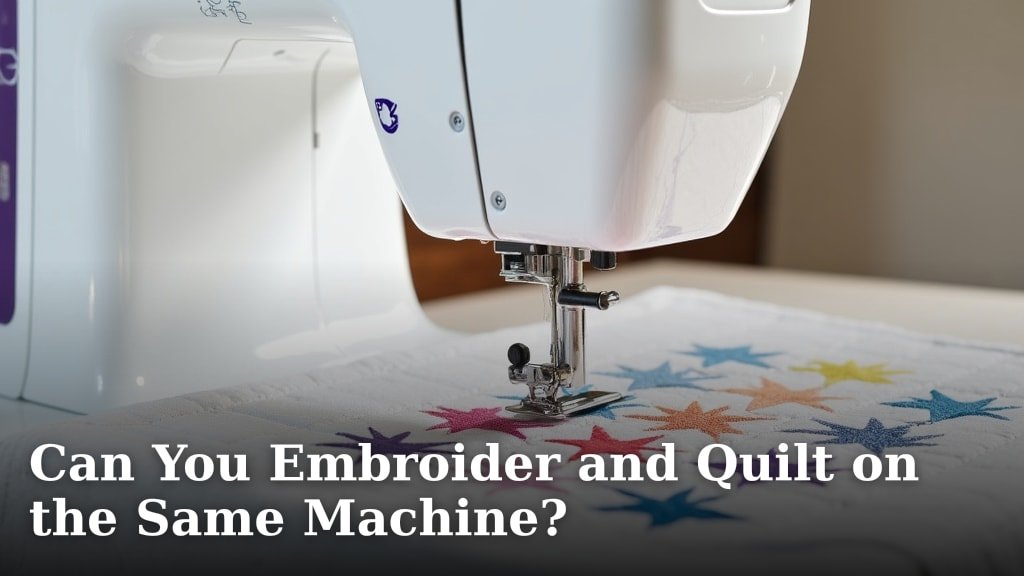
Yes, you can absolutely embroider and quilt on the same machine, provided it’s a model designed for both functions. Many modern sewing machines offer this dual capability, giving you great versatility for your projects. It saves space and money, which is always a plus.
These specialized machines are often called “combo” or “sewing and embroidery” machines. They come with different accessories and settings to handle the unique demands of both quilting and embroidery. You’ll find features like a larger throat space for quilting and an embroidery unit for decorative stitches.
TL;DR:
- Many machines can do both.
- Look for “combo” or “sewing and embroidery” models.
- These machines save space and money.
- They have specific features for each craft.
- You’ll need different accessories for each task.
We’ll walk you through everything you need to know about using one machine for both embroidery and quilting. Let’s see how you can get the most out of your versatile machine.
Understanding Combination Sewing and Embroidery Machines
You’re wondering if a single machine can handle both your quilting and embroidery passions. The good news is, yes, many modern machines are designed precisely for this! These versatile tools are often called “combo” machines. They truly are like having two machines in one, saving you both space and money. But how do they actually work?
What Makes a Machine Dual-Purpose?
A machine that can both quilt and embroider has a clever design. It combines the robust sewing capabilities needed for quilting with the precise, automated movements required for embroidery. Think of it as a chameleon, adapting to your project’s needs. You’ll find that these machines come with specific features and accessories for each craft.
The Sewing and Quilting Aspect
For quilting, you need a machine that can handle multiple layers of fabric and batting. This means a strong motor and good needle penetration. You’ll also want a spacious work area. We found that a larger throat space is essential for maneuvering bulky quilts (American Sewing Guild). This is the distance from the needle to the machine’s body. A wider space means less wrestling with your quilt top.
- Powerful Motor: Ensures consistent stitching through thick layers.
- Walking Foot: Helps feed multiple layers evenly, preventing puckering.
- Quilting Stitches: Often includes decorative stitches for free-motion quilting.
- Knee Lift: A handy feature to raise the presser foot without using your hands.
The Embroidery Aspect
When it comes to embroidery, precision is key. These machines come with a special embroidery unit that attaches to the machine. This unit controls the hoop, moving it under the needle to create intricate designs. It’s like having a robotic artist at your fingertips. You’ll download designs or create your own, and the machine brings them to life.
- Embroidery Unit: The attachment that holds the hoop and moves it.
- Hoops: Come in various sizes to secure your fabric.
- Design Capabilities: Built-in designs and options to upload more.
- Stitch Speed Control: Lets you slow down for delicate work.
Comparing Dedicated Machines vs. Combo Machines
You might be wondering if a combo machine truly stacks up against two separate, dedicated machines. It’s a fair question. Each option has its own set of advantages. Let’s look at a simple comparison to help you decide.
| Feature | Dedicated Quilting Machine | Dedicated Embroidery Machine | Combo Machine |
|---|---|---|---|
| Space Requirement | Moderate | Moderate | Low (one machine) |
| Cost | Moderate to High | Moderate to High | Moderate to High (single purchase) |
| Throat Space | Often Very Large | Small to Moderate | Good (often large) |
| Embroidery Field Size | N/A | Often Very Large | Good (can be large) |
| Convenience | Single Function | Single Function | High (switch functions) |
| Learning Curve | Specific to quilting | Specific to embroidery | Broader skillset needed |
As you can see, a combo machine offers a good balance. It won’t typically have the absolute largest embroidery field or the biggest throat space available, but it provides a strong all-around performance for both crafts. It’s a great choice if you have limited space or want to explore both hobbies without buying two expensive machines.
Key Features to Look for in a Combo Machine
When you’re shopping for a combo machine, you’ll encounter a lot of features. It can feel a bit overwhelming. But focusing on a few key areas will help you find the perfect match for your creative needs. Think about what you’ll be doing most often and what features will truly enhance your experience.
Throat Space and Harware Considerations
For quilters, throat space is paramount. It’s the area to the right of the needle. The wider it is, the easier it is to manage a large quilt top without bunching. We recommend looking for at least 8-10 inches of throat space for comfortable quilting. Some machines offer even more. Also, consider the overall build quality. A heavier machine often means more stability, especially when quilting at higher speeds.
Stitch Quality and Variety
Good stitch quality is essential for both quilting and embroidery. You want stitches that are consistent, even, and strong. Look for machines that offer a wide variety of utility stitches for piecing and appliqué, as well as decorative stitches for free-motion quilting. For embroidery, check the number of built-in designs and the machine’s ability to import new ones.
- Straight Stitch: A fundamental stitch that must be perfect.
- Zigzag Stitch: Versatile for finishing edges.
- Buttonhole Stitches: Handy for clothing or bag making.
- Decorative Stitches: For embellishing quilts or embroidery projects.
Embroidery Capabilities You’ll Appreciate
The embroidery unit is where the magic happens for your decorative projects. Its size and ease of use are very important. You’ll want a machine with a good sized embroidery field. This determines the maximum design size you can stitch without re-hooping.
Embroidery Field Size and Hoops
The size of the embroidery area is dictated by the largest hoop the machine can accommodate. A larger embroidery field gives you more freedom for complex designs. While you can usually do larger designs by re-hooping, a single, larger field saves time and ensures better alignment. Many experts recommend at least a 5″x7″ embroidery field for good versatility.
- Multiple Hoop Sizes: Useful for different project scales.
- Hoop-less Embroidery: Some advanced machines offer this for very large designs.
- Design Editing: The ability to resize, rotate, and combine designs on the machine screen.
Connectivity and Software
Modern combo machines often come with USB ports, allowing you to easily transfer embroidery designs from your computer. Some even have Wi-Fi connectivity. The accompanying software can be a big plus. It lets you organize designs, edit them, and even create your own from scratch. This can be a game-changer for personalizing your projects.
Ease of Use and User Interface
Even the most feature-rich machine can be frustrating if it’s not intuitive to use. Look for a machine with a clear, easy-to-navigate touchscreen. Many machines offer tutorials built right in. You want to spend your time creating, not wrestling with complex settings. Consider features like automatic needle threading and automatic thread cutting; they save so much time and effort!
Here’s a quick checklist of user-friendly features to consider:
- Intuitive Touchscreen: Easy to read and navigate.
- Automatic Needle Threader: A true time-saver for your eyes.
- Automatic Thread Cutter: Snips threads with a touch of a button.
- Top-Loading Bobbin: Easy to insert and monitor thread levels.
- Adjustable Presser Foot Pressure: Important for different fabric thicknesses.
- Clear Lighting: Illuminates your workspace well.
Remember, a machine that’s a joy to use will encourage you to create more. Don’t compromise on features that make your creative process smoother and more enjoyable.
Conclusion
You now know that yes, you can absolutely embroider and quilt on the same machine. These combo machines offer incredible flexibility. They help you save space and money while pursuing both your quilting and embroidery passions. We discussed how to look for key features like a good throat space and capable embroidery unit.
Focus on what matters most for your projects. Consider stitch quality, connectivity, and ease of use. By choosing wisely, you’ll find a machine that brings your creative visions to life. Take the time to research and pick the perfect dual-purpose machine for your crafting journey.
Frequently Asked Questions
Are combo sewing and embroidery machines hard to learn?
Learning to use a combo machine might take a little time. You are learning two different crafts on one device. However, many models have intuitive touchscreens and built-in tutorials. This makes the learning process much smoother for you.
Can I upgrade a regular sewing machine to do embroidery?
No, you generally cannot upgrade a standard sewing machine to perform embroidery. Embroidery requires specialized hardware. This includes an embroidery unit and a hoop attachment. These features are only found on machines designed for embroidery.
Do combo machines cost more than buying two separate machines?
Often, a high-quality combo machine can be a more cost-effective option than buying two separate, dedicated machines. You’re making a single investment. This typically saves you money in the long run, especially for mid-range models.
What kind of maintenance does a combo machine need?
Like all sewing machines, combo models need regular cleaning and oiling. Refer to your machine’s manual for specific instructions. Proper maintenance ensures smooth operation and extends the life of your machine for both quilting and embroidery.
Can I use any embroidery design with my combo machine?
Most combo machines support standard embroidery file formats. You can often download or create designs and transfer them via USB. Always check your machine’s specifications for compatible file types and maximum design sizes.
