
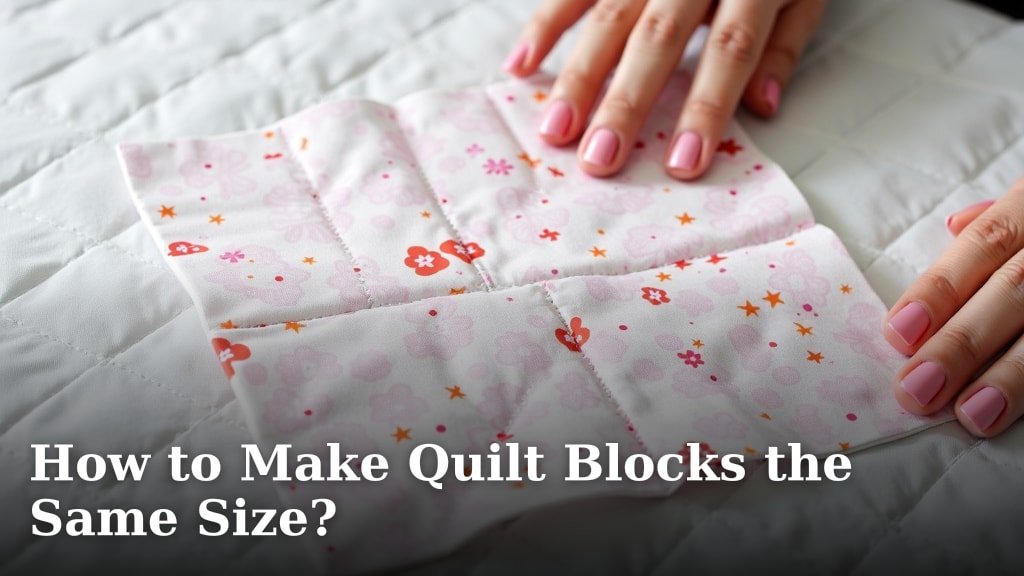
The easiest way to make quilt blocks the same size is to cut your fabric accurately and use a consistent sewing seam allowance. This ensures that even after stitching, your blocks will measure exactly what you need them to be. Perfectly sized blocks are the foundation of a beautiful quilt.
Getting your quilt blocks to match in size can feel tricky at first. It’s a common challenge for quilters of all levels. The good news is that with a few key techniques, you can achieve that desired uniformity for every block. Many quilters find success by focusing on precise cutting and stitching. Many quilters find success by focusing on precise cutting and stitching, and our guide can help you learn how to sew straight lines.
- Always measure twice and cut once.
- Use a quilting ruler and a rotary cutter.
- Be consistent with your 1/4-inch seam allowance.
- Trim your blocks after piecing for perfect edges.
Let’s walk through exactly how to get your quilt blocks to be the same size, step by step.
Achieving Perfectly Sized Quilt Blocks Every Time
Making your quilt blocks all the same size is essential for a professional-looking quilt. It might seem like a daunting task, but it’s absolutely achievable with a little attention to detail. We’ve found that consistent accuracy in cutting and sewing is the bedrock of this skill. Let’s break down the most effective strategies. Making your quilt blocks all the same size is essential for a professional-looking quilt, and learning how to piece a quilt top is the next step.
The Importance of Precision Cutting
Your rotary cutter and quilting ruler are your best friends when it comes to block accuracy. Cutting fabric precisely sets you up for success before you even sew a single stitch. Imagine building a house; if your foundation isn’t level, the whole structure will be off. The same applies to quilting blocks. Your fabric pieces need to be exact for everything to line up later.
Choosing the Right Tools for Accurate Cuts
Using a high-quality rotary cutter and a sturdy quilting ruler is non-negotiable. A dull blade can drag and create an uneven edge. A flimsy ruler might slip, leading to inaccurate measurements. Many quilters swear by rulers with a clear grid and non-slip backing for extra stability. We found that investing in good tools makes a noticeable difference in the end result.
Mastering the Rotary Cutting Technique
When you cut, take your time. Lay your fabric flat and smooth out any wrinkles. Place your ruler firmly on the fabric. Ensure the edge of the ruler aligns perfectly with the measurement you need. Hold the ruler steady with one hand. With the other, guide your rotary cutter along the edge of the ruler. Make sure you use enough pressure to cut through the fabric in one smooth motion. We found that a gentle, consistent pressure works best. Don’t saw back and forth; a single, firm pass is ideal.
Always place your cutting mat on a stable surface. This prevents wobbling. Measure twice, cut once is more than just a saying in quilting; it’s a mantra. A small error in cutting can magnify as you create more blocks.
Understanding Fabric Grain
It’s also important to pay attention to the fabric grain. Most quilting patterns assume you’re cutting with the grain, which runs parallel
Conclusion
You’ve learned that achieving uniform quilt blocks is all about careful preparation. Precise cutting with good tools and a consistent 1/4-inch seam allowance are your key allies. Don’t forget that trimming blocks after piecing offers a final layer of perfection. Keep practicing these techniques, and you’ll soon find your quilt blocks consistently matching in size. Your next step is to gather your favorite fabrics and try out these methods on your very next project. You’ve got this!
Frequently Asked Questions
How much extra fabric should I add for trimming?
We’ve found it’s wise to add about 1/4 inch to each side of your cut piece before you start sewing. This gives you enough wiggle room to trim it down perfectly after piecing. This extra fabric ensures you don’t accidentally trim away your seam allowance.
What if my blocks are slightly different sizes?
Don’t worry! A small difference can often be fixed. You can carefully trim the larger blocks down to match the smallest one. Use your quilting ruler and rotary cutter for this. Aim for accuracy even when correcting mistakes.
Does the type of fabric affect block size?
Yes, it can. Some fabrics, like certain cottons, are more prone to stretching than others. We’ve learned that being extra gentle when cutting and sewing stretchy fabrics helps maintain their shape. Always ensure your fabric is smooth and lies flat.
How often should I replace my rotary cutter blade?
A dull blade can ruin your accuracy. We recommend changing your rotary cutter blade at least every few months, depending on how much you quilt. You’ll know it’s time when you have to press harder to cut through fabric. A sharp blade makes all the difference.
Can I use scissors to cut my quilt blocks?
While you can use scissors, a rotary cutter and ruler are far superior for making quilt blocks the same size. Scissors can easily cause fabric to shift, leading to uneven edges. For consistent results, investing in a good rotary cutter setup is highly recommended.
