
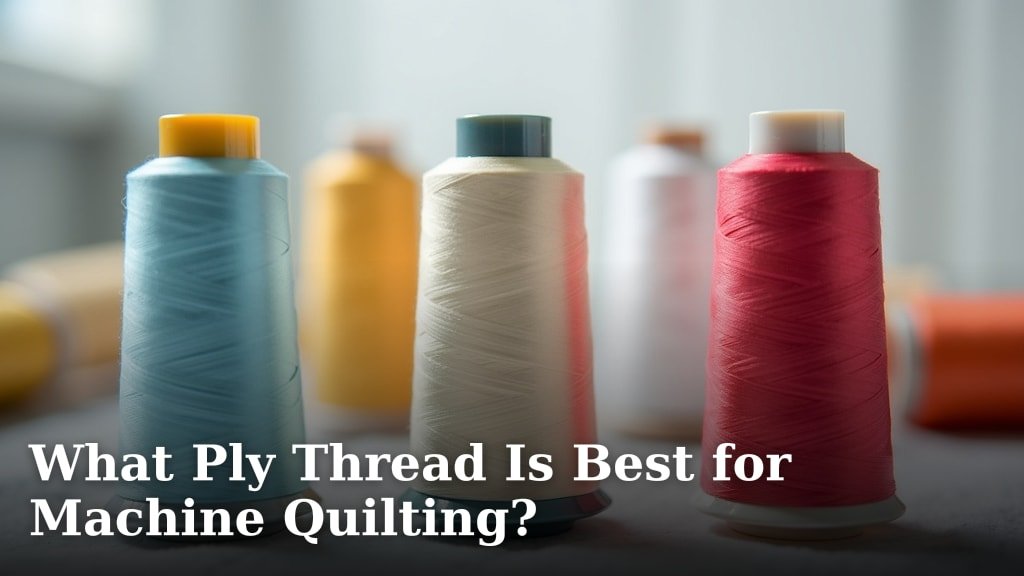
For machine quilting, a 30wt or 40wt 100% cotton thread is often considered best for most projects. These weights offer a good balance of strength and visibility, making them versatile for various quilting styles. The ideal ply thread for machine quilting ultimately depends on your specific project needs. Our guide to the best thread for quilting offers a comprehensive look at all the factors that influence your choice.
You want a thread that is strong enough to withstand the quilting process without breaking, but also thin enough to not add too much bulk. Many quilters find that cotton threads provide a beautiful matte finish that blends well with fabric. We found that thread weight and fiber type are key considerations for successful machine quilting.
- 30wt or 40wt cotton thread is generally recommended.
- Consider polyester for more durability and shine.
- Think about visibility: match or contrast with your fabric.
- Always test your thread on a scrap piece first.
Let’s dive into the details so you can choose the perfect ply thread for your next machine quilting masterpiece.
Choosing the Right Thread for Machine Quilting
You’re ready to quilt, but which thread should you pick? It’s a common question. The “best” thread for machine quilting really depends on what you want your finished project to look like and how durable you need it to be. We found that the main things to think about are the You might also be wondering if you can quilt with a regular sewing machine, which is often possible with the right setup.fiber type, thread weight, and color.
Each type of thread offers different qualities. Understanding these differences will help you make a confident choice. Let’s break down the options so you can find your perfect match.
Understanding Thread Weights
Thread weight can be a bit confusing at first, but it’s really quite simple. It tells you how thick or thin a thread is. The smaller the number, the thicker the thread. The larger the number, the finer the thread. For example, a 30wt thread is thicker than a 40wt thread.
This “weight” is based on how many kilometers of thread it takes to weigh one kilogram. Don’t worry about the math! Just remember that lower numbers mean thicker threads. We found this system helps you quickly compare thread sizes across different brands.
Common Weights for Quilting
You’ll often see threads in weights like 30wt, 40wt, 50wt, and sometimes even 60wt. Each has a specific use in quilting:
- 30wt Thread: This is a heavier thread. It creates a more pronounced, textural stitch. Use it when you want your quilting to stand out. It’s great for decorative topstitching.
- 40wt Thread: This is a very popular choice for machine quilting. It offers a good balance. It’s visible enough to show off your stitches but not so thick that it adds too much bulk. Many quilters consider it their go-to.
- 50wt Thread: A finer thread that blends into your fabric more easily. It’s excellent when you want your piecing to be the star, or when you’re quilting delicate fabrics. It produces a soft, less noticeable texture.
- 60wt Thread: This is a very fine thread. It’s nearly invisible and perfect for “stitch in the ditch” quilting where you want the thread to disappear. It’s also good for appliqué.
Choosing the right weight helps achieve your desired aesthetic. Think about whether you want your stitches to pop or to blend away.
Exploring Fiber Types for Quilting Thread
Beyond weight, the material your thread is made from plays a huge role. Each fiber has unique properties. These properties affect how the thread performs, how it looks, and how long your quilt will last. Let’s look at the most common types.
Cotton Thread: The Classic Choice
Cotton thread is a favorite among quilters, and for good reason. It’s natural and has a lovely matte finish. This means it doesn’t shine. This matte look blends beautifully with most quilting fabrics, which are often 100% cotton themselves.
Cotton thread can be very strong, especially when mercerized. Mercerization is a process that strengthens the fibers and makes them more lustrous. We found that 100% long-staple cotton thread is often recommended because it has fewer lint particles and is less prone to breaking (National Quilting Association).
- Pros: Matches cotton fabrics well, natural look, strong, good for heirloom quilts, comes in many colors.
- Cons: Can produce more lint than other threads, some brands may break easily if not good quality.
Polyester Thread: Strength and Shine
Polyester thread is known for its durability. It’s stronger than most cotton threads of the same weight. It also has a bit of a sheen, which some quilters love. This shine can add a subtle sparkle to your quilting stitches.
Polyester threads are generally lint-free and resistant to shrinking and fading. We found that modern polyester threads are designed to be smooth and strong, making them a reliable choice. They are often a good option for quilts that will see a lot of use or washing.
- Pros: Very strong, durable, low lint, colorfast, resistant to mildew, adds subtle shine.
- Cons: Can sometimes cut into cotton fabric over time if it’s too strong and the cotton is weaker.
Rayon and Other Specialty Threads
While cotton and polyester are the workhorses, you might encounter other threads for special effects.
- Rayon Thread: This thread is incredibly shiny. It’s often used for embroidery or decorative quilting where you want a high-luster effect. It’s not as strong as polyester, so use it carefully.
- Metallic Thread: For a true sparkle, metallic threads are your choice. They can be tricky to work with. Use a larger needle and reduce your machine’s tension to prevent breakage. They add a real “wow” factor.
- Monofilament Thread: This is a single-strand, translucent thread, similar to fishing line. It’s used when you want the quilting to be nearly invisible. It comes in clear or smoke colors. Some quilters find it a little stiff to work with.
These specialty threads are wonderful for adding unique touches to your projects. Don’t be afraid to experiment when you want something extra special.
Matching Thread to Fabric and Project Goals
Now that you know about weights and fibers, how do you put it all together? Your project’s purpose and the fabric you’re using should guide your final decision. You want a harmonious relationship between your thread and your quilt top.
Consider the final use of your quilt. Is it a wall hanging? A baby quilt? A bed quilt that will be used every day? This helps you think about durability and appearance.
Visual Impact: To Blend or To Stand Out?
Do you want your quilting stitches to be a subtle texture, or do you want them to be a bold design element? This is a key question.
- Blending: Choose a finer thread (50wt or 60wt) in a color that matches your fabric exactly. Cotton is great for a matte blend. Monofilament thread is the ultimate blander.
- Standing Out: Opt for a thicker thread (30wt or 40wt) in a contrasting color. Polyester can add a slight sheen. Rayon and metallic threads will certainly draw attention.
Sometimes, a variegated thread (one with multiple colors along its length) can offer both blending and contrasting effects, creating a beautiful transition across your quilt.
A Quick Checklist for Thread Selection
When you’re standing in front of the thread rack, run through these quick questions:
- What fiber is my quilt top? (Cotton usually pairs best with cotton thread.)
- How visible do I want my stitches to be? (Thicker for visible, thinner for invisible.)
- Does my project need to be extra durable? (Polyester is a good choice here.)
- What aesthetic am I going for? (Matte, shiny, sparkly?)
- Have I tested this thread on a scrap piece of fabric? (Always, always do this!)
Answering these questions will help narrow down your choices and lead you to the perfect thread for your quilting adventure. Remember, there’s no single “right” answer for every project, only the right answer for *your* project.
Tips for Working with Different Threads
Even with the perfect thread choice, some threads require a little extra care. It’s like learning to drive a new car; a few adjustments make all the difference. We found that small changes to your machine settings can prevent frustration.
Needle Selection Matters
Your needle and thread are a team. They need to work well together. A general rule of thumb is to use a larger needle for thicker threads and a smaller needle for finer threads. Using the wrong size can lead to skipped stitches, thread breakage, or damage to your fabric.
- Universal Needle: A good all-purpose needle for many threads.
- Quilting Needle: Designed with a sharp point to easily pierce multiple layers of fabric.
- Topstitching Needle: Has a larger eye and a deeper groove, great for thicker or specialty threads like metallics.
Always start with a new, sharp needle for each project. A dull needle can cause more problems than you might imagine.
Adjusting Machine Tension
Thread tension is often the culprit behind stitch problems. When you switch thread types or weights, you might need to adjust your machine’s tension settings. Thicker threads usually require slightly looser tension, while finer threads might need a bit more. We found that experimenting on a scrap sandwich (like your actual quilt layers) is the best way to get it just right.
Take your time and stitch a few lines. Check both the top and bottom stitches. They should look balanced and even. If you see loops or pulls, adjust your tension one small number at a time until it looks perfect. It’s a bit like tuning a guitar; a little tweak makes a big difference.
Comparing Popular Thread Options
To help you visualize the choices, here’s a quick comparison of some common options you might consider. This table summarizes the key characteristics we’ve discussed.
| Thread Type | Common Weights | Key Characteristics | Best For |
|---|---|---|---|
| 100% Cotton | 30wt, 40wt, 50wt | Matte finish, natural look, good strength, some lint | Traditional quilting, matching cotton fabrics, heirloom quilts |
| Polyester | 30wt, 40wt, 50wt | Strong, durable, low lint, subtle sheen, colorfast | High-use quilts, modern quilts, added durability |
| Rayon | 40wt | High sheen, vibrant colors, decorative | Embroidery, decorative topstitching, accent quilting |
| Monofilament | Clear, Smoke | Nearly invisible, single strand, can be stiff | “Stitch in the ditch,” invisible quilting, appliqué |
This table can serve as a quick reference when you’re planning your next quilting project. It helps reinforce what each thread type brings to the table.
Conclusion
Choosing the best ply thread for machine quilting doesn’t have to be overwhelming. You’ve learned that a 30wt or 40wt 100% cotton thread is a great starting point for most projects. However, your project’s specific needs, desired durability, and aesthetic vision should always guide your final choice.
Remember to consider thread weight, fiber type, and how visible you want your stitches to be. We found that testing your chosen thread on a scrap fabric sandwich is the single most important step. Now, go confidently choose your thread and create something beautiful!
Frequently Asked Questions
Is 100% cotton thread strong enough for machine quilting?
Yes, 100% cotton thread is generally strong enough, especially if it’s a good quality, long-staple cotton. For quilts that will see a lot of use, you might consider mercerized cotton for added strength.
Can I mix different thread types in the same quilt?
You can mix thread types, but it’s often best to use the same type in your bobbin as on top to maintain consistent tension. For decorative elements, you can certainly use specialty threads alongside your main quilting thread.
What does “ply” mean when referring to thread?
Ply refers to the number of strands twisted together to make a single thread. For example, a 3-ply thread means three individual strands are twisted. This contributes to the thread’s strength and overall thickness.
Why does my thread keep breaking during machine quilting?
Thread breakage can be frustrating. Common culprits include using a dull or incorrect needle, incorrect machine tension, using a thread that is too old or poor quality, or sewing too fast. Try a fresh needle and adjust your tension.
Should I use the same thread color in the bobbin as on top?
For most machine quilting, using a bobbin thread that matches your top thread color (or your backing fabric) is recommended. This helps ensure your stitches look consistent on both sides of the quilt.
