
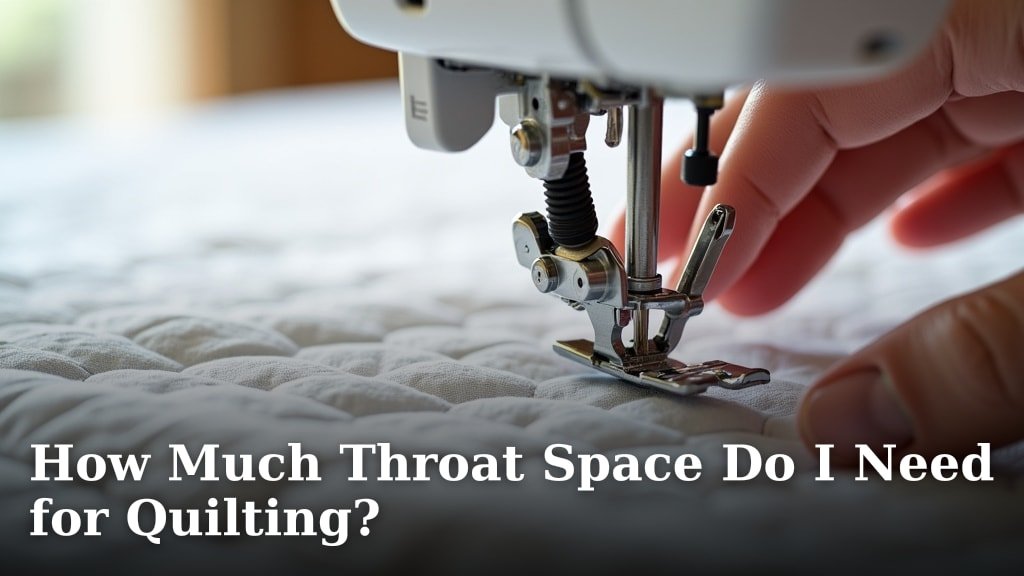
For most quilters, you’ll need at least 8 to 12 inches of throat space for comfortable quilting. This allows enough room to maneuver your quilt layers. Bigger projects, like king-sized quilts, might even require 15 inches or more.
The ideal throat space for quilting truly depends on the size of your projects and your specific quilting style. A machine with more space gives you greater freedom. It makes managing large quilt tops much less of a struggle.
- Throat space matters most for large quilts.
- Small projects need less room.
- Consider your typical quilt size.
- More space equals easier movement.
Let’s dive into understanding throat space and help you figure out what’s best for your quilting adventures.
Understanding Quilting Machine Throat Space
Throat space on your sewing machine is the open area to the right of the needle. Think of it as the workspace where your quilt gets folded and moved around. It’s the distance between the needle and the machine’s inner arm.
This space is critical for quilters, especially when working on larger projects. A generous throat space means less wrestling with bulky fabric. It allows you to quilt more freely and with better control.
Why Does Throat Space Matter So Much?
Imagine trying to draw a masterpiece on a tiny notepad. You’d be constantly adjusting, folding, and getting frustrated. Quilting is similar.
When you’re quilting, you’re not just sewing two layers of fabric. You’re handling a quilt sandwich: the top, batting, and backing. This creates a fair amount of bulk. More throat space gives this bulk somewhere to go, preventing it from getting bunched up and making your job harder.
The Impact of Quilt Size on Your Needs
The size of your typical quilt project is the biggest factor in deciding how much throat space you need. What do you love to make? Baby quilts? Bedspreads? Wall hangings?
A smaller quilt top, like a baby quilt or a table runner, can often be managed with less throat space. But as projects grow, so does your need for more room.
Smaller Quilts: Less Demanding on Space
If you mainly make things like placemats, small wall hangings, or baby quilts, you might be surprised at how little throat space you truly need. A standard sewing machine, often with 6-7 inches of throat space, can be perfectly adequate.
You’ll still need to learn how to roll or fold your quilt neatly, but the smaller size makes this much easier to handle. Don’t feel pressured to buy a huge machine if your projects are consistently small.
Medium to Large Quilts: Where Space Becomes Key
For throw quilts, twin-sized bed quilts, or even full-sized quilts, you’ll start to feel the pinch with a smaller throat. This is where 8 to 12 inches of space truly shines. It allows for more comfortable maneuvering.
Many quilters find this range to be a sweet spot. It offers enough room for most projects without requiring a specialty machine. We found that machines in this category are very popular among hobbyist quilters.
King-Sized or Art Quilts: The Need for Ample Room
If you dream of quilting king-sized bedspreads or large, elaborate art quilts, you’ll want to aim for the most throat space possible. Machines with 15 inches or more are designed for these types of large-scale projects.
These larger machines are often called “long-arm machines” or “mid-arm machines” depending on their exact size. They are an investment but can make quilting big projects much more enjoyable (National Quilt Museum).
Different Machines, Different Spaces
Not all sewing machines are created equal when it comes to throat space. There’s a wide variety of options out there, each designed for different purposes.
Understanding these differences can help you make an informed choice. You don’t want to buy a machine only to find it’s not suitable for your quilting goals.
Standard Sewing Machines
Most basic home sewing machines fall into this category. They usually offer around 6 to 7 inches of throat space. These machines are great for garment sewing, crafts, and smaller quilting projects.
You can certainly quilt larger items on them, but it will involve more stopping, rolling, and repositioning your quilt. It’s doable, but it requires patience and good technique. You can learn more about how to quilt with a regular sewing machine, even for larger items, with the right techniques.
Quilting-Specific Sewing Machines
Many manufacturers offer machines marketed specifically to quilters. These often come with more throat space, typically in the 8 to 12-inch range. They also often include quilting-specific features like walking feet and extended sewing tables.
If quilting is your main passion, one of these machines could be a great investment. They are designed to make the process smoother and more enjoyable.
Mid-Arm and Long-Arm Machines
These are the big guns of the quilting world. Mid-arm machines typically offer 15 to 20 inches of throat space. Long-arm machines can have 20 inches or more.
They are specialized tools, often mounted on large frames, allowing you to quilt very large projects without wrestling the fabric under the needle. Many professional quilters use these machines.
| Machine Type | Typical Throat Space | Best For |
|---|---|---|
| Standard Sewing Machine | 6-7 inches | Small quilts, garment sewing, crafts |
| Quilting Machine | 8-12 inches | Throw, twin, full-sized quilts |
| Mid-Arm Machine | 15-20 inches | Queen, king-sized quilts, large art quilts |
| Long-Arm Machine | 20+ inches | Very large quilts, professional quilting |
Maximizing Your Current Machine’s Space
What if you already have a machine and aren’t ready to buy a new one? Don’t worry! There are ways to make the most of the throat space you have. You can quilt larger projects even on a smaller machine with the right strategies.
It’s all about managing the bulk of your quilt. Think of it like packing a suitcase – clever folding makes a big difference.
Techniques for Handling Bulk
One common technique is to roll your quilt. You roll up the sides of your quilt, leaving only the area you’re currently quilting flat under the needle. This keeps the bulk from getting in the way.
Another approach is to bunch or gently fold the excess quilt. You just want to keep it out of the path of your needle and the arm of your machine. Practice makes perfect here.
Essential Tools to Help You
- Extension Table: An extension table significantly increases your work surface around the needle. This provides more support for your quilt, making it easier to maneuver.
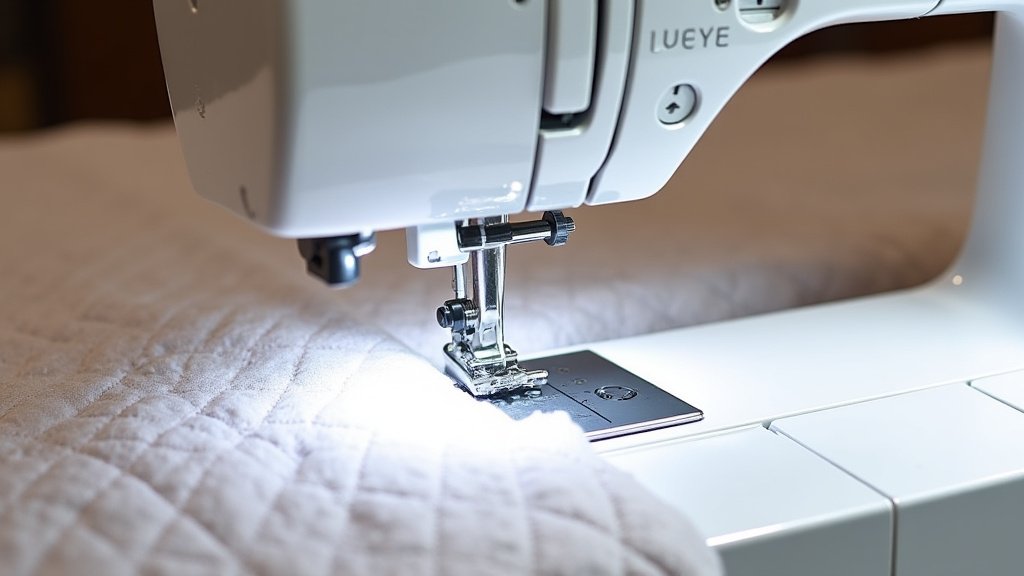
- Good Lighting: Being able to clearly see what you’re doing helps a lot. It prevents mistakes and reduces strain.
- Appropriate Needles: Use a sharp, strong needle suitable for quilting multiple layers. This prevents skipped stitches and broken needles.
- Walking Foot: This attachment feeds all layers of your quilt through the machine evenly, preventing shifting and puckering. It’s a game-changer for quilting.
- Gloves: Quilting gloves can improve your grip on the fabric, giving you more control as you move the quilt.
Making Your Decision: A Checklist
Choosing a machine with the right throat space is a big decision. It impacts your quilting experience significantly. Take a moment to think about your needs and priorities.
Here’s a quick checklist to help guide you before you commit to a particular machine:
- What is the average size of the quilts you plan to make?
- Do you occasionally make larger quilts, or is that your main focus?
- What is your budget for a new sewing machine?
- Do you have space for a larger machine if needed?
- Are you willing to learn techniques for managing bulk on a smaller machine?
- Will you be doing free-motion quilting, which often benefits from more space?
Conclusion
Choosing the right throat space is about aligning your machine with your quilting ambitions. We’ve covered that 8 to 12 inches is a great sweet spot for most quilters, but bigger projects demand more room.
Don’t forget that even with a smaller machine, clever techniques and a few key tools can greatly expand your capabilities. Consider your typical quilt size, your budget, and how much quilting you truly want to do.
By using the checklist and tips we shared, you can confidently select a machine that makes your quilting journey more joyful and less of a struggle.
Frequently Asked Questions
Can I quilt a large blanket on a regular sewing machine?
Yes, you absolutely can quilt larger items on a standard machine with less throat space. It will require more frequent rolling or folding of your quilt sandwich. This process just takes more patience and strategic maneuvering.
What is an extension table and how does it help with throat space?
An extension table is an accessory that attaches to your sewing machine, creating a larger, flat work surface around the needle. While it doesn’t physically increase the internal throat space, it provides much-needed support for your quilt’s bulk, making it easier to manage and move under the needle.
Is a walking foot necessary for quilting, especially with limited throat space?
While not strictly “necessary,” a walking foot is highly recommended for quilting, particularly when working with limited throat space. It helps feed all layers of your quilt evenly through the machine. This prevents puckering and makes it easier to guide your fabric without constant adjustments.
How can I tell how much throat space my current sewing machine has?
To measure your machine’s throat space, simply measure the distance from the needle to the inside of the machine’s body (the arm) to the right of the needle. Use a ruler or tape measure. This measurement will give you the exact throat space.
Does free-motion quilting require more throat space than straight-line quilting?
Free-motion quilting often benefits greatly from more throat space. It allows you to move the quilt more fluidly and in larger arcs without encountering the machine’s arm. While you can free-motion quilt on smaller machines, more space provides greater freedom of movement and less fabric bunching.
