
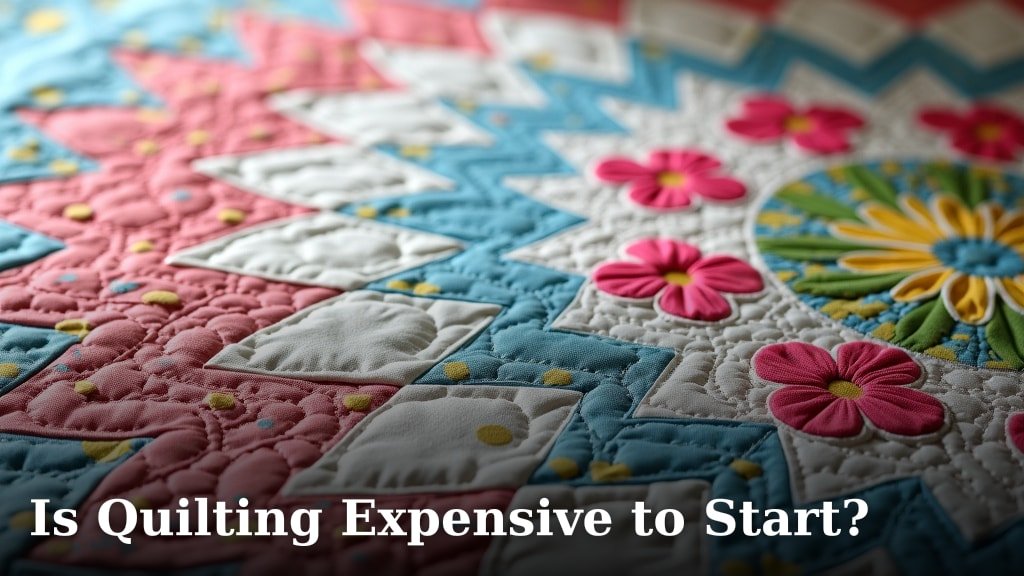
Yes, quilting can be expensive to start, especially if you buy all new equipment and materials. However, many quilters find ways to manage costs and enjoy this rewarding hobby without breaking the bank.
You might be wondering about the initial investment for fabric, tools, and a sewing machine. We found that the price tag varies greatly depending on your approach. It’s all about finding the right balance for your budget.
- Starting quilting can range from affordable to pricey.
- Your choices in fabric and tools affect the total cost.
- Secondhand machines and supplies save money.
- Basic quilting tools are often inexpensive.
- Luxury fabrics can quickly drive up expenses.
Let’s walk through exactly how much you can expect to spend when you’re just getting started with quilting.
Breaking Down the Cost of Starting Quilting
You’re wondering about the real costs, and we’re here to give you a clear picture. The total expense depends on your choices, from basic tools to premium materials.
The Essential Tool: Your Sewing Machine
A sewing machine is often the biggest upfront cost. Don’t worry, you have many options here, from budget-friendly to high-end.
New vs. Used Sewing Machines
A brand-new sewing machine can range from about $100 for a basic model to over $1,000 for advanced quilting machines. For starting out, a basic mechanical machine around $150-$300 is perfectly adequate. These machines handle straight stitches well, which is what you’ll use most.
We found that buying a used sewing machine can save a lot. You might find a great machine for $50-$150. Check online marketplaces, local sewing shops that offer trade-ins, or even family and friends. Just make sure to test it out before buying.
Features That Affect Price
What makes one machine more expensive than another? Features like automatic needle threaders, many stitch options, and a larger “harp space” (the area to the right of the needle) for big quilts. For a beginner, these extras aren’t critical. Focus on reliability and ease of use (Consumer Reports).
Fabric Costs: Where Your Vision Takes Shape
Fabric is the heart of your quilt, and its cost can add up quickly. This is where you have the most control over your budget.
Understanding Fabric Types and Prices
Quilters typically use 100% cotton fabric. Prices for quilting cotton can range from $8 to $15 per yard, sometimes more for designer prints or specialty fabrics. A typical throw-sized quilt might use 5-8 yards of fabric, plus backing and batting. This means fabric alone could be $100 or more for one project.
Consider buying fabric on sale! Many fabric stores have sales regularly. Look for “fat quarter bundles” or “jelly rolls,” which are pre-cut fabric selections that can be more economical and provide variety for smaller projects.
Creative Ways to Reduce Fabric Expenses
Want to save money? Use fabric from your stash, old clothes, or even thrift store finds. Many quilters create beautiful “memory quilts” from sentimental clothing. This not only saves money but also adds a personal touch to your project.
Another smart move is to join local quilting guilds. Members often swap or sell fabric at reduced prices. It’s a great way to get unique pieces without the retail cost.
Essential Tools and Notions
Beyond the machine and fabric, you’ll need a few basic tools. These are generally a one-time purchase and are not usually expensive.
The Absolute Must-Haves
Here’s a checklist of the core tools you’ll need to start. Think of these as your basic toolkit for quilting success:
- Rotary cutter (a sharp, circular blade for cutting fabric)
- Cutting mat (to protect your surfaces)
- Quilting ruler (a clear, sturdy ruler for precise cuts)
- Fabric scissors (dedicated to fabric only!)
- Seam ripper (because mistakes happen!)
- Pins or wonder clips
- Good quality thread
You can buy these items individually or in a starter kit. A basic kit often costs $50-$100 and includes many of these essentials. We found that buying them in a bundle can sometimes be cheaper than piecing them together.
Nice-to-Haves That Can Wait
There are many specialized tools out there, but you don’t need them right away. Things like design walls, specialized pressing tools, or fancy appliqué scissors can be added later as your skills grow. Start simple and expand your toolbox when you feel the need.
Batting and Backing: The Inner and Outer Layers
Don’t forget the batting (the fluffy middle layer) and backing fabric. These are crucial for a complete quilt and come with their own costs.
Choosing Your Batting
Batting comes in various materials: cotton, polyester, wool, and blends. Cotton batting is very popular and usually costs You can also quilt with polyester batting, which is often a more budget-friendly option.$10-$20 per yard for a common width. Polyester batting can be a bit cheaper, while wool is often more expensive.
The amount you need depends on your quilt size. For a throw quilt, you might need 2-3 yards of batting. Consider buying it on a roll or in larger packages if you plan to make multiple quilts, as this can sometimes offer a better price per yard.
Backing Fabric Options
Your backing fabric will need to be the same size, or slightly larger, than your quilt top. You can use regular quilting cotton, wide-back fabric (which saves you from piecing strips together), or even a thrifted bedsheet.
Using a bedsheet for backing is a fantastic budget option! Just make sure it’s 100% cotton and a quality weave. This can cut your backing costs significantly.
Putting It All Together: A Cost Breakdown Estimate
Let’s look at a general estimate for a beginner’s first throw-sized quilt. Remember, these are estimates, and your costs will vary.
| Item | Budget-Friendly Estimate | Mid-Range Estimate |
|---|---|---|
| Sewing Machine | $50 (used) | $200 (new basic) |
| Fabric (for quilt top) | $30 (sales/scraps) | $75 (new basic cotton) |
| Basic Tool Kit | $50 (essential items) | $80 (quality starter set) |
| Batting | $15 | $25 |
| Backing Fabric | $10 (thrifted sheet) | $30 (new basic cotton) |
| Thread, Pins | $10 | $15 |
| Total Estimated Cost | $165 | $425 |
As you can see, the range is quite broad. Your choices have a direct impact on your initial investment. We found that most beginners spend somewhere in the middle of these estimates.
Beyond the Initial Investment: Learning and Maintenance
The upfront costs are one thing, but what about ongoing expenses? These are usually minimal, especially for a new hobbyist.
Learning Resources
You don’t need expensive classes to learn to quilt. Many excellent resources are free! YouTube is a treasure trove of tutorials. Public libraries often have quilting books. Local quilt shops sometimes offer free beginner sessions or low-cost classes.
Learning from friends or joining a quilting group can also be very helpful and cost nothing. The quilting community is generally very welcoming and happy to share knowledge.
Maintenance and Supplies
Your sewing machine will need occasional oiling and cleaning. These are simple tasks you can do yourself with basic supplies that cost very little. Needles and bobbins are inexpensive and readily available.
The main ongoing expense will be fabric for new projects. However, by using sales, scraps, and upcycling, you can keep these costs down and keep your creative juices flowing without emptying your wallet.
Conclusion
You’ve seen that starting quilting can be as affordable or as lavish as you choose. Your sewing machine and fabric choices are the biggest cost drivers. By opting for a used machine, seeking out fabric sales, and utilizing household items, you can significantly reduce your initial outlay. Remember, the joy of quilting comes from the creative process, not the price tag of your tools.
So, don’t let perceived costs hold you back. Start small, be resourceful, and let your creativity flourish. Your beautiful, handmade quilt journey awaits!
Frequently Asked Questions
Can I really start quilting with a very basic, inexpensive sewing machine?
Absolutely, yes! A simple mechanical sewing machine, even an older used one, is perfectly capable of handling the straight stitches needed for most quilting projects. You don’t need advanced features to create stunning quilts, especially as a beginner.
Are there any free resources to learn quilting, or do I need to pay for classes?
There are many excellent free resources available to help you learn quilting. YouTube offers countless tutorials, and public libraries often have a wide selection of quilting books. You can also connect with local quilting groups for free advice and community support.
How much fabric do I need for my very first quilt project?
For a small, beginner-friendly project like a baby quilt or a throw, you might need anywhere from 3 to 8 yards of fabric in total, including your quilt top, batting, and backing. This estimate can vary based on your chosen pattern and quilt size.
Is it cheaper to buy a quilting starter kit or individual tools?
Often, buying a quilting starter kit can be more economical than purchasing each essential tool individually. These kits are usually curated with beginner needs in mind and can offer a bundled discount. We found them to be a great value.
What’s the best way to save on batting and backing fabric for my quilt?
To save on batting, look for sales or consider buying larger rolls if you plan multiple projects. For backing fabric, a fantastic budget option is to use a 100% cotton flat bedsheet. This can significantly cut down on your backing costs.
