
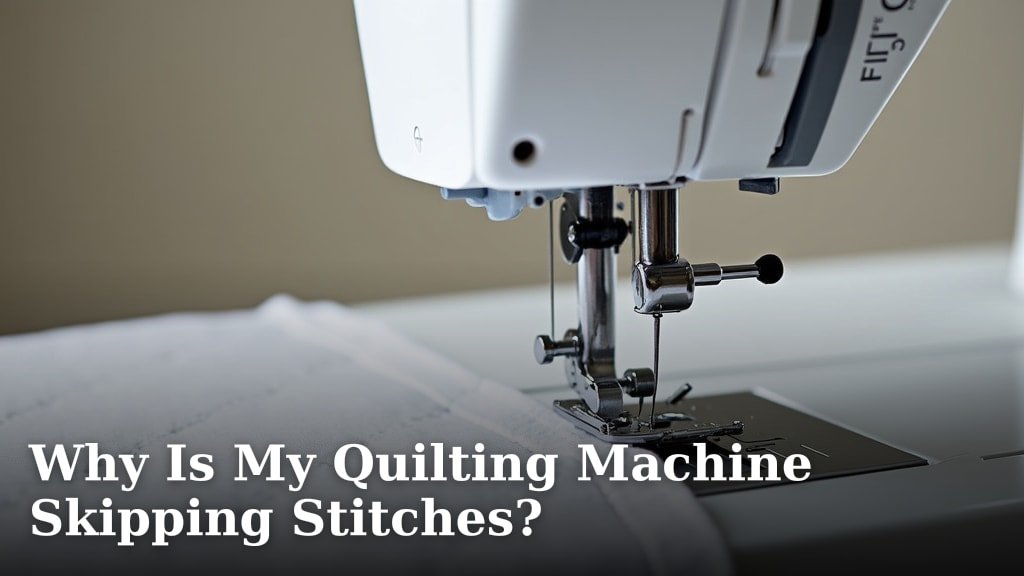
Your quilting machine is skipping stitches because of common mechanical issues like a bent needle, incorrect needle insertion, or improper threading. We found that tension problems, lint buildup, or using the wrong needle type for your fabric are also frequent culprits when your quilting machine starts misbehaving. These are usually easy fixes you can do at home.
There’s nothing more frustrating than a quilting project halted by skipped stitches, right? It can feel like your machine has a mind of its own. Luckily, most of the time, the reasons behind this issue are simple and fixable. You might just need to check a few key areas on your machine to get it running smoothly again. We’ll help you diagnose the problem and get back to quilting.
- Check your needle first.
- Examine machine threading.
- Clean out any lint.
- Adjust tension settings.
- Consider your fabric and thread choices.
Let’s walk through these common causes and their straightforward solutions so you can troubleshoot your quilting machine with confidence.
Common Reasons Your Quilting Machine Skips Stitches
Skipped stitches are often a sign of simple mechanical issues that are easy to fix. Don’t worry, we’ll walk you through each one.
Needle Niggles: The First Place to Look
Your needle is the heart of your stitching. Even a tiny problem here can cause big headaches. We often find that needle issues are the most frequent cause of skipped stitches.
Is Your Needle Bent or Damaged?
Think of your needle as a tiny, precise tool. If it’s even slightly bent, dull, or has a burr, it can’t pick up the bobbin thread correctly. This leads to those frustrating skipped stitches. Take your needle out and roll it on a flat surface. If it wobbles, it’s bent. Run your fingernail down the shaft; if you feel any roughness, it’s damaged. Replace it immediately if you find any flaws.
Is the Needle Inserted Correctly?
This sounds basic, but it’s a super common oversight! We’ve all done it. Make sure your needle is inserted all the way up into the needle clamp. The flat side of the needle shaft should face the correct direction for your machine (usually to the back, but check your manual). If it’s not fully seated, it won’t be at the proper height to form a stitch loop. Many experts say this is a quick fix to check (University of Kentucky Extension).
Are You Using the Right Type or Size of Needle?
Just like you wouldn’t use a screwdriver for a nail, you shouldn’t use the wrong needle for your fabric. Heavy fabrics like denim need a stronger, larger needle, while delicate silks require a finer one. Quilting projects often use a universal needle or a specific quilting needle. A needle that’s too small for thick fabric can bend, and one that’s too large can create holes. Matching your needle to your fabric and thread is essential for smooth stitching.
Thread Trouble: When Your Machine Isn’t Happy with the String
Thread issues are another big culprit when stitches start skipping. From how it’s wound to how it flows, every part matters.
Is Your Machine Threaded Properly?
Incorrect threading is perhaps the most common issue we see. Even experienced quilters can make a mistake. Go slowly. Re-thread your machine from scratch, following your manual exactly. Make sure the thread is seated correctly in every guide, through the tension discs, and into the take-up lever. A thread that’s out of place won’t create a consistent stitch. We found that forgetting a guide is a frequent mistake.
Is Your Thread Quality or Type Causing Problems?
Not all threads are created equal. Cheap, low-quality thread can break, fray, or create lint, leading to skipped stitches. Consider using a good quality, mercerized cotton or polyester thread designed for quilting. Also, make sure the thread type is compatible with your fabric. For instance, using a thick topstitching thread in your bobbin might cause issues if your machine isn’t designed for it. You can learn more about the pros and cons of using regular thread for quilting in our detailed guide.
Is the Thread Spool or Bobbin Wound Unevenly?
An unevenly wound spool or bobbin can cause the thread to catch or snag, affecting tension and leading to skipped stitches. If your bobbin is lumpy or too tight, re-wind it. Make sure the thread unwinds smoothly from the spool, with no snags or jerks. Sometimes, simply placing a felt pad under your spool can help it feed more evenly.
Tension Tangles: Finding the Sweet Spot
Ah, tension. It’s often misunderstood, but it’s key to perfect stitches. Getting your tension right is like balancing a seesaw.
Understanding Upper and Lower Thread Tension
Your machine has two main tension points: the upper thread tension (controlled by a dial) and the bobbin thread tension (controlled by a screw on the bobbin case). For a balanced stitch, these two tensions need to work together perfectly. If one is too tight or too loose, your machine will have trouble forming a proper lockstitch. This can easily result in Understanding the function of the take-up lever is crucial for maintaining proper thread tension and preventing skipped stitches.skipped stitches or loops.
How to Adjust Your Tension Settings
Adjusting tension is often a process of trial and error. Start with a fresh piece of your actual quilting fabric and thread. We often recommend adjusting the upper tension first, usually in small increments (like half-number adjustments). If your bobbin thread is showing on top, your upper tension might be too tight. If your upper thread is showing on the bottom, it might be too loose. Make small changes and test until your stitches look even on both sides. Many experts suggest keeping a sample piece for reference (Bernina International).
Machine Maintenance Matters: Keeping Things Clean and Oiled
Your quilting machine is a workhorse, and like any machine, it needs a little TLC to perform its best.
The Pesky Problem of Lint Buildup
Quilting produces a surprising amount of lint, especially from cotton fabrics. This lint can accumulate under the needle plate, around the feed dogs, and inside the bobbin case. When lint builds up, it can interfere with the machine’s moving parts, especially the bobbin hook, preventing it from catching the thread properly. We found that a simple cleaning with a small brush can often solve many problems.
- Turn off and unplug your machine.
- Remove the needle plate.
- Use a soft brush (often included with your machine) to gently sweep away all lint.
- Never use canned air, as it can push lint further into the machine.
- Regular cleaning, especially after a big project, prevents buildup.
When Was Your Machine Last Oiled or Serviced?
If your machine is mechanical, it likely needs oiling. Check your manual for specific oiling points and frequency. Dry, unlubricated parts can lead to friction, affecting stitch formation and potentially causing skips. A machine that hasn’t been serviced in a while might have worn parts that need professional attention. Consider an annual tune-up, especially if you quilt frequently.
Fabric and Project Considerations: Are You Asking Too Much?
Sometimes, the issue isn’t the machine itself, but how it interacts with your materials.
Is Your Fabric Too Thick or Too Slippery?
Quilting often involves multiple layers. If your fabric sandwich is too thick for your machine’s capabilities, it can struggle to penetrate all layers, leading to skipped stitches. Similarly, very slippery fabrics can shift and cause issues. Consider using a walking foot for thick or slippery projects; it helps feed all layers evenly. We’ve seen this dramatically improve stitch quality.
Is Your Stabilizer or Batting Causing Problems?
Some stabilizers can be very stiff or gummy, making it hard for the needle to pass through cleanly. Batting, especially dense or high-loft types, can also contribute to difficulty. Ensure your chosen batting and stabilizer are compatible with your machine and project. Sometimes, a temporary spray adhesive can help hold layers together smoothly, preventing shifting.
Troubleshooting Checklist for Skipped Stitches
When in doubt, use this quick checklist to pinpoint the problem. It’s like being a detective for your machine!
| Potential Problem Area | What to Check | Possible Fix |
|---|---|---|
| Needle | Bent, dull, wrong size, or incorrectly inserted. | Replace needle, re-insert correctly, use proper size/type. |
| Threading | Upper or bobbin thread not seated properly. | Re-thread both upper and bobbin threads from scratch. |
| Tension | Upper or bobbin tension too tight or too loose. | Adjust upper tension in small increments; check bobbin tension. |
| Lint/Dirt | Buildup in bobbin area, feed dogs, or needle plate. | Clean thoroughly with a brush; do not use canned air. |
| Thread Quality | Cheap, old, or inappropriate thread type. | Switch to quality thread suitable for quilting. |
| Fabric/Batting | Too thick, slippery, or incompatible with the machine. | Use walking foot, appropriate needle, or different batting. |
Here’s a quick summary to help you get back on track:
- Always start with a fresh, sharp needle.
- Perform a full re-threading of both the top thread and bobbin.
- Give your machine a good cleanout, especially around the bobbin area.
- Do a test stitch on scrap fabric and adjust tension as needed.
- Ensure your thread and fabric are suitable for your project.
- If all else fails, consider a professional tune-up for your machine.
Conclusion
Skipped stitches don’t have to stop your quilting in its tracks. By systematically checking your needle, re-threading your machine, ensuring proper tension, and performing regular cleaning, you can solve most issues yourself. Think of it as a small puzzle to solve before returning to your creative flow. We’ve seen these simple checks make a huge difference for many quilters.
Keep this guide handy as your go-to troubleshooting companion. Don’t be afraid to experiment with small adjustments. Your machine wants to stitch beautifully, and with these tips, you’ll both be back to creating stunning quilts in no time.
Frequently Asked Questions
Why does my quilting machine suddenly start skipping stitches?
Often, a sudden skip is due to a bent or dull needle. It could also be from new lint buildup, especially if you’ve been sewing for a while. Always check your needle and clean your machine first.
Can the type of fabric really cause skipped stitches?
Absolutely! Very thick or very thin/slippery fabrics can challenge your machine. Using the wrong needle type or size for your fabric can also lead to stitches being missed. Try adjusting your needle or using a walking foot for difficult materials.
How often should I clean my quilting machine to prevent skipped stitches?
We recommend a quick cleaning after every major project, or after about 8-10 hours of sewing. Lint buildup is a major cause of skipped stitches, so regular, gentle cleaning around the bobbin case and feed dogs is key.
Is it possible my bobbin tension is causing the problem?
Yes, bobbin tension can definitely contribute to skipped stitches. If your bobbin thread is too loose or too tight, it can prevent a balanced stitch. While you usually adjust upper tension first, sometimes a minor bobbin tension tweak is needed for perfect stitch formation.
When should I consider taking my machine to a professional for service?
If you’ve tried all the common troubleshooting steps—changing the needle, re-threading, cleaning, and adjusting tension—and your machine is still skipping stitches, it might be time for a professional tune-up. Worn parts or more complex internal issues often require expert attention.
