
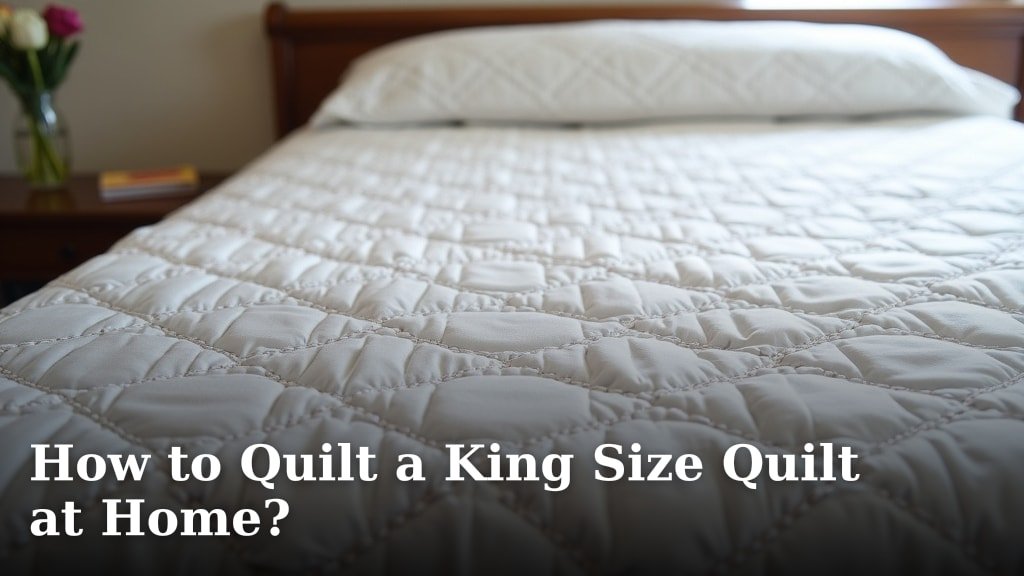
The easiest way to quilt a king size quilt at home involves breaking the process into smaller, manageable steps, often utilizing advanced planning and smart techniques. You don’t need a massive studio or special equipment to create a beautiful, large quilt yourself.
Working with larger projects, especially a king size quilt, can feel daunting at first, but it’s completely achievable. We found that with the right approach, you can comfortably manage the size and enjoy the quilting journey right in your own sewing space.
TL;DR: Quilt a King Size Quilt
- Prepare your space and materials carefully.
- Divide the quilt into sections for easier handling.
- Utilize a walking foot to manage bulk.
- Practice good posture and take breaks.
- Celebrate your large and lovely creation!
Let’s walk through exactly how to tackle quilting a king size quilt at home, step by step, making it a surprisingly enjoyable project for you.
Quilting a King Size Quilt with Confidence
You can absolutely quilt a king size quilt right at home, even if your sewing space is cozy. The key is in thoughtful preparation and smart techniques that break down the large project into manageable parts.
Preparing Your Space and Your Quilt
Before you even think about stitching, setting up your environment is super important. A well-organized space makes a huge difference when dealing with a big quilt.
Clearing Your Work Area
Find the largest clear surface you have. This could be your dining table, a cleared-off floor, or even a craft table. You’ll need room to spread out the quilt layers without them falling off or getting wrinkled. Think of it like mapping out a giant puzzle; you need space for all the pieces.
- Clear furniture, vacuum, and clean surfaces thoroughly.
- Ensure good lighting; bright natural light is ideal.
- Make sure your sewing machine is on a stable, flat surface.
Assembling Your Quilt Sandwich
This is where your top, batting, and backing come together. For a king size quilt, this can be quite a challenge just to layer. Many quilters find that an oversized backing and batting help immensely (National Quilting Association guidelines often suggest 4-6 inches larger on all sides than your quilt top).
We found that having a helper for this step can save a lot of headaches. If you’re working solo, use masking tape to secure the backing to your clean, flat surface. Smooth it out, then add the batting, and finally your quilt top. Smooth each layer from the center outwards to avoid puckers.
Basting Your King Size Quilt
Basting holds your quilt layers together so they don’t shift while you’re quilting. For a king size quilt, this is not a step to rush.
Pin Basting Large Quilts
Safety pins are a popular choice. We found that using plenty of pins is crucial for large quilts. Space them every 3-4 inches across the entire surface. Curved safety pins work best; they’re easier to open and close. A good tip is to use a thimble or even special pin-pushers to save your fingers.
Spray Basting for Convenience
Spray basting offers a quicker alternative. Be sure to use a temporary adhesive designed for quilting. Do this in a well-ventilated area, or even outside if weather permits. Spray one section at a time, smoothing the layers as you go. Many quilters find this method reduces bulk and shifting, especially with very large projects.
Quilting Strategies for Large Projects
Now for the fun part: the actual quilting! You don’t need a longarm machine to quilt a king size quilt beautifully. Your domestic machine can do the job with a few key techniques.
Using Your Conventional Sewing Machine
Your regular sewing machine is perfectly capable. The main trick is to manage the bulk of the fabric. Many experts recommend a walking foot (University of Nebraska-Lincoln Extension). This attachment helps feed all three layers of your quilt sandwich evenly through the machine, preventing stretching and puckering.
We found that rolling or folding the parts of the quilt not currently under the needle can make a huge difference. Use quilt clips or even binder clips to keep the rolled sections tidy and out of your way.
Quilting in Sections or Panels
This is arguably the most effective technique for home quilters tackling king size. Instead of trying to quilt the whole thing at once, you divide and conquer. This means you quilt smaller sections at a time.
You can even cut your batting and backing into smaller pieces, quilt them to sections of your quilt top, and then join those quilted panels together. This sounds like more work, but it means you’re only wrangling a small portion of the quilt at any given moment. This method is often called “quilt-as-you-go” and is a lifesaver for large projects.
Managing Bulk and Weight
The sheer size and weight of a king size quilt can be tiring. Plan for this!
Supporting the Quilt’s Weight
As you quilt, the unquilted portions of your project will hang off your machine. This weight can pull and distort your stitching. We found that setting up an ironing board or a small table directly behind and to the left of your machine can provide much-needed support. This takes the strain off both you and your quilt.
Keep your chair at the right height and practice good posture. Taking breaks often is essential. Your body will thank you!
Quilting Designs for King Size
Choosing the right quilting design can simplify the process and still look fantastic.
Simple and Effective Designs
Straight-line quilting or simple meandering designs are your friends here. These are quick to execute and provide sufficient stability for your quilt without requiring intricate maneuvers that are difficult with lots of fabric. You don’t need to do a super dense pattern for a comfortable, cozy king size quilt.
A simple grid or a wavy line can be incredibly effective. Consider using a walking foot for straight lines and a free-motion foot for meandering. Practice on scraps first!
| Quilting Method | Pros for King Size | Cons for King Size |
|---|---|---|
| Pin Basting | Secure and widely accessible. | Time-consuming; can snag fabric. |
| Spray Basting | Quick; reduces shifting. | Requires ventilation; can be costly. |
| Machine Quilting w/ Walking Foot | Even stitches; good for straight lines. | Still requires bulk management. |
| Machine Quilting w/ Free-Motion Foot | Allows for intricate designs; flexible. | Requires practice; can be hard with bulk. |
| Quilt-As-You-Go | Manages bulk by breaking into sections. | More piecing/joining steps. |
Finishing Touches and Enjoyment
After all that quilting, you’re almost done!
Binding Your Large Quilt
Binding a king size quilt is another task best done with plenty of space. You can machine bind for speed or hand bind for a classic finish. No matter your method, take your time to ensure even corners and a neat edge. Many quilters find that an extra-wide binding strip can look luxurious on a king size quilt.
You’ve put so much work into it; don’t rush the last steps. Give your beautiful creation the finish it deserves.
Tips for a Successful King Size Quilt
Here’s a quick checklist of things that will help you tackle this big project with ease:
- Start with a design that isn’t overly complicated for your first king size quilt.
- Keep your sewing machine clean and freshly oiled.
- Use good quality thread; you’ll be using a lot of it!
- Take frequent breaks to stretch and rest your eyes.
- Have a comfortable, ergonomic chair.
- Don’t be afraid to ask for help with basting or moving the quilt around.
Remember, quilting is meant to be enjoyable. Don’t let the size intimidate you. With these strategies, you’re well on your way to creating a stunning king size quilt right in your own home.
Conclusion
You’ve seen that quilting a king size quilt at home is totally within your reach. By breaking down the process, managing bulk effectively, and choosing smart quilting strategies, you can transform what seems like an overwhelming project into an enjoyable journey. Remember, preparation and patience are your best tools. Don’t let the size intimidate you. We found that with a little planning, your domestic machine is more than capable.
Now, gather your materials and confidently create that beautiful, cozy king size quilt you’ve been dreaming of.
Frequently Asked Questions
What is the best type of batting for a large quilt?
For a king size quilt, we recommend a lightweight yet durable batting, such as an 80/20 cotton/poly blend or a polyester batting. These options are easier to manage through your machine and provide a lovely drape without adding too much bulk to an already large project.
How do I prevent my king size quilt from distorting while quilting?
To prevent distortion, practice even tension in your stitching and ensure proper basting. Spray basting can minimize shifting, and using a walking foot helps feed all layers evenly. We found that supporting the quilt’s weight with tables helps keep fabric from pulling.
Can I truly quilt a king size quilt on a regular sewing machine?
Absolutely! The key is to manage the bulk by rolling sections of the quilt and using a walking foot. Many quilters successfully complete king size projects on their home machines. Utilizing a “quilt-as-you-go” method can also make it much more manageable.
How long does it typically take to quilt a king size quilt at home?
The time varies greatly depending on your experience, the complexity of your design, and how often you work on it. Expect it to take anywhere from several weeks to a few months of dedicated effort. Breaking it into smaller sessions is helpful.
What kind of thread should I use for machine quilting a large quilt?
For machine quilting, we suggest a high-quality 40 or 50 weight polyester or cotton thread. These threads are strong enough to withstand the quilting process and will create durable stitches that last. Always use a fresh needle for best results.
