
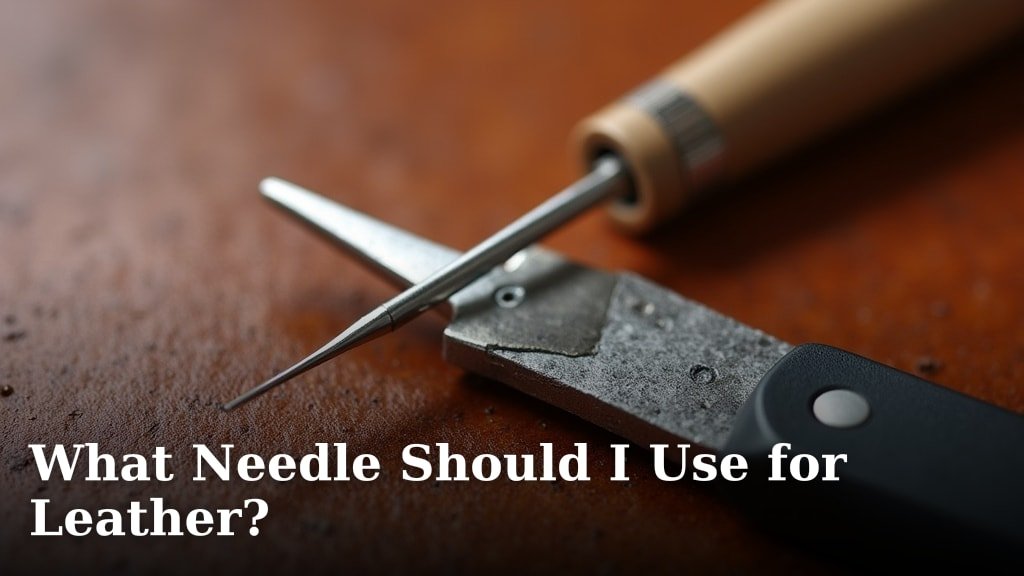
Choosing the right needle for your leather project is super important. For most leatherwork, you’ll want a leather needle with a cutting point. These needles are specifically designed to pierce tough materials cleanly. They prevent skipping stitches and fabric tears.
Using the wrong needle can really ruin your project. A standard sewing needle might bend or break. It can also leave unsightly holes in your leather. Finding the perfect needle ensures your stitches are neat and your leather stays beautiful.
- Leather needles have a cutting point.
- They make clean holes in tough materials.
- This prevents skipped stitches and tears.
- Avoid standard needles; they can break.
- Always use the right needle for your leather type.
Ready to get your hands on the best needle for your leather craft? Let’s walk through exactly what you need to know so you can get stitching with confidence.
Choosing the Right Needle for Your Leather Projects
Selecting the correct needle is a game-changer for any leather project. It ensures your stitches look professional. It also helps you avoid frustration and damage to your materials. We’ll guide you through the options.
Understanding Leather Needle Types
Leather needles aren’t just any sewing needles. They are specially designed tools. Think of them like tiny, sharp swords for your fabric. They need to push through thick, tough leather without a fuss. Standard needles just aren’t built for this kind of work.
The Magic of the Cutting Point
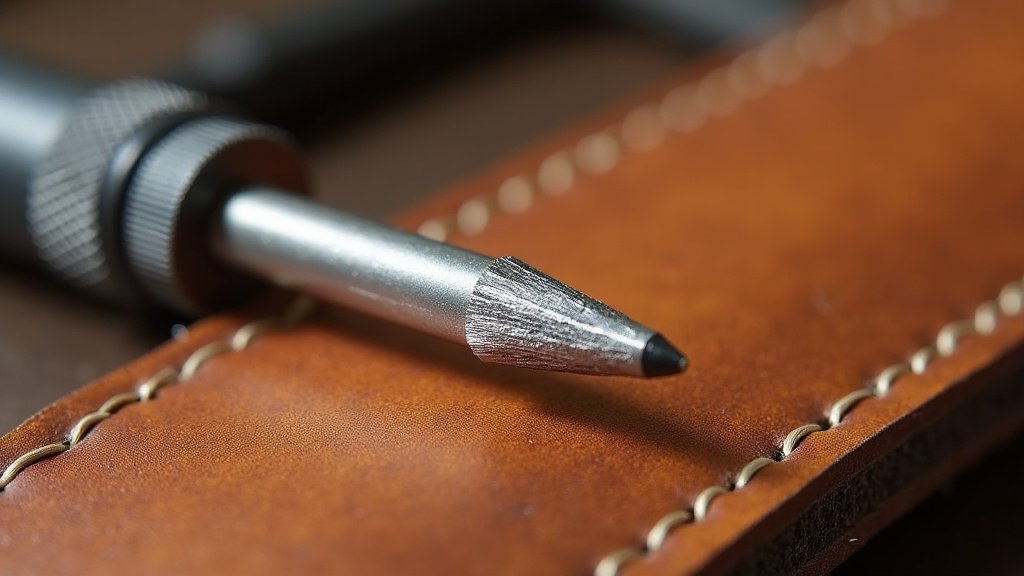
Most leather needles have a cutting point. This is their most important feature. Instead of a rounded tip that pushes fibers aside, a cutting point slices cleanly through the leather. This makes a neat, precise hole for your thread.
Imagine trying to push a dull pencil through thick cardboard. It would just make a mess, right? A sharp knife cuts through it easily. That’s the idea behind a cutting point needle. It separates the leather fibers rather than stretching or tearing them.
Different Cutting Point Shapes
There are a few variations of cutting points you might see:
- Triangular (or Chisel) Point: This is the most common type. It has three sharp edges that form a triangle. It creates a visible stitch hole that looks like a small dash. It’s great for straight stitches.
- Diamond Point: This needle has four sharp edges in a diamond shape. It makes a slightly larger, more prominent stitch hole. It’s also good for straight stitching and can provide a very clean look.
- Round Point: While less common for hand-sewing leather, some machine needles have a round point designed for specific leather types or stitch patterns. This type is less likely to cut fibers but is still tougher than a standard needle.
Why Not Just Use a Stronger Needle?
You might think, “Why not just grab a thicker, stronger needle?” That’s a fair question. However, even a strong standard needle can cause problems. A rounded tip will still push and stretch the leather fibers. This can lead to skipped stitches, weakened seams, and visible damage.
Research has shown that using the wrong needle type can compromise the integrity of the material. This means your beautiful leather bag might not hold up as well over time. The goal is to create durable, attractive seams. A cutting point needle helps achieve this.
Matching Needles to Your Leather Thickness and Type
The thickness and type of leather you’re using are key factors. A needle that works for thin garment leather won’t work for thick upholstery or boot leather. Here’s how to think about it:
Size Matters: Needle Gauge
Needles come in different sizes, often referred to as gauges. For leather, you’ll typically use thicker needles. Standard sewing needles might be around a size 8 or 10. Leather needles often start around size 14 and go up to size 18 or even larger.
A larger number usually means a thicker needle. For thinner leathers (like 2-3 oz), a size 14 or 16 might be perfect. For medium-weight leathers (4-5 oz), a size 16 or 18 is often recommended. Heavy-duty leathers (6 oz and up) might need an 18 or even larger. Many experts suggest starting with a size 16 or 18 for most general leather projects (Leatherworking Hub).
Consider the Thread
Your thread thickness also plays a role. A very thick, waxed thread needs a larger needle eye to pass through easily. Conversely, a thin thread might look lost on a huge needle. You want a balanced pairing.
A good rule of thumb is to test your needle and thread on a scrap piece of your leather. Can the thread pass through the needle’s eye without too much trouble? Does the needle make a hole that’s just right for the thread, not too big and not too small?
Leather Type vs. Needle Choice
Different leathers have different properties. Smooth, finished leathers are generally easier to work with. Suede or nubuck can be more delicate.
- Smooth Leathers (Full-grain, Top-grain): These are the most common. A triangular or diamond cutting point needle works very well here.
- Suede and Nubuck: Because these have a napped surface, you need to be extra careful not to damage the fibers. A fine-point cutting needle is often best to minimize fiber disturbance.
- Exotic Leathers (e.g., Snakeskin, Alligator): These can be tricky. Always test your needle on a scrap. A sharp, fine cutting point is usually preferred.
Hand Sewing vs. Machine Sewing Needles
The type of needle you use also depends on whether you’re sewing by hand or using a sewing machine.
For Hand Sewing Leather
Hand-sewing needles for leather are often called “glover’s needles.” They are typically shorter than standard sewing needles. They also feature that crucial cutting point. You’ll find them in various sizes, as discussed earlier.
When hand-sewing, you’ll be pushing the needle through the leather yourself. Having that sharp point makes all the difference. It reduces the force you need to apply. It also ensures cleaner holes, preventing thread breakage or skipped stitches.
For Machine Sewing Leather
Leather sewing machine needles are also designed with durability and piercing power in mind. They are much sturdier than regular machine needles. They often have a slightly larger eye to accommodate heavier threads used in machine sewing.
These machine needles usually come with a cutting point (like a wedge or chisel point). This is vital for consistent stitching on a machine. A standard machine needle can bend, break, or skip stitches very quickly on leather. Many sewists recommend using a leather point needle specifically made for your machine type (Singer Sewing Company).
Understanding Needle Markings and Sizes
Needles can seem confusing with all their numbers and letters. Let’s break down what you’ll typically see.
Metric vs. Imperial Sizes
You might see sizes like “14/90” or “18/110”. The first number (14 or 18) is usually the US/UK size, and the second number (90 or 110) is the metric size (diameter in millimeters). A 14 gauge is roughly equivalent to a 90/100 metric size, and an 18 gauge is around a 110/120 metric size.
Needle Codes Explained
You’ll often find a designation like “Leather” or “LT”. This indicates the needle is specifically designed for leather. Some brands might have their own specific codes, but “Leather” is usually a safe bet.
For machine needles, you might also see codes related to the machine type (e.g., “Universal,” “Jeans,” “Leather”). Always select the one labeled for leather. This ensures you have the right strength and point type.
When to Replace Your Leather Needle
Even the best needles wear down over time. A dull or damaged needle can cause problems.
Signs of a Worn-Out Needle
How do you know it’s time for a new needle? Look for these signs:
- Skipped stitches: Your machine or hand stitch is missing every few stitches.
- Thread breaking: Your thread snaps frequently.
- Fabric damage: You notice snags, pulls, or irregular holes in your leather.
- Bent or damaged tip: If you visually inspect the needle and see it’s bent or the point looks chipped.
- Unusual noise: Your sewing machine sounds strained or is making odd noises when stitching.
How Often Should You Change Them?
For hand sewing, a good needle can last for many projects if you care for it. However, if you notice any of the above signs, it’s time to switch. For machine sewing, it’s often recommended to change your needle every 8-10 hours of continuous sewing or after completing a major project (Bernina USA).
It might seem like a small thing, but changing your needle regularly is an easy way to ensure consistent, beautiful results. It prevents a lot of headaches down the line.
A Quick Checklist for Your Leather Needle Selection
Feeling a bit overwhelmed? Here’s a quick reminder to help you pick the right needle:
- Always choose a needle specifically designed for leather.
- Look for a cutting point (triangular, diamond) for most projects.
- Match the needle size to your leather thickness and thread weight.
- Use hand-sewing needles (glover’s) for handwork and leather point needles for machines.
- Inspect your needle regularly for signs of wear or damage.
- Don’t be afraid to test on scrap leather first!
Conclusion
You’ve learned that picking the right needle is key for beautiful, durable leather projects. A leather needle with a cutting point, like triangular or diamond, is your best bet for clean stitches. Always match your needle size to your leather’s thickness and your thread weight. Whether you’re hand-sewing or using a machine, the correct needle prevents skipped stitches and fabric damage. Now that you know the essentials, grab the right needle and start stitching with confidence on your next leather creation!
Frequently Asked Questions
What’s the difference between a leather needle and a regular sewing needle?
Leather needles have a sharp cutting point designed to slice through tough leather fibers cleanly. Regular sewing needles have rounded tips that push and stretch fibers, leading to skipped stitches, holes, or even breakage in leather.
Can I use any size needle for any type of leather?
No, size matters a lot! Thicker leathers need larger gauge needles (higher numbers) to pierce them, while thinner leathers work better with smaller gauge needles. Matching the needle to the leather thickness ensures clean stitches and prevents needle breakage.
Do I need a different needle for hand sewing leather versus machine sewing leather?
Yes. Hand-sewing leather needles are often called glover’s needles and are designed for manual pushing. Machine leather needles are sturdier to withstand machine speed and vibration, and they typically feature a cutting point suitable for machine use.
How do I know when my leather needle is dull or worn out?
You’ll notice signs like skipped stitches, thread breaking frequently, visible snags or tears in your leather, or if your sewing machine makes unusual straining noises. Inspecting the needle tip for damage is also a good indicator.
What if I don’t have a specific leather needle, can I still sew thin leather?
For very thin garment leather, some people have success with a strong, sharp needle like a denim or quilting needle, especially if it has a fine point. However, a true leather needle with a cutting point is always recommended for the best results and to minimize potential damage.
